
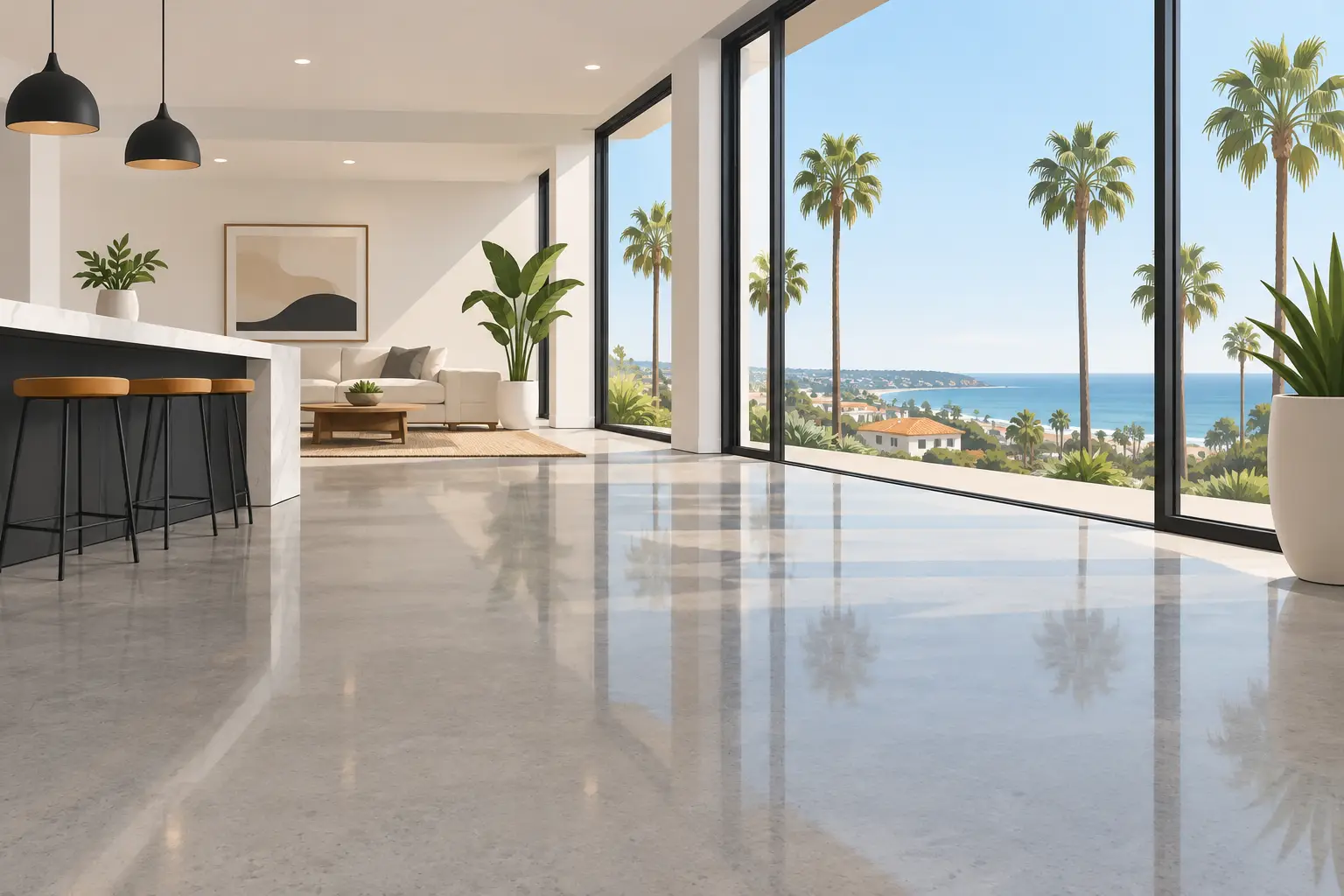
Polished Concrete Floors That Hold Up in Orange County
A warehouse aisle, retail entry, garage, or office lobby does not get easier on a floor over time. Tires bring in grit. Foot traffic wears paths into weak coatings. Forklifts, dropped tools, spills, and daily cleaning expose every shortcut in the original installation. Polished concrete is a practical answer when the existing slab has the right potential and the finished floor needs to look clean while standing up to real use.
For Orange County property owners and facility managers, the appeal is straightforward: a professionally polished slab can deliver a refined finish without adding a separate floor covering that may peel, chip, delaminate, or require frequent replacement. It is not the right answer for every slab or every operation, but when it is properly specified and installed, it is one of the most durable, low-maintenance flooring systems available.
What Polished Concrete Actually Is
Polished concrete is not simply concrete with a shiny sealer on top. The process uses industrial grinders fitted with progressively finer diamond tooling to refine the concrete surface. A densifier is typically applied during the process to harden the slab and reduce dusting. As the floor is refined, the surface becomes more reflective, tighter, and easier to clean.
The final appearance depends on the slab itself and the requested finish. A cream polish stays close to the top surface and offers a more uniform look, but it can expose minor imperfections in the existing concrete. A salt-and-pepper finish lightly reveals fine aggregate. A full aggregate exposure removes more of the surface and creates a more decorative, terrazzo-like appearance with visible stone.
That difference matters during budgeting and planning. Greater aggregate exposure generally requires more grinding, more time, and more material removal. It can look exceptional in a showroom, lobby, restaurant, or high-end residence, but it is not automatically the best fit for an active warehouse or a project with a tight schedule.
Where Polished Concrete Performs Best
A polished floor works especially well in spaces that need durability, a clean presentation, and a practical maintenance routine. It is common in retail stores, offices, restaurants, warehouses, distribution areas, airplane hangars, garages, and residential interiors.
In commercial spaces, the benefit is often operational. There are no tile grout lines to scrub and no carpet fibers to trap dirt. Dust mopping and periodic wet cleaning can keep the floor looking professional. A properly finished slab also improves light reflectivity, which can help bright interiors feel more open and may reduce the need for additional lighting in some facilities.
For homeowners, polished concrete is often a strong option for garages, living spaces, patios, and contemporary remodels. It provides a clean, modern surface that can be customized with dyes, stains, decorative scoring, or varying levels of aggregate exposure. In a garage, it eliminates the concern of a coating lifting because of poor slab preparation or moisture pressure, although a polished system is not always the best choice when high chemical resistance or a heavily decorative color finish is the priority.
The Slab Determines the Result
The most important part of any polished concrete project is not the final sheen. It is the existing slab. Concrete has a history, even when it looks plain from the surface. Previous coatings, oil contamination, patching, moisture issues, curled joints, cracks, and soft concrete can all affect the finished result.
Grinding can remove many surface contaminants and failed coatings, but it cannot make a severely damaged slab disappear. Existing cracks can be repaired, filled, or treated as part of the design, yet they may remain visible. Patches often accept dye or stain differently than surrounding concrete. If a floor has been heavily repaired over the years, a uniform cream-polished look may be less predictable than a deeper grind with aggregate exposure or a different flooring system.
This is why an in-person site evaluation matters. A contractor should assess the slab condition, test the surface where needed, identify moisture concerns, review access and operational restrictions, and establish realistic expectations before proposing a finish. The right recommendation is based on the floor in front of you, not a generic square-foot price.
Moisture, joints, and slip resistance
Moisture is a major consideration for any floor finish. Polished concrete is breathable compared with many film-forming coatings, but moisture can still influence repairs, dyes, and the condition of the slab. Moisture vapor concerns should be evaluated before work begins, particularly in ground-level commercial buildings, garages, and older structures.
Control joints and cracks also need a clear plan. Some clients prefer a clean, filled-joint appearance. Others accept visible joints as part of an authentic concrete floor. Neither approach is wrong, but it should be discussed before polishing starts rather than after the floor has been opened up.
A polished floor can be safe when properly maintained, but high-gloss does not mean every area has the same traction needs. Entrances exposed to rain, food-service areas, wet production zones, and ramps may require a different finish level, added traction treatment, mats, or another flooring system altogether. The best floor balances appearance, cleanability, and the way people actually use the space.
Polished Concrete vs. Epoxy: Choose by Use, Not Trend
Polished concrete and epoxy flooring are both durable solutions, but they solve different problems. A polished slab is an excellent fit when the concrete itself is sound and the goal is a long-lasting, low-maintenance architectural finish. It does not create a thick barrier over the slab, and it retains the natural character of concrete.
Epoxy and other resinous systems are often the better option where chemical resistance, color consistency, safety striping, or a fully coated appearance is required. Automotive shops, manufacturing areas, commercial kitchens, and spaces exposed to oils, solvents, or aggressive cleaning chemicals may benefit from a properly specified epoxy, urethane cement, or other resinous system.
The choice also depends on downtime. Polishing can be staged around operational needs, particularly in large facilities. Resinous systems require careful surface preparation and cure time, but may offer the specific performance required for certain environments. There is no one-size-fits-all answer. A good flooring proposal explains what the system can do, what it cannot do, and why it fits the conditions on site.
What the Installation Process Looks Like
Professional concrete polishing begins with preparation. The crew protects adjacent surfaces, removes existing coatings or adhesives when required, repairs identified defects, and uses heavy-duty grinding equipment to establish the desired exposure. The concrete is then densified and refined through multiple diamond-grinding stages.
Color can be introduced with concrete dyes or stains at the appropriate stage. From there, the floor is polished to the selected sheen level, cleaned thoroughly, and inspected for consistency. The exact sequence changes based on slab condition, desired appearance, occupied-space requirements, and whether the project includes repairs, leveling, staining, or coating removal.
For active businesses, scheduling is part of the work. Retail stores, offices, warehouses, and restaurants often cannot stop operations for days at a time. Off-hours work, phased installation, and clearly defined access plans can reduce disruption while keeping the project moving. Orange County Concrete Polishing scopes these details before the crew arrives so the floor installation supports the business rather than interrupting it.
Maintenance That Protects the Finish
Polished concrete is low maintenance, not no maintenance. Grit acts like sandpaper under shoes and tires, so regular dust mopping is one of the simplest ways to protect the finish. Use clean pads and a neutral cleaner designed for polished concrete. Avoid harsh degreasers, acidic products, and soaps that leave a residue, since residue can dull the surface and attract dirt.
Spills should be cleaned promptly, especially oils, food acids, and chemicals. Entry mats can reduce tracked-in sand and moisture, while felt pads under furniture help prevent unnecessary abrasion in residential and office settings. High-traffic commercial floors may benefit from periodic burnishing or a maintenance program to keep the polish looking its best.
The goal is not to baby the floor. It is to use a maintenance routine that matches the traffic and protects the investment. A distribution center and a residential living room will not have the same cleaning schedule, and they should not be treated as if they do.
Start With the Conditions You Have
The best polished floor starts with an honest look at the slab, the traffic, the moisture conditions, and the visual result you expect. If you are planning a garage upgrade, tenant improvement, warehouse renovation, retail build-out, or new commercial facility, schedule an in-person estimate before selecting a finish from a photo. A site-specific recommendation can save time, prevent avoidable change orders, and give you a floor built for the work it will do.
Recent Post

Best Concrete Slab Repair Methods That Last
November 23, 2026 1:50 am
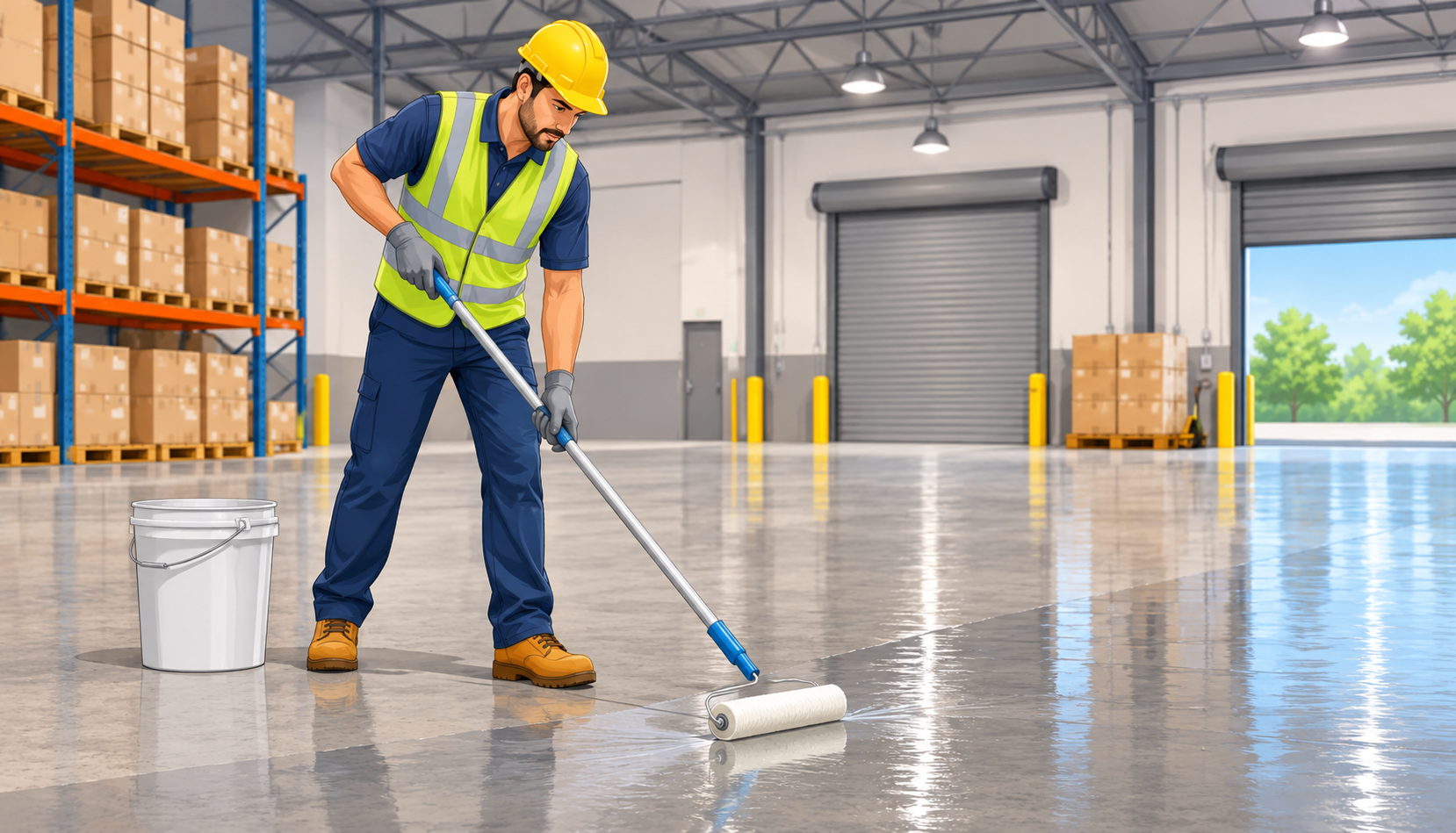
Penetrating vs. Topical Concrete Sealers: Which Is Right for Your Floor?
November 22, 2026 8:11 pm
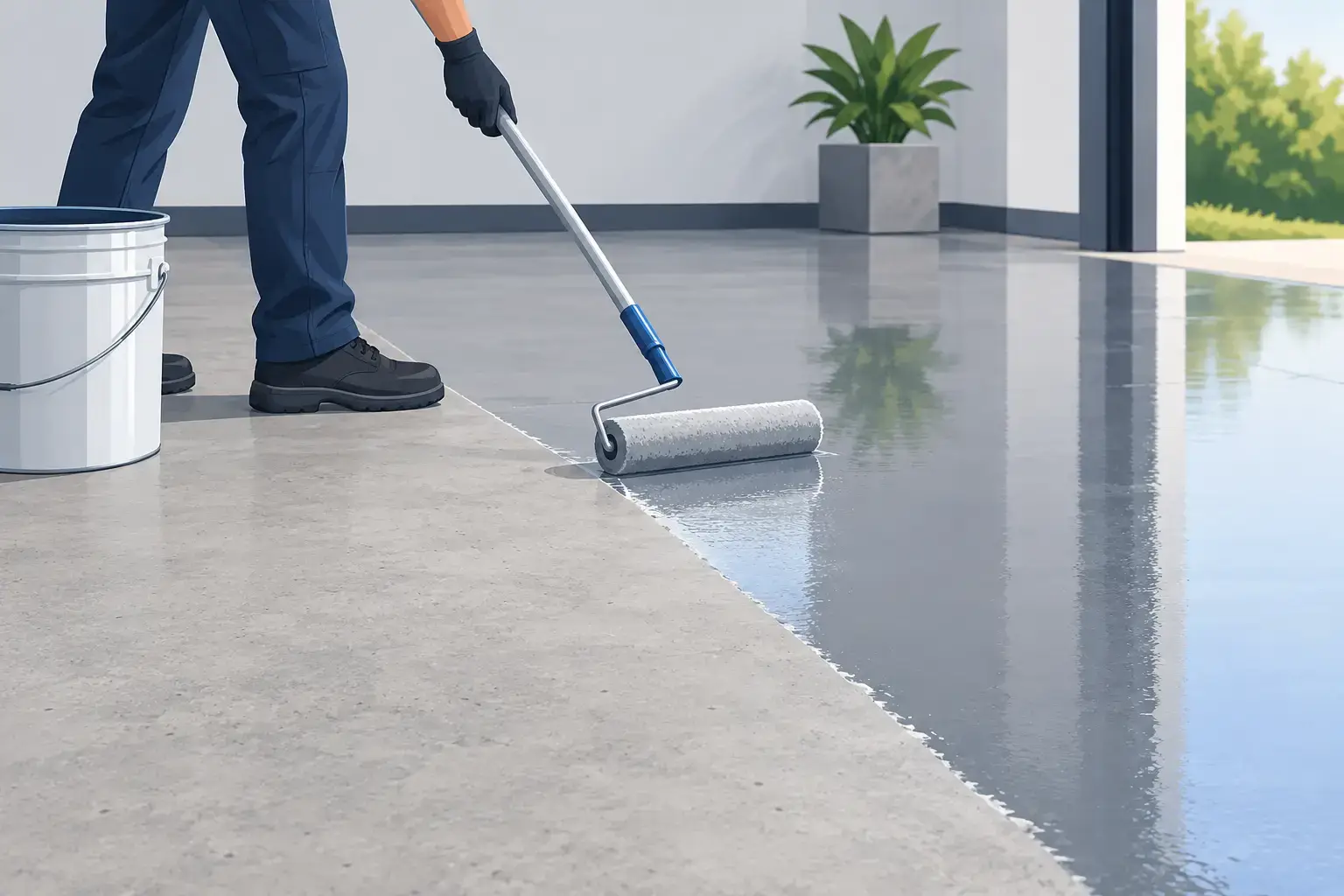
How to Seal Concrete Floors for Lasting Protection
November 21, 2026 1:44 am