
Concrete Staining vs Dyeing: Which Finish Fits?
A concrete floor can look completely different depending on how the color is introduced. One garage may have soft, mottled earth tones that make the slab feel like natural stone. Another may have rich charcoal, clean blue-gray, or a modern metallic effect under a polished finish. The decision between concrete staining vs dyeing determines not only the color, but also the preparation, protection system, maintenance needs, and final character of the floor.
For Orange County homes, retail spaces, offices, restaurants, and industrial facilities, there is no one-color-system answer. The right choice depends on the condition of the slab, how the space is used, the amount of sunlight it receives, and whether the owner wants natural variation or controlled color.
Concrete Staining vs Dyeing: The Core Difference
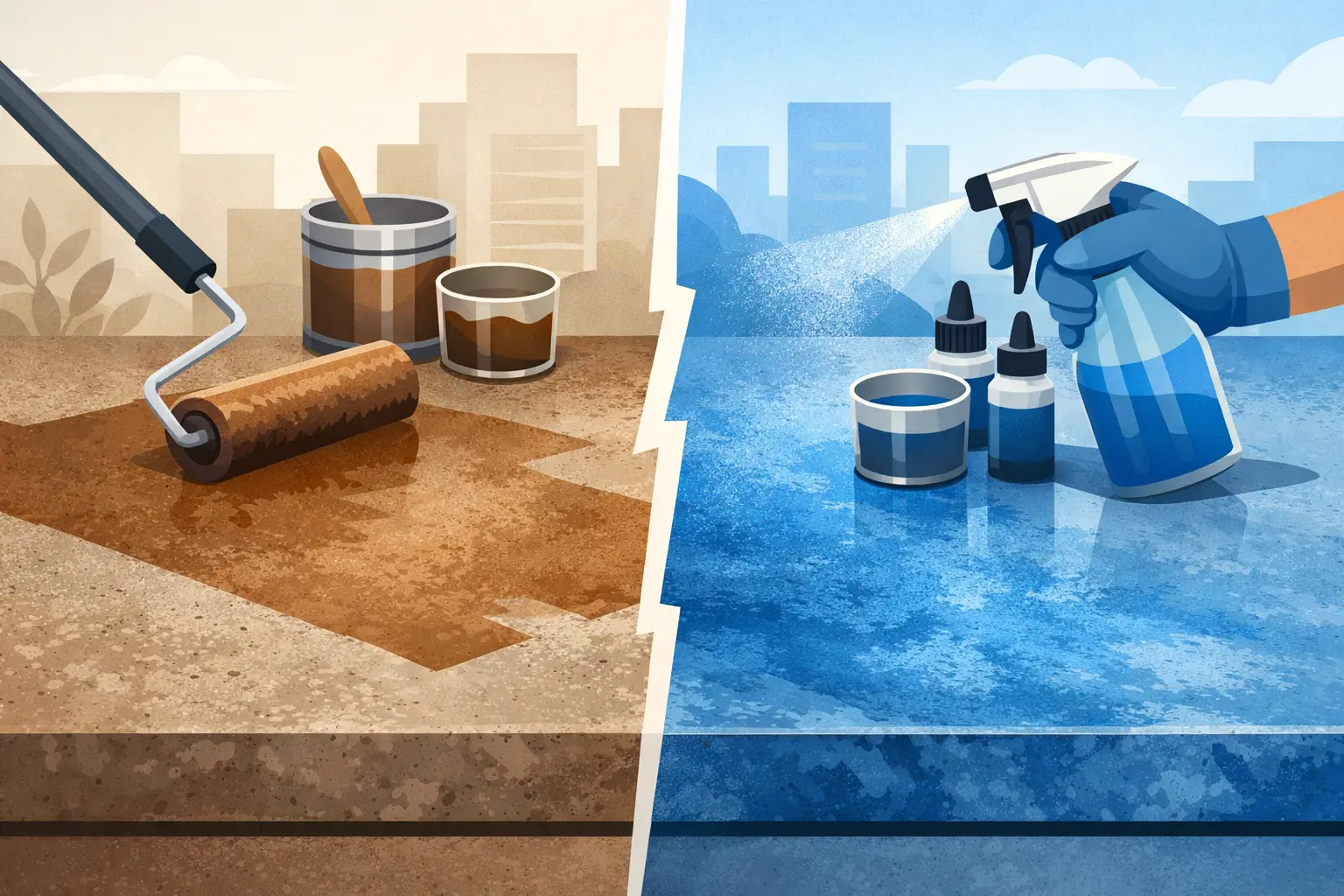
Concrete stain creates color through a chemical reaction or by depositing pigments into the surface. Acid stains react with minerals in the concrete, creating translucent, variegated tones. Water-based stains are typically non-reactive and offer a wider color range while still leaving a more natural, layered appearance than paint or epoxy.
Concrete dye is a very fine coloring agent designed to penetrate the surface quickly. Dyes are often used on properly prepared concrete before polishing or sealing. They produce more consistent, vivid color than traditional stains and are available in a broad range of shades, from subtle neutrals to bold blacks, reds, blues, and custom combinations.
Neither option is a thick coating. Stains and dyes color the concrete itself rather than building a protective film on top. That is why the protective finish matters. A sealer, guard, or polished surface is what helps defend the floor from wear, moisture, staining, and routine cleaning.
When Concrete Stain Makes Sense
Concrete stain is a strong option when the goal is character rather than perfectly even color. Acid stain is especially popular in residential interiors, patios, restaurants, showrooms, and decorative commercial spaces where a naturally varied finish is part of the appeal.
Because acid stain reacts with the individual slab, the result is never fully uniform. Existing trowel marks, changes in concrete density, patched areas, and mineral content can all influence the final appearance. On the right floor, that variation adds depth. On a slab with visible repairs or inconsistent previous work, it can make those differences more noticeable.
Water-based concrete stains offer more color flexibility than acid stains. They can be layered or blended to create decorative effects without relying as heavily on the concrete’s mineral makeup. Still, they remain more translucent than a coating, so the substrate continues to affect what you see.
Staining is often a practical fit for property owners who want warm, organic visual movement and understand that the floor will not look like a single, factory-made color. Samples are useful, but a sample area is not a guarantee that every square foot will react exactly the same way.
Stain performance and protection
A stained floor needs a compatible sealer or finish system. In a low-traffic residential room, that may mean a quality decorative sealer with regular maintenance. In a busy restaurant, retail store, garage, or commercial lobby, the floor may need a more durable protective topcoat selected for traffic, abrasion, and chemical exposure.
Stain can perform well for years, but the sealer takes the day-to-day punishment. If the protective layer becomes worn, scratched, or neglected, the floor can lose its sheen and become harder to clean. Periodic cleaning and timely reapplication of the appropriate maintenance product protect the investment.
When Concrete Dye Is the Better Choice
Concrete dye is usually the better choice when color control is a priority. It is commonly used in polished concrete systems because it penetrates the opened concrete surface and allows the natural aggregate, reflectivity, and texture of the slab to remain visible.
For offices, retail floors, modern residences, airplane hangars, and commercial spaces that want a clean architectural look, dyes offer a level of consistency that traditional acid stain generally cannot match. A black or charcoal dye can create a sharp contemporary floor. Brown, tan, and gray dyes can add warmth without making the floor appear heavily coated.
Dyes are also useful for decorative scoring, borders, logos, or multiple-color layouts. A contractor can create clear visual separation between work zones, display areas, walkways, or feature spaces without introducing the thickness or peeling risk associated with a painted surface.
The trade-off is that dye demands disciplined surface preparation. Residual adhesives, curing compounds, oil contamination, old sealers, and patch materials can block penetration or cause uneven color. Proper grinding and surface preparation are not optional steps. They are what make the color take evenly and help prevent expensive surprises after application.
Dye and polished concrete
If a polished concrete finish is the goal, dye is frequently the more natural fit. Color can be applied during the grinding and polishing process, then protected as the concrete is densified and refined. The result is a floor with a cleanable, low-maintenance finish that does not rely on a thick topical coating for its appearance.
This makes dyed polished concrete especially attractive for facilities that need durable floors with reduced maintenance. Warehouses, offices, retail stores, and high-traffic interiors benefit from a system that resists dusting, handles foot traffic well, and supports efficient cleaning routines.
Not every slab is a candidate for a high-gloss polished result. Heavy spalling, widespread patching, moisture concerns, or extensive contamination may call for resurfacing, an epoxy system, or another solution. A site inspection is the right time to determine whether the concrete can support the finish you want.
Durability Depends on the Full Floor System
Property owners sometimes ask whether stain or dye is more durable. The honest answer is that the color itself is only one part of the system. A floor’s long-term performance depends on the slab condition, mechanical preparation, traffic level, exposure to chemicals, moisture conditions, and protective finish.
For example, a dyed and polished office floor may hold up exceptionally well under daily foot traffic because the polished surface is dense and easy to maintain. A stained restaurant floor can also perform well, but it needs a protective system capable of handling spills, chair movement, cleaning chemicals, and repeated traffic.
For garages and industrial spaces, color should not be the only consideration. Hot tires, oil, solvents, dropped tools, forklifts, and chemical exposure may make epoxy, urethane cement, or another high-build system a better long-term solution. Stain and dye can be attractive, but they do not automatically provide the chemical resistance of a purpose-built coating system.
Outdoor exposure also changes the decision. Sunlight can affect certain dye colors over time, particularly in areas with strong UV exposure. Acid-stained concrete is often favored for exterior decorative surfaces because its color is chemically developed within the slab, though it still requires appropriate protection and maintenance. The exact product selection should match the location and expected exposure.
Preparation Is Where the Result Is Won or Lost
A beautiful color application starts with a realistic assessment of the existing concrete. New concrete, old concrete, repaired concrete, and previously coated concrete all behave differently. What is hiding below an old carpet adhesive or acrylic sealer may not become visible until grinding begins.
Before staining or dyeing, the surface may need cleaning, degreasing, grinding, crack repair, patching, moisture testing, and removal of old coatings. For stained concrete, preparation must be thorough without leaving residues that interfere with the stain. For dyed polished concrete, the grinding sequence needs to open the surface consistently while preserving the desired level of aggregate exposure.
This is also why quotes should be based on an in-person evaluation rather than a square-foot price alone. Two floors with the same dimensions can require very different levels of preparation. A clear slab in a residential living room is not the same project as an oil-affected warehouse floor or a garage with failed coating removal.
How to Choose for Your Space
Choose stain when you want a more natural, variegated appearance and are comfortable letting the concrete influence the final color. It works well for decorative spaces where visual depth matters more than uniformity.
Choose dye when you want stronger color control, a modern polished-concrete look, or cleaner transitions between colors and design areas. It is particularly effective for interior floors that will be ground and polished as part of the finishing process.
If the floor must withstand heavy vehicles, chemicals, frequent impacts, or aggressive cleaning, start by defining the performance requirements. The right answer may be a stained or dyed decorative floor, but it may also be a more protective resinous system designed around the way the facility actually operates.
Orange County Concrete Polishing evaluates the slab, intended use, schedule, and finish expectations before recommending a system. That process helps homeowners and facility managers avoid choosing color first and discovering later that the surface cannot support the desired finish.
The best concrete floor is not simply the one with the most dramatic color sample. It is the one that fits the condition of your slab, handles the traffic you expect, and still looks professional after years of real use. Request an in-person estimate to compare the finish options on your actual floor before making the final call.
Recent Post

Best Industrial Floor Systems for Demanding Sites
October 16, 2026 1:51 am
How to Prevent Concrete Delamination Early
October 14, 2026 1:51 am

Warehouse Floor Safety Guide for Busy Facilities
October 12, 2026 1:45 am