
Best Concrete Slab Repair Methods That Last
A cracked slab in a garage, warehouse, storefront, or office is rarely just a cosmetic issue. Cracks collect dirt and moisture, uneven sections create trip hazards, and worn concrete can undermine the performance of any coating or finished floor installed over it. The best concrete slab repair methods depend on what caused the damage, how the space is used, and what finish the floor needs to support afterward.
For Orange County property owners and facility managers, the right repair is not always the fastest patch. A dependable result starts with identifying whether the slab is dealing with surface wear, movement, moisture, poor drainage, or a deeper structural concern. From there, repairs can be matched to the traffic, chemical exposure, and appearance requirements of the space.
Start With the Cause, Not the Crack
Concrete is durable, but it moves, shrinks, and wears over time. Hairline cracks often develop as new concrete cures. Wider cracks may point to settlement, heavy wheel loads, expansion and contraction, or a weak subbase. A slab that is sinking or heaving has a different problem than one with a sound structure and a worn top layer.
Before selecting a repair method, look at the crack pattern, elevation changes, edges, and surrounding conditions. Is one side of the crack higher than the other? Does water sit on the slab after washing or rain? Are joints breaking apart under forklift traffic? Has a coating begun to peel? These details determine whether the work calls for crack repair, grinding, leveling, resurfacing, or a combination of services.
A cosmetic patch over an active movement issue may look acceptable for a short period, then reopen. Likewise, installing epoxy over improperly prepared concrete can trap problems beneath a finished surface. Proper surface preparation is what separates a repair that lasts from one that simply hides damage.
Best Concrete Slab Repair Methods for Common Problems
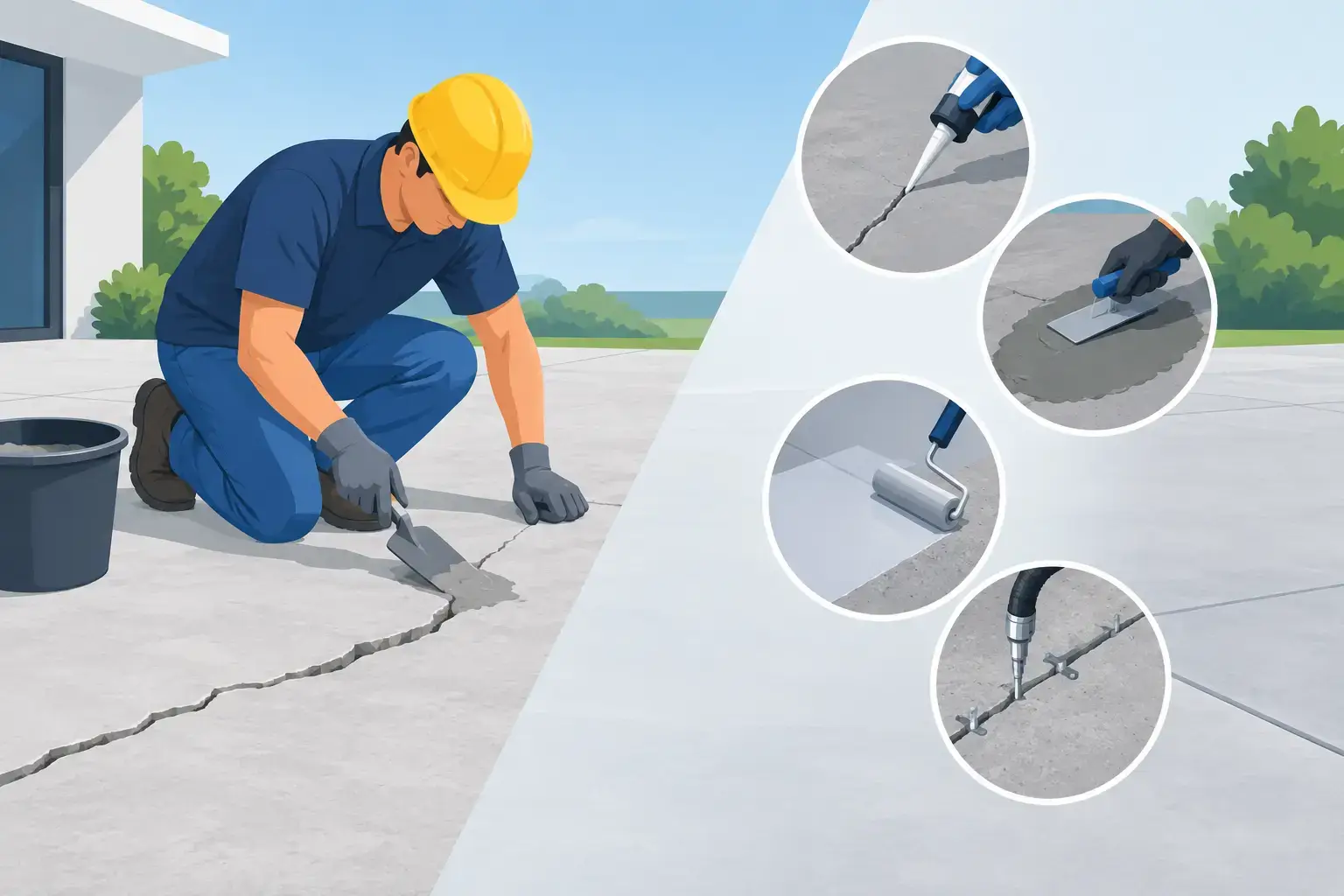
Crack routing and filling
For stable cracks that are not moving vertically, routing and filling is often the practical solution. The crack is opened and cleaned so a repair material can bond to solid concrete rather than loose debris. Depending on the application, contractors may use a rigid polyurea, epoxy filler, or flexible joint material.
This method works well for garage floors, retail spaces, office interiors, and warehouses where a smooth finished floor is needed. After filling, the repaired area can be ground flush to reduce visible lines and create a uniform surface for polishing, staining, or coating.
The trade-off is that no filler can stop structural movement. If the crack is active, if the slab is settling, or if moisture is driving the failure, the source of the problem needs attention first. A filled crack may still be visible after a decorative finish, particularly with polished concrete or translucent stains. That is normal and should be discussed before work begins.
Joint repair for damaged edges
Control joints are designed to give concrete a place to crack in a controlled way. In industrial buildings and parking areas, joint edges can break down from forklifts, pallet jacks, vehicle tires, and repetitive impact. This is commonly called spalling.
Joint repair removes weak concrete at the edges and rebuilds the section with a heavy-duty repair material. In high-traffic facilities, the joint may also need a semi-rigid filler that supports the edges while allowing the joint to perform as intended. This is especially valuable in warehouses, distribution areas, airplane hangars, and commercial garages where damaged joints can quickly worsen under rolling loads.
A proper joint repair improves safety, reduces equipment vibration, and protects the slab from continued edge failure. It should be scheduled around operations when possible, since preparation and cure times can affect access to the area.
Concrete grinding for high spots and surface damage
Grinding is one of the most effective methods when a slab has high edges, coating residue, minor surface irregularities, or localized trip hazards. Professional diamond grinding removes weak material and brings elevated areas closer to a consistent plane.
Grinding is not a fix for major settlement, but it is often the right answer for small height differences at cracks, uneven transitions, and rough surfaces that need preparation before an epoxy system, polished concrete finish, or resurfacing overlay. It also opens the concrete pores, allowing repair materials and coatings to bond more reliably.
For commercial spaces, grinding can often be completed in sections to limit downtime. Dust-controlled equipment is particularly important in occupied offices, retail locations, and facilities where cleanliness affects daily operations.
Self-leveling underlayment for low areas
When a floor is generally sound but has shallow depressions, low spots, or poor drainage, a cement-based self-leveling underlayment may be the best choice. After mechanical preparation, the material flows into low areas and creates a flatter surface for flooring systems or a finished coating.
This option is useful when water pools in a garage, when a retail floor needs a smoother installation surface, or when an existing slab has gradual dips that make the space look unfinished. It is not intended to correct serious structural displacement. If a slab is actively sinking, the underlying cause should be evaluated before applying a leveling product.
The final finish matters here. Some underlayments are designed to remain beneath a coating or floor covering, while others can support specific exposed-floor systems. The product and preparation method must match the environment, especially where moisture, vehicle traffic, or chemicals are present.
Concrete resurfacing for widespread wear
Resurfacing is a strong option when the slab has broad cosmetic damage but remains structurally sound. A properly installed overlay can cover widespread pitting, light spalling, old coating scars, and surface discoloration while creating a cleaner, more uniform appearance.
This method is common for garage floors, patios, commercial entries, showrooms, and workspaces that need an upgraded look without full slab replacement. Resurfacing can also serve as the base for decorative finishes, stains, or protective coatings.
The condition of the existing concrete is critical. Resurfacing will not perform well over loose, contaminated, moisture-damaged, or severely cracked concrete. The slab must be mechanically prepared, repaired where needed, and tested for conditions that could interfere with adhesion. Skipping that work is where many failed overlays begin.
Slab lifting for settlement
If part of the slab has dropped due to soil movement or voids beneath the concrete, lifting may be the better repair. Methods such as polyurethane foam injection or mudjacking can raise settled sections and help restore drainage and walking safety without removing the entire slab.
This is often considered for sidewalks, drive lanes, patios, and certain commercial slabs. The right method depends on access, slab thickness, soil conditions, load requirements, and the amount of movement. Once the slab is stable, crack repair, grinding, or a new finish can address the visible damage.
Where significant structural cracking, foundation movement, or repeated settlement is present, an engineering assessment may be necessary. No surface repair should be presented as a substitute for correcting a serious structural issue.
Choosing a Repair for Your Finished Floor
The repair plan should support the floor you want when the work is complete. A warehouse that will receive an epoxy system needs a clean, profiled, level substrate with repaired joints and moisture-conscious preparation. A polished concrete floor may require careful crack filling and progressive grinding, while still showing some character from existing repairs. A residential garage may benefit from crack repair, localized leveling, and a chemical-resistant coating that makes cleaning easier.
Appearance is only one part of the decision. Consider traffic, impact, thermal changes, exposure to oil or chemicals, cleaning practices, and the hours the facility can be taken out of service. A restaurant or retail location may need work completed after hours. An industrial facility may prioritize joint durability and fast return to service over a perfectly uniform appearance.
When Replacement Is the Better Investment
Repair is not always the responsible recommendation. Full replacement may make more sense when concrete is severely deteriorated, the slab has extensive movement, reinforcing steel is compromised, or repeated repairs have failed. Replacement costs more upfront and creates more disruption, but it can prevent ongoing maintenance costs when the existing slab no longer provides a reliable base.
A qualified flooring contractor should explain the limits of repair clearly. The goal is not to sell the largest scope. It is to recommend a solution that performs in the actual environment and gives the property owner a realistic expectation of appearance and service life.
For a slab that needs repair before polishing, epoxy, leveling, or resurfacing, a site visit is the fastest way to define the right scope. Orange County Concrete Polishing can assess the condition of the concrete, identify the preparation required, and provide a tailored proposal around your schedule, traffic demands, and finish goals. A well-repaired slab gives every finished floor a stronger start.
Recent Post
Penetrating vs. Topical Concrete Sealers: Which Is Right for Your Floor?
November 22, 2026 8:11 pm
How to Seal Concrete Floors for Lasting Protection
November 21, 2026 1:44 am
Concrete Sealing: Benefits, Applications, and When Your Floor Needs It
November 19, 2026 7:02 pm