

Concrete Floor Joint Repair That Holds Up
Forklift tires clipping a broken slab edge, carts rattling across open joints, and chipped concrete collecting dirt are not small cosmetic issues. They are early signs that the floor is losing its ability to handle daily traffic. Professional concrete floor joint repair restores those vulnerable areas before damage spreads into wider cracks, failed coatings, trip hazards, and costly disruptions.
For Orange County warehouses, garages, retail spaces, commercial kitchens, and industrial facilities, joint repair is often the right first step before polishing, epoxy installation, resurfacing, or ongoing floor maintenance. The best repair is not simply the one that fills a gap. It is the one matched to the joint type, traffic load, movement in the slab, and finish planned for the floor.
Why Concrete Floor Joints Fail
Concrete joints are intentional breaks in a slab. Some are cut to control where concrete shrinks and cracks as it cures. Others separate sections of slab that may move independently. These joints do important work, but their edges are exposed to repeated impact.
In busy facilities, hard-wheeled carts, pallet jacks, forklifts, delivery equipment, and vehicle traffic strike joint edges thousands of times. Over time, the concrete can chip, spall, or break away. Once an edge is damaged, wheels hit the joint harder, which accelerates the failure.
Moisture, cleaning chemicals, temperature changes, poor drainage, weak concrete at the joint, and previous patch repairs can also contribute. In a residential garage, the damage may come from vehicle tires, dropped tools, and moisture entering the joint. In a warehouse, the issue is more often concentrated wheel loads and constant equipment movement.
The visible opening is only part of the problem. Loose concrete and deteriorated joint filler allow dirt, water, and contaminants into the joint. That makes cleaning harder and can interfere with a future coating or polished concrete finish.
Signs Your Floor Needs Joint Repair
A floor does not need to be severely broken before it needs attention. Facility managers and property owners should look for joint edges that are chipped, crumbling, or lower than the surrounding slab. Open joints filled with dust and debris, loose old filler, and cracks branching out from the joint are also clear warning signs.
Another common symptom is equipment noise. If forklifts, pallet jacks, shopping carts, or vehicles produce a sharp impact each time they cross the same joint, the slab edge may already be failing. That impact creates vibration, wears down wheels, and increases maintenance on both the floor and the equipment using it.
For commercial properties, damaged joints can create liability concerns. Uneven transitions and loose material can become trip hazards for employees, customers, and visitors. For homeowners, deteriorated garage joints can make an otherwise clean epoxy or polished floor look unfinished.
How Professional Concrete Floor Joint Repair Works
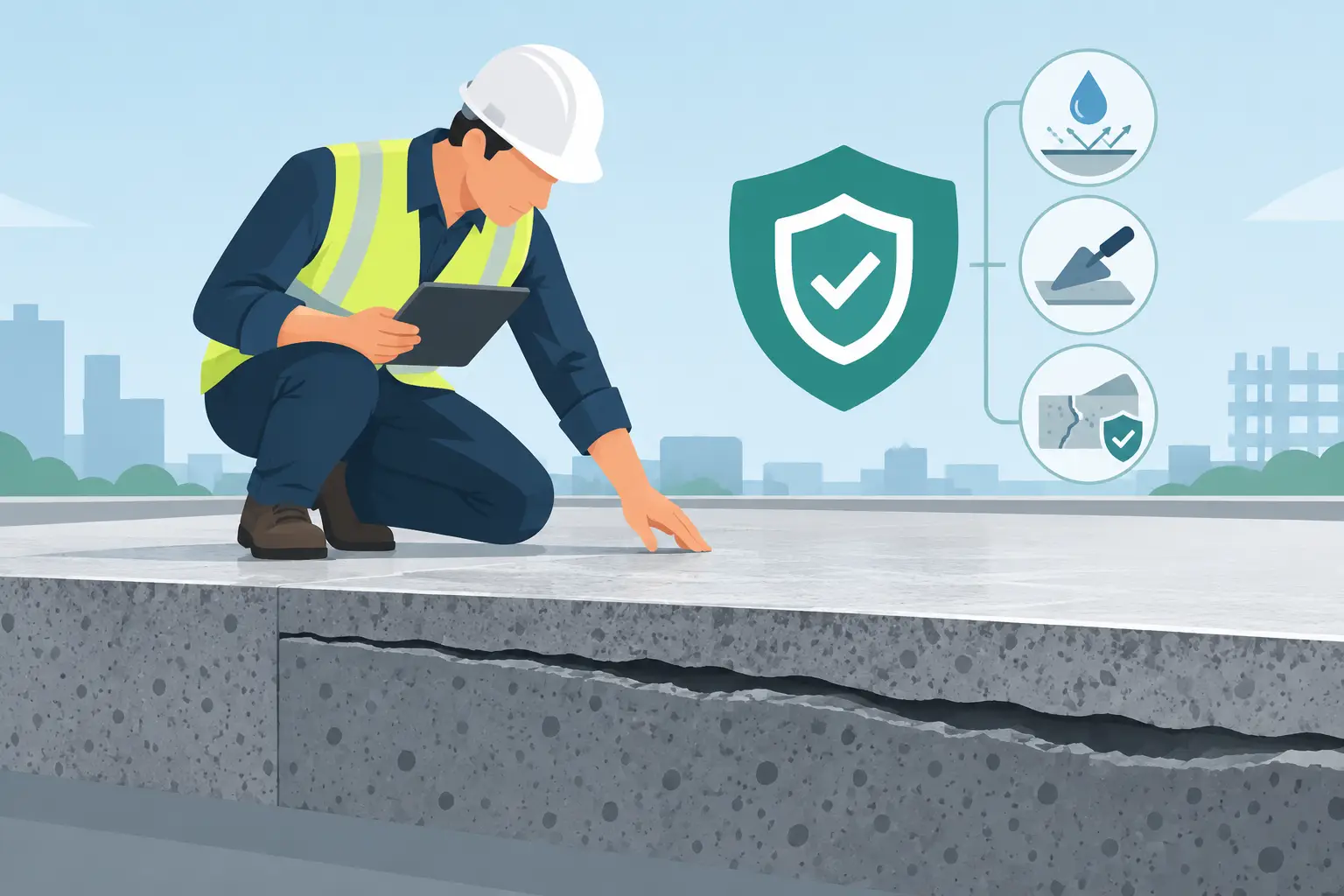
Proper concrete floor joint repair starts with determining what type of joint is present and why it failed. A control joint needs to remain capable of movement. Filling it with a rigid patch material can cause the repair to crack or pull away. A construction joint with broken edges may need a different repair approach, particularly when heavy rolling traffic crosses it every day.
The damaged material is first removed. This may involve saw cutting, grinding, routing, or chipping out weak concrete until sound material is reached. The area is then thoroughly cleaned so the repair product can bond properly. Dust, oil, old filler, and loose particles all reduce the chance of a durable repair.
Next, the joint edges are rebuilt with a traffic-rated repair material selected for the environment. In many commercial and industrial applications, a semi-rigid joint filler is used because it supports slab edges while accommodating the limited movement expected in interior concrete. For wider spalls or deeper edge damage, a compatible repair mortar or polymer-based material may be needed before the joint is refilled.
After curing, the repaired area is ground flush with the surrounding concrete. This step matters. A joint that sits too high can create a bump, while a low repair can collect water and debris. A smooth transition helps equipment roll over the joint with less impact and gives the floor a cleaner finished appearance.
The Repair Material Must Match the Use
There is no universal joint filler for every slab. A light-duty residential garage does not have the same needs as a distribution warehouse with loaded forklifts. Some materials prioritize flexibility, while others are designed to provide firm support under rolling traffic.
The planned floor system also affects the recommendation. If the concrete will receive an epoxy coating, the joint detail must be handled differently than a floor being polished or stained. Coatings can bridge minor imperfections, but active joints should not be treated as if they are permanently motionless. When the slab moves, a rigid coating over an active joint can crack.
That is why an in-person evaluation is worth the time. The repair needs to account for slab condition, moisture exposure, traffic patterns, chemical exposure, and the final look and performance requirements.
Repair Before Polishing, Epoxy, or Resurfacing
Joint repairs are most successful when they are part of the surface preparation plan, not an afterthought. Installing a decorative coating over crumbling joints may make the floor look better briefly, but the underlying failure can reappear through the finish.
Before concrete polishing, repairs help create a more uniform surface and reduce visible defects. Depending on the desired level of aggregate exposure and sheen, some repaired joints may remain visible. That is not necessarily a defect. It is part of working with an existing slab, and the right repair approach can make those areas clean, sound, and consistent with the finished floor.
Before epoxy or other resinous systems, joint repair removes loose material that could compromise adhesion. In garages, retail spaces, and work areas, a properly prepared substrate gives the coating a better chance to withstand vehicle traffic, cleaning, spills, and daily wear.
Before resurfacing or leveling, the contractor must determine whether the joint is active. Covering an active joint without honoring its movement can lead to reflective cracking in the new surface. In some cases, the best result is to repair the joint and carry it through the new finish with a planned joint detail.
When a Simple Patch Is Not Enough
A hardware-store patch may appear to solve a small chip, but it often fails where rolling traffic repeatedly hits the edge. The issue is not just adhesion. It is impact, load transfer, movement, and the condition of the concrete beneath the surface.
A simple patch may be appropriate for a minor cosmetic defect in a low-traffic area. It is usually not the best long-term answer for forklift lanes, loading areas, parking structures, commercial entries, or garage joints exposed to vehicle use. Those areas need a repair system that is prepared, placed, and finished for the actual service conditions.
The timing matters, too. Repairing a few isolated spalls early is far less disruptive than waiting until multiple joints have broken down across an operating facility. Off-hours scheduling can help businesses address repairs while reducing interference with customers, employees, and normal operations.
Keep Repaired Joints Performing Longer
Once joints are repaired, routine floor care helps protect the investment. Keep joints clear of abrasive debris, especially in areas with heavy wheeled traffic. Address water intrusion and drainage problems where possible, and avoid allowing aggressive chemicals to sit on the floor longer than necessary.
Traffic patterns should also be considered. If loaded equipment repeatedly turns or stops at the same joint, that location will wear faster than the rest of the floor. Small operational adjustments, such as changing travel paths or reducing sharp turns, can reduce concentrated stress.
A periodic inspection is practical for any commercial or industrial floor. Look for separation at the repair, new edge chipping, or signs of movement. Catching these conditions early allows targeted service instead of a larger floor restoration project later.
Get the Repair Scoped for Your Floor
Concrete joints are one of the most heavily used parts of a slab, even though they are easy to overlook. The right repair can reduce equipment impact, improve cleanability, support a new floor finish, and help the concrete stand up to the work being done on it.
Orange County Concrete Polishing can evaluate damaged joints as part of a larger polishing, epoxy, grinding, resurfacing, or surface preparation project. A site-specific assessment helps determine whether the floor needs localized joint work, broader slab repair, or a complete finish system built for the traffic and conditions your property faces. Get a free in-person estimate and address the damaged areas before they become the next costly interruption.
Recent Post

Best Industrial Floor Systems for Demanding Sites
October 16, 2026 1:51 am
How to Prevent Concrete Delamination Early
October 14, 2026 1:51 am

Warehouse Floor Safety Guide for Busy Facilities
October 12, 2026 1:45 am