
Concrete Flooring Design Trends for Orange County
A garage floor does not have to look like a dusty slab that absorbs oil stains, and a retail floor does not need constant replacement to stay presentable. The strongest concrete flooring design trends are practical first: cleanable surfaces, intentional color, better light reflection, and finishes selected for the traffic they will actually handle.
For Orange County homeowners, builders, and facility managers, the right concrete finish can make a space look sharper while reducing maintenance demands. The key is not chasing a photo-worthy look that fails under forklifts, hot tires, spills, or heavy foot traffic. It is matching the finish system to the environment, preparation needs, and expected use.
Polished Concrete Remains a Leading Commercial Choice
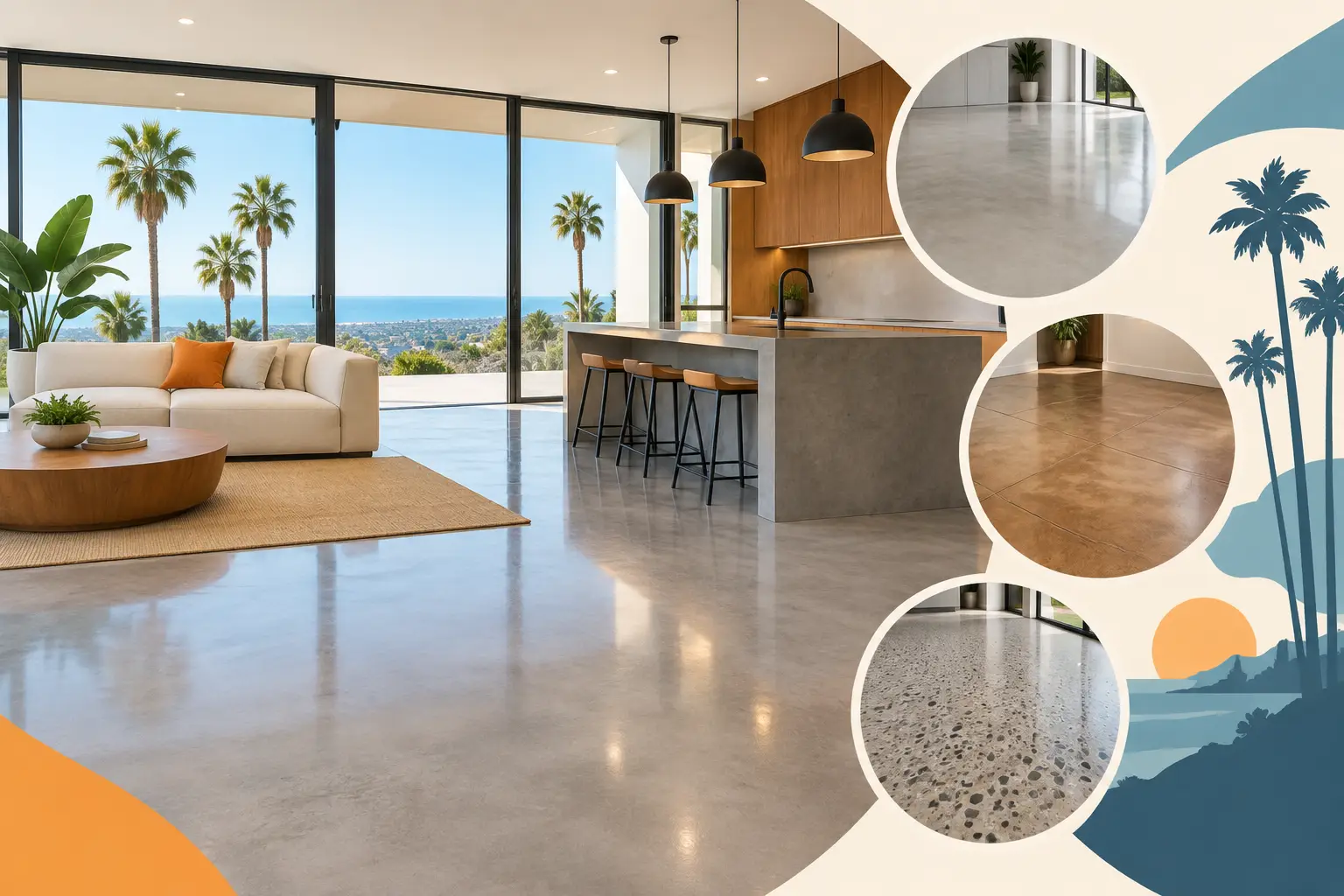
Polished concrete continues to be one of the most requested finishes for offices, showrooms, retail spaces, restaurants, and modern residential interiors. Rather than covering the slab with a separate material, mechanical grinding and polishing densify and refine the concrete surface itself. The finished floor has a clean, contemporary appearance with less dusting and easier day-to-day care.
The design range is wider than many property owners expect. A low-sheen matte polish works well in spaces that need an understated, industrial look. Higher-gloss finishes reflect more available light, which can brighten a showroom, office, or warehouse and reduce the need for additional lighting in some areas. Aggregate exposure also changes the character of the floor. Light grinding preserves a more uniform, cement-based look, while deeper grinding reveals sand or larger aggregate for added visual texture.
Polished concrete is not automatically the best choice for every slab. Floors with extensive cracking, soft concrete, old coatings, or significant moisture concerns need to be evaluated before polishing begins. Repairs can blend in, but they will not always disappear. In many projects, that natural variation becomes part of the finished look. In others, a resurfacing or coating system is the better design decision.
Warm Neutrals and Controlled Color Are Replacing Plain Gray
Raw gray concrete is still a valid option, especially in industrial spaces, but current flooring design is moving toward warmer, more intentional tones. Soft charcoal, sandstone, taupe, espresso, and muted earth colors are common choices because they complement wood, metal, glass, and modern cabinetry without making a floor feel overly decorative.
Concrete stains and dyes provide a way to add color while retaining the character of the slab. Dyes are often used with polished concrete to create more consistent color movement, while stains can create variegation and a more organic appearance. Neither product should be treated like paint. Existing concrete, patchwork, porosity, and previous contaminants all affect the final result.
That unpredictability is not necessarily a drawback. A stained or dyed concrete floor can have depth that manufactured flooring cannot duplicate. But it requires clear expectations. Sample areas and an in-person review are the right way to confirm whether the slab can deliver the color effect a homeowner, architect, or business owner has in mind.
Black, White, and Natural Aggregate Create Modern Contrast
A popular approach in high-visibility commercial and residential spaces is contrast through simple materials. Darker concrete floors set off white walls and light fixtures. A natural aggregate finish can provide visual interest without adding patterns that compete with displays, furniture, or equipment.
For a modern home, this same idea works in garages, kitchens, living areas, and covered patios where a continuous floor surface makes the space feel more open. The finish should still account for safety. A glossy interior floor may be appropriate, while a wet exterior or pool-adjacent surface usually calls for a different texture and slip-resistance strategy.
Decorative Epoxy Systems Are Becoming More Refined
Epoxy flooring has moved well beyond the basic solid-gray garage coating. Today, homeowners are choosing full-flake broadcast systems with coordinated base colors and flakes that resemble terrazzo or natural stone. These systems help disguise dust, tire marks, and small debris while delivering a finished appearance that holds up better than bare concrete.
Commercial and industrial epoxy systems are also being specified with design in mind. Solid colors can define production zones, walkways, storage areas, and safety boundaries. Quartz and flake systems offer more texture and visual variation in kitchens, service corridors, restrooms, and customer-facing back-of-house areas. For warehouses and facilities, the visual design often has an operational purpose: clearer traffic flow, easier housekeeping, and more visible safety markings.
The trade-off is that coatings depend heavily on surface preparation. Concrete must be mechanically profiled, repaired where needed, and checked for moisture conditions before a coating is installed. A coating can be attractive on day one, but poor preparation can lead to peeling, bubbling, or premature wear. The system should also be selected for the exposure it will face, whether that is vehicle traffic, cleaning chemicals, food oils, battery acid, or UV light.
Low-Maintenance Finishes Are Driving Concrete Flooring Design Trends
The most useful trend is not a color or sheen level. It is the demand for flooring that reduces ongoing work. Property managers do not want a floor that requires frequent stripping, waxing, or replacement. Homeowners want a garage that can be rinsed or cleaned without worrying about permanent stains.
Polished concrete, properly specified epoxy, and quality resurfacing systems can all support lower-maintenance operations. The best option depends on the application. Polished concrete performs well in many dry interior settings and handles routine cleaning efficiently. Epoxy or other resinous systems provide stronger chemical resistance for many garages, industrial work areas, and service environments. Resurfacing can restore worn concrete and create a fresh surface where the existing slab is too damaged or uneven to serve as the final finish.
Low maintenance does not mean no maintenance. Entry mats, routine sweeping, prompt spill cleanup, and appropriate cleaning products extend the life of any concrete floor. Abrasive cleaners and neglected spills can dull finishes or shorten the service life of coating systems.
Texture and Traction Are Part of Good Design
A floor can look excellent and still be wrong for the space if it becomes slippery when wet. This is especially relevant for commercial kitchens, auto service areas, exterior walkways, parking structures, pool-adjacent surfaces, and any workplace with frequent washdowns.
Texture can be built into a coating system with broadcast aggregates, quartz, or traction additives. A concrete surface can also be ground, resurfaced, or finished to create the right profile for the use case. More texture generally improves traction, but it can make cleaning more involved. That is why there is no universal “best” floor finish. A showroom, an airplane hangar, and a residential garage have different performance requirements.
Facility managers should also consider how floor texture affects carts, rolling equipment, and cleaning methods. The goal is enough traction for real conditions without creating an unnecessarily rough surface that traps dirt or interferes with operations.
Seamless Floor Design Helps Spaces Work Harder
Another strong direction is the use of continuous flooring across larger areas. A seamless concrete finish can visually connect a lobby to an adjacent workspace, or make a garage feel cleaner and more finished from wall to wall. Fewer joints and transitions can also simplify cleaning compared with tile or other segmented flooring.
That does not mean joints can simply be ignored. Control joints and cracks are part of concrete construction, and they need to be addressed honestly during project planning. Depending on the floor system, joints may remain visible, be filled, or be incorporated into the layout. Trying to hide every existing condition can create unrealistic expectations and unnecessary cost.
For commercial projects, seamless design also supports branding without overdoing it. A business may use color blocks, clean border lines, or designated work zones rather than a large logo across the floor. The result looks organized, supports operations, and remains easier to update if the space changes use later.
Start With the Slab and the Job Requirements
The best-looking concrete floor starts with a detailed assessment, not a color chart. Slab condition, moisture, cracks, slope, previous coatings, traffic level, chemical exposure, and downtime all affect the right recommendation. In an active business, scheduling is just as important as product selection. Work completed during off-hours can reduce disruption while keeping a project on track.
Orange County Concrete Polishing approaches flooring as a working surface, not just a finish. Whether the project calls for polishing, grinding, resurfacing, staining, leveling, or a high-performance epoxy system, the plan should be built around how the space will be used after installation.
If you are considering a new garage floor, updating a retail space, or preparing a warehouse for heavier use, get an in-person estimate before choosing a system. A clear review of the concrete and the operating conditions will point you toward a finish that looks right, performs reliably, and stays easier to maintain long after the project is complete.
Recent Post
Epoxy Curing Time for Garage and Shop Floors
November 5, 2026 1:51 am

Distribution Center Resurfacing That Holds Up
November 3, 2026 1:51 am
Can Polished Concrete Reduce Dust in Your Facility?
November 1, 2026 1:44 am