
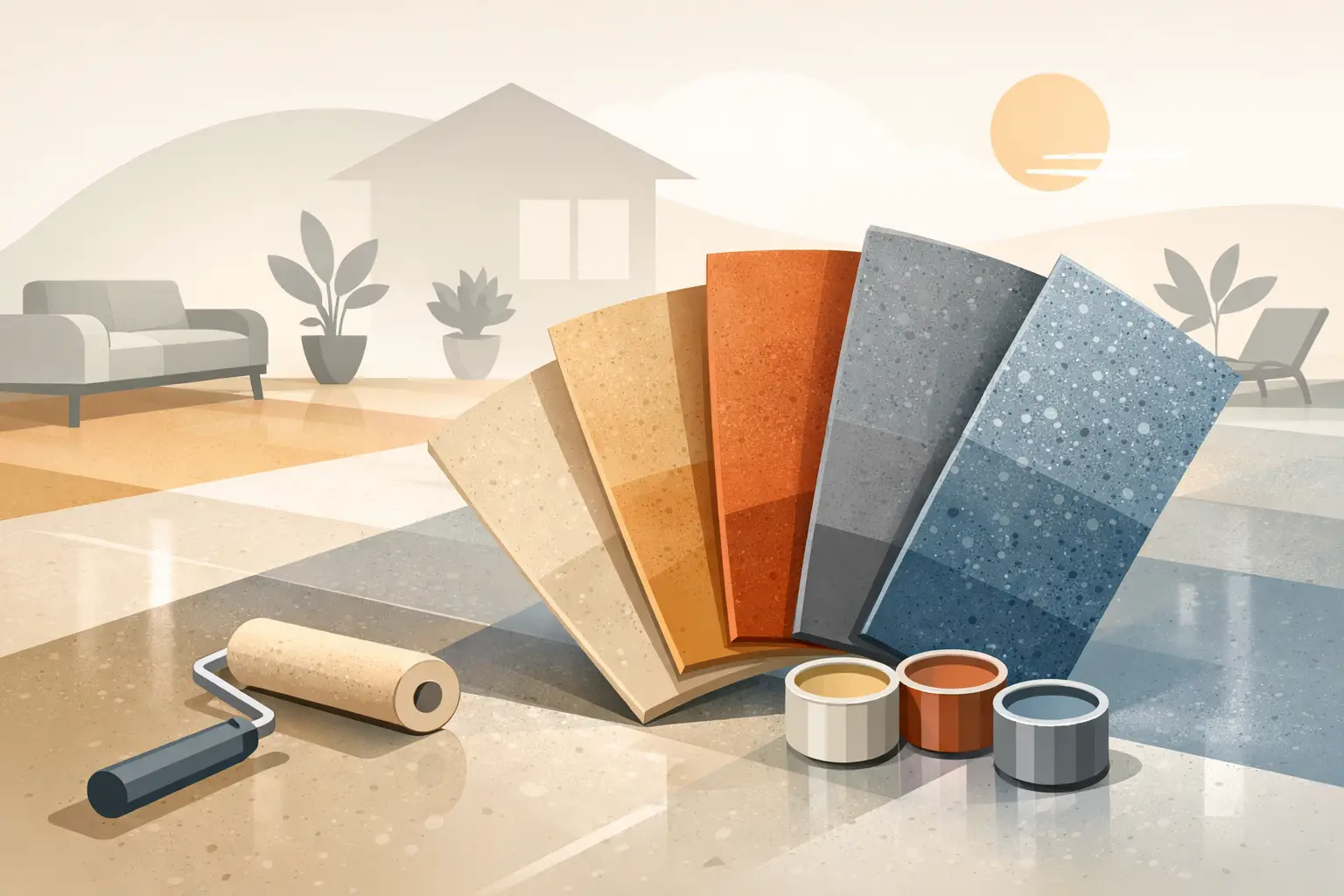
Decorative Concrete Floor Colors That Last
A garage floor can look sharp on installation day and still be the wrong color choice six months later. Tire marks, dust, sunlight, cleaning chemicals, and daily traffic all change how a surface reads over time. The best decorative concrete floor colors are selected for the real demands of the room, not just a small sample card.
For Orange County homes and businesses, color should support performance. A bright retail floor may need to make a space feel open while hiding routine scuffs. A warehouse may need high visibility striping and a neutral base that does not show every forklift track. A residential garage may call for a finish that complements cabinetry, vehicles, and the exterior of the home while standing up to hot tires and spills.
Start With How the Floor Will Be Used
Before choosing gray, tan, blue, or a custom blend, define what happens on the floor every day. Concrete color is not separate from the coating, stain, dye, or polishing system used to create it. Each finish produces a different look, wears differently, and has its own preparation requirements.
A polished concrete floor uses the existing slab as the visual foundation. Its color often comes from the natural concrete, a penetrating dye, or a stain applied before final polishing. This is a strong fit for offices, showrooms, restaurants, lobbies, and modern residential interiors where low maintenance and a clean, refined appearance matter.
Epoxy and similar resinous systems give property owners the broadest range of color control. Solid-color epoxy can create a uniform, easy-to-clean floor for garages, warehouses, utility areas, and commercial back rooms. Decorative chip systems add texture, visual depth, and better concealment of dirt or minor wear. Metallic epoxy creates movement and dramatic variation, but it is usually best suited to interiors where the visual impact is more important than a perfectly uniform appearance.
Concrete stains and dyes work well when the goal is to enhance the concrete rather than cover it. They can create warm, variegated tones in patios, retail spaces, homes, and decorative commercial interiors. Since the slab itself affects the final result, staining requires realistic expectations. Existing patches, repairs, cracking, and differences in concrete porosity may remain visible.
Decorative Concrete Floor Colors by Application
The right color for a floor is often dictated by the environment. A finish that looks excellent in a climate-controlled showroom may not be practical in a busy service bay or sun-exposed patio.
Garages and Residential Spaces
Medium gray remains a dependable garage floor color because it works with nearly every home style and does a better job of hiding dust than black or bright white. Gray can be clean and contemporary without making the space feel sterile. For added visual interest, a gray base with black, white, and charcoal decorative chips gives the floor dimension while disguising tracked-in debris and light tire marks.
Tan, beige, and warm taupe work particularly well in homes with earth-tone exteriors, stone finishes, or warm wood cabinetry. These colors can make a garage or interior concrete floor feel more connected to the rest of the property. They may show dark automotive drips more readily than medium gray, so a protective topcoat and routine cleanup are still necessary.
White and very light gray make spaces appear larger, but they require more regular cleaning. They are better suited to polished interior floors, retail settings, and specialty spaces than high-use garages. Dark charcoal and black deliver a bold look, although they can reveal dust, scratches, and hard-water residue. They also absorb more heat in areas with heavy direct sunlight.
Retail, Office, and Hospitality Floors
For customer-facing spaces, color should reinforce the brand and make day-to-day maintenance manageable. Warm grays, soft concrete tones, and natural brown stains are common choices because they create a professional background without competing with merchandise, furniture, or signage.
Polished concrete with a subtle dye is a practical option for offices and retail environments. The finish reflects available light, reduces the need for additional flooring layers, and gives the space a finished look that holds up to foot traffic. A matte or satin polish may be a better choice than a high-gloss finish where glare is a concern.
Restaurants and hospitality spaces often benefit from mottled stains, decorative chips, or blended tones that hide small spills and scuffs between cleanings. The finish still needs to be selected for slip resistance, especially near entryways, beverage stations, kitchens, and restrooms. Color alone does not make a floor safe. The final texture, topcoat, and maintenance plan all matter.
Warehouses, Industrial Areas, and Hangars
Industrial floors should prioritize visibility, durability, chemical resistance, and maintenance efficiency. Medium gray is common for a reason: it handles a high volume of traffic visually and provides a neutral surface for equipment, racks, and safety markings. Light gray can improve brightness in facilities with limited natural light, while darker tones may be useful in localized work zones where staining is expected.
Color can also support operations. Safety yellow, red, blue, or white markings can define pedestrian routes, staging areas, machinery zones, loading lanes, and storage boundaries. These colors should be installed as part of a properly prepared coating system, not treated as a cosmetic afterthought. In active facilities, the coating thickness, cure time, and scheduling plan are as important as the color selection.
What Changes the Final Color
A showroom sample is useful, but it is not a promise of an identical final floor. Concrete is a natural, variable substrate. Age, moisture, previous coatings, patching compounds, surface contamination, and slab density can all affect stains, dyes, and transparent finishes.
Acid stains create color through a chemical reaction with the concrete, which is why their results are naturally varied. That variation is part of the appeal, but it is not the best option when a client needs exact color matching. Water-based stains and dyes offer more predictable color options, though substrate preparation remains critical.
With epoxy or polyurethane systems, color consistency is easier to control because the coating covers the slab. However, proper grinding and surface preparation determine whether that finish bonds correctly and stays looking good. Applying a decorative coating over weak concrete, trapped moisture, or failed old paint can lead to peeling regardless of how attractive the color is.
Lighting changes color more than many property owners expect. Natural daylight, LED fixtures, warm interior lighting, and overhead warehouse lighting can make the same floor look different throughout the day. Reviewing physical samples in the actual space is the most reliable way to avoid surprises.
Choosing Color Without Creating a Maintenance Problem
There is no single low-maintenance color. The goal is to choose a color pattern that hides the type of dirt and wear your floor will actually experience. Medium tones are forgiving for general dust and foot traffic. Decorative flake blends are especially practical in garages and service areas because the pattern breaks up the appearance of small marks. Variegated stains can conceal natural slab variation but will not hide major oil spills or damage.
Solid, high-contrast colors take more upkeep. A white floor highlights dark debris. A black floor often shows light dust. Bright colors can fade or look dated if they are chosen only for impact rather than how they fit the building. That does not mean avoiding bold colors. It means using them strategically, such as for borders, logos, designated work zones, or accent areas.
For exterior or sun-exposed concrete, UV stability should be part of the conversation. Some coatings can amber, fade, or lose their original appearance when exposed to prolonged sunlight. A contractor should recommend a system designed for the exposure level, rather than applying the same finish used in an enclosed garage.
Match the Finish to the Color Goal
If you want a natural, architectural surface with subtle variation, polished concrete, stains, and dyes are usually the right direction. If you want a highly controlled color with better resistance to automotive fluids, chemicals, and abrasion, an epoxy or polyaspartic system may be the better fit. If you need a decorative floor that also hides everyday use, a chip broadcast system is hard to beat.
Orange County Concrete Polishing scopes each project around the existing slab, the intended use, required downtime, and the finish expectations. That matters because the most attractive color is only a good investment when the preparation and protective system are right for the job.
Bring photos of the space, cabinet or wall samples, and examples of colors you like to an in-person estimate. A qualified flooring contractor can explain which options will look right on your concrete, handle your traffic, and remain practical long after the first impression.
Recent Post

Best Industrial Floor Systems for Demanding Sites
October 16, 2026 1:51 am

How to Prevent Concrete Delamination Early
October 14, 2026 1:51 am

Warehouse Floor Safety Guide for Busy Facilities
October 12, 2026 1:45 am