
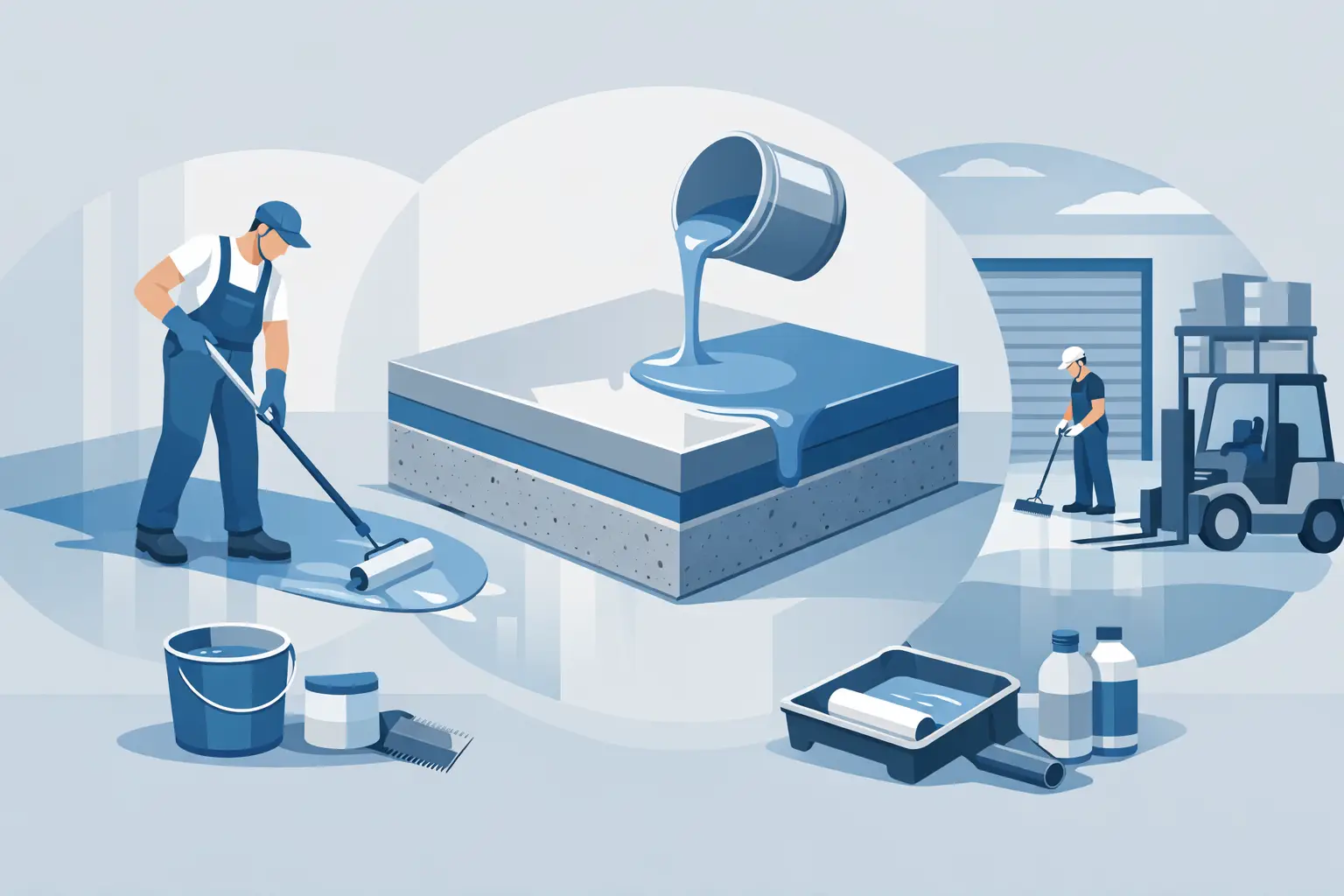
Epoxy Floor Coating Guide for Real Use
A floor can look fine on day one and fail by month six. That usually comes down to one thing – the system was chosen for appearance, not for the way the space actually operates. This epoxy floor coating guide is built for property owners, facility managers, contractors, and homeowners who need a floor that holds up under traffic, chemicals, impact, and daily cleaning.
Epoxy is not one single product. It is a category of resin-based coating systems, and performance depends on the condition of the concrete, the level of surface prep, the thickness of the build, and the topcoat used over it. If you are comparing bids, that distinction matters. A low-price quote with weak prep or thin application can become a costly replacement job much faster than most people expect.
What an epoxy floor coating guide should actually cover
Most people start with color and finish. Those matter, but they are not the first decision. The first question is what the floor needs to do.
A residential garage has different demands than a restaurant kitchen, warehouse aisle, automotive bay, retail showroom, or airplane hangar. Some spaces need strong chemical resistance. Others need slip resistance, hot-tire resistance, impact durability, or a finish that stays easy to clean without trapping dirt. Good coating recommendations come from use case first, appearance second.
That is why serious epoxy work starts with evaluation. The slab may need grinding, crack repair, moisture testing, leveling, or removal of old coatings before any new material goes down. When that part gets skipped, the coating can peel, blister, or wear unevenly no matter how good the product sounded in the proposal.
Where epoxy works best
Epoxy performs well in environments that need a hard-wearing, low-maintenance, professional-looking floor. Garages are a common fit because epoxy handles vehicle traffic, fluid exposure, and routine cleaning better than bare concrete. It also improves appearance fast, especially when decorative flakes or solid-color finishes are used.
In commercial and industrial settings, epoxy is often selected for durability and control. Warehouses, machine shops, service areas, and stock rooms benefit from a sealed surface that resists dusting and stands up to forklifts, carts, and repeated foot traffic. In office and retail settings, epoxy can deliver a cleaner, brighter finish with less maintenance than untreated concrete.
That said, epoxy is not ideal for every environment. If the slab has ongoing moisture vapor issues, if the substrate is unstable, or if the space sees thermal shock or very aggressive conditions, another system may be the better long-term fit. A contractor who understands concrete should say that clearly instead of forcing one coating into every job.
Types of epoxy systems
Solid-color epoxy
This is one of the most common options for garages, utility rooms, back-of-house commercial spaces, and industrial floors. It creates a clean, uniform look and can be paired with a gloss or satin topcoat depending on the setting. It is practical, easy to maintain, and often more budget-friendly than decorative broadcast systems.
Flake epoxy systems
Flake systems add color chips into the coating to create texture, visual variation, and better dirt hiding. They are popular in residential garages, service areas, locker rooms, and commercial spaces where owners want durability without an overly industrial look. They also improve traction when paired with the right finish.
Quartz-filled systems
These are more specialized and often used where slip resistance and higher build are important. They work well in demanding commercial environments, though they are usually more expensive and more application-sensitive than standard decorative systems.
Epoxy with urethane or polyaspartic topcoat
In many cases, the best-performing floor is not epoxy alone. Epoxy is often used as the build coat because it bonds well and creates thickness. A urethane or polyaspartic topcoat may then be applied for added UV stability, abrasion resistance, or chemical performance. That layered approach usually gives better long-term results than treating the floor like a one-coat product.
Surface prep is where the job is won or lost
If there is one section in this epoxy floor coating guide that deserves extra attention, it is prep. Coatings do not hide bad concrete. They expose it.
Proper preparation usually means mechanically grinding the slab to open the surface and remove contaminants. Oil spots, curing compounds, previous sealers, glue residue, tire marks, and weak surface cream all interfere with adhesion. Sweeping and acid washing are not substitutes for professional grinding when durable performance is the goal.
Cracks and spalls also need to be addressed correctly. Some should be repaired and blended. Others may remain slightly visible because concrete naturally moves and no ethical contractor should promise every crack will disappear forever. That honesty matters. Good workmanship improves the slab dramatically, but realistic expectations are part of a reliable proposal.
Moisture testing is another big factor. If moisture vapor is pushing through the slab, the coating can fail from below even if installation looked perfect on completion day. In that case, the solution may involve moisture mitigation or a different system design.
How thickness, topcoats, and texture affect performance
Not all epoxy floors wear the same because not all are built the same. Film thickness affects impact resistance, lifespan, and how much abuse the floor can take. A thin roll-on product from a store is not comparable to a professionally installed multi-layer system. They may look similar for a short time, but they are not designed for the same workload.
Topcoats also make a major difference. Some improve scratch resistance. Some help with UV stability so ambering is reduced. Some hold up better against chemicals or tire pickup. In commercial settings, the topcoat can be the layer that determines whether the floor keeps performing under real traffic patterns.
Texture should be chosen carefully. More slip resistance can improve safety, especially in wet or service environments. But too much texture can make cleaning harder and change the look of the floor. The right balance depends on whether the space is a garage, warehouse, showroom, restaurant back room, or industrial work zone.
What to expect on cost and scheduling
Price depends on square footage, slab condition, repair requirements, coating build, and whether decorative elements are included. The biggest cost variable is often not the coating itself but the amount of prep and repair needed to get the concrete ready.
That is why apples-to-apples comparisons are rare. One quote may include full grinding, crack repair, moisture testing, and a topcoat. Another may price a basic coating with minimal prep. The lower number can look attractive until the floor starts peeling at the edges, lifting under tires, or wearing through in traffic lanes.
Scheduling also depends on the system selected. Some epoxy systems require more cure time before traffic returns. For active commercial spaces, that matters. A contractor with flexible scheduling can often phase the work or complete installation during evenings or weekends to reduce disruption. For facilities that cannot afford downtime, planning is part of the service.
Choosing the right contractor for an epoxy floor coating guide project
The best contractor is not just someone who installs coatings. It is someone who understands concrete behavior, substrate prep, repair methods, traffic demands, and finish selection for the environment. That is especially true in mixed-use properties and commercial facilities where performance matters more than showroom language.
Ask what prep method will be used, what system is being specified, how moisture is handled, what topcoat is included, and how the floor is expected to perform in your specific setting. Ask what is excluded too. Clear scope prevents surprises.
A qualified contractor should be able to explain trade-offs without dodging. For example, a smoother finish may look cleaner but offer less grip when wet. A more textured floor may improve safety but collect more dirt. A decorative system may cost more up front but better suit client-facing spaces. A straightforward, job-specific recommendation is usually a better sign than a one-size-fits-all sales pitch.
At Orange County Concrete Polishing, that practical approach is what separates a coating that simply looks new from one that keeps working. Whether the project is a garage, warehouse, office, retail floor, or industrial facility, the goal is the same – match the system to the slab, the traffic, and the day-to-day demands of the space.
If you are considering epoxy, do not start with color charts alone. Start with how the floor is used, what the concrete needs, and how much performance you expect over time. A good floor should make your space easier to operate, easier to clean, and easier to trust every day after installation.
Recent Post
How to Prevent Concrete Delamination Early
October 14, 2026 1:51 am

Warehouse Floor Safety Guide for Busy Facilities
October 12, 2026 1:45 am
Orange County Concrete Floors That Hold Up
October 10, 2026 1:51 am