
Self Leveling Underlayment Review for Concrete Floors
A self leveling underlayment review should start with the jobsite, not the bag. These cement-based materials can turn a rough, uneven slab into a flat surface ready for tile, vinyl, carpet, epoxy, or another finish. But they are not a shortcut around poor concrete preparation. When underlayment fails, the usual cause is not the product itself. It is moisture, contamination, improper priming, bad mixing, or an unrealistic expectation of what a thin layer can repair.
For Orange County homes, retail spaces, offices, warehouses, and garages, self-leveling underlayment can be an excellent part of a flooring system. The key is matching the material and installation method to the slab, the planned finish, and the traffic the floor will handle.
What Self-Leveling Underlayment Does Well
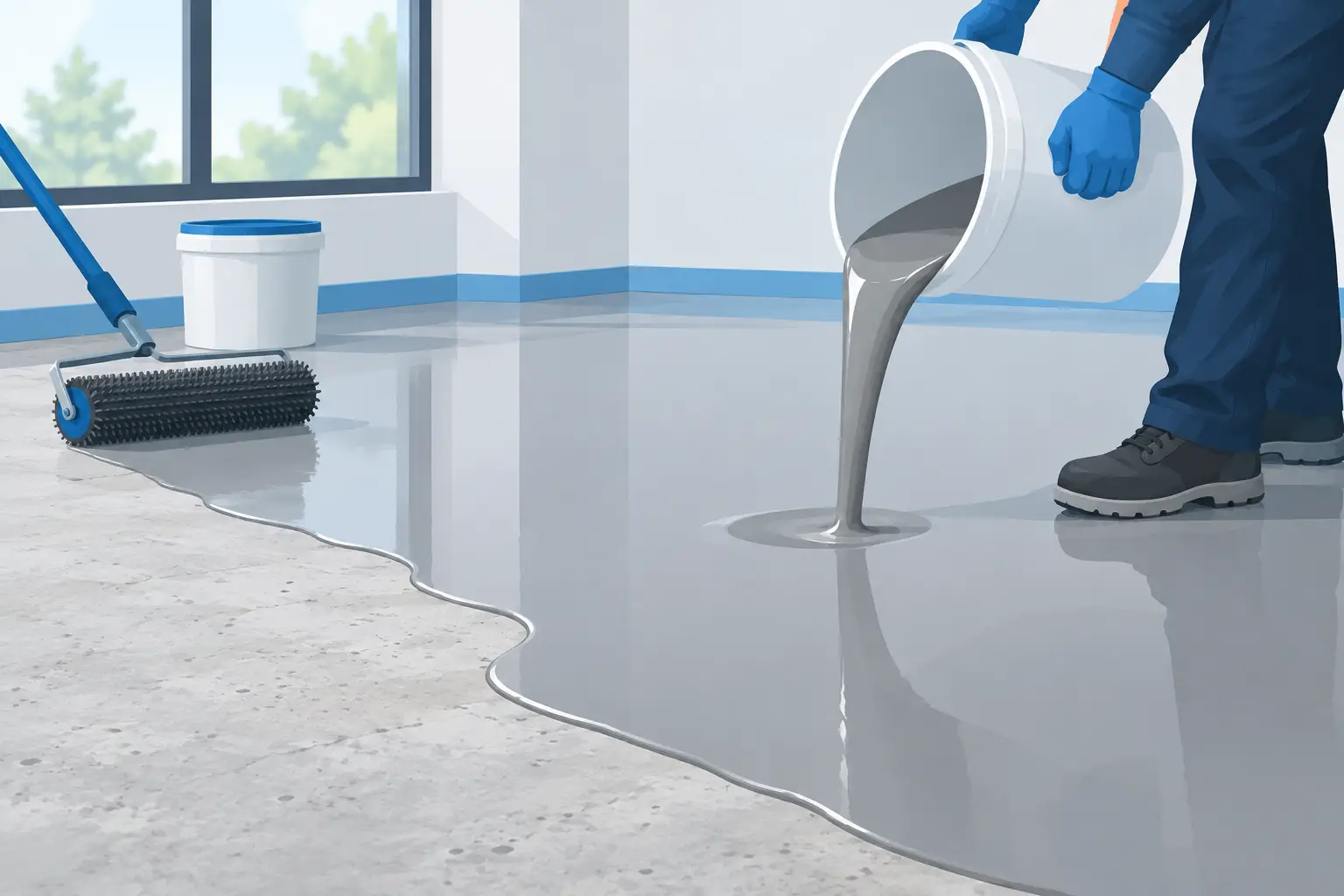
Self-leveling underlayment, often called SLU or SLC, is a flowable cementitious material designed to seek a level plane after it is mixed and placed correctly. It is commonly used over interior concrete before installing finish flooring. Depending on the product, it may be placed in thin applications to smooth minor surface variation or poured deeper to correct larger low areas.
The main advantage is speed. A properly prepared floor can be primed, poured, spread, and ready for the next phase far faster than traditional patching methods. That matters in occupied commercial facilities where downtime affects sales, staffing, inventory, or customer access. It also matters in residential garages and interior remodels where homeowners want a clean, even base before moving forward with decorative concrete, coatings, or new flooring.
Underlayment also produces a smooth surface that works especially well beneath tile, luxury vinyl plank, sheet vinyl, carpet, and certain epoxy systems. It can eliminate the small dips, trowel marks, and uneven transitions that telegraph through thin finish materials. A flat substrate helps finished flooring look better and perform better.
That said, level and flat are not the same thing. A floor may need to be flat for large-format tile or vinyl plank without being perfectly level from one end of the room to the other. In garages, warehouses, parking areas, and wash-down spaces, existing drainage may be intentional. Filling every low spot without considering slope can send water where it should not go.
Self Leveling Underlayment Review: Where It Falls Short
The biggest misconception is that self-leveling underlayment repairs every concrete problem. It does not. It is generally not a structural repair material, a waterproofing system, or a replacement for proper slab correction. A moving crack, an unstable slab, or active moisture vapor transmission can still cause a new underlayment layer to fail.
Cracks deserve a closer look before any leveling material is placed. Some are dormant shrinkage cracks that can be prepared and treated as part of the system. Others indicate movement, settlement, or stress that needs a different repair approach. Covering them with underlayment alone may create a smooth appearance temporarily, but the crack can reflect through later.
Moisture is another critical issue, particularly when the planned finish is epoxy, vinyl, adhesive-set flooring, or another low-permeability material. Concrete can look dry and still release moisture vapor. If the slab has elevated moisture, a contractor may need a moisture-control system, a compatible primer, or another solution before leveling begins. Skipping this assessment can lead to debonding, bubbling, staining, and costly replacement.
Underlayment is also not automatically suitable as a final wear surface. Most standard products are intended to be covered. In a high-traffic warehouse, airplane hangar, commercial kitchen, or active garage, an exposed layer may wear, dust, chip, or absorb contaminants unless it is specifically engineered and protected for that purpose. For these environments, polished concrete, a properly specified epoxy system, urethane cement, or another commercial flooring solution may be the better long-term answer.
Preparation Determines the Result
A successful pour begins with mechanical surface preparation. Concrete must be clean, sound, and open enough for the primer and underlayment to bond. Paint, curing compounds, sealers, adhesives, oil, grease, and weak concrete must be removed. This is why grinding, shot blasting, or other mechanical preparation is often more reliable than relying on chemical cleaning alone.
Surface profile matters. A dense, slick slab may look clean but still reject the underlayment if it has not been properly prepared. On the other hand, a severely rough surface may require patching or a scratch coat before a full pour. The right process depends on the slab condition and the manufacturer-approved system being used.
Primer is not optional. The correct primer controls substrate absorption, improves adhesion, and helps prevent pinholes and bubbles. Using too little primer, allowing it to dry beyond its required window, or applying the wrong primer for the substrate can compromise the entire installation. The same applies to mixing. Water ratios must be measured precisely. Adding extra water may make the material easier to spread, but it weakens the cured layer and increases the chance of cracking or surface dusting.
The crew also needs a pouring plan. Material has a working time, and larger rooms may require multiple mixers, sufficient labor, gauge rakes, smoothing tools, and a clear placement sequence. A bag-by-bag approach without enough manpower can leave cold joints, ridges, and inconsistent thickness. On commercial projects, organized staging and scheduling are part of quality control, not just logistics.
Choosing the Right Material for the Finish Floor
Not every self-leveling product is interchangeable. The intended floor covering drives the specification. A material used beneath carpet may not be the right choice beneath moisture-sensitive wood flooring or a high-build resinous coating. Some products are reinforced for greater strength, some accommodate thicker pours, and some are designed for faster turnaround.
For tile and vinyl, the goal is often a smooth, flat substrate that meets the flooring manufacturer’s tolerance requirements. For epoxy or decorative coatings, the issue is more involved. The underlayment must bond reliably, cure properly, and be compatible with the selected coating system. It may also need additional grinding before coating so the final surface has the correct profile.
In a garage, cosmetic goals must be balanced with vehicle traffic, hot-tire exposure, occasional chemicals, and possible moisture. A self-leveling layer can correct slab irregularities before a coating system, but it should not be selected solely because it creates a smooth floor. The entire floor assembly needs to be designed for the service conditions.
Commercial spaces require the same practical thinking. A retail store may prioritize fast installation and a clean finished appearance. A warehouse may need impact resistance, forklift durability, and minimal disruption to operations. A restaurant may need slip resistance, sanitation, and slope control around wet areas. The best underlayment choice is the one that supports the actual use of the building, not the one that merely looks easiest on paper.
When Grinding Is Better Than Pouring
Self-leveling underlayment is not always the most economical or durable solution. If a slab has high spots, grinding may be more effective than pouring material across the entire floor to bring low areas up to the same elevation. Grinding can also preserve door clearances, reduce transitions at adjoining rooms, and avoid excessive material thickness.
Many projects need both methods. High areas are ground down first, cracks and isolated defects are repaired, then underlayment is used only where needed to achieve the desired flatness. This targeted approach can reduce material use while producing a better substrate for polished concrete, coatings, tile, or resilient flooring.
For concrete polishing, excessive underlayment is usually not the answer because it will not polish like the original slab. If the objective is an exposed, polished concrete finish, the existing concrete condition must be evaluated early. A topical leveling material may be appropriate in a design that includes an overlay system, but it changes the finish strategy.
The Practical Verdict
A quality self-leveling underlayment is a reliable solution when the concrete is stable, properly prepared, dry enough for the system, and paired with the right finish floor. It saves time, improves flatness, and provides a clean base for many residential and commercial flooring installations.
It is a poor solution when it is used to hide structural issues, bypass moisture testing, correct drainage without a plan, or replace surface preparation. The lowest-cost pour can become the most expensive part of a project if the floor later debonds or the finish fails.
Before committing to an underlayment system, have the slab evaluated in person. A contractor who understands grinding, moisture conditions, coatings, repairs, and final-floor requirements can recommend whether leveling, grinding, resurfacing, or a combined approach will deliver the durable result your space needs.
Recent Post
Polyaspartic Coating Review: Is It Worth It?
October 20, 2026 1:50 am

Airplane Hangar Floor Upgrade for Hard Work
October 18, 2026 1:45 am
Best Industrial Floor Systems for Demanding Sites
October 16, 2026 1:51 am