
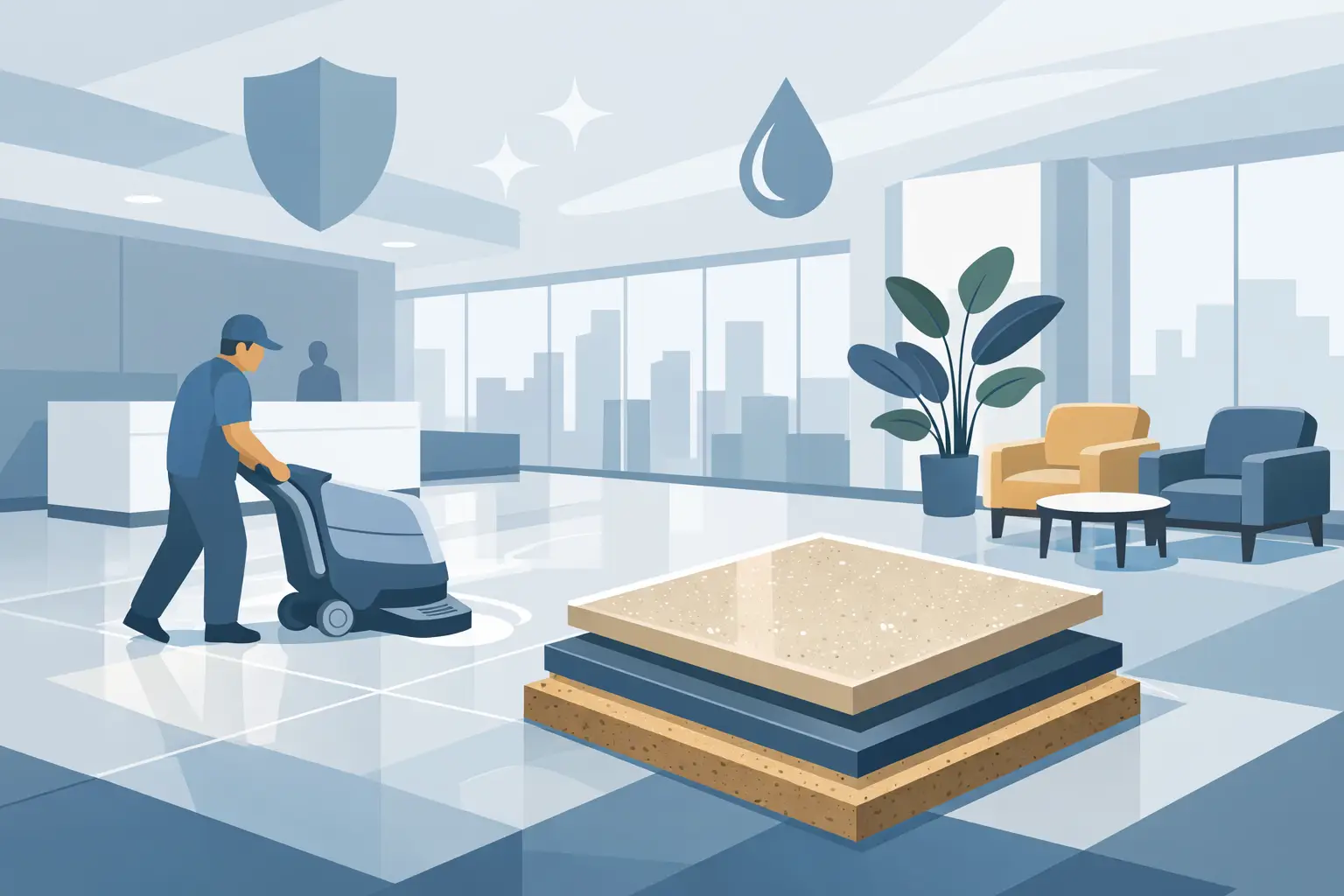
Low Maintenance Commercial Flooring That Lasts
A commercial floor starts costing money long after installation day. It shows up in labor hours, cleaning supplies, repair calls, downtime, and the constant cycle of patching worn areas before customers or staff notice. That is why low maintenance commercial flooring matters so much for retail stores, offices, warehouses, restaurants, and industrial spaces that cannot afford a floor that looks tired after a few months.
For most property owners and facility managers, the real question is not just what floor looks good on day one. It is which floor keeps performing without becoming a maintenance problem. In many commercial settings, polished concrete and resin-based systems stand out because they are built for traffic, easier to clean, and less likely to need frequent replacement than softer or more delicate materials.
What low maintenance commercial flooring really means
Low maintenance does not mean no maintenance. Every commercial floor needs routine cleaning and occasional service. What you want is a floor that does not require constant waxing, stripping, replacing damaged sections, or shutting down work areas for repairs.
A low-maintenance system should handle the daily realities of the space. That includes foot traffic, carts, forklifts, spills, cleaning chemicals, impact, and tracked-in dirt. It should also be easy for your staff or janitorial team to clean using practical methods, not a complicated maintenance plan that gets ignored after the first month.
This is where many flooring decisions go sideways. A product may look attractive in a showroom, but if it scuffs easily, traps dirt in seams, stains under normal use, or needs specialty upkeep, it stops being a value fast.
Best options for low maintenance commercial flooring
The right floor depends on how the space is used, but some materials consistently outperform others when maintenance is a top concern.
Polished concrete
Polished concrete is one of the strongest options for low maintenance commercial flooring, especially in offices, retail stores, showrooms, warehouses, educational buildings, and large open commercial interiors. It works by mechanically refining the concrete surface to create a dense, durable finish that resists dusting and is easier to keep clean.
For business owners, the appeal is straightforward. There is no wax to maintain, no carpet fibers to trap dirt, and no tile grout lines to scrub. Day-to-day care usually comes down to dust mopping and wet mopping with the right cleaner. In high-traffic settings, that simplicity matters.
Polished concrete also holds up well under steady use. It does not peel like a coating can when the substrate is not properly prepared, and it can deliver a clean, modern appearance without adding a separate flooring layer over the slab you already have. That often makes it a smart long-term choice for owners looking to reduce both upkeep and replacement costs.
Epoxy and resinous flooring systems
Epoxy systems are another strong candidate, especially where chemical resistance, spill protection, and surface uniformity matter. They are common in garages, back-of-house commercial kitchens, industrial spaces, medical environments, and manufacturing areas.
A properly installed epoxy or resinous floor creates a sealed surface that is easier to wash down and less likely to absorb oils, chemicals, or moisture. It can also be customized for slip resistance, color coding, safety striping, and specific performance requirements.
That said, epoxy is not identical across every environment. Heavy impact, substrate movement, UV exposure, and poor installation can affect performance. In some settings, a different resin system or a polished concrete finish may be the better fit. This is why project scoping matters. The best low-maintenance floor is the one matched to the actual use of the building, not the one with the broadest marketing claims.
Concrete coatings and resurfacers
In commercial properties where the slab is worn, stained, or uneven, resurfacing and specialty coatings can restore the floor without a full replacement. This can be a practical path when owners want a fresh, serviceable surface while controlling downtime and budget.
The trade-off is that not every coating offers the same maintenance profile. Some decorative finishes look good but may wear faster in high-traffic environments. Others are built specifically for abrasion resistance and easier cleaning. Surface prep is what separates a floor that lasts from one that fails early.
Why concrete-based systems often win on maintenance
For many Orange County commercial properties, concrete-based flooring systems make sense because they solve several problems at once. They are durable, they can be customized, and they reduce the ongoing labor tied to floor care.
A polished or properly coated concrete floor does not have the seam issues you get with tile, the stain retention you get with carpet, or the wear pattern problems common with lower-grade sheet materials. Dirt stays on the surface instead of embedding deep into the floor. Spills are easier to address. Equipment traffic is less likely to tear or delaminate the finish when the system is selected correctly.
There is also the issue of downtime. Replacing traditional floor coverings can be disruptive and expensive, especially in active businesses that cannot shut down for long. Restoring and upgrading an existing concrete slab can often be a more efficient option. When work is scheduled correctly, including off-hours if needed, that disruption can be kept to a minimum.
Matching the floor to the space
The biggest mistake in commercial flooring is assuming one product works everywhere. It does not.
Retail spaces usually need a balance of appearance, durability, and easy cleaning. Polished concrete works well here because it creates a clean, professional finish that stands up to daily foot traffic. In a showroom or storefront, that matters as much visually as it does operationally.
Office buildings often benefit from polished concrete in lobbies, common areas, and modern workspaces, especially where owners want a cleaner look with less upkeep than carpet tile or VCT. If acoustics or comfort are a concern in certain zones, it may make sense to combine flooring types rather than force one solution across the entire building.
Warehouses and industrial spaces have a different set of demands. Forklift traffic, pallet movement, dust control, and chemical exposure often point toward polished concrete, epoxy, or another resin-based system depending on the work being performed. Surface hardness, traction, and resistance to abrasion matter more here than decorative style alone.
Restaurants, auto facilities, and service areas may need more chemical resistance and wash-down performance than a standard polished finish can provide by itself. In those settings, a heavy-duty coating or resinous system is often the smarter move.
What affects maintenance more than the material itself
Even the best flooring product can become a maintenance problem if the installation is rushed or the slab is not properly prepared. This is where experienced contractors separate themselves.
Surface preparation is not the flashy part of the job, but it is the part that determines whether the floor performs. Grinding, leveling, moisture evaluation, crack repair, and adhesion testing all affect the result. If a floor is installed over contamination, weak concrete, or unresolved moisture issues, maintenance costs show up later.
The finish level also matters. A warehouse floor and a boutique retail floor may both be concrete, but they do not need the same profile, sheen, or coating build. The right recommendation should come from how the space is used, how it will be cleaned, and how much abuse it needs to handle.
This is why tailored proposals matter. A serious commercial flooring contractor should look at traffic patterns, exposure conditions, cleaning methods, and schedule constraints before recommending a system.
Low maintenance does not mean low expectations
Some owners hear low maintenance and assume it means plain or industrial-looking. That is outdated thinking. Modern commercial concrete finishes can be polished to different sheen levels, enhanced with stains or dyes, or coated in colors that match branding and practical needs.
You can build for function without giving up appearance. In fact, many businesses prefer the cleaner, sharper look of finished concrete because it presents well and performs under pressure.
For companies that want fewer headaches after installation, the goal is simple: choose a floor that fits the environment, prepare the surface correctly, and install a system designed for real traffic instead of best-case conditions. That is how low maintenance commercial flooring actually saves money over time.
If you are planning a new build, renovating an existing facility, or replacing a floor that keeps creating problems, get the space evaluated before you commit to a product. A floor should make operations easier, not add another item to your maintenance list. Orange County Concrete Polishing helps commercial clients choose flooring systems that hold up, clean up easily, and keep working long after the project is finished.
Recent Post
Best Industrial Floor Systems for Demanding Sites
October 16, 2026 1:51 am
How to Prevent Concrete Delamination Early
October 14, 2026 1:51 am
Warehouse Floor Safety Guide for Busy Facilities
October 12, 2026 1:45 am