
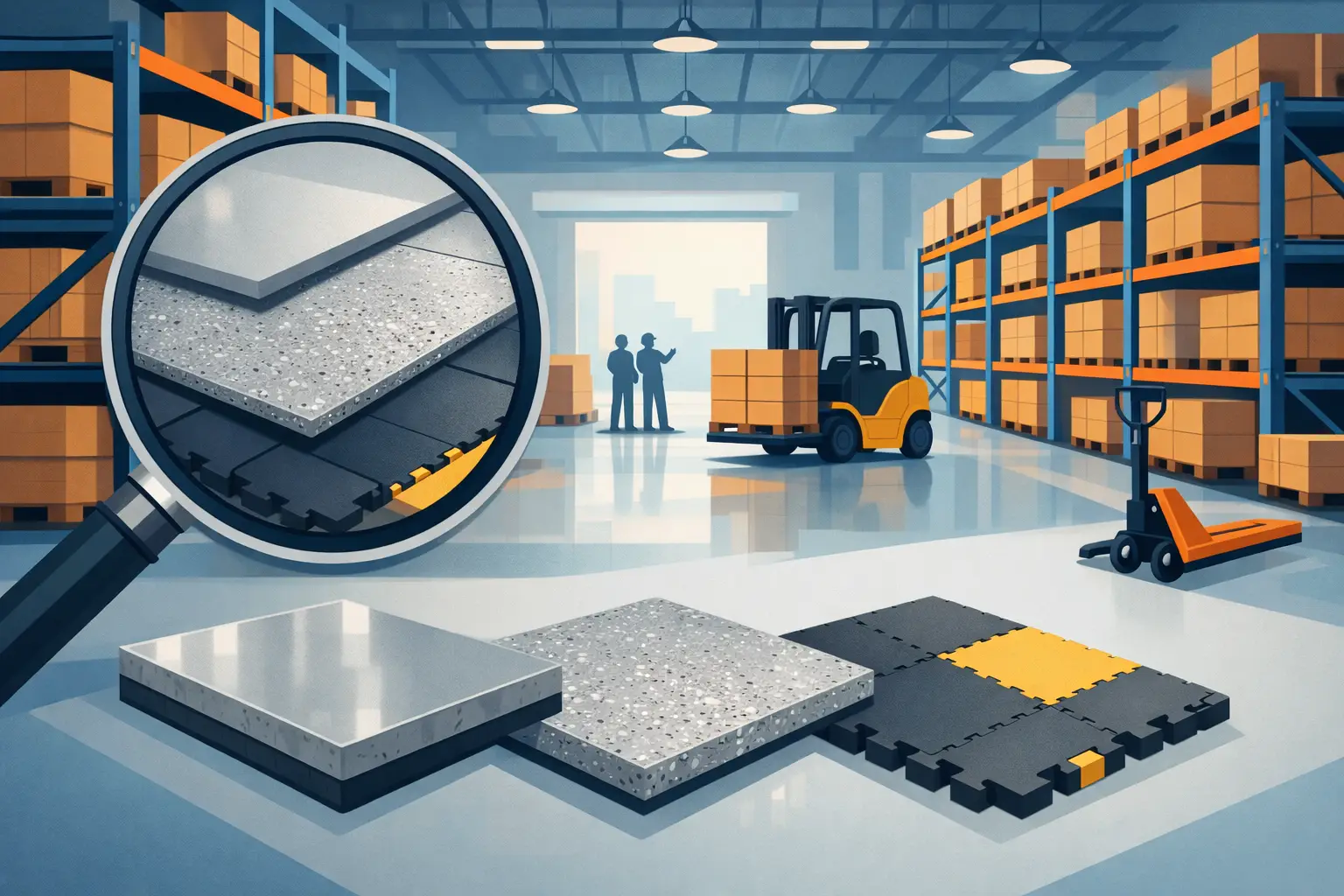
Best Flooring for Warehouses: What Works
A warehouse floor gets judged fast. Forklifts leave marks, pallet jacks find weak spots, spills test chemical resistance, and dust becomes a daily maintenance problem. If you are trying to choose the best flooring for warehouses, the right answer usually comes down to how your facility actually operates – not which product has the best sales pitch.
For most warehouse environments, concrete-based flooring systems lead the conversation because they deliver strength, long service life, and practical maintenance. But that does not mean every concrete floor performs the same. A basic slab, a polished concrete finish, an epoxy coating, or a resurfaced system each serves a different purpose. The best choice depends on traffic levels, impact, moisture exposure, sanitation needs, and how much downtime your operation can tolerate.
What makes the best flooring for warehouses?
Warehouse flooring has one job above all else: it needs to keep working under pressure. That means handling rolling loads, resisting abrasion, staying cleanable, and supporting safe day-to-day movement across the facility. If the floor starts dusting, cracking, peeling, or becoming slick in active work zones, it stops being an asset and starts creating operational drag.
The best flooring for warehouses is rarely the one with the lowest upfront price. Facility managers and owners usually do better when they look at total cost over time. A floor that needs constant patching, recoating, or shutdowns for repairs often costs more than a higher-performing system installed correctly from the start.
There are also trade-offs. A highly glossy finish may improve brightness and appearance, but it is not always the right fit for every loading area. A heavy-build coating may offer strong chemical protection, but if the slab prep is poor or moisture conditions are ignored, it can fail early. Good warehouse flooring decisions are not about chasing one feature. They are about matching the system to the use case.
Polished concrete: the top choice for many warehouses
In many commercial and light industrial settings, polished concrete is one of the strongest options available. It works especially well in warehouses that need a durable, low-maintenance surface with a clean professional appearance and minimal dusting. Instead of covering the slab with a coating that can eventually wear away, polishing mechanically refines the concrete itself.
That matters in busy facilities. Polished concrete stands up well to foot traffic, forklifts, carts, and regular cleaning. It also reflects light better than untreated concrete, which can help improve visibility across the floor. For warehouse operators watching maintenance costs, one of the biggest advantages is simplicity. There is no wax to strip, and routine care is straightforward when the floor is properly finished.
The main limitation is chemical exposure. If your warehouse deals with aggressive acids, oils, solvents, or repeated liquid contamination, polished concrete may need added protection or may not be the best stand-alone answer. It also depends on the condition of the existing slab. If the floor has widespread damage, moisture issues, or major surface inconsistencies, prep work or resurfacing may be needed before polishing becomes a smart investment.
When epoxy flooring makes more sense
Epoxy flooring is often a better fit when the warehouse environment includes chemicals, washdowns, staining agents, or stricter sanitation demands. A properly installed epoxy system creates a protective surface that resists many common industrial spills and makes cleanup easier. It can also be customized with added texture for slip resistance and line striping for traffic control.
This makes epoxy a strong option for distribution centers with designated work zones, food-adjacent facilities, manufacturing support spaces, and warehouses where appearance and containment both matter. It also gives owners more control over color coding and safety marking than a polished slab alone.
Still, epoxy is not automatically the best flooring for warehouses across the board. It is a coating system, which means long-term performance depends heavily on surface preparation, moisture testing, and installation quality. In high-impact areas or facilities with constant heavy turning traffic, some epoxy systems can wear faster than expected if the wrong build or formulation is used. Downtime is another factor. Coatings need curing time, and scheduling has to be handled carefully to avoid disrupting operations.
Bare concrete is common, but not always enough
A lot of warehouses operate on plain unfinished concrete, especially older facilities. It is familiar, cost-effective at the start, and already part of the building. But bare concrete often creates problems that become more noticeable over time. Surface dusting, tire wear, staining, and gradual erosion can increase maintenance demands and hurt the overall condition of the space.
That does not mean every untreated slab needs to be replaced. In many cases, the underlying concrete is structurally sound but simply underperforming at the surface. Grinding, densifying, polishing, or resurfacing can turn an aging warehouse floor into a much more durable and workable system without the cost of full replacement.
If your warehouse floor is already showing pitting, uneven patches, crack movement, or soft surface wear, keeping it bare usually just delays a bigger repair decision. The question is not whether concrete belongs in the warehouse. It is whether the current finish is doing enough for the demands placed on it.
Resurfacing and repair before choosing a finish
One of the biggest mistakes in warehouse flooring is focusing on the top layer before addressing the slab itself. If the floor is uneven, cracked, contaminated, or failing at the surface, no finish system will perform the way it should. Surface preparation is not a side issue. It is the foundation of the job.
In active warehouse environments, floor flatness and consistency affect more than appearance. They influence forklift movement, rack stability, drainage patterns, and wear at expansion joints. Resurfacing can correct damaged areas and create a better substrate for polishing or coatings. In some buildings, concrete leveling is just as important as the final finish because operational efficiency depends on a floor that performs predictably.
This is where working with an experienced flooring contractor matters. A warehouse floor needs to be evaluated based on load conditions, existing slab quality, moisture, traffic patterns, and maintenance expectations. There is no one-size-fits-all recommendation that works in every facility.
How to choose the best warehouse floor for your operation
Start with traffic. If your facility sees constant forklift travel, rolling carts, and pallet movement, abrasion resistance and surface consistency should lead the decision. Polished concrete is often a strong fit here, especially when low maintenance is a priority.
Next, look at exposure. If the floor deals with oils, chemicals, frequent spills, or washdown conditions, epoxy or another protective resinous system may offer better performance. The more demanding the environment, the more important proper prep and specification become.
Then consider upkeep and downtime. Some owners focus only on install price and miss the long-term operational cost. A floor that is easy to clean and less likely to fail under traffic usually supports the business better over time. If the building cannot afford long shutdowns, phased installation or off-hours scheduling may be part of the solution.
Appearance also matters more than some warehouse operators expect. A cleaner, brighter floor can improve light reflectivity, support inspections, and present a stronger image to staff, tenants, and customers. That does not mean aesthetics come first. It means the best-performing floors often look better because they are designed and maintained correctly.
Our take on the best flooring for warehouses
If the warehouse needs a dependable, long-lasting surface for heavy daily use, polished concrete is often the best overall value. It is durable, low maintenance, dust-reducing, and well suited for many storage, fulfillment, and logistics spaces. When chemical resistance, spill containment, or specialized safety markings are the bigger priority, epoxy becomes the smarter choice.
That is why warehouse flooring should always be scoped around the building, not around a generic product pitch. At Orange County Concrete Polishing, that means looking at the slab, the traffic, the exposure, and the schedule before recommending a system. The right floor should hold up under real conditions, support daily operations, and reduce headaches instead of adding them.
If you are weighing flooring options for a warehouse, the smartest next step is to assess what your current floor is not doing well. Once that is clear, the right system usually becomes clear too.
Recent Post
Best Industrial Floor Systems for Demanding Sites
October 16, 2026 1:51 am
How to Prevent Concrete Delamination Early
October 14, 2026 1:51 am
Warehouse Floor Safety Guide for Busy Facilities
October 12, 2026 1:45 am