
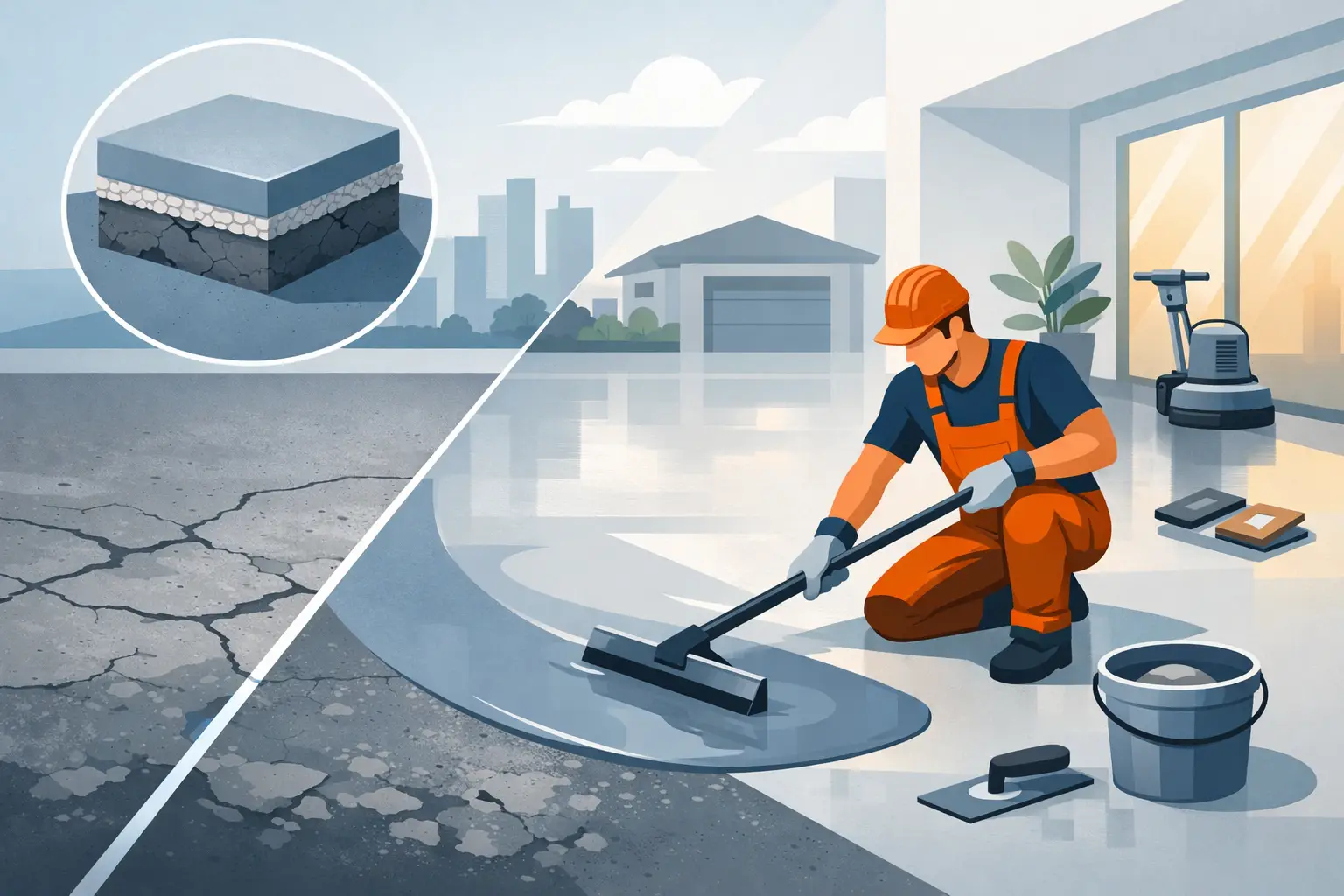
Concrete Resurfacing Guide for Lasting Floors
A concrete floor does not need to be replaced just because it looks worn, stained, or uneven in color. This concrete resurfacing guide explains when an existing slab can be renewed, what preparation it requires, and how to choose a finish that holds up in a garage, retail space, warehouse, office, or industrial facility.
Resurfacing can make an aging concrete surface cleaner, safer, easier to maintain, and more professional-looking. The right system can also improve resistance to vehicle traffic, abrasion, chemicals, moisture exposure, and routine cleaning. But resurfacing is not a cover-up for every concrete problem. The condition of the slab determines whether a new surface will perform or fail.
Start With the Condition of the Existing Concrete
The first question is not which color or coating looks best. It is whether the concrete is structurally sound enough to receive a resurfacing system. A qualified contractor should inspect the slab in person, identify damage patterns, and determine what preparation is needed before recommending a finish.
Cosmetic wear is usually a good candidate for resurfacing. This includes faded color, light scaling, old coating residue, minor pitting, tire marks, surface scratches, and stains that cannot be removed through standard cleaning. A properly prepared overlay, polished finish, stain, dye, or epoxy system can significantly improve these surfaces.
Cracks require a closer look. Hairline shrinkage cracks can often be repaired and blended into a resurfacing plan. Wider cracks, active movement, major settlement, heaving, or sections that sound hollow may point to deeper slab issues. Applying a coating or overlay over unstable concrete may make the floor look better temporarily, but the damage can telegraph through the new finish.
Moisture is another deciding factor, especially in ground-level commercial spaces, garages, parking areas, and older buildings. Moisture vapor moving up through the slab can cause certain coatings to blister, discolor, or lose bond strength. Testing and surface evaluation help determine whether a moisture-mitigation system, breathable finish, or a different flooring approach is the right fit.
Concrete Resurfacing Guide: Choose the Right System
Concrete resurfacing is not one product or one process. The best choice depends on traffic, appearance goals, cleaning requirements, downtime, and the condition of the existing surface.
For a garage or light commercial space with surface wear, a cementitious overlay can provide a fresh, uniform base. Overlays can be installed in smooth, textured, or decorative finishes, depending on the application. They are useful when the goal is to renew a worn slab without removing and repouring concrete.
Polished concrete is often the right solution for offices, retail areas, showrooms, warehouses, and modern residential interiors. The process uses professional grinding equipment and densifiers to refine the existing slab or a suitable overlay. The result is a durable, low-maintenance floor with a clean appearance and no separate coating layer to peel. The trade-off is that polished concrete depends heavily on the quality and flatness of the underlying slab. Extensive patching or severe damage may remain visible by design.
Epoxy and other resinous floor systems are well suited to garages, workshops, industrial spaces, commercial kitchens, airplane hangars, and facilities exposed to oils, chemicals, or frequent cleaning. These systems can create a highly customizable finish with color flakes, solid colors, traction additives, and chemical-resistant topcoats. They require detailed mechanical surface preparation and careful moisture evaluation. Skipping either step is one of the most common reasons a coating fails early.
Concrete stains and dyes are a strong choice when the slab is in good condition and the goal is to enhance the natural character of the concrete rather than hide it. They can add depth, color variation, and a more finished appearance for lobbies, interiors, patios, and retail spaces. Because stains are translucent, they do not conceal repairs, patches, or major discoloration. A mockup area is often helpful before committing to a final color.
Surface Preparation Determines Performance
A resurfacing system is only as reliable as the concrete below it. Paint, adhesives, sealers, oil contamination, weak surface paste, and dust must be addressed before new materials are installed. A floor can look clean and still have contaminants that interfere with adhesion.
Professional concrete grinding is the standard preparation method for many resurfacing and coating projects. It opens the concrete surface, removes weak material, and creates the profile needed for the selected system. The level of grinding should match the product being installed. A thin coating, a thicker overlay, and a polished concrete floor each require a different approach.
Crack repair comes before the finish, not after it. Depending on the crack, repairs may involve routing, filling, grinding, and feathering the area to reduce visibility. Joints also need to be handled correctly. Control joints are designed to accommodate movement, so filling or coating them without the right detail can lead to cracking later.
For occupied commercial properties, preparation also affects operations. Grinding creates noise and requires dust-control equipment, access planning, and protection for nearby inventory or work areas. Orange County Concrete Polishing can schedule work during off-hours when needed, helping business owners reduce disruption while still giving the floor the preparation it requires.
Match the Finish to Daily Use
A good-looking floor that is difficult to maintain is not a good flooring investment. Before selecting a resurfacing system, consider what happens on the floor every day.
A residential garage may need tire-mark resistance, easy cleanup, and a finish that improves the appearance of a concrete slab exposed to automotive fluids. A warehouse may need abrasion resistance, clear traffic lanes, and a surface that supports carts, pallet jacks, and forklifts. A restaurant, service area, or industrial workspace may need added traction and resistance to water, grease, or cleaning chemicals.
Gloss level matters as well. High-gloss polished concrete and resinous coatings can create a sharp, upscale look, but they may show dust, footprints, and surface debris more readily than a satin finish. A lower-sheen system can be more forgiving in high-traffic spaces. Texture and traction additives improve slip resistance, but aggressive textures can make mopping more difficult. The right balance depends on how the space is used and how it will be cleaned.
Color should be selected with the same practical mindset. Light floors can brighten a garage, showroom, or office, while darker colors may better hide tire marks in active work areas. Decorative flakes can help mask minor debris and create visual interest, but a solid-color industrial coating may be the better fit where clear striping, safety markings, or a uniform appearance is required.
Plan for Repairs, Curing, and Access
Resurfacing projects need realistic scheduling. The floor must be cleaned, repaired, mechanically prepared, installed, and allowed to cure before regular use. Cure time varies by system, temperature, humidity, slab condition, and whether the area will receive foot traffic, vehicles, or heavy equipment.
Do not assume a floor is ready for full service because it feels dry to the touch. Premature vehicle traffic, heavy loads, or aggressive cleaning can damage a new system before it reaches its intended performance. A contractor should provide clear guidance on when the space can reopen and when it can return to full service.
Access planning matters on larger projects. Business owners should identify loading routes, equipment staging areas, employee entrances, and sections that must remain operational. In some facilities, completing the work in phases is more practical than closing the entire floor at once. A phased plan may take longer overall, but it can prevent unnecessary interruption to revenue-producing operations.
Avoid the Shortcuts That Cause Early Failure
The most expensive resurfacing jobs are often the ones that have to be redone. Applying a coating over dirty concrete, relying on acid etching when mechanical grinding is needed, ignoring moisture, or using patch material that is not compatible with the final system can all create bond failures.
Another common mistake is choosing a finish based only on a photo. A sample board can show color, but it cannot reveal the slab’s porosity, crack pattern, moisture condition, or level of surface contamination. An in-person assessment provides the information needed to recommend the right preparation and product system instead of a one-size-fits-all solution.
Routine maintenance also protects the investment. Use cleaning products appropriate for the finish, remove chemical spills promptly, and avoid dragging sharp metal objects or damaged pallets across the surface. For polished concrete, regular dust removal and periodic cleaning preserve clarity. For coatings, prompt attention to impact damage or scratches can prevent a small issue from spreading.
A resurfaced concrete floor should be selected for the work it needs to do, not just the way it looks on installation day. Start with an on-site evaluation, be clear about traffic and cleaning demands, and choose a system with the preparation and cure schedule to match. That approach gives your garage, business, or facility a floor built to stay dependable long after the project is complete.
Recent Post
Best Industrial Floor Systems for Demanding Sites
October 16, 2026 1:51 am
How to Prevent Concrete Delamination Early
October 14, 2026 1:51 am

Warehouse Floor Safety Guide for Busy Facilities
October 12, 2026 1:45 am