
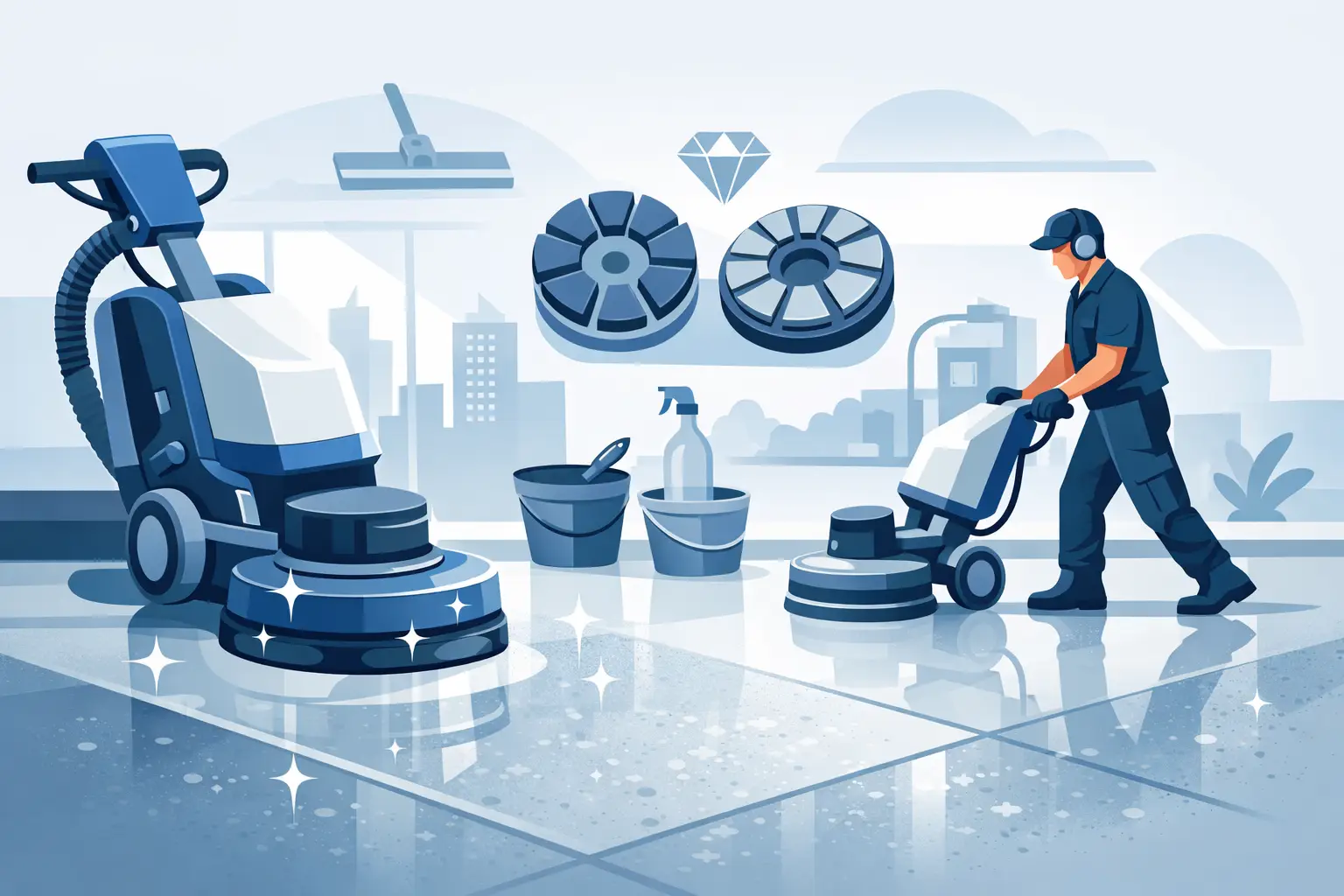
Concrete Polishing Process Guide for Lasting Floors
A polished concrete floor is only as good as the slab beneath it and the preparation behind it. This concrete polishing process guide explains what happens from the first site visit through final burnishing, so Orange County homeowners, facility managers, and contractors can plan for a floor that performs as well as it looks.
Polished concrete is not paint applied over a floor. It is a mechanical refining process that uses industrial grinders, diamond tooling, chemical densifiers, and progressively finer abrasives to strengthen and refine the concrete surface. The right process can produce a clean, durable, low-maintenance finish for garages, retail stores, offices, warehouses, restaurants, and industrial facilities. The wrong process can expose defects, create uneven sheen, or leave a floor that does not match the intended use.
Concrete Polishing Process Guide: Start With the Slab
Every successful project starts with an in-person evaluation. Before equipment reaches the floor, the contractor needs to identify the concrete’s age, strength, flatness, existing coatings, contamination, cracks, joint conditions, moisture concerns, and expected traffic. A newly poured slab behaves differently from a decades-old warehouse floor, and a residential garage has different requirements than a forklift aisle.
This evaluation also establishes realistic expectations. Polishing does not hide all imperfections. Existing aggregate exposure, patch repairs, old paint shadows, oil staining, and variations in the concrete mix may remain visible after grinding. In many commercial and industrial settings, that natural variation is part of the finished concrete’s character. When a more uniform appearance is required, a resurfacing system, overlay, stain, dye, or epoxy floor may be the better option.
The desired aggregate exposure should be discussed early. A cream polish preserves the top cement paste and offers the least aggregate exposure, but it requires a slab in excellent condition. A salt-and-pepper finish removes a thin layer of surface material and is a popular choice for modern interiors. A medium or full aggregate polish exposes more stone and creates a more decorative terrazzo-like appearance, though it requires additional grinding and may affect the project budget.
Repair, Removal, and Surface Preparation
The floor must be clean, sound, and accessible before polishing can begin. Coatings such as epoxy, mastic, paint, glue, thinset, and carpet adhesive must be mechanically removed. This is not a shortcut stage. Old materials can clog diamond tools, interfere with densifier penetration, and leave visible inconsistencies if they are not properly addressed.
Cracks, spalls, holes, and failed joints are repaired using materials selected for the floor’s movement, traffic, and appearance requirements. A repaired crack will usually remain visible to some degree after polishing because repair materials do not polish exactly like surrounding concrete. For warehouses and industrial buildings, joint filling is often a performance decision as much as an appearance decision. Properly filled joints help protect slab edges from wheeled traffic and reduce ongoing damage.
Surface preparation may also include leveling high spots, correcting transitions, and removing weak concrete. If the slab has widespread damage, severe moisture issues, or extensive patching, polishing may not be the most cost-effective solution. A professional contractor should explain that trade-off before the project is priced, not after work is underway.
Initial Grinding Creates the Foundation
The first grinding passes do the heavy work. Industrial planetary grinders fitted with metal-bond diamond tooling cut through coatings, remove damaged surface material, flatten localized irregularities, and establish the selected aggregate exposure. Dust-control equipment is used throughout the process to keep the job cleaner and support safer conditions for occupied properties.
Tool selection depends on the concrete. Hard, dense concrete needs a different diamond bond than soft or abrasive concrete. Contractors also adjust tooling for coating removal, glue removal, high spots, and the desired cut. This is one reason polished concrete should not be treated as a one-price-per-square-foot service. Two floors with the same size can require very different amounts of labor, tooling, repair work, and grinding time.
At this stage, the floor may look rough or uneven in color. That is normal. The objective is not shine yet. It is to establish a sound, consistently prepared surface that can accept the next steps of the polishing sequence.
Densifying the Concrete
After the initial grinding stages, a liquid concrete densifier is applied. Densifier reacts with components in the concrete to help harden and tighten the surface. This improves abrasion resistance, supports a clearer polish, and helps reduce dusting on suitable slabs.
Densifier is valuable, but it is not a cure for structural problems or weak, deteriorated concrete. It works best when the floor has been properly prepared and the product is matched to the slab conditions. Adequate drying and reaction time are also necessary before the polishing steps continue.
Honing and Polishing Build the Sheen
Once the floor is prepared and densified, the contractor moves through progressively finer diamond abrasives. These resin-bond steps remove scratches left by earlier tooling and slowly refine the surface. The exact number of passes depends on the requested finish, concrete condition, and level of clarity required.
A matte or satin finish can be an excellent practical choice for busy commercial areas because it provides a refined appearance without emphasizing every small scuff or texture variation. Higher-gloss finishes create more reflection and visual impact, which is often attractive in showrooms, offices, lobbies, and high-end residential interiors. However, a higher sheen generally requires more labor and may reveal more of the slab’s natural variation.
Color can be introduced with concrete dyes during the refinement process. Dyes can create modern gray, brown, black, earth-tone, or custom color effects while allowing the concrete character to remain visible. Results vary based on porosity, repairs, aggregate exposure, and prior staining. A test area is the most dependable way to confirm expectations before committing to a larger floor.
Guard, Burnish, and Complete the Floor
For many polished concrete systems, a stain guard or protective product is applied near the final stages. This helps improve resistance to staining and makes routine cleaning easier. The floor is then burnished with high-speed equipment to increase clarity and bring out the intended sheen.
The final walkthrough should confirm the scope agreed upon at the beginning of the project: aggregate exposure, gloss level, repair appearance, edge work, transitions, and access conditions. In occupied businesses, sequencing and off-hours scheduling matter just as much as the finish itself. A qualified flooring contractor can phase work around operations, coordinate with other trades, and reduce disruption where site conditions allow.
Choosing the Right Finish for Your Space
A polished floor should be specified around how the space operates. A garage may prioritize easy cleanup, tire resistance, and a bright finished appearance. A retail floor may need a decorative sheen that supports the brand environment. A warehouse may prioritize durability, joint protection, and low maintenance under heavy traffic.
Polished concrete can improve cleanability and long-term wear, but it is not automatically the right choice for every location. Areas exposed to frequent oils, aggressive chemicals, standing water, or specific slip-resistance requirements may benefit from a protective coating system instead. Texture, cleaning practices, footwear, contaminants, and drainage all affect traction. The best recommendation comes from evaluating the actual use of the floor rather than selecting a finish from a photo.
Maintaining a Polished Concrete Floor
Routine maintenance is straightforward, but it still matters. Dry dust mopping removes abrasive grit that can dull the surface over time. Wet cleaning should use clean water and a neutral cleaner formulated for polished concrete, followed by a clean mop or auto scrubber with the correct pads. Harsh acidic cleaners, degreasers, and soap-heavy products can leave residue or reduce the floor’s appearance.
Spills should be addressed promptly, especially oils, food acids, and chemicals. Entry mats in commercial spaces help control grit and moisture before they reach the polished surface. High-traffic areas may eventually benefit from periodic burnishing or maintenance services to restore clarity without repeating the full grinding process.
For a floor built around real site conditions, not assumptions, schedule a free in-person estimate with Orange County Concrete Polishing. The right finish begins with a close look at your slab, your traffic, and the performance your space needs for the years ahead.
Recent Post
Best Industrial Floor Systems for Demanding Sites
October 16, 2026 1:51 am
How to Prevent Concrete Delamination Early
October 14, 2026 1:51 am

Warehouse Floor Safety Guide for Busy Facilities
October 12, 2026 1:45 am