
Best Industrial Floor Systems for Demanding Sites
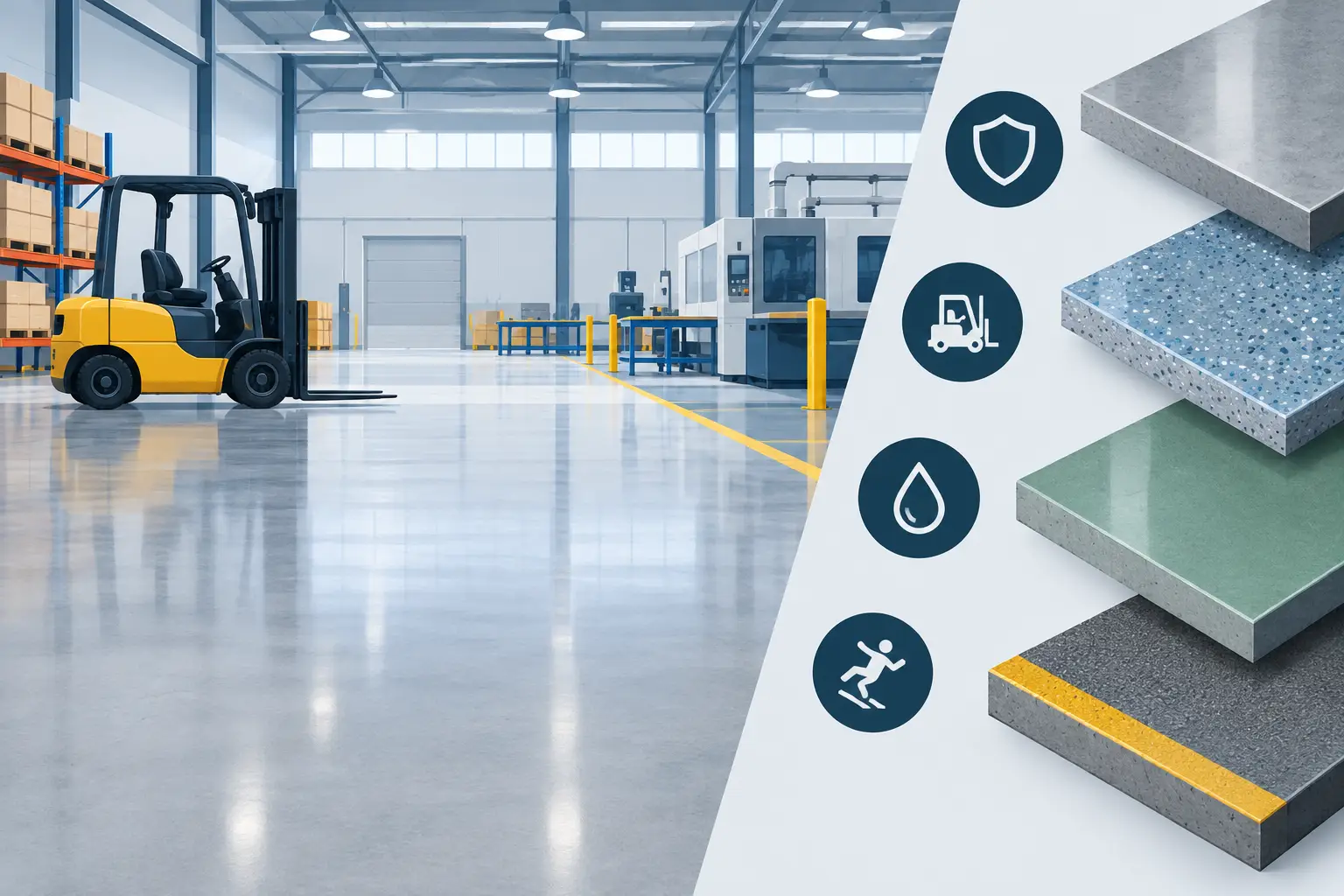
A warehouse floor can look acceptable on installation day and still fail the operation six months later. Forklift turning paths wear through thin coatings, oil finds unsealed joints, and a wet-process area becomes harder to clean than it should be. The best industrial floor systems are selected around the actual work happening on the slab – not a generic color chart or the lowest initial quote.
For Orange County facility managers, contractors, and property owners, the right choice starts with traffic, moisture, chemicals, sanitation requirements, and the shutdown window available for installation. A floor that performs well in an airplane hangar may not be the right answer for a food production room, loading dock, or automotive service bay.
What Makes an Industrial Floor System the Right Fit?
Industrial flooring is a system, not just a topcoat. The condition of the concrete, crack and joint repair, surface preparation, primer, build thickness, texture, and cure time all affect the finished result. Skipping preparation to save time usually moves the cost to future repairs.
Start with the operational demands. Heavy forklift traffic needs a different wear surface than light warehouse foot traffic. Chemical spills call for a resin system with the right resistance profile. Areas exposed to water, oils, or washdowns may need added texture, while a dry distribution floor may benefit more from easy cleaning and light reflectivity.
The slab itself also matters. Moisture vapor transmission, contamination from oil or curing compounds, weak concrete at the surface, and existing coating failure must be addressed before a new finish is installed. A professional site visit and moisture evaluation help determine whether the floor needs grinding, patching, leveling, resurfacing, or a moisture-mitigation primer before the finish goes down.
Best Industrial Floor Systems by Application
There is no single best coating for every industrial building. These are the systems most often considered for demanding facilities and where each one makes sense.
Polished Concrete for Warehouses and Large Open Floors
Polished concrete is a strong option for warehouses, showrooms, distribution spaces, airplane hangars, and industrial areas where dry traffic is the primary concern. The existing slab is mechanically ground, densified, and polished to the desired level of sheen. It creates a hard, low-maintenance surface without a film coating that can peel.
Its biggest advantages are long service life, easier dust control, improved light reflectivity, and a clean professional appearance. Because the finish becomes part of the concrete surface, polished concrete holds up well to rolling traffic when the slab is structurally sound and maintained properly.
The trade-off is chemical protection. Polished concrete resists abrasion well, but it is not automatically the best choice where acids, harsh cleaners, standing oils, or frequent chemical spills are expected. It also needs the right aggregate exposure and slip-resistance approach for the environment. For a dry warehouse, it can be an excellent long-term investment. For a wet chemical-processing area, a resinous system is often the better call.
Epoxy Floor Coatings for Chemical Resistance and Color Control
Epoxy is one of the most recognized industrial flooring options because it can provide strong adhesion, chemical resistance, color consistency, and a cleanable surface. It is commonly used in manufacturing spaces, machine shops, automotive facilities, commercial kitchens, storage rooms, laboratories, and service areas.
A properly specified epoxy system can be installed as a thin-film coating or built up into a thicker system depending on the traffic and protection required. Colored epoxy can also support safety striping, work-zone definitions, and brighter interiors. Decorative flakes or quartz broadcast can be added where appearance and texture matter.
Epoxy is not a one-size-fits-all solution. Concrete preparation is critical, and moisture vapor can cause adhesion problems if it is not tested and controlled. Standard epoxy also has limitations in areas with major temperature swings or thermal shock. A facility that uses hot-water washdowns, for example, may need a different resin system. The product selection should follow the exposure, not the other way around.
Urethane Cement for Hot, Wet, and High-Abuse Areas
Urethane cement is built for some of the toughest floor conditions: frequent washdowns, thermal cycling, wet service, impact, and chemical exposure. It is often used in food and beverage facilities, commercial kitchens, breweries, processing areas, and industrial rooms where a standard epoxy could be stressed beyond its intended limits.
This system is thicker than a basic coating and can be finished with broadcast aggregate for traction. It handles demanding service conditions well, especially where hot equipment, steam cleaning, or temperature changes are part of daily operations.
The investment is typically higher than a basic epoxy floor, and installation requires skilled preparation and detailing. But in the right environment, urethane cement can reduce the cycle of coating repairs and shutdowns. This is a case where choosing the lower upfront price can become the expensive decision.
Quartz and Broadcast Resin Systems for Traction
Quartz broadcast systems combine epoxy or urethane resins with colored aggregate. They are a practical choice when a facility needs a durable, textured, easy-to-clean surface with more slip resistance than a smooth coating. Common applications include locker rooms, commercial kitchens, wash areas, laboratories, restrooms, and production spaces.
Texture needs to be specified carefully. Too little texture can be a safety concern when floors are wet. Too much texture can trap debris and make cleaning harder. The goal is a floor that gives crews secure footing while still supporting the cleaning method used at the site.
MMA Systems When Downtime Is the Main Constraint
Methyl methacrylate, or MMA, flooring is known for fast curing. It can be a practical option for facilities that cannot afford to close an area for several days, including retail back rooms, production zones, cold environments, and high-traffic service corridors.
The advantage is speed, but fast cure does not eliminate the need for preparation. MMA installation also has a noticeable odor, so ventilation, occupancy, and scheduling must be planned. When installed during off-hours by an experienced crew, it can help get an operation back on the floor quickly.
Surface Preparation Decides the Outcome
Even the best material will not perform over weak, dirty, or poorly prepared concrete. Mechanical diamond grinding or shot blasting creates the profile needed for resin systems to bond. Oil contamination may require additional treatment, while damaged areas need repair before coatings are applied.
Cracks, spalls, failed patches, and uneven transitions should be addressed as part of the scope. Control joints also need a plan. Some joints are filled for a smoother rolling surface, while others must remain functional to allow slab movement. Treating every crack and joint the same way is a common mistake.
At Orange County Concrete Polishing, project recommendations are based on an in-person assessment of the concrete and the conditions the floor will face. That allows the system, surface preparation, and installation schedule to match the building instead of forcing the building to fit a standard package.
How to Compare Industrial Flooring Proposals
When reviewing bids, look beyond square-foot pricing. A lower price may reflect a thinner coating, limited surface preparation, no moisture testing, or repair work that is excluded from the proposal. Those details affect both performance and the final project cost.
Ask what preparation method is included, how cracks and joints will be handled, what system thickness is proposed, and whether the product is appropriate for your specific chemicals and temperatures. Confirm the expected cure time before forklift or vehicle traffic can resume. If traction is needed, ask how the texture will be balanced with cleanability.
Scheduling matters as much as materials in active facilities. Work completed in phases, overnight, or during planned shutdowns can protect operations and reduce disruption. A qualified flooring contractor should be able to explain the sequence clearly, identify risks before work starts, and provide a proposal built around the site.
Choose for the Work Your Floor Must Do
The best industrial floor systems are the ones that hold up to your actual traffic, cleaning process, chemicals, and production schedule. A polished concrete floor may be the right answer for a dry distribution center, while urethane cement is better suited to a wet processing area and epoxy may serve a machine shop well.
Before committing to a system, walk the space with a contractor who understands concrete conditions and industrial operations. A clear evaluation now can prevent peeling coatings, unsafe surfaces, and avoidable downtime later. Request an in-person quote, explain what your floor handles every day, and build the solution around that reality.
Recent Post
How to Prevent Concrete Delamination Early
October 14, 2026 1:51 am

Warehouse Floor Safety Guide for Busy Facilities
October 12, 2026 1:45 am
Orange County Concrete Floors That Hold Up
October 10, 2026 1:51 am