
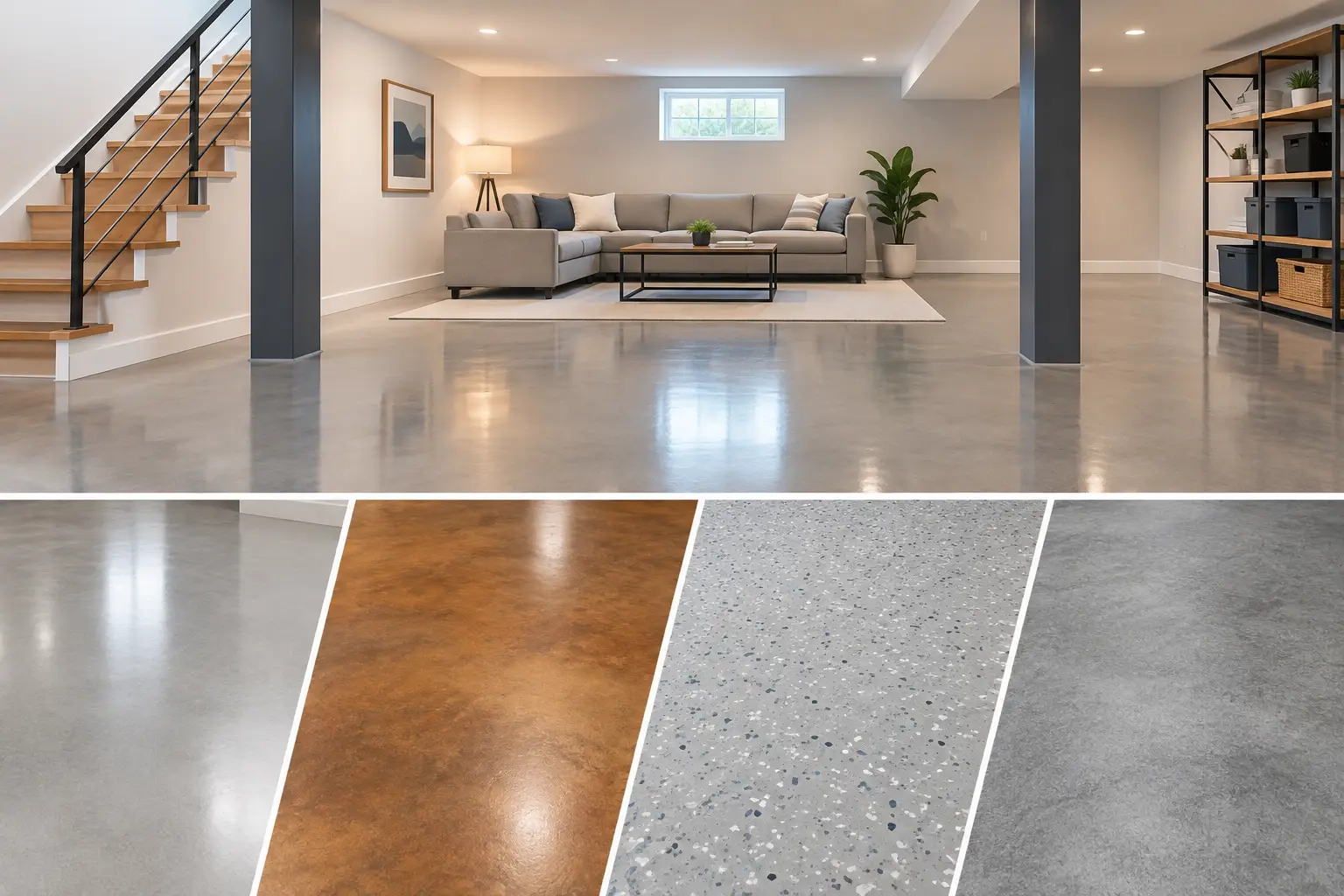
Best Finishes for Basement Concrete That Last
A basement floor does not get the same treatment as a living room floor upstairs. It deals with cooler temperatures, possible moisture vapor, heavy storage, utility equipment, and sometimes direct access from a garage or exterior door. The best finishes for basement concrete account for those conditions first, then deliver the appearance, traction, and maintenance level you want.
A good-looking floor that fails because moisture pushes through the slab is not a good finish. Before choosing a color or sheen, the concrete needs to be evaluated for cracks, vapor transmission, contamination, flatness, and prior coatings. Surface preparation is where a long-lasting basement floor begins.
Start With the Condition of the Concrete
Concrete slabs are not all the same. A newer, clean, dry slab may be ready for grinding and a protective system. An older basement can have paint residue, glue, oil spots, spalling, uneven areas, or hairline cracks that need repair before any finish goes down.
Moisture is the biggest deciding factor in most basement projects. Concrete is porous, and water vapor can move up through the slab even when there is no visible water on the surface. If that moisture is not properly tested and addressed, a coating can blister, peel, or lose bond over time.
A professional in-person assessment should also look for drainage issues around the building, plumbing leaks, active water intrusion, and signs of hydrostatic pressure. A floor finish is not a substitute for waterproofing a basement with an active water problem. Fix the water source first, then select a finish built for the slab’s actual condition.
Best Finishes for Basement Concrete by Use
The right system depends on whether the basement is a finished living area, home gym, workshop, storage room, commercial back room, or utility space. Here are the most practical options.
Epoxy Coatings for Durable, Custom Protection
Epoxy is one of the most popular basement concrete finishes because it creates a hard, protective surface with strong resistance to stains, abrasion, and many household or commercial chemicals. It is a practical choice for workshops, storage areas, mechanical rooms, hobby spaces, and finished basements where easy cleanup matters.
Epoxy can be installed in solid colors, decorative flake blends, metallic effects, or broadcast systems with added texture. Decorative flakes help hide dust and minor wear, while a textured topcoat can improve traction in areas that may get wet.
The trade-off is preparation. Epoxy requires a properly profiled, clean concrete surface for a dependable bond. It also needs the correct moisture-mitigation approach when vapor readings are elevated. Applying a basic store-bought kit over poorly prepared concrete may look fine initially, but it often becomes a peeling repair project later.
For basements that see regular traffic or need a clean, finished appearance, a professionally installed epoxy system is often the strongest value. It provides a controlled look, low maintenance, and a surface that stands up well to everyday use.
Polyaspartic and Polyurea Systems for Faster Installation
Polyaspartic and polyurea coatings are high-performance alternatives often used when schedule matters. They cure faster than conventional epoxy and offer excellent resistance to abrasion, staining, and chemicals. For commercial properties, this can be especially useful when flooring work must happen during off-hours to limit operational disruption.
These systems can also be installed with decorative flakes and protective topcoats, creating a durable floor for basement storage, work areas, or utility rooms. Their quick cure time can be a major advantage, but it does not eliminate the need for concrete preparation or moisture testing.
A fast-curing coating is only as reliable as the substrate beneath it. If the slab has active moisture issues, weak concrete, or contaminants, those conditions still need to be addressed before installation.
Polished Concrete for a Clean, Permanent Look
Polished concrete is an excellent option when the basement slab is in reasonably good shape and the goal is a modern, low-maintenance floor without a film-forming coating. The process mechanically grinds, densifies, and polishes the concrete to create a smooth, light-reflective surface.
For homeowners, polished concrete works well in contemporary finished basements, wine rooms, home gyms, and open recreation spaces. For commercial properties, it is a strong choice for offices, retail areas, showrooms, and facilities that need a clean professional appearance with minimal upkeep.
The main advantage is longevity. Because the finish is created within the concrete rather than sitting on top of it, there is no coating layer to peel. It is also easy to clean and can reduce dusting from the slab.
Polished concrete does have limits. Deep stains, major patchwork, heavy damage, and uneven repairs may remain visible or require more extensive remediation. A highly polished finish can also become slick when wet, so the intended use and traction requirements should be discussed before selecting the final sheen.
Concrete Stains and Dyes for Decorative Color
Stains and dyes change the appearance of concrete without creating the thick protective build of an epoxy system. They can add warm earth tones, gray washes, rich browns, black accents, or more contemporary color effects. When paired with polishing or a quality protective sealer, stained concrete can give a basement a distinctive finished look.
This option works best when the slab has natural character worth showing. Variations in color, aggregate exposure, old patches, and concrete texture can become part of the design. That is appealing to some property owners and unacceptable to others.
Stained concrete is not the best choice when you need to hide extensive slab damage. It also needs a protective top layer appropriate for the room’s traffic and exposure. For a decorative basement lounge or finished interior space, though, it can create a custom look that does not resemble a standard coated floor.
Concrete Resurfacing for Damaged or Uneven Slabs
When concrete has spalling, pitting, worn areas, surface cracking, or significant cosmetic damage, resurfacing may be the right first step. A cementitious overlay or repair system can restore the surface before it receives a coating, stain, or other finish.
Resurfacing is not a shortcut for structural problems or moisture pressure. The underlying slab still needs proper evaluation. But for floors with surface-level deterioration, it can provide a cleaner, more uniform foundation than trying to coat over visible damage.
In some basements, concrete leveling is also necessary before the final finish. This is especially relevant when the space will receive equipment, shelving, finished walls, or an intended floor covering that requires a flatter surface.
How to Choose the Right Basement Floor Finish
The best decision comes down to how the room will be used, what condition the slab is in, and what kind of maintenance you are willing to do. A basement workshop may need a chemical-resistant flake epoxy with traction. A finished residential basement may benefit from polished or stained concrete for a cleaner architectural look. A commercial utility room may need a high-build coating designed for frequent cleaning and equipment traffic.
Ask practical questions before approving a system: Will the floor see standing water? Are there known moisture concerns? Do you need slip resistance? Will vehicles, carts, weights, or storage racks be used? Is a uniform color more important than exposing the natural concrete? These details affect the correct prep method, repair work, coating thickness, and topcoat selection.
Avoid choosing only by initial price. A low-cost coating that fails in two years costs more when removal, grinding, moisture correction, and replacement are added to the job. Quality preparation, the right materials, and a system matched to the environment are what protect your investment.
Get a Basement Floor Built for Its Real Conditions
A basement concrete finish should be specified for the slab you have, not selected from a generic package. Orange County Concrete Polishing evaluates concrete conditions in person, prepares the surface correctly, and recommends systems based on traffic, moisture exposure, appearance goals, and schedule requirements.
Whether you need a hard-working epoxy floor, a polished concrete finish, decorative staining, or repairs before finishing, the right installation starts with a clear scope and honest assessment. A well-prepared basement floor can turn an overlooked space into one that is easier to use, easier to clean, and built to hold up for years.
Recent Post
Best Concrete Slab Repair Methods That Last
November 23, 2026 1:50 am
Penetrating vs. Topical Concrete Sealers: Which Is Right for Your Floor?
November 22, 2026 8:11 pm
How to Seal Concrete Floors for Lasting Protection
November 21, 2026 1:44 am