
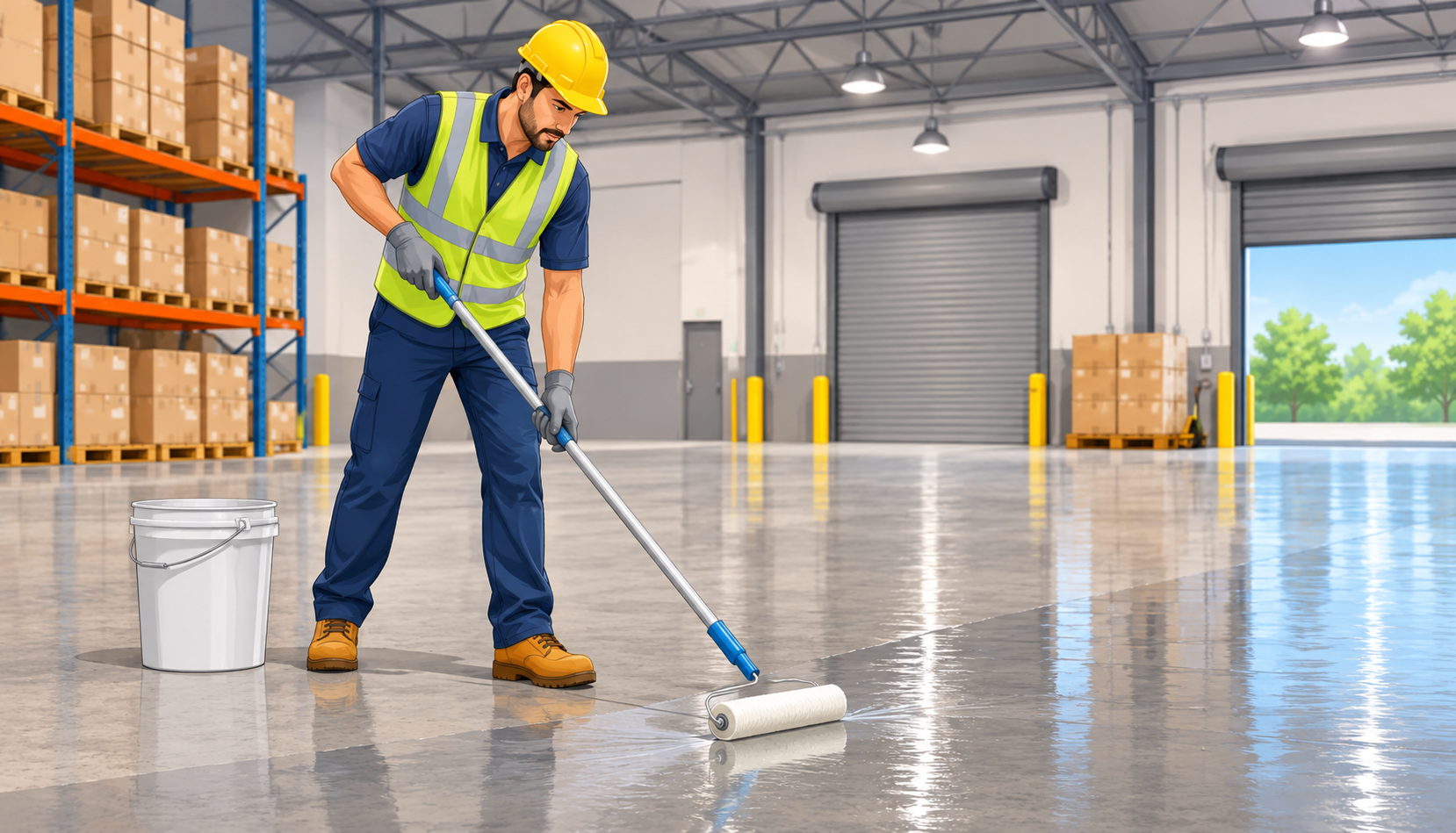
Penetrating vs. Topical Concrete Sealers: Which Is Right for Your Floor?
Choosing the right concrete sealer is an important part of protecting a concrete floor and maintaining its appearance. However, not all concrete sealers work in the same way. Some penetrate into the concrete to help reduce moisture absorption, while others create a protective film on the surface.
Understanding the difference between penetrating and topical concrete sealers can help property owners make a more informed decision. The right option depends on the floor’s condition, exposure to moisture and contaminants, expected traffic, and desired finish.
For homes and businesses in Orange County, selecting an appropriate concrete protection system can help support long-term floor performance. OC Concrete Polishing provides concrete flooring solutions, including concrete polishing, staining and dyes, resinous flooring, and concrete preparation.
In this guide, we compare penetrating and topical concrete sealers, explain their advantages and limitations, and discuss how to determine which option may be suitable for your floor.
What Is a Penetrating Concrete Sealer?
A penetrating concrete sealer is a treatment designed to enter the pores of concrete rather than form a continuous coating on top of the surface. Depending on its chemistry, it reacts within the concrete or lines the pore structure to help reduce the absorption of water and other substances.
Common penetrating sealer technologies include silane, siloxane, silicate, and siliconate formulations. These products are not identical: some are primarily water repellents, while others react with concrete components to modify or densify the surface.
Benefits of Penetrating Sealers
- Natural appearance: Most penetrating sealers leave little or no visible surface film, helping retain the concrete’s original appearance.
- Moisture resistance: Suitable formulations can reduce water absorption into concrete.
- Breathability: Many water-repellent penetrating products allow water vapor to pass through, although performance varies by formulation.
- No film to peel: Because they do not rely on a surface coating, they do not peel or flake in the same way as a failing film-forming sealer.
- Low visual impact: They are useful when the goal is protection without adding a glossy finish.
Where Are Penetrating Sealers Commonly Used?
Penetrating sealers are often considered for exterior concrete surfaces such as driveways, sidewalks, patios, and walkways. They may also suit other concrete surfaces where a natural appearance and reduced water absorption are priorities.
However, a standard water-repellent penetrating sealer may not provide sufficient protection against every oil, chemical, or industrial contaminant. Always match the product to the actual exposure and consult its technical data sheet.
What Is a Topical Concrete Sealer?
A topical concrete sealer, also called a film-forming sealer, creates a protective layer on the concrete surface instead of working primarily within its pores.
Depending on the formulation, a topical sealer can add a matte, satin, or glossy finish. Some products also enhance the concrete’s color or create a richer, wet-look appearance.
Common film-forming products include acrylic sealers, epoxy coatings, and polyurethane coatings. These products have different performance characteristics and should not be treated as interchangeable.
Benefits of Topical Sealers
- Appearance enhancement: Certain products deepen concrete color and create a decorative finish.
- Surface barrier: The coating can help protect against selected spills, stains, and contaminants.
- Finish options: Products are available in different sheen levels, depending on the formulation.
- Decorative applications: Topical sealers can be suitable for stained, stamped, or decorative concrete when the product is compatible.
- Maintenance options: Some coating systems can be cleaned and recoated as part of a planned maintenance program.
Where Are Topical Sealers Commonly Used?
Topical sealers may be considered for decorative concrete, stained surfaces, and selected interior or exterior floors where appearance enhancement and surface protection are important.
For demanding commercial or industrial environments, a specialized resinous flooring system may be more appropriate than a conventional sealer. The choice should account for traffic, chemical exposure, moisture conditions, and required surface performance.
Penetrating vs. Topical Concrete Sealers: Key Differences
The main difference is where each product provides protection. Penetrating sealers work within the concrete’s pore structure, while topical sealers create a film on the surface.
| Comparison | Penetrating Sealer | Topical Sealer |
| How it works | Enters the concrete pores | Forms a surface film |
| Appearance | Usually natural with little or no sheen | Can range from matte to glossy |
| Moisture protection | Helps reduce water absorption | Creates a surface barrier, depending on the product |
| Breathability | Many products allow vapor movement | Depends on coating chemistry and system |
| Peeling or flaking | No surface film to peel | Film may peel or flake if it fails |
| Surface wear | Treatment is within the near-surface concrete | Film is exposed to abrasion and wear |
| Maintenance | Depends on product and exposure | May require cleaning, recoating, or removal of a failing film |
| Common applications | Exterior concrete and natural-finish surfaces | Decorative concrete and selected coated floors |
Neither type is automatically better. The correct choice depends on what the concrete needs to withstand and how the finished floor should look.
Which Concrete Sealer Is Better for Your Floor?
Before choosing a concrete sealer, consider the floor’s environment and performance requirements.
1. Choose a Penetrating Sealer for a Natural Concrete Appearance
If you want to preserve the existing appearance of concrete without adding a visible coating, a penetrating sealer may be a suitable option.
For example, an exterior walkway or patio may benefit from a compatible water-repellent treatment where reducing water absorption is the main goal.
2. Choose a Topical Sealer for a Decorative Finish
If your priority is enhancing the appearance of stained or decorative concrete, a compatible topical sealer may be more appropriate.
Depending on the product, it can add sheen or deepen the surface color. Before applying it across the entire floor, test a small area to check the appearance and compatibility.
3. Consider Traffic and Surface Conditions
A floor exposed to frequent foot traffic, vehicle movement, equipment, or repeated cleaning needs a treatment designed for those conditions.
A standard penetrating sealer may be suitable for water-repellent protection but may not provide the chemical or abrasion resistance needed in a demanding facility. A suitable coating system may be required instead.
4. Evaluate Moisture and Existing Treatments
Moisture within a concrete slab can affect the performance of certain topical coatings. Existing sealers, curing compounds, stains, and contaminants can also interfere with penetration or adhesion.
The surface should be inspected and prepared according to the selected product’s requirements before application.
Can a Concrete Floor Have Both Penetrating and Topical Protection?
Some flooring systems use more than one treatment, but the products must be compatible and applied in the correct sequence.
For example, a penetrating treatment may be used for a specific protective purpose before a separate coating system. However, a penetrating product can also reduce the surface’s ability to accept a coating if it changes the substrate in a way that affects adhesion.
Do not assume that applying one sealer over another will improve protection. Check the manufacturers’ technical documentation and confirm compatibility before combining products.
Common Mistakes to Avoid When Sealing Concrete
Selecting the right product is only part of a successful concrete sealing project. Incorrect preparation or application can affect the final result.
- Choosing by appearance alone: A glossy finish does not necessarily mean better protection.
- Ignoring moisture conditions: Moisture can interfere with the penetration or adhesion of certain products.
- Applying over an incompatible coating: Existing treatments may need to be removed or prepared before resealing.
- Using too much product: Excess penetrating sealer that cannot absorb may leave residue or uneven marks.
- Overlooking traction: Some topical finishes can affect surface traction. Consider suitable slip-resistant additives where the product and application require them.
- Ignoring maintenance requirements: Every sealer or coating system has its own cleaning and maintenance recommendations.
Following the manufacturer’s product instructions and preparing the concrete correctly are essential steps.
Concrete Sealing Solutions in Orange County, CA
Concrete floors across Orange County are used in residential properties, retail spaces, offices, garages, warehouses, and industrial facilities. Each environment can have different requirements for appearance, moisture resistance, cleaning, and durability.
A suitable concrete treatment should be selected after evaluating the slab, its current condition, and how the space is used.
OC Concrete Polishing offers concrete flooring services that include concrete polishing, concrete staining and dyes, resinous flooring, moisture-control systems, and concrete preparation. If you are considering a new floor finish or protection system, the team can help discuss the options that may fit your project.
Explore OC Concrete Polishing to learn more about its flooring solutions.
Frequently Asked Questions About Penetrating and Topical Concrete Sealers
1. What is the main difference between penetrating and topical concrete sealers?
A penetrating sealer enters the concrete’s pores to help reduce absorption, while a topical sealer forms a protective film on the surface. The two types also differ in appearance, maintenance, and performance.
2. Which concrete sealer lasts longer?
There is no universal lifespan for either type. Durability depends on the product chemistry, concrete condition, traffic, weather exposure, application quality, and maintenance. Compare the manufacturer’s stated performance for the intended application rather than relying on the category alone.
3. Do penetrating concrete sealers change the floor’s appearance?
Most conventional penetrating water-repellent sealers are designed to leave little or no visible film. However, some products can darken or enhance the surface, so checking the product information and testing a small area is important.
4. Do topical concrete sealers make floors slippery?
Some topical finishes can affect surface traction, particularly when wet. The result depends on the coating, surface texture, and conditions. Suitable slip-resistant additives may be needed for certain applications.
5. Can I apply a topical sealer over a penetrating sealer?
Not always. Some penetrating treatments can affect the adhesion of a later coating. Confirm compatibility with the product manufacturers and prepare the surface as specified before applying another system.
6. Are penetrating sealers suitable for commercial concrete floors?
They may be suitable for selected commercial floors where reduced water absorption and a natural appearance are priorities. Areas exposed to heavy traffic, chemicals, or frequent cleaning may require a different protective system.
7. How do I know which concrete sealer my floor needs?
Consider the floor’s condition, moisture exposure, traffic, contaminants, desired appearance, and existing treatments. A professional assessment can help identify a suitable product and preparation process.
Recent Post
Best Concrete Slab Repair Methods That Last
November 23, 2026 1:50 am
How to Seal Concrete Floors for Lasting Protection
November 21, 2026 1:44 am
Concrete Sealing: Benefits, Applications, and When Your Floor Needs It
November 19, 2026 7:02 pm