
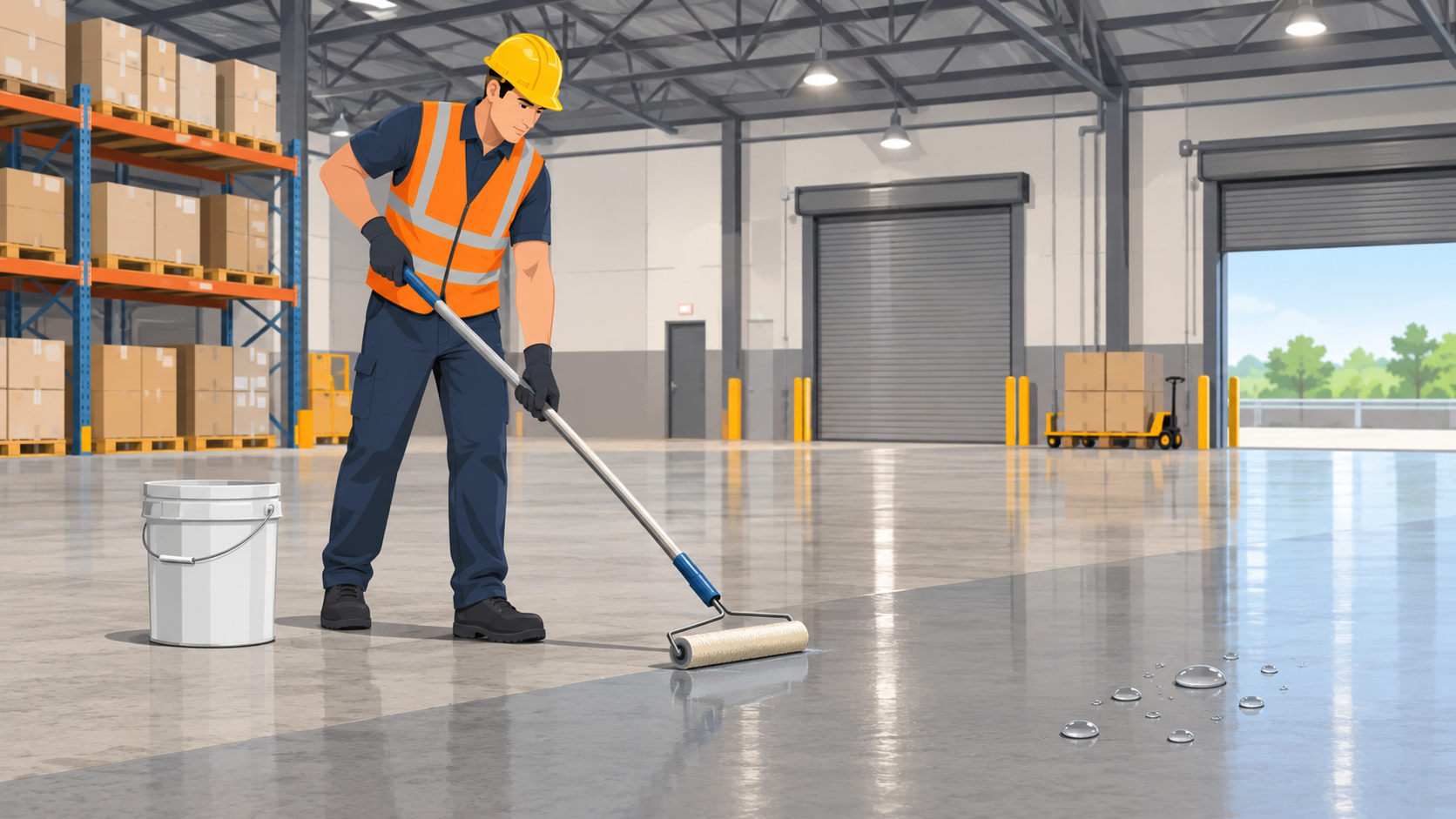
Concrete Sealing: Benefits, Applications, and When Your Floor Needs It
Concrete is known for its strength and durability, but even a properly installed concrete floor can be affected by moisture, spills, dirt, chemicals, and everyday wear. Over time, these conditions can impact its appearance and make routine cleaning more difficult.
Concrete sealing is one way to help protect concrete surfaces from certain types of damage and maintain their appearance. A suitable concrete sealer can reduce liquid absorption, help limit staining, and make routine maintenance easier.
However, not every concrete floor requires the same type of sealer. The right solution depends on the floor’s condition, intended use, exposure, and desired finish.
For property owners and facility managers exploring professional concrete flooring solutions, OC Concrete Polishing provides services including concrete polishing, concrete staining and dyes, and resinous flooring. In this guide, we explain what concrete sealing is, its benefits, common applications, signs your floor may need sealing, and how to choose the right protective treatment.
What Is Concrete Sealing?
Concrete sealing is the process of applying a protective treatment to a concrete surface to help reduce the penetration of moisture, stains, dirt, and other contaminants.
Concrete naturally contains small pores that can absorb liquids. When water, oil, or other substances enter these pores, they may leave stains or make the surface harder to maintain.
A suitable concrete sealer helps limit this absorption or creates a protective layer over the surface. Depending on the product, it can also change the appearance of the concrete by adding a matte, satin, or glossy finish.
Concrete sealers generally fall into two main categories: penetrating sealers and film-forming sealers. Each works differently and is designed for specific applications.
What Are the Benefits of Concrete Sealing?
Concrete sealing can provide several practical benefits when the correct product is selected and applied properly.
1. Helps Protect Against Moisture
Unprotected concrete can absorb water through its pores. Repeated exposure to moisture may contribute to surface deterioration or other moisture-related problems.
A suitable concrete sealer can reduce water absorption and help protect the surface from everyday moisture exposure.
However, standard concrete sealers should not be considered complete waterproofing systems. Floors with persistent water intrusion may require a specialized moisture-control or waterproofing solution.
2. Helps Reduce Staining
Oil, grease, food spills, and other contaminants can leave marks on porous concrete. Once these substances penetrate the surface, cleaning may become more difficult.
Concrete sealing can help reduce the absorption of certain contaminants, making routine cleaning easier.
For commercial properties, this can help maintain a cleaner-looking floor, particularly in areas exposed to regular spills and foot traffic.
3. Makes Routine Cleaning Easier
A properly sealed concrete surface may be easier to maintain because dirt and liquids are less likely to penetrate the concrete.
Regular sweeping, dust mopping, and cleaning with suitable products can help maintain the surface.
Although sealing can improve cleanability, it does not eliminate the need for regular floor maintenance.
4. Helps Protect Against Surface Wear
Commercial and industrial floors may experience repeated foot traffic, equipment movement, and frequent cleaning.
Some concrete sealers can help improve resistance to everyday surface wear. However, their performance depends on the formulation and the conditions in which the floor is used.
For areas exposed to heavy mechanical traffic or aggressive chemicals, a specialized floor coating may be more appropriate than a standard sealer.
5. Improves the Appearance of Concrete
Concrete sealers are available in different finishes. Depending on the product, they can maintain a natural appearance or provide a satin or glossy finish.
Some products can also enhance the appearance of decorative or stained concrete.
The final result depends on the concrete condition, selected sealer, and application method. Testing a small area before treating the entire floor can help confirm the expected finish.
Common Applications of Concrete Sealing
Concrete sealing can be considered for different residential, commercial, and industrial environments. The appropriate product depends on the surface and its exposure.
Commercial Concrete Floors
Commercial properties need flooring that is practical to maintain and suitable for regular use.
Concrete sealing may be appropriate for selected commercial floors where reducing liquid absorption, improving cleanability, and maintaining appearance are priorities.
Before selecting a product, consider foot traffic, cleaning procedures, spills, and the required surface traction.
Warehouses and Industrial Facilities
Warehouse and industrial floors may be exposed to equipment movement, dust, oil, chemicals, and frequent cleaning.
A suitable concrete treatment may help protect the surface. However, the product must match the facility’s operating conditions.
Areas exposed to heavy equipment or chemical spills may require a more specialized industrial flooring system.
Retail Stores and Showrooms
Retail stores and showrooms often need flooring that supports a clean and professional appearance.
Concrete sealing may help maintain selected exposed concrete surfaces. The finish should be chosen according to the desired appearance, foot traffic, and cleaning requirements.
Garages and Parking Areas
Garage and parking surfaces may encounter vehicle fluids, tire marks, moisture, and dirt.
A compatible concrete sealer can help reduce the penetration of certain liquids and make routine maintenance easier. The selected product should be suitable for vehicle traffic and the expected exposure.
Outdoor Concrete Surfaces
Outdoor concrete is exposed to rain, sunlight, temperature changes, and environmental contaminants.
An appropriate exterior concrete sealer can help reduce water absorption and protect the surface. UV exposure, drainage, and the existing concrete finish should be considered before application.
Types of Concrete Sealers
Selecting the right concrete sealer is essential because different products provide different types of protection.
1. Penetrating Concrete Sealers
Penetrating sealers enter the pores of the concrete and provide protection within the surface rather than creating a prominent film on top.
Common examples include silane- and siloxane-based products.
Their characteristics may include:
- Helping reduce water absorption
- Maintaining a more natural concrete appearance
- Providing protection without a thick surface film
- Being suitable for selected exterior concrete applications
The product must be compatible with the concrete and its intended use.
2. Film-Forming Concrete Sealers
Film-forming sealers create a protective layer on the concrete surface.
Depending on the formulation, these products can provide a satin or glossy appearance and help reduce the penetration of certain contaminants.
Acrylic-based sealers are one common example.
These products may be suitable for decorative concrete and surfaces where appearance enhancement is important. However, they require appropriate surface preparation and maintenance.
Incorrect application or incompatible existing treatments can contribute to peeling, bubbling, whitening, or uneven finishes.
3. Specialized Concrete Coatings
Some concrete floors require more than a conventional sealer.
Epoxy, polyurethane, and polyaspartic systems are examples of specialized coating technologies used for specific flooring requirements.
They are not interchangeable with every standard concrete sealer. Their suitability depends on the concrete substrate, expected traffic, chemical exposure, and project requirements.
When Does Your Concrete Floor Need Sealing?
There is no single schedule that applies to every concrete floor. The need for resealing depends on the product previously used, surface condition, exposure, and maintenance history.
Look for these common signs:
1. Water Absorbs Quickly Into the Surface
If water no longer beads or remains on the surface and instead appears to absorb quickly, the existing treatment may have worn down or the concrete may be unprotected.
This observation alone does not confirm that resealing is necessary. The surface should be evaluated before choosing a replacement product.
2. Stains Are Becoming Difficult to Remove
Repeated oil, grease, food, or dirt marks may indicate that the surface is absorbing contaminants more readily.
If routine cleaning is becoming less effective, inspect the concrete and determine whether the existing sealer is still performing as intended.
3. The Surface Appearance Has Changed
A previously consistent finish may become dull, patchy, or uneven as a surface treatment wears down.
Changes can also result from abrasion, cleaning products, or other surface conditions. Identify the cause before applying another sealer.
4. The Existing Sealer Is Peeling or Flaking
Peeling, flaking, or bubbling may indicate a problem with an existing film-forming sealer.
Applying a new product over a failing layer without proper preparation can cause further adhesion problems. The old treatment may need to be removed or corrected first.
5. The Floor Has Increased Exposure
A change in how a space is used can affect its flooring requirements.
For example, a warehouse that begins handling more equipment or a commercial area that experiences more frequent cleaning may need its existing floor treatment reviewed.
What Is the Concrete Sealing Process?
A successful concrete sealing project involves more than applying a product to the floor. Surface preparation, product selection, and application conditions all matter.
Step 1: Inspect the Concrete
Evaluate the existing concrete for cracks, stains, previous coatings, moisture conditions, contamination, and general wear.
This helps determine whether the surface is suitable for sealing and what preparation may be necessary.
Step 2: Select the Right Sealer
The product should match the floor’s intended use.
Consider whether the floor is indoors or outdoors, the expected traffic, moisture exposure, chemical exposure, desired appearance, and maintenance requirements.
Step 3: Prepare the Surface
The concrete must be prepared according to the manufacturer’s instructions.
Preparation may involve cleaning, removing contaminants, correcting surface defects, or removing an incompatible existing sealer.
Step 4: Apply the Sealer
Apply the selected product using the manufacturer’s recommended method and coverage rate.
Temperature, humidity, ventilation, and concrete moisture can affect the application and final result.
Step 5: Allow Proper Curing
Allow the floor to cure for the period specified by the manufacturer.
Dry-to-touch time and the time required before foot traffic or vehicle traffic are not necessarily the same. Following the curing instructions helps protect the finished surface.
Concrete Sealing vs. Concrete Polishing vs. Epoxy Coating
These treatments serve different purposes and should not be considered interchangeable.
| Treatment | Main purpose |
| Concrete sealing | Helps reduce liquid absorption and surface contamination |
| Concrete polishing | Mechanically refines the concrete surface to create a polished finish |
| Epoxy coating | Creates a resin-based protective flooring system |
Concrete polishing may also involve densifiers and stain guards as part of a specified process. A densifier is not the same as a conventional concrete sealer.
The best option depends on the slab’s condition, intended appearance, traffic, and performance requirements.
How to Choose the Right Concrete Sealer
Before selecting a concrete sealer, consider these important factors:
- Location: Interior floors, outdoor surfaces, garages, and industrial facilities may need different products.
- Exposure: Consider water, oil, chemicals, sunlight, equipment movement, and foot traffic.
- Desired finish: Decide whether a natural, matte, satin, or glossy appearance is appropriate.
- Compatibility: Existing coatings, stains, curing compounds, and previous sealers may affect product performance.
- Maintenance: Review the cleaning methods and maintenance requirements recommended by the manufacturer.
- Application requirements: Check the product data sheet for preparation, coverage, application, curing, and safety instructions.
For commercial and industrial floors, professional evaluation can help prevent the selection of an unsuitable product.
Concrete Sealing in Torrance, CA
Property owners and facility managers in Torrance, California, should consider how their concrete floors are used and exposed before selecting a protective treatment.
Commercial spaces, warehouses, garages, and other concrete environments can have different requirements. A floor exposed to regular cleaning may need a different treatment from one exposed to vehicle fluids, heavy equipment, or outdoor weather.
The right approach is to evaluate the existing concrete, identify its main performance requirements, and select a compatible surface treatment.
OC Concrete Polishing provides concrete flooring solutions, including concrete polishing, concrete staining and dyes, resinous flooring, and floor preparation.
If you are considering concrete sealing or a protective concrete finish, contact the team to discuss your flooring requirements and the most suitable option for your project.
Frequently Asked Questions About Concrete Sealing
1. What is the main purpose of concrete sealing?
The main purpose of concrete sealing is to help protect concrete against moisture absorption, staining, and surface contamination. The level of protection depends on the selected sealer and application conditions.
2. Is sealing concrete worth it?
Concrete sealing can be worthwhile when the selected product addresses the floor’s exposure and maintenance requirements. It may help reduce liquid absorption, make cleaning easier, and maintain the surface appearance.
3. How often should concrete be sealed?
There is no universal resealing schedule. Timing depends on the product, traffic, weather exposure, surface condition, and maintenance. Follow manufacturer recommendations and inspect the floor periodically.
4. Does concrete sealer make concrete waterproof?
No. Many concrete sealers help reduce water penetration, but they do not automatically make a concrete slab waterproof. Persistent moisture intrusion may require a separate moisture-control or waterproofing solution.
5. Can you seal an existing concrete floor?
Yes. An existing concrete floor may be suitable for sealing if its condition is appropriate and the selected product is compatible. Cleaning, repairs, or removal of old treatments may be necessary.
6. Does concrete sealing make floors shiny?
Not necessarily. Some sealers maintain a natural appearance, while film-forming products can provide satin or glossy finishes.
7. Can you apply concrete sealer over an old sealer?
Sometimes, but compatibility must be checked first. Applying a new product over an incompatible or damaged treatment can cause adhesion and appearance problems.
8. Is concrete sealing the same as epoxy flooring?
No. Concrete sealing generally involves a penetrating treatment or surface sealer. Epoxy flooring is a resin-based coating system designed for specific flooring requirements.
9. Is concrete sealing suitable for commercial floors?
It can be suitable for selected commercial floors. The correct product depends on traffic, moisture exposure, cleaning methods, chemical exposure, and required surface performance.
10. How do I choose the right concrete sealer?
Evaluate the concrete condition, intended use, exposure, desired finish, and existing treatments. A flooring professional can help identify a suitable product and preparation method.
Recent Post
Best Concrete Slab Repair Methods That Last
November 23, 2026 1:50 am
Penetrating vs. Topical Concrete Sealers: Which Is Right for Your Floor?
November 22, 2026 8:11 pm
How to Seal Concrete Floors for Lasting Protection
November 21, 2026 1:44 am