
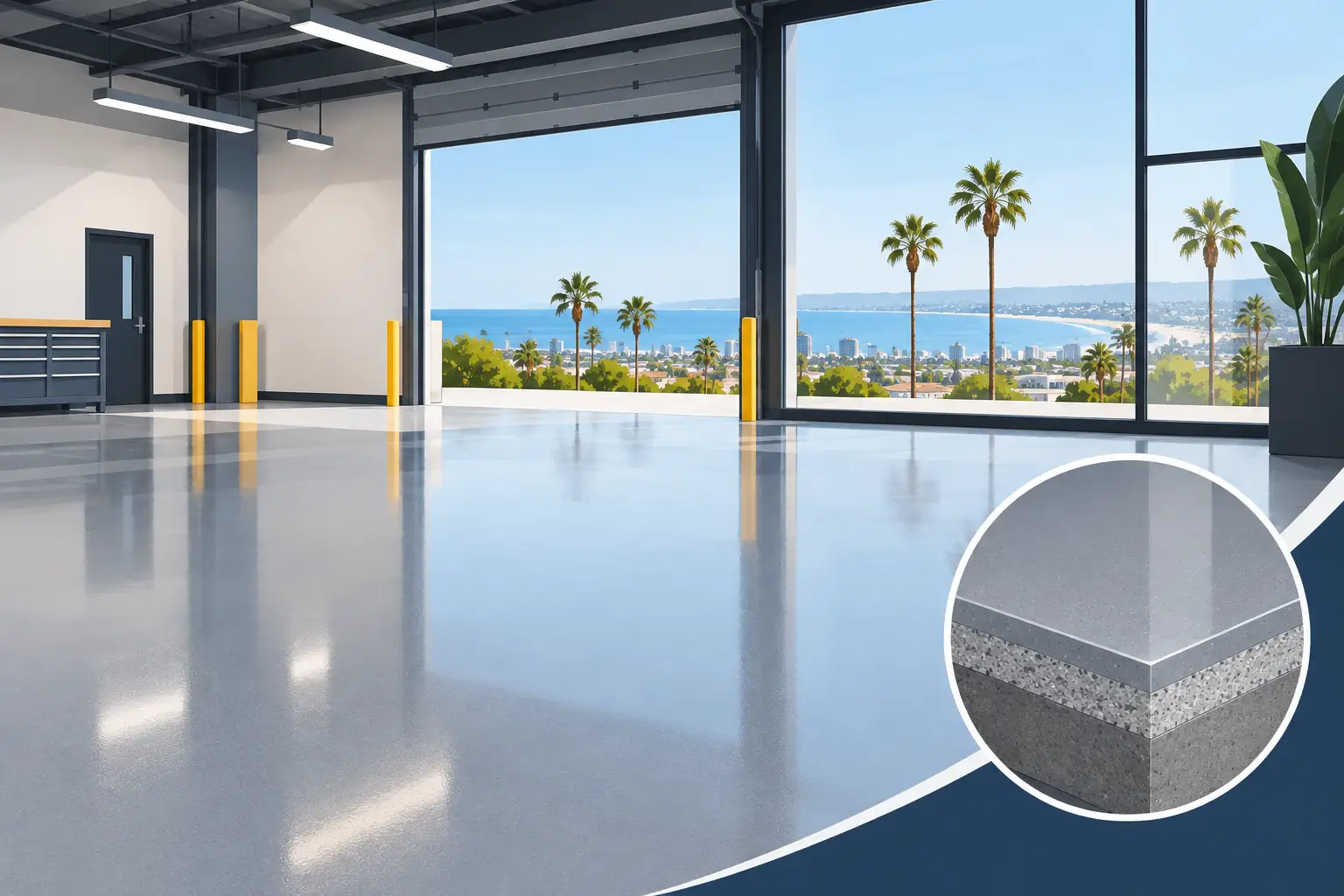
Resinous Flooring for Demanding Orange County Spaces
A warehouse floor can look fine at 8 a.m. and show every tire mark, oil spill, and dropped pallet by the end of the day. A garage has its own demands: hot tires, road salt, tools, leaks, and constant foot traffic. Resinous flooring is built for these conditions, providing a hard-wearing surface that can be customized for appearance, traction, chemical resistance, and the way a space is actually used.
For Orange County property owners and facility managers, the right system is not simply a matter of picking a color chip. The performance of a resin floor depends on the concrete beneath it, the coating chemistry, the surface preparation, and the installation plan. A properly specified system can simplify cleaning and protect the slab for years. A poorly prepared one can peel, blister, or wear out long before it should.
What Is Resinous Flooring?
Resinous flooring is a category of seamless floor systems made by combining liquid resins with hardeners and, in many cases, broadcast materials such as decorative flakes, colored quartz, or silica sand. Once cured, the materials form a continuous protective layer over concrete.
Epoxy is the system most people recognize, especially for garages, retail backrooms, workshops, and industrial areas. It offers strong adhesion, build thickness, and chemical resistance. Polyaspartic and polyurethane topcoats are often used where faster return-to-service, UV stability, flexibility, or improved abrasion resistance matter. In demanding facilities, a multi-coat system may use more than one material because each layer has a different job.
That distinction matters. There is no single “best” resin floor for every project. A decorative garage floor and a commercial kitchen service corridor may both need a resin system, but they need different levels of texture, thickness, chemical protection, and moisture control.
Where Resin Floors Make Sense
Resin systems are a practical fit wherever bare concrete is hard to keep clean or is exposed to conditions that shorten the life of ordinary paint. They are common in residential garages, auto shops, warehouses, retail spaces, showrooms, airplane hangars, laboratories, storage rooms, food-service support areas, and manufacturing facilities.
In a garage, homeowners often want a floor that is easier to sweep, resistant to common automotive fluids, and finished with a clean decorative look. Full-flake systems are popular because they hide minor dust and scuffs better than a solid color. A clear topcoat can add stain resistance and help the finish hold up against daily use.
For commercial and industrial spaces, the decision is usually more operational. Facility managers may need a surface that handles forklift traffic, chemical exposure, rolling loads, or frequent washdowns without creating excessive maintenance. Retail and office clients may prioritize a polished, branded appearance while still needing a durable finish that can take customer traffic.
Parking structures and exterior-adjacent areas require special attention. Sun exposure, temperature changes, moisture, and tire traffic can affect material selection. Standard epoxy may discolor in direct UV exposure, so a UV-stable topcoat is often the better choice for areas with significant sunlight.
The Concrete Prep Determines the Result
A coating is only as dependable as the slab it is bonded to. This is why surface preparation is not an optional add-on. It is the work that determines whether the system bonds properly and performs as specified.
Concrete must be mechanically prepared through grinding or shot blasting to remove weak surface material, previous coatings, contaminants, curing compounds, and smooth laitance. The goal is to create a clean, properly profiled surface that gives the resin a sound mechanical bond. Simply acid etching or applying a coating over an unprepared slab may look acceptable at first, but it is not the standard for long-term performance in high-use areas.
Cracks, spalls, joints, and low spots should also be evaluated before coating begins. Some cracks can be filled and repaired for a cleaner appearance. Moving control joints generally need to remain functional, so filling them solid is not always the right answer. If the slab has drainage problems or major unevenness, leveling and repair may need to happen before the final system is installed.
Moisture is another critical factor, especially in older slabs or ground-level spaces. Moisture vapor moving up through concrete can interfere with adhesion and cause failures. A professional evaluation helps determine whether a moisture-mitigation primer or a different flooring approach is required.
Choosing the Right Resin System
The best system starts with the conditions of the space, not a product name. Before selecting materials, a contractor should understand what moves across the floor, what may spill on it, how often it is cleaned, and how much downtime the site can tolerate.
A thin decorative coating can be appropriate for a light-use residential garage. A warehouse receiving frequent pallet-jack or forklift traffic may need a thicker build, a high-wear topcoat, and a texture selected to balance traction with cleanability. In areas exposed to oils, solvents, battery acid, food byproducts, or industrial chemicals, chemical resistance must be matched to the substances actually present.
Slip resistance is equally specific. A glossy floor can look sharp, but excessive smoothness is not appropriate for every environment. Silica aggregate, aluminum oxide, or other traction additives can improve footing. More texture improves grip, particularly where water or oils are present, but it can also make cleaning more involved. The right amount is based on the use of the area, not a one-size-fits-all finish.
Color and finish also serve a purpose beyond appearance. Light colors can brighten a work area and make debris easier to spot. Decorative flakes can help disguise dust and minor wear. Safety striping, walkway markings, and designated work zones can be incorporated into commercial systems when organization and visibility are priorities.
Installation Planning Matters for Active Businesses
Most businesses cannot shut down operations indefinitely for a flooring project. The installation schedule should account for surface preparation, repair work, material cure times, ventilation, access routes, and return-to-service requirements.
Some fast-curing resin systems allow a quicker installation window than traditional epoxy-only systems. That can be valuable for retail spaces, restaurants, warehouses, and other facilities that need to limit disruption. Faster is not automatically better, however. The material must still be appropriate for the substrate, temperature, humidity, and intended traffic.
A qualified contractor will identify staging areas and develop a plan for working in phases when needed. Off-hours scheduling can keep a facility functional while flooring work is completed in sections. This is especially useful for occupied offices, active warehouses, and customer-facing commercial properties where access cannot be blocked for long.
Maintenance Is Straightforward, Not Maintenance-Free
One advantage of resin flooring is that it removes the grout lines, seams, and porous concrete texture that trap dirt and fluids. Routine care is usually simple: sweep or dust mop dry debris, use a neutral cleaner for regular washing, and address spills before they sit for extended periods.
Still, these floors are not indestructible. Sharp metal edges, heavy impact, aggressive chemicals, and dragging equipment can damage any finish. Entry mats can reduce abrasive grit. Protective pads under equipment and proper wheel selection for carts or machinery also help preserve the topcoat.
Avoid harsh cleaners unless they are approved for the installed system. Degreasers, bleach solutions, and specialty chemicals may be acceptable at certain concentrations, but the answer depends on the resin chemistry and the exposure duration. For commercial facilities, creating a simple cleaning protocol protects both the floor and the investment.
What Affects the Cost of a Resin Floor?
Square footage matters, but it is not the only cost driver. Surface condition often has the biggest impact. Concrete with failed coatings, oil contamination, extensive cracking, moisture concerns, or significant leveling needs requires more preparation than a clean, sound slab.
The selected system also changes the price. Decorative flake floors, solid-color epoxy systems, quartz broadcast floors, high-build industrial coatings, and chemical-resistant linings each use different materials and labor methods. Added traction, cove base, line striping, repairs, and off-hours installation can also affect the scope.
The most useful quote is one that clearly explains the preparation work, coating layers, finish options, and expected use of the finished floor. Comparing estimates based on price alone can be misleading when one proposal includes professional grinding, repairs, and a protective topcoat while another covers only a thin application over minimally prepared concrete.
Get a Floor System Built for the Way You Work
Resinous flooring earns its value when the system is designed around real conditions, not just a preferred color. Whether the project is a garage, showroom, warehouse, restaurant backroom, or industrial work area, the details behind the finish matter.
Orange County Concrete Polishing provides in-person evaluations and customized proposals based on your slab condition, traffic level, scheduling needs, and performance goals. A clear scope up front gives you a floor that is easier to maintain, safer underfoot, and ready for the demands of the space. The right first step is a site visit that turns those day-to-day demands into a flooring system that holds up.
Recent Post
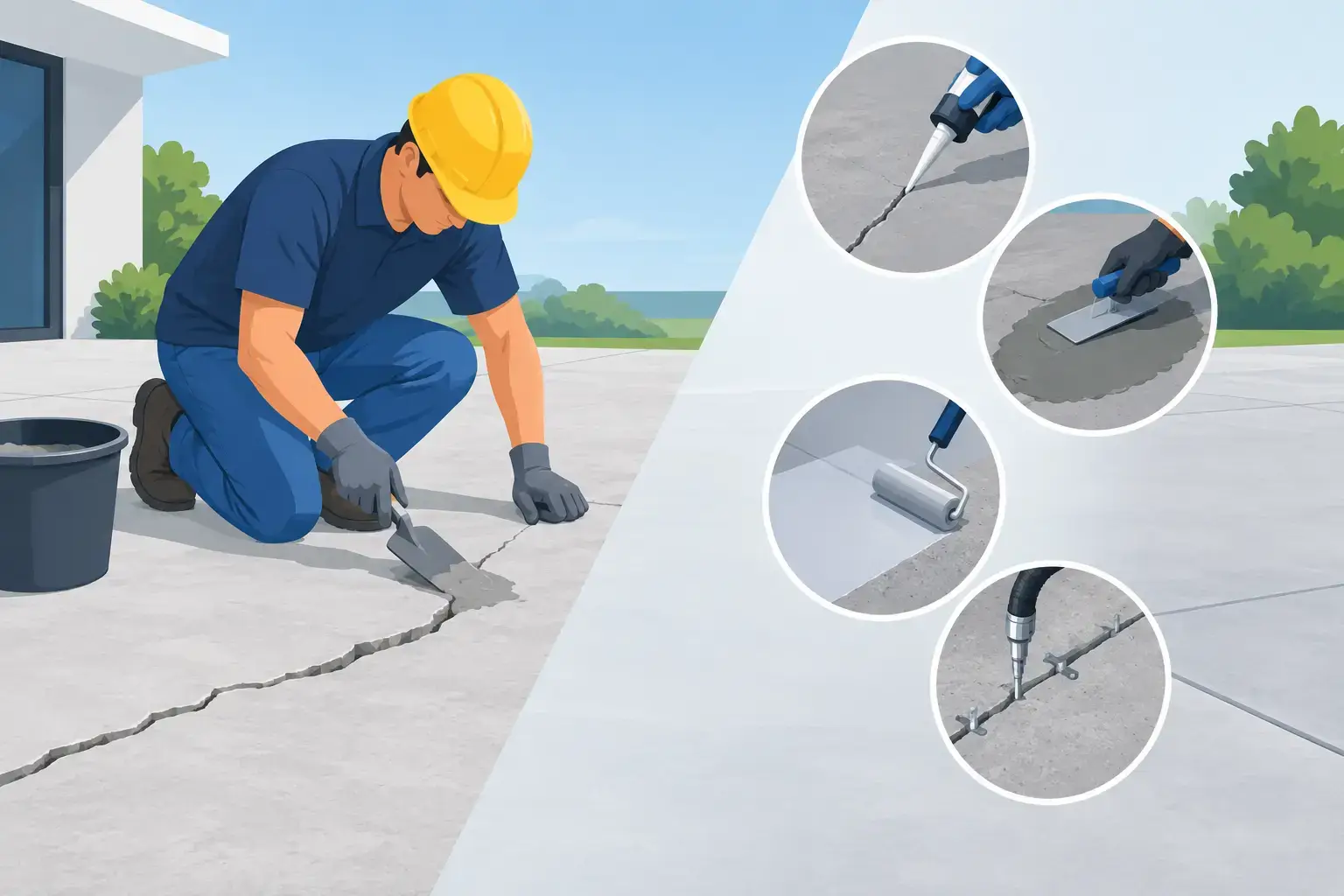
Best Concrete Slab Repair Methods That Last
November 23, 2026 1:50 am
Penetrating vs. Topical Concrete Sealers: Which Is Right for Your Floor?
November 22, 2026 8:11 pm
How to Seal Concrete Floors for Lasting Protection
November 21, 2026 1:44 am