
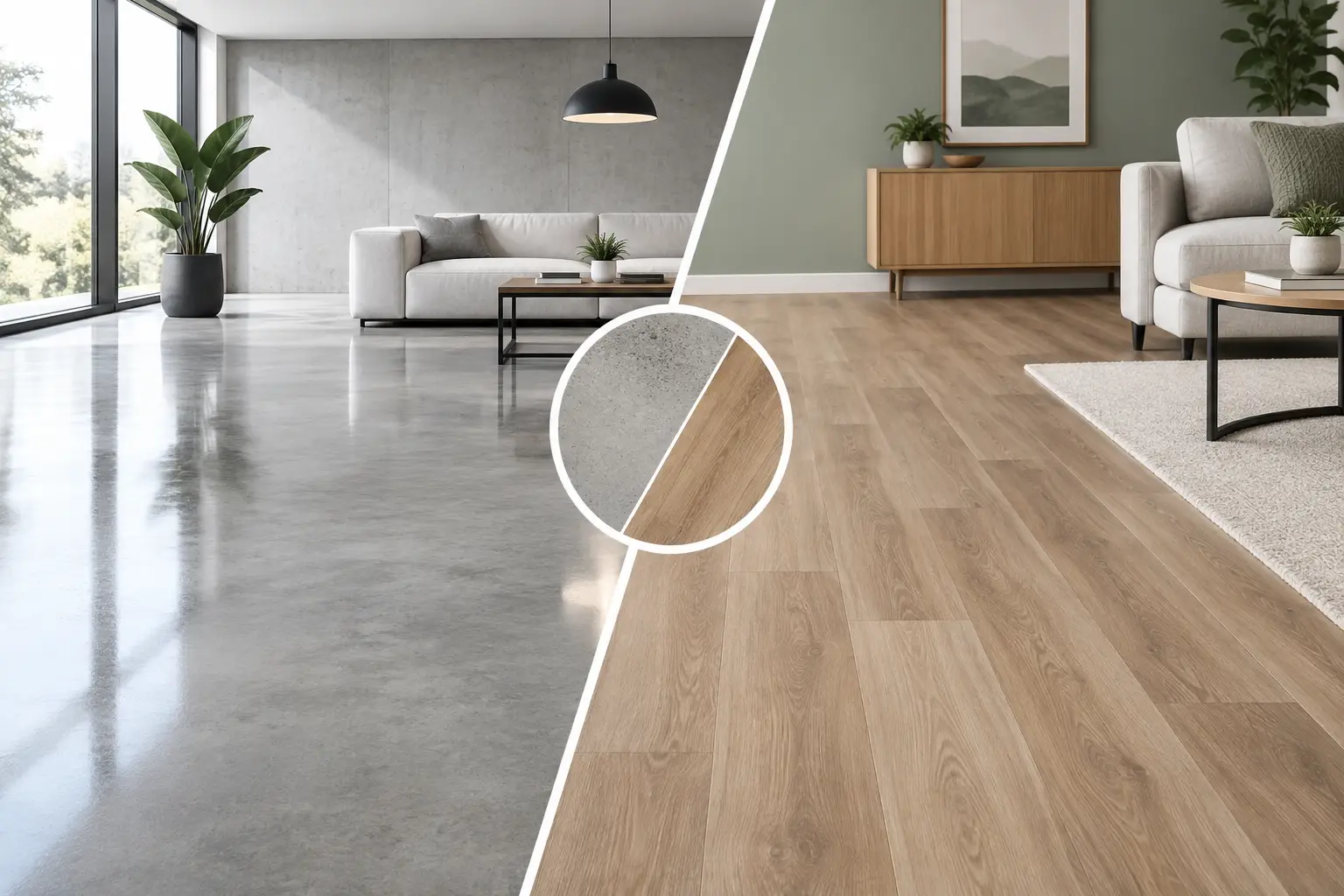
Polished Concrete Versus Vinyl Flooring
A floor can look great on opening day and still become a maintenance problem six months later. That is why polished concrete versus vinyl flooring is not simply a color or style decision. For Orange County homes, retail stores, offices, garages, and industrial facilities, the right choice depends on traffic, moisture, cleaning routines, downtime, and what the existing slab can support.
Vinyl flooring is often selected for its softer feel, wide design selection, and fast visual transformation. Polished concrete is chosen when owners want a hard-wearing surface that becomes part of the building itself. Both can work well, but they perform very differently once carts start rolling, furniture moves, spills happen, and daily cleaning begins.
Polished Concrete Versus Vinyl Flooring at a Glance
Polished concrete is created by mechanically grinding, honing, and polishing an existing concrete slab. Depending on the slab condition and desired finish, the process may include crack repair, joint treatment, densifiers, dyes, stains, and protective guards. The finished floor is not a layer placed on top of concrete. It is the concrete surface, refined for appearance, strength, and easier maintenance.
Vinyl flooring is a manufactured finish installed over a prepared subfloor. It may come as luxury vinyl plank, luxury vinyl tile, sheet vinyl, or commercial vinyl composition tile. It can imitate wood, stone, terrazzo, or other materials while providing more cushion underfoot than concrete.
The practical difference is simple: polished concrete relies on the quality and condition of the slab already in place, while vinyl relies heavily on substrate preparation and the performance of its wear layer, adhesive, seams, and edges. A property owner should compare those systems based on the actual environment, not just a showroom sample.
Durability Under Real Traffic
For warehouses, showrooms, airplane hangars, auto service areas, garages, and retail spaces with heavy rolling loads, polished concrete is usually the stronger long-term option. A properly prepared and densified concrete floor handles foot traffic, carts, forklifts, equipment, and frequent cleaning without peeling or separating from the slab. It also does not have seams or plank edges that can lift over time.
That does not mean every polished floor is automatically indestructible. Concrete can crack, and existing cracks or spalls need to be evaluated before work begins. Heavy impacts can chip the surface, while harsh acidic products can etch it. The advantage is that a professional can often repair, re-hone, or refresh concrete instead of replacing an entire floor covering.
Vinyl performs well in many homes, offices, boutiques, and light commercial spaces. Quality commercial-grade vinyl can resist scratches and stains better than older vinyl products, but it remains a thinner finish over a subfloor. Sharp objects, dragging furniture, rolling point loads, dropped tools, and damaged edges can leave permanent marks. In busy commercial environments, replacement may eventually be required in sections or across the entire floor to maintain a consistent appearance.
Moisture Changes the Decision
Moisture is one of the most common reasons flooring installations fail. Concrete slabs can release moisture vapor long after construction, especially in ground-level spaces, garages, and older buildings. If that moisture is not tested and properly addressed, vinyl adhesives can break down, planks can cup or shift, and sheet seams can fail.
Polished concrete does not eliminate moisture issues, but it does not depend on a glued-on finish remaining bonded to the slab. For locations where moisture is a concern, evaluating the concrete and specifying the right surface system upfront can prevent expensive flooring failures later.
Maintenance and Cleaning Requirements
Polished concrete is popular with facility managers because it simplifies maintenance. Daily cleaning typically involves dust mopping and damp mopping with a neutral cleaner. The dense, refined surface resists dusting better than untreated concrete and does not require waxing, stripping, or frequent recoating like many traditional floor systems.
Vinyl is also relatively easy to clean, especially in low-traffic settings. Sweeping and damp mopping are usually enough for routine care. The added work comes with protecting the surface: using the correct cleaner, avoiding abrasive pads, cleaning spills before they stain seams, and periodically addressing scuffs, scratches, or worn traffic lanes. Some commercial vinyl products also require more involved maintenance programs to keep their finish looking consistent.
For a business trying to reduce overnight janitorial labor and recurring floor-care costs, polished concrete can make a strong case. For a homeowner who prefers a warmer walking surface and is comfortable replacing flooring down the road, vinyl may still be the better fit.
Appearance, Comfort, and Design Flexibility
Vinyl wins on pattern selection. It can closely resemble oak, marble, concrete, tile, and other finishes without the cost or installation requirements of those materials. It also feels warmer and quieter underfoot, which matters in bedrooms, living areas, and offices where people stand or walk for long periods.
Polished concrete has a different kind of design value. It delivers a clean, modern surface with natural variation from the existing slab. Aggregate exposure, cream finishes, dyes, stains, sheen level, joint layout, and decorative scoring can all influence the final look. No two slabs polish exactly the same, and that character is often the point.
For retail, restaurants, creative offices, modern residences, and finished garages, polished concrete can create a high-end architectural look without adding a separate floor covering. However, owners should be realistic about the slab. Prior patches, uneven coloration, existing stains, and crack repairs may remain visible to some degree. A site visit and sample area help set clear expectations before the full project begins.
Is Polished Concrete Too Hard for a Home?
Concrete is harder underfoot than vinyl. In kitchens, playrooms, and living spaces, area rugs and anti-fatigue mats can improve comfort where people stand the most. Polished concrete also reflects sound more than vinyl, so furnishings, rugs, and acoustic treatments may be useful in open-plan interiors.
In garages, patios, workshops, entryways, and contemporary interiors, many homeowners consider that trade-off worthwhile for the durability and clean appearance. The best choice comes down to how the room is actually used, not a one-size-fits-all rule.
Installation Time and Business Disruption
Vinyl can be installed quickly when the subfloor is flat, dry, clean, and ready. The catch is that proper substrate preparation is not optional. Concrete grinding, patching, moisture mitigation, and leveling may be needed before vinyl installation begins. Skipping those steps may reduce initial cost, but it can lead to visible imperfections or early failure.
Polished concrete takes a staged process of grinding, densifying, honing, polishing, and cleaning. The project duration depends on square footage, slab condition, repair needs, access, and the desired sheen. Existing coatings, mastics, tile residue, or thick adhesives can add preparation time as well.
For commercial clients, scheduling matters as much as flooring performance. Work can often be planned in phases or during off-hours to reduce disruption to customers, employees, and operations. A contractor should discuss access, dust control, curing requirements, equipment movement, and reopening deadlines before work starts.
Cost: Look Beyond the Initial Quote
Vinyl may have a lower upfront price in some residential and light commercial projects, particularly when installed over a clean, level substrate. Polished concrete can cost more when a slab needs extensive repairs, coating removal, leveling, or decorative work. There is no honest flat price that applies to every building.
The more useful comparison is lifecycle cost. A polished concrete floor can remain in service for many years with basic cleaning and periodic professional maintenance. Vinyl may cost less at installation but can require replacement when wear layers fail, designs become dated, edges lift, or traffic patterns become visible.
For a leased office with a short occupancy horizon, vinyl may be a practical financial choice. For an owner-occupied retail space, warehouse, garage, or long-term commercial facility, polished concrete often delivers better value through durability and lower ongoing maintenance.
Which Floor Is Right for Your Space?
Choose vinyl when comfort, sound reduction, a specific wood or stone appearance, and a softer walking surface are the top priorities. It is especially useful in bedrooms, low-impact offices, residential remodels, and spaces where heavy equipment is not part of the daily routine.
Choose polished concrete when you need a floor that stands up to traffic, rolling loads, cleaning, moisture concerns, and long-term use. It is a strong fit for garages, retail floors, warehouses, showrooms, offices, restaurants, industrial facilities, and homes with a modern design direction.
Before choosing either system, have the existing slab inspected. Orange County Concrete Polishing can evaluate slab condition, repairs, moisture concerns, traffic demands, and finish options in person, then provide a scope built around the way your space operates. The best floor is the one that still performs well after the furniture, vehicles, customers, and cleaning crews have all done their work.
Recent Post
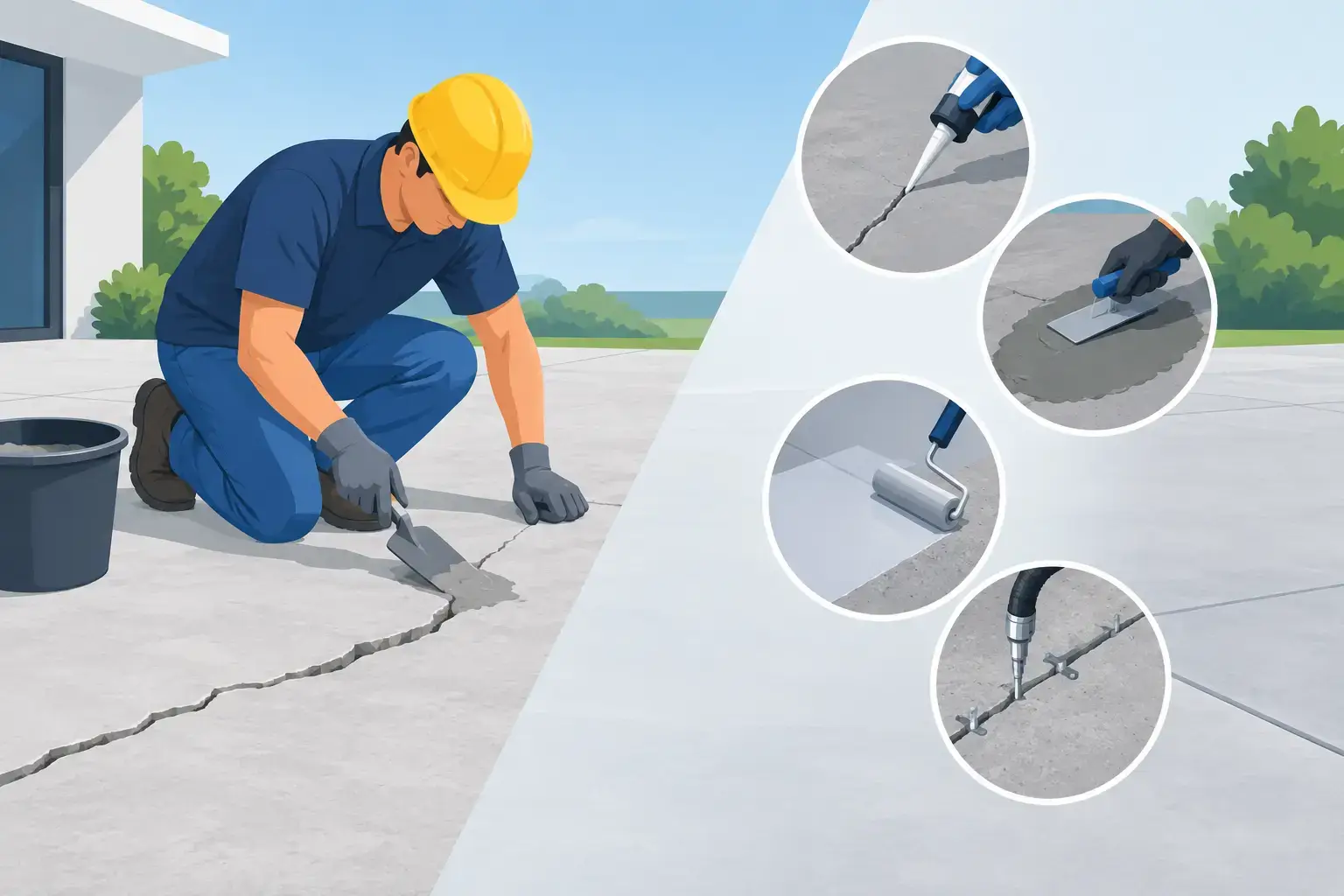
Best Concrete Slab Repair Methods That Last
November 23, 2026 1:50 am
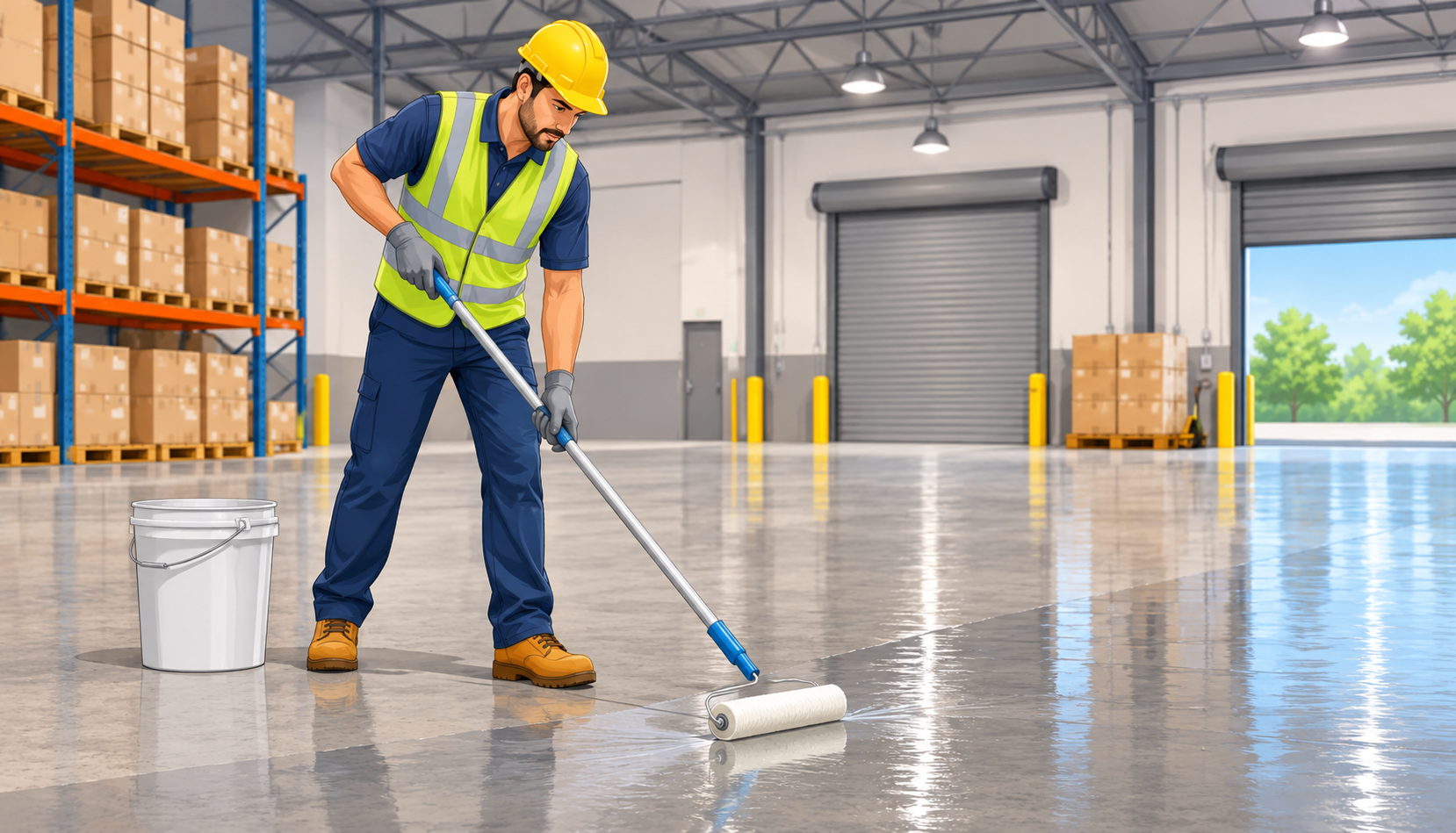
Penetrating vs. Topical Concrete Sealers: Which Is Right for Your Floor?
November 22, 2026 8:11 pm
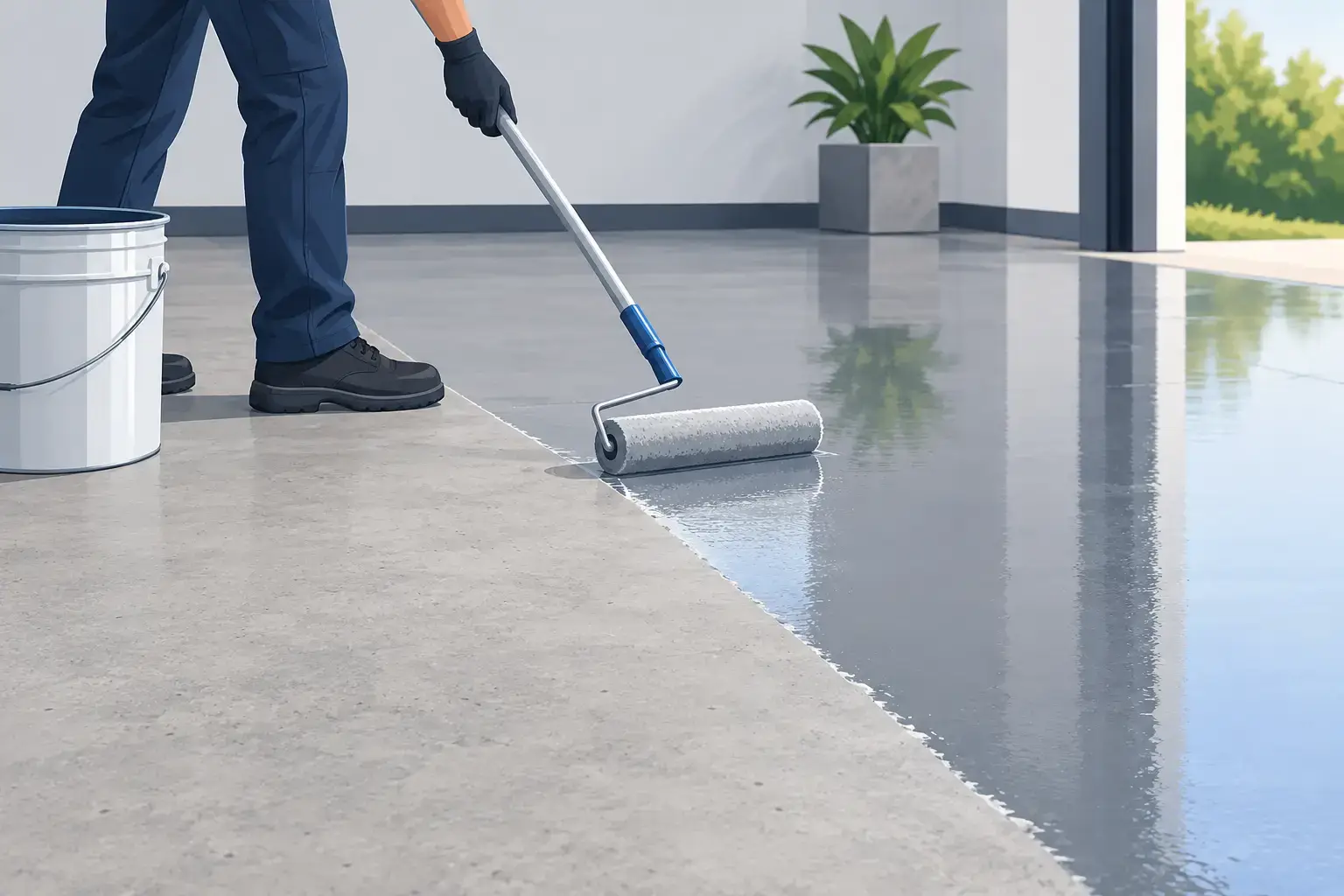
How to Seal Concrete Floors for Lasting Protection
November 21, 2026 1:44 am