
Floor Grinding for Stronger, Cleaner Concrete
A concrete floor can look sound from across the room and still be a problem underneath. Old adhesive, peeling paint, tire marks, oil contamination, high spots, and weak surface paste can all prevent a new finish from performing as it should. Floor grinding addresses those conditions at the source by mechanically removing damaged material and creating the right profile for the next step.
For Orange County garages, retail spaces, warehouses, offices, and industrial facilities, this is rarely a cosmetic-only service. Proper grinding can be the difference between a coating that bonds for years and one that starts lifting after a season of traffic. The right approach depends on the slab, its condition, the intended finish, and how the space will be used.
What Floor Grinding Actually Does
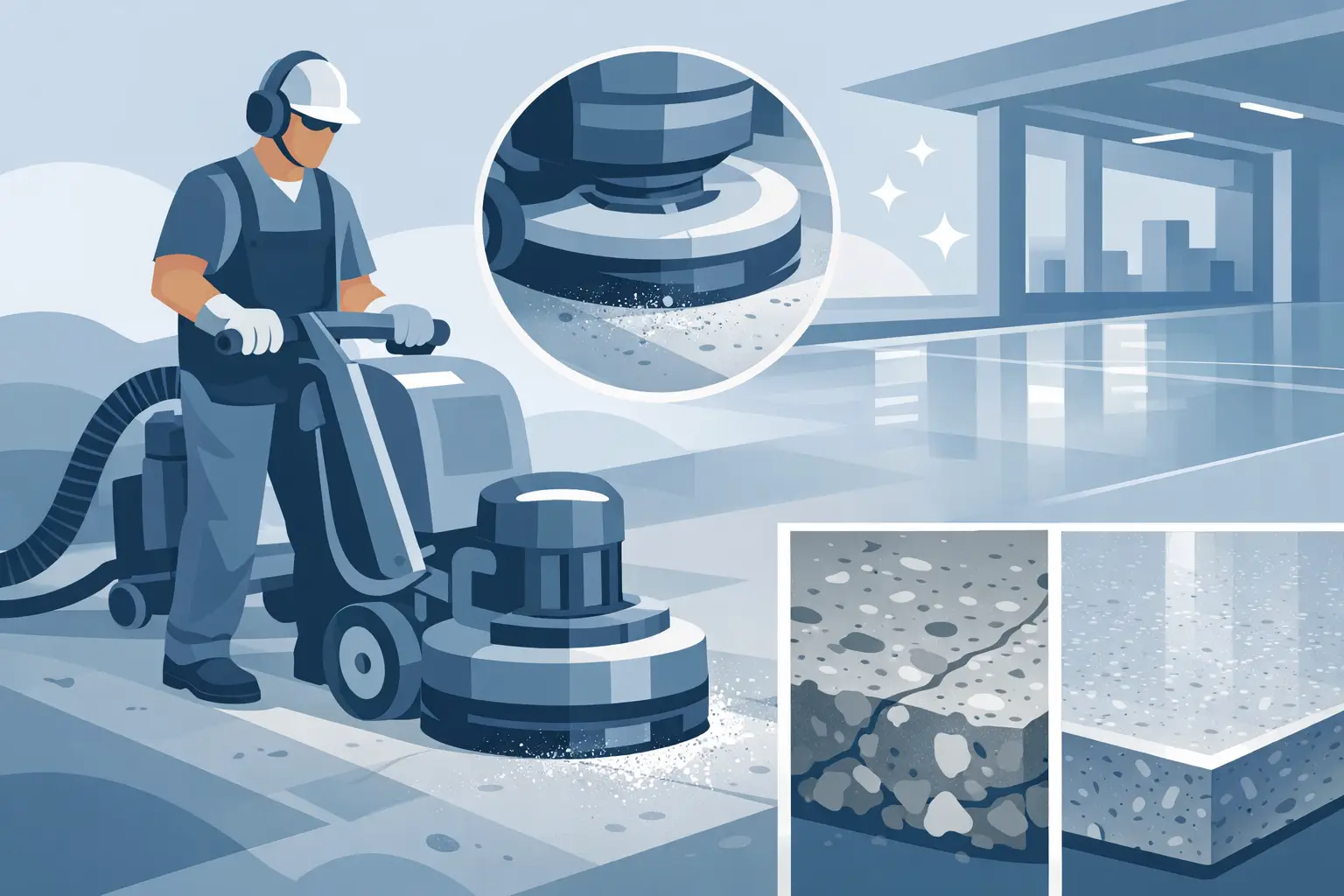
Floor grinding uses specialized machines fitted with diamond tooling to cut, level, clean, or refine a concrete surface. The equipment ranges from compact edge grinders for walls and tight corners to large planetary grinders that cover broad warehouse floors efficiently. Professional machines are connected to industrial HEPA vacuums to control the fine concrete dust created during the process.
Grinding is not the same as simply cleaning concrete. A degreaser may remove surface dirt, but it will not take off a failed epoxy layer, flatten a raised joint, or open dense concrete so a new system can bond. Grinding physically changes the top layer of the slab. That is why it is a foundational part of many concrete polishing, epoxy, resurfacing, and repair projects.
The amount removed matters. In some cases, a light pass is enough to eliminate contaminants and create texture. In others, the floor needs aggressive metal-bond diamond tooling to remove thick coatings, mastic, leveling material, or uneven concrete. More cutting is not automatically better. The goal is to remove what is failing and produce the profile required for the finish, without unnecessary disruption or cost.
When Concrete Needs Floor Grinding
The clearest sign is a coating that is peeling, flaking, or bubbling. Applying new epoxy over a failing layer may improve the appearance briefly, but the old material remains the weak link. Grinding removes the failed system and gives the replacement coating a clean, mechanically prepared surface.
Uneven areas are another common reason to grind. High spots can create trip hazards, interfere with equipment, cause water to collect in the wrong areas, and make a finished floor look inconsistent. Grinding can reduce those high points and blend repaired areas before a decorative or protective system is installed. It does not always solve major slab movement or widespread drainage issues by itself. Those situations may require crack repair, joint work, leveling material, or a more comprehensive resurfacing plan.
In garages, floor grinding is often needed before epoxy or polyaspartic coatings, especially when the concrete has absorbed automotive fluids or has old paint and patchwork repairs. In commercial settings, it is frequently part of tenant improvements, floor coating replacement, warehouse maintenance, and preparation for polished concrete. Restaurants, retail stores, airplane hangars, and manufacturing spaces each place different demands on the floor, from traction and cleanability to chemical resistance and heavy rolling loads.
Surface Preparation Is Where Coatings Succeed or Fail
A quality epoxy or resinous floor is only as dependable as the concrete beneath it. Coatings need a clean, dry, sound surface with the correct concrete surface profile. That profile gives the material something to grip mechanically, rather than relying on a smooth or contaminated slab.
This is why a contractor should evaluate more than what is visible. Moisture vapor, oil penetration, weak concrete, cracks, previous sealers, and incompatible coatings can all affect preparation and material selection. A hard-troweled slab may require more aggressive grinding than a porous one. A warehouse with forklift traffic may need deeper repair and a thicker system than a residential garage. An office floor intended for polishing needs a different sequence than a floor receiving a broadcast-flake epoxy finish.
Skipping preparation can look like a savings on the proposal, but it usually shifts the expense into early repairs, downtime, and replacement. Grinding is one of the most practical ways to protect the investment in the final flooring system.
Grinding for Polished Concrete
Polished concrete is created through a controlled sequence of grinding, densifying, honing, and polishing steps. Early passes remove surface imperfections and expose the desired amount of aggregate. Later stages refine the surface to the selected sheen, from a practical satin finish to a higher-gloss appearance.
The existing slab determines what polished concrete will look like. Variations in aggregate, patches, old stains, and repairs may remain visible. That character can be appealing in a modern showroom, office, or home, but it should be discussed before work starts. A floor with extensive damage may be better suited to a stain, dye, overlay, or coating system than a high-exposure polish.
Grinding Before Epoxy and Polyaspartic Systems
For garage and commercial coatings, grinding provides the anchor profile that helps epoxy or polyaspartic materials bond properly. It also removes weak concrete at the surface, old sealers, and residual coatings that can interfere with adhesion.
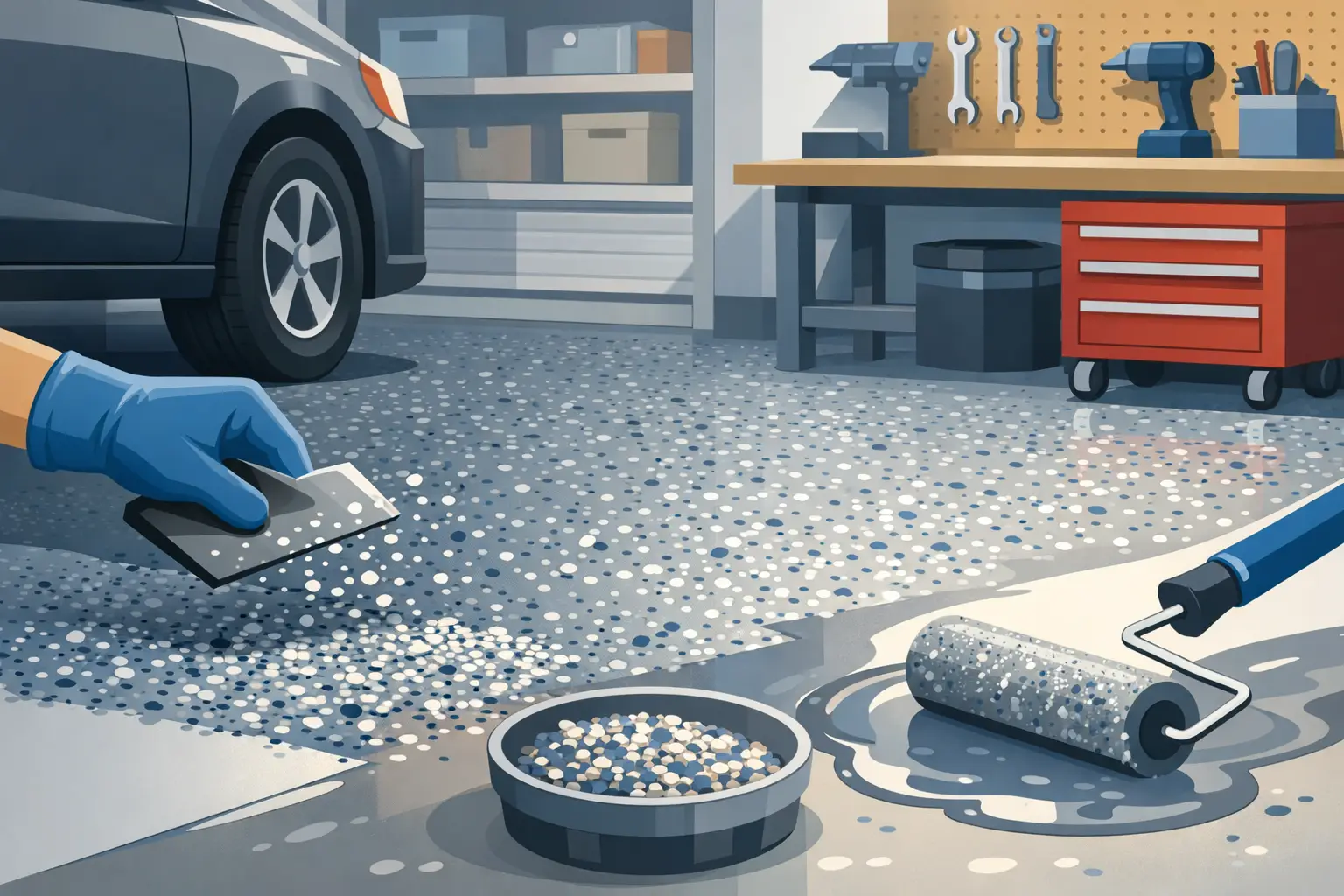
After preparation, cracks and spalls can be repaired, joints can be addressed as needed, and the selected coating system can be installed. The best finish depends on use. A decorative flake floor works well for many garages and customer-facing spaces. A solid-color, high-build system may be the better choice for an industrial area that needs chemical resistance and straightforward maintenance. Where slip resistance is a priority, the system can be built with the appropriate texture without making daily cleaning unnecessarily difficult.
What to Expect During a Grinding Project
A professional project begins with an in-person evaluation of the slab and the intended result. The contractor should identify existing coatings, visible damage, moisture concerns, access limitations, operating hours, and the areas that need protection. That information drives the tooling, repair scope, dust-control plan, and schedule.
The active grinding phase can be noisy, but modern equipment with proper vacuum collection keeps dust far more controlled than older methods. Occupied commercial facilities often benefit from off-hours or phased work so entrances, aisles, and production areas can remain available where possible. For a residential garage, homeowners should plan to move vehicles, storage items, and loose belongings before the crew arrives.
Concrete repairs may become more visible once the top layer is removed. This is normal. Grinding often exposes small cracks, soft spots, old patching, and hidden coating failures that were not clear during the initial walkthrough. An experienced contractor will explain the options before moving forward, rather than covering over a condition that could affect the finished floor.
Choosing the Right Scope Instead of the Cheapest Scope
Not every floor needs a full restoration, and not every slab can be corrected with one light pass. The right scope is based on the planned finish and the actual condition of the concrete. A simple coating refresh may need localized grinding and repairs. A large distribution floor with failed paint, tire wear, and uneven transitions may require a more involved preparation program.
Price should reflect the work needed to achieve lasting adhesion and a clean result, not just the square footage. Questions worth asking include whether edge work is included, how dust will be controlled, what happens with cracks and spalls, whether moisture is being evaluated, and what surface profile is being prepared. Clear answers help avoid change orders caused by vague assumptions.
Orange County Concrete Polishing scopes each project around the floor’s condition, the operating demands of the space, and the finish you want to maintain. That approach helps homeowners and facility managers choose a system that performs in real use, not just on installation day.
Plan the Finish Before the Grinder Arrives
Floor grinding should be tied to a clear end goal. Tell your contractor whether you need a polished concrete finish, a decorative garage coating, a chemical-resistant industrial system, a safer walking surface, or a level base for another flooring material. Those decisions affect the preparation method, repair materials, texture, and scheduling requirements.
A well-prepared concrete floor gives every finish a better chance to do its job. Start with a site evaluation, be direct about traffic and maintenance needs, and choose preparation that matches the demands your floor will face long after the crew leaves.
Recent Post

Sealed Concrete vs Polished: Which Floor Fits? September 4, 2026 2:54 am

Concrete Floor Moisture Testing Before Coatings September 2, 2026 2:54 am
Epoxy Flake Systems for Garages and Workspaces August 31, 2026 2:57 am