

How to Choose Concrete Finish for Any Space
A concrete floor can be one of the toughest surfaces in a property, but the wrong coating, polish level, or texture can create expensive maintenance problems. Knowing how to choose concrete finish starts with the real conditions on the floor: what happens there every day, what the slab is dealing with, and how much downtime the project can allow.
A polished showroom floor, a chemical-resistant warehouse coating, and a slip-resistant pool-deck finish may all start with concrete, but they require very different systems. The right choice should look good on day one and still perform after years of traffic, cleaning, spills, and wear.
How to Choose Concrete Finish Based on Use
The first question is simple: what will the floor need to withstand? A homeowner may prioritize appearance and easy garage cleanup. A facility manager may need resistance to forklift traffic, oil, cleaning chemicals, or heavy rolling loads. A retail owner may need a clean, professional surface that can be installed with limited disruption to business hours.
Start by identifying whether the space is residential, commercial, or industrial. Then look closer at the daily demands. Foot traffic alone is very different from carts, pallet jacks, vehicles, machinery, or dropped tools. The more demanding the environment, the more the finish needs to be selected for performance rather than color alone.
For example, polished concrete works well in offices, showrooms, lobbies, retail spaces, and modern homes because it creates a clean, refined surface with low ongoing maintenance. In a garage or warehouse exposed to oils, tires, and chemicals, an epoxy or high-performance coating system may be the better fit. For worn exterior concrete, resurfacing with a textured overlay may offer the right combination of appearance and traction.
Inspect the Condition of the Existing Slab First
A finish is only as reliable as the concrete beneath it. Before choosing a system, the slab needs to be evaluated for cracks, moisture, unevenness, contamination, old coatings, and weak surface concrete. Skipping this step is one of the fastest ways to end up with peeling coatings, uneven sheen, or visible defects after installation.
Concrete with minor cracks and surface wear can often be repaired and prepared for polishing, staining, or coating. Slabs with major low spots may need leveling or grinding before the finish goes down. If moisture is moving through the slab, certain coating systems may require moisture mitigation or a different product choice altogether.
Oil-soaked garage slabs and warehouse floors also need thorough mechanical preparation. A coating cannot bond reliably to contaminated concrete just because the surface looks clean. Professional grinding, repair, and surface preparation create the profile needed for a finish to hold up under real use.
Do not assume every crack should disappear
Concrete naturally moves and can develop cracks over time. Some cracks can be filled and blended into the finished floor, while others may remain visible, especially in polished concrete. That is not always a workmanship issue. It is part of working with an existing slab.
If a completely uniform appearance is the priority, a coating or resurfacing system may hide more of the slab’s character than polishing or staining. If you prefer the natural variation of concrete, polished or dyed finishes can make those details part of the design.
Match the Finish to Maintenance Expectations
Every concrete finish needs care, but the level and type of maintenance differ. The best floor is one your team or household can realistically maintain.
Polished concrete is a strong option for spaces that need a hard, dust-resistant, easy-to-clean floor. It does not rely on a thick topical layer that can peel, and its reflective surface can improve the look and brightness of an interior. Regular dust mopping and appropriate cleaning products help maintain the finish.
Epoxy coatings are popular for garages, shops, commercial kitchens, warehouses, and industrial areas because they can create a protective barrier against many stains and chemicals. However, the coating system must be properly installed and cleaned with products that will not damage its surface. A high-build system may also need occasional repair in areas exposed to severe impact or abrasion.
Concrete stain and dye create color within the slab instead of covering it with an opaque layer. They can produce a distinctive look for residential interiors, retail floors, and decorative commercial spaces. Because the concrete still shows through, these options are less forgiving of patchwork, repairs, and slab inconsistencies.
Consider Traction, Safety, and Lighting
A floor should not only look polished. It needs to work safely for the people using it. This matters in garages, restaurant entryways, pool-adjacent areas, parking structures, loading zones, and any business that sees wet shoes, spills, or rolling equipment.
High-gloss floors can be attractive, but gloss and traction are separate decisions. A polished concrete floor can be specified with a lower sheen when glare is a concern. Coatings can also include traction additives, ranging from light texture for pedestrian areas to more aggressive broadcast systems for wet or industrial environments.
More texture generally improves grip, but it may also make cleaning more labor-intensive. That trade-off needs to be discussed upfront. A warehouse aisle may need a different traction profile than a customer-facing retail floor, even if both spaces use epoxy.
Lighting also affects finish selection. Polished concrete can reflect available light and make large interiors feel brighter. Decorative metallic coatings and high-gloss systems can create visual impact, but they may show dirt, tire marks, or scratches more readily in high-traffic areas. Ask to see finish samples under lighting similar to the actual space whenever possible.
Choose Color and Style After Performance Requirements
Color is the fun part of the decision, but it should come after the technical requirements are set. Once the correct system is identified, there are plenty of ways to make the floor fit the property.
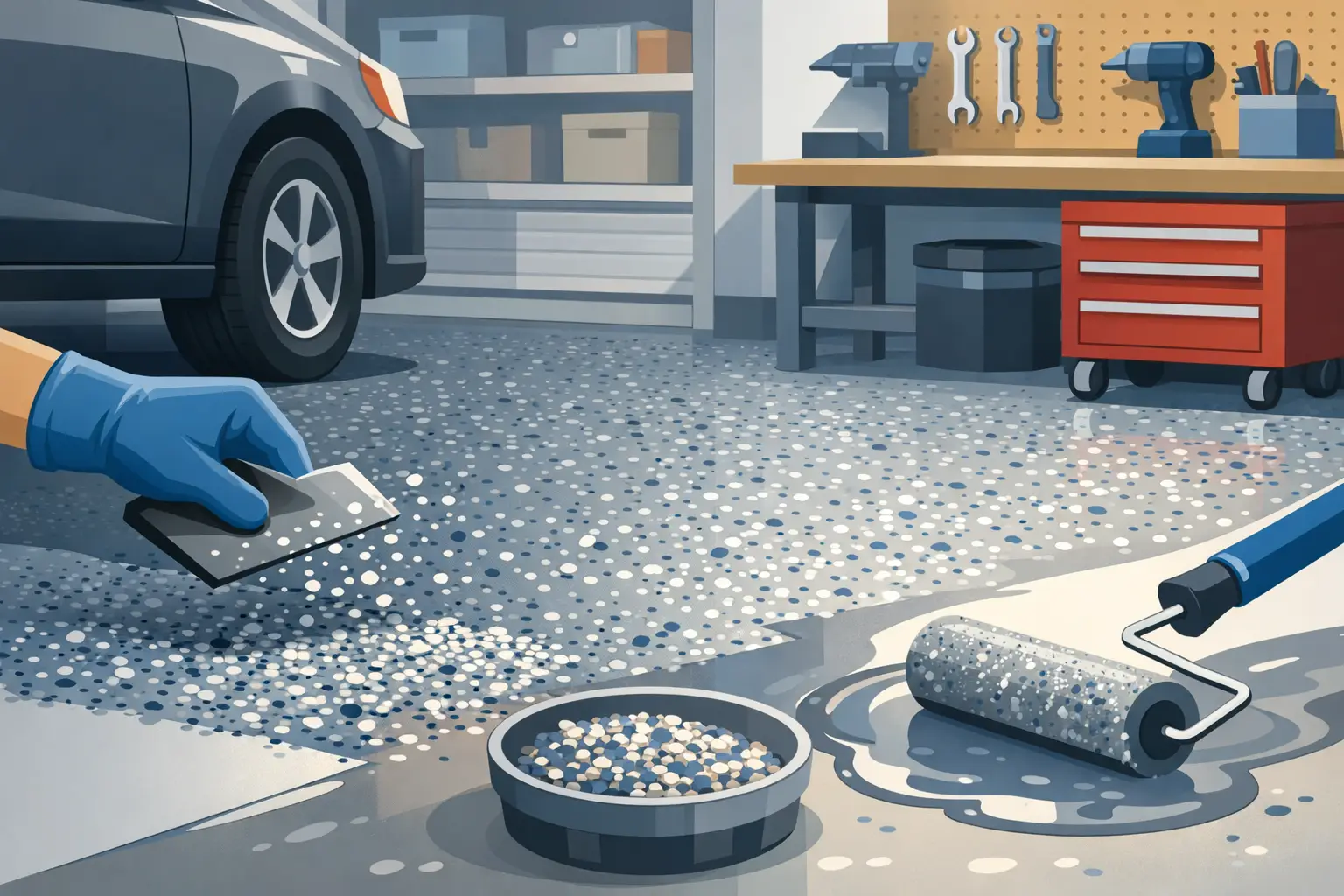
For homes and garages, neutral gray, charcoal, tan, and flake blends remain practical choices because they hide everyday dust and small marks better than solid white or deep black. Decorative flake epoxy can add dimension while reducing the visual impact of minor wear. Solid-color coatings can look sharp, but they tend to reveal dust and imperfections more quickly.
For offices and retail spaces, polished concrete with a natural gray finish, stain, or dye can support a modern professional design without competing with merchandise or furnishings. Warehouses and industrial facilities often benefit from lighter neutral colors that improve visibility, along with striping or designated work zones where needed.
The slab itself affects the final look. Existing concrete has variation in aggregate, patches, and porosity. Stains and dyes react differently across those areas, while coatings provide more consistent color coverage. A contractor should explain what the finished surface can realistically look like before work begins.
Factor in Downtime and Installation Conditions
A great finish is not helpful if installation disrupts operations at the wrong time. Commercial and industrial flooring projects should be planned around access needs, cure times, staging areas, and the ability to move equipment or inventory.
Polished concrete is often a good fit for occupied commercial spaces because the work is mechanical and can be phased by section. Coating systems may require more careful scheduling because surface preparation, primer, base coats, broadcast materials, and curing all affect when the floor can return to service. Fast-cure products can reduce downtime, but they still need proper preparation and installation conditions.
Temperature and humidity matter as well, particularly for coatings. Exterior work brings additional concerns such as sun exposure, drainage, and weather. A finish that performs well in a climate-controlled office may not be the right system for an exposed driveway or parking structure.
Set a Budget Around Lifecycle Cost, Not Just Installation Price
The lowest upfront quote does not always deliver the lowest long-term cost. Thin coatings may be less expensive initially, but they can wear faster in a high-traffic environment. A properly prepared and installed industrial system can cost more upfront while reducing repairs, cleaning labor, and premature replacement.
When comparing proposals, make sure they address the same scope. Surface preparation, crack repair, moisture testing, leveling, coating thickness, traction additives, and protection of adjacent areas all affect price and performance. A vague quote can leave important work out of the original number.
Ask how the finish is expected to perform in your specific environment, what maintenance it requires, and what could shorten its service life. A reliable contractor should give direct answers rather than selling every floor as the same solution.
Get a Site-Specific Recommendation
The right concrete finish is rarely chosen from a photo alone. An in-person review can reveal moisture concerns, slab damage, traffic patterns, drainage issues, and scheduling requirements that change the recommendation. That is why Orange County Concrete Polishing builds project scopes around the actual floor and how the space operates.
Bring photos, color ideas, and practical concerns to the estimate, but also be prepared to discuss what the floor sees on its hardest day. A finish chosen for that day will continue to look better and require less attention when business is busy, equipment is moving, or the garage is doing real work.
Recent Post

Sealed Concrete vs Polished: Which Floor Fits? September 4, 2026 2:54 am

Concrete Floor Moisture Testing Before Coatings September 2, 2026 2:54 am
Epoxy Flake Systems for Garages and Workspaces August 31, 2026 2:57 am