
Surface Preparation for Epoxy Coating That Lasts
A new epoxy floor can look excellent on installation day and still fail months later if the concrete beneath it was not properly prepared. Surface preparation for epoxy coating is where the long-term performance of the system is decided. Whether the floor is in a residential garage, retail space, warehouse, restaurant kitchen, or airplane hangar, the coating needs a clean, sound, properly profiled concrete surface to bond correctly.
Epoxy is not a fix for weak concrete, trapped moisture, oil contamination, or failed prior coatings. It is a high-performance system that relies on the condition of the slab. Professional preparation takes more time than simply rolling on epoxy, but it prevents peeling, bubbling, hot-tire pickup, and costly callbacks.
Why Surface Preparation for Epoxy Coating Matters
Epoxy forms a mechanical bond with concrete. That means the coating needs a surface profile with enough texture and open pores to grab onto the slab. A smooth, dense, sealed, or contaminated surface gives epoxy very little to bond with, even when premium materials are used.
This is especially relevant in Orange County garages and commercial properties where concrete is often exposed to vehicle traffic, oils, cleaning products, moisture, and years of use. A floor may appear clean while still holding contaminants below the surface. If those materials are not removed, the epoxy can detach from the concrete rather than wear naturally over time.
Proper prep also reveals the actual condition of the slab. Grinding can expose weak concrete, old patch repairs, cracks, spalls, previous coatings, and areas affected by moisture. Addressing those issues before installation produces a more uniform finish and a floor that performs as intended.
Start With a Concrete Condition Assessment
No two slabs require exactly the same preparation. Before selecting equipment or coating materials, a contractor should evaluate the floor’s age, hardness, contamination level, existing finish, traffic demands, and moisture condition.
A newer garage slab may only need diamond grinding, crack repair, and detailed edge work. An older warehouse floor with forklift traffic may require heavier grinding, joint repair, removal of deteriorated concrete, and a thicker epoxy system. A retail space may need a finish that balances appearance, durability, and a schedule that keeps the business operational.
Moisture testing is a critical part of this assessment. Moisture vapor moving through concrete can push against an epoxy coating and cause blisters, delamination, or discoloration. Surface moisture is not the only concern. A slab can feel dry on top while still transmitting moisture vapor from below. When readings are elevated, the right moisture-mitigation primer or alternate system may be needed before epoxy is installed.
Mechanical Grinding Creates the Right Profile
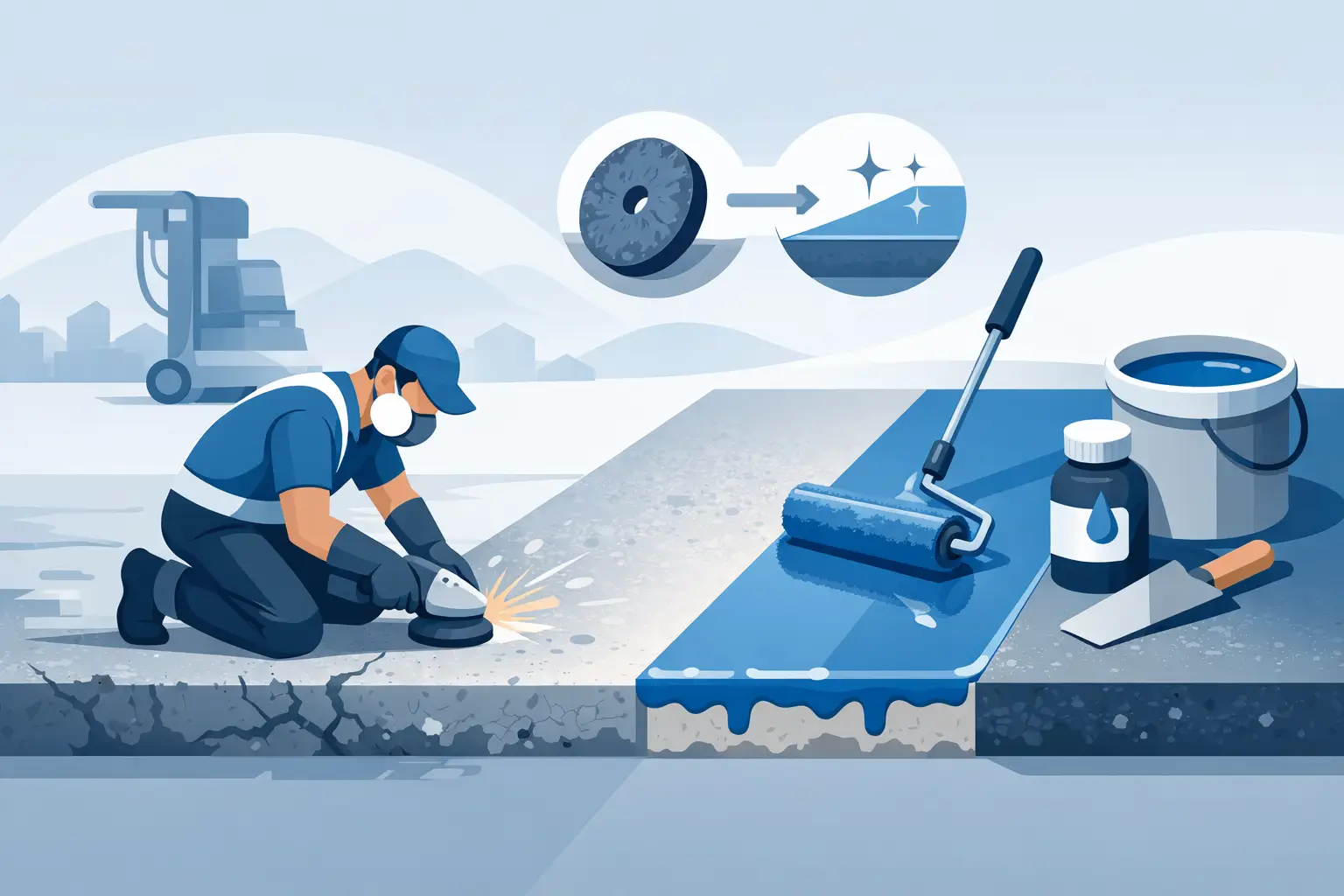
For most epoxy flooring projects, diamond grinding is the preferred preparation method. Professional grinders remove surface contaminants, weak laitance, old coatings, paint, sealers, and minor surface irregularities while creating the concrete surface profile required for adhesion.
The target profile depends on the coating system. A thin epoxy coating may need a lighter profile, while a thicker build system, mortar epoxy, or broadcast floor generally needs a more aggressive texture. The goal is not to grind the floor unnecessarily. It is to create a consistent, clean surface that matches the specified coating.
Grinding also gives the installer greater control than acid etching. Acid can react unevenly, does not reliably remove heavy oil or existing coatings, and introduces water into the slab. It may have a place in limited situations, but it is not a substitute for professional mechanical preparation on demanding residential, commercial, or industrial floors.
High-quality grinding equipment should be connected to industrial dust collection. This keeps silica dust under control, improves visibility during the work, and leaves less cleanup before coating begins. For occupied offices, retail spaces, and facilities with strict operating requirements, dust management and off-hours scheduling can make a major difference.
Edges, Corners, and Vertical Surfaces Need Equal Attention
Large grinding machines cannot reach every edge, corner, drain, column base, or doorway. These areas require handheld grinders and detailed prep work. Skipping them creates weak bond lines around the perimeter, which is often where peeling starts.
Vertical transitions matter too. If epoxy is being installed with a cove base, at a loading threshold, or around equipment pads, the substrate must be prepared beyond the flat floor. A complete system is only as reliable as its least-prepared section.
Remove Oil, Grease, Coatings, and Other Contaminants
Oil is one of the most common reasons epoxy floors fail in garages, repair areas, warehouses, and loading spaces. Surface sweeping or pressure washing may improve appearance, but it does not always remove oil that has penetrated into the concrete.
Degreasers can help break down surface contamination, particularly before grinding. Deeply saturated areas may need repeated treatment, aggressive mechanical removal, or localized repair. In severe cases, it may be more reliable to remove contaminated concrete and rebuild the area than to coat over a questionable substrate.
Existing paint, acrylic sealers, curing compounds, glue residue, and old epoxy also need to be completely addressed. Epoxy will only perform as well as the layer beneath it. Coating over a failing paint film does not solve the problem. The new material may simply peel away with the old finish attached.
Repair Cracks and Concrete Damage Before Coating
Grinding makes cracks and damaged sections easier to identify. These should be repaired before the epoxy system is applied, but the repair method needs to fit the type of defect.
Hairline shrinkage cracks can often be routed and filled with an epoxy or polyurea crack repair material. Larger cracks may require more extensive preparation and filling. Spalls, pits, and broken concrete around joints or edges should be rebuilt with a compatible repair mortar. The repair should be ground flush after curing so the finished floor looks intentional rather than patched.
Not every crack can be permanently hidden. Active structural cracks and moving control joints can continue to move with temperature changes and slab movement. In those cases, a contractor may honor the joint with a flexible filler rather than rigidly coating over it. This is one of the areas where the right answer depends on the slab, its use, and the owner’s expectations for appearance.
Clean Thoroughly Before the First Coat
After grinding and repairs, the floor must be vacuumed in detail. Fine dust left on the slab can interfere with primer penetration and create weak points in the bond. The surface should be dry, clean, and free from debris before coating begins.
Professional installers inspect the floor again at this stage. They look for missed coating residue, soft concrete, dust in joints, repair areas that need additional grinding, and signs of moisture or contamination. This final check is not a formality. Once epoxy is mixed and applied, correcting a preparation issue becomes far more difficult.
Temperature and humidity should also be within the material manufacturer’s approved range. Concrete temperature can affect working time, flow, and cure. A floor coating project should be planned around site conditions, not rushed because a calendar date was selected without considering the environment.
Match the Prep to the Floor’s Real Use
A decorative flake epoxy garage floor and a chemical-resistant industrial epoxy floor may both begin with concrete grinding, but they are not the same project. The preparation level, crack repair approach, primer selection, build thickness, and topcoat should reflect how the floor will be used.
For a homeowner, that may mean preparing for hot tires, dropped tools, household chemicals, and easy cleanup. For a warehouse manager, it may mean resistance to forklift traffic, abrasion, oil, and daily cleaning. For a restaurant or commercial facility, traction, sanitation, and downtime may be central concerns.
At Orange County Concrete Polishing, project recommendations are based on the condition of the concrete and the demands placed on the finished floor. A customized scope helps avoid paying for an overbuilt system where it is not needed or, just as importantly, installing an underbuilt system that wears out early.
Common Shortcuts That Lead to Epoxy Failure
The fastest way to compromise an epoxy floor is to treat preparation as a minor step. Applying epoxy over a pressure-washed slab, using acid etching as a cure-all, ignoring moisture concerns, or coating over old paint can all create problems that show up after the installer has left.
Another common mistake is choosing a coating based only on its appearance. Decorative flakes and glossy finishes can look impressive, but the floor needs the correct primer, base coat, broadcast rate, and protective topcoat for the environment. A beautiful finish cannot compensate for poor adhesion underneath.
The right preparation may add time at the start of the project, especially when repairs, moisture mitigation, or coating removal are required. That time is usually far less expensive than removing failed epoxy and starting over.
A reliable epoxy floor begins with the concrete you cannot see once the job is finished. If your garage, business, or facility needs an epoxy system that is built for real use, schedule an in-person evaluation so the slab can be assessed, prepared correctly, and coated with the right system for the job.
Recent Post

Overnight Floor Installation Planning That Works September 20, 2026 1:51 am
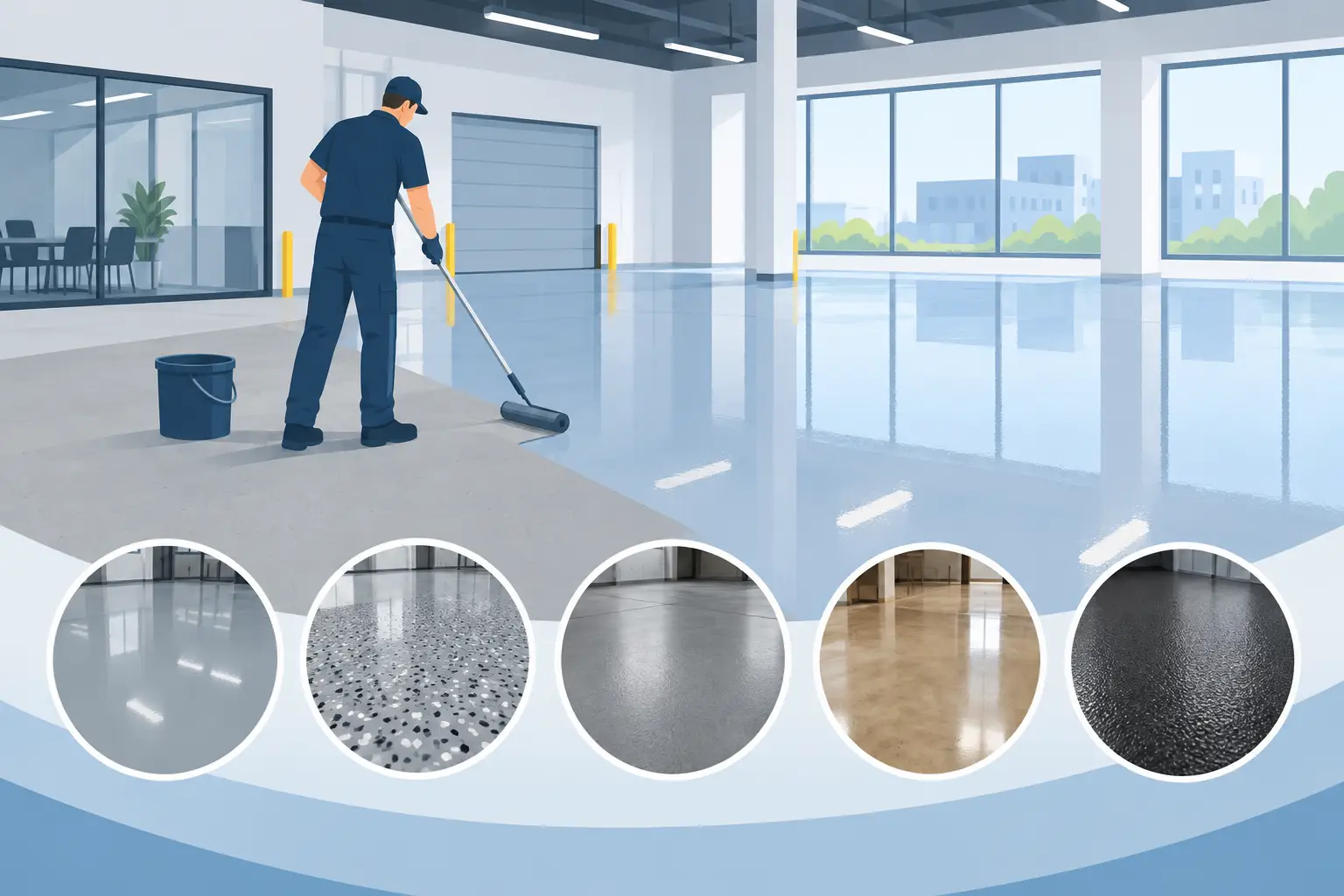
Top Commercial Floor Coating Options for Business September 18, 2026 1:53 am
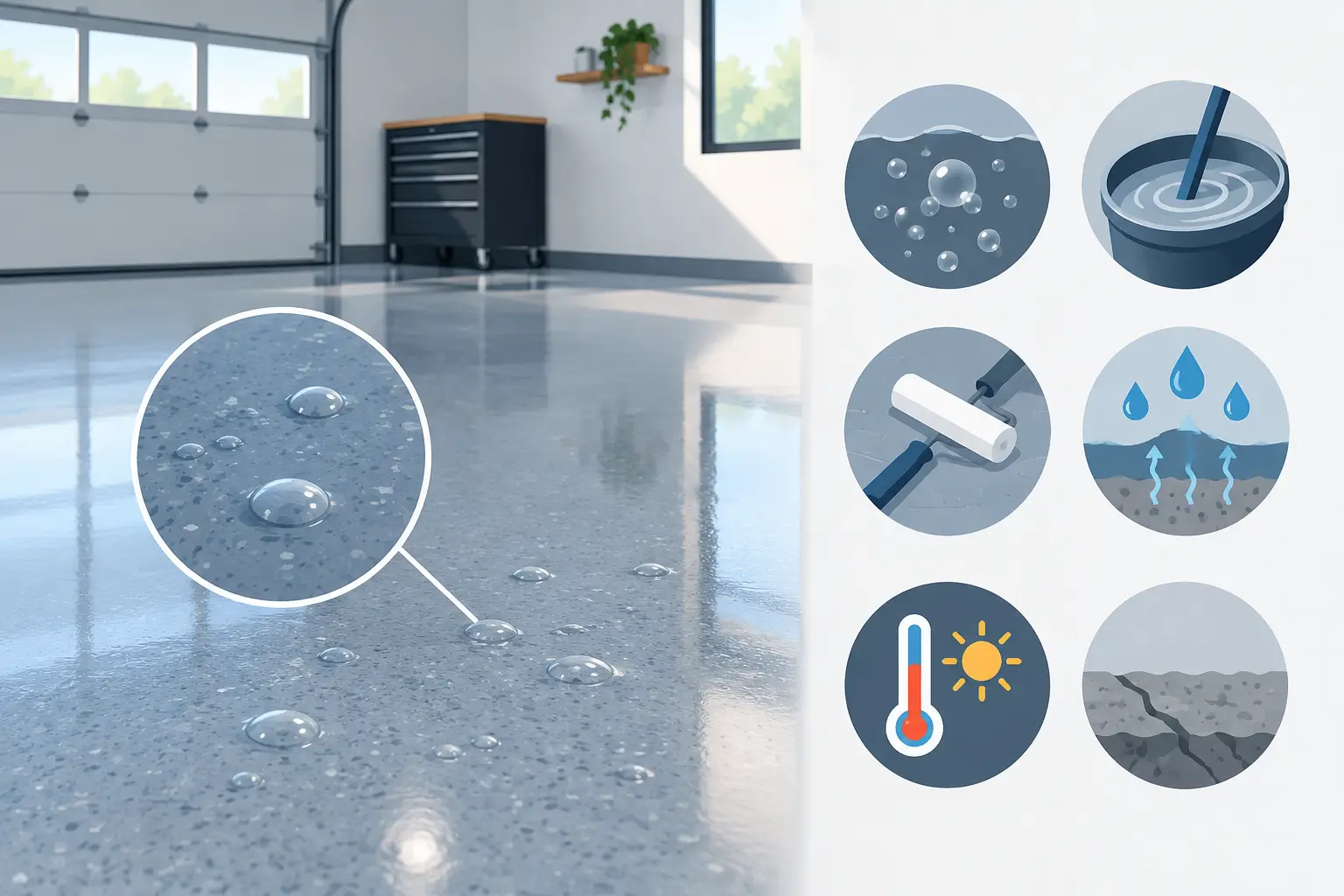
What Causes Epoxy Floor Bubbles? 7 Common Reasons September 16, 2026 1:53 am
Surface Preparation for Epoxy Coating That Lasts
A new epoxy floor can look excellent on installation day and still fail months later if the concrete beneath it was not properly prepared. Surface preparation for epoxy coating is where the long-term performance of the system is decided. Whether the floor is in a residential garage, retail space, warehouse, restaurant kitchen, or airplane hangar, the coating needs a clean, sound, properly profiled concrete surface to bond correctly.
Epoxy is not a fix for weak concrete, trapped moisture, oil contamination, or failed prior coatings. It is a high-performance system that relies on the condition of the slab. Professional preparation takes more time than simply rolling on epoxy, but it prevents peeling, bubbling, hot-tire pickup, and costly callbacks.
Why Surface Preparation for Epoxy Coating Matters
Epoxy forms a mechanical bond with concrete. That means the coating needs a surface profile with enough texture and open pores to grab onto the slab. A smooth, dense, sealed, or contaminated surface gives epoxy very little to bond with, even when premium materials are used.
This is especially relevant in Orange County garages and commercial properties where concrete is often exposed to vehicle traffic, oils, cleaning products, moisture, and years of use. A floor may appear clean while still holding contaminants below the surface. If those materials are not removed, the epoxy can detach from the concrete rather than wear naturally over time.
Proper prep also reveals the actual condition of the slab. Grinding can expose weak concrete, old patch repairs, cracks, spalls, previous coatings, and areas affected by moisture. Addressing those issues before installation produces a more uniform finish and a floor that performs as intended.
Start With a Concrete Condition Assessment
No two slabs require exactly the same preparation. Before selecting equipment or coating materials, a contractor should evaluate the floor’s age, hardness, contamination level, existing finish, traffic demands, and moisture condition.
A newer garage slab may only need diamond grinding, crack repair, and detailed edge work. An older warehouse floor with forklift traffic may require heavier grinding, joint repair, removal of deteriorated concrete, and a thicker epoxy system. A retail space may need a finish that balances appearance, durability, and a schedule that keeps the business operational.
Moisture testing is a critical part of this assessment. Moisture vapor moving through concrete can push against an epoxy coating and cause blisters, delamination, or discoloration. Surface moisture is not the only concern. A slab can feel dry on top while still transmitting moisture vapor from below. When readings are elevated, the right moisture-mitigation primer or alternate system may be needed before epoxy is installed.
Mechanical Grinding Creates the Right Profile
For most epoxy flooring projects, diamond grinding is the preferred preparation method. Professional grinders remove surface contaminants, weak laitance, old coatings, paint, sealers, and minor surface irregularities while creating the concrete surface profile required for adhesion.
The target profile depends on the coating system. A thin epoxy coating may need a lighter profile, while a thicker build system, mortar epoxy, or broadcast floor generally needs a more aggressive texture. The goal is not to grind the floor unnecessarily. It is to create a consistent, clean surface that matches the specified coating.
Grinding also gives the installer greater control than acid etching. Acid can react unevenly, does not reliably remove heavy oil or existing coatings, and introduces water into the slab. It may have a place in limited situations, but it is not a substitute for professional mechanical preparation on demanding residential, commercial, or industrial floors.
High-quality grinding equipment should be connected to industrial dust collection. This keeps silica dust under control, improves visibility during the work, and leaves less cleanup before coating begins. For occupied offices, retail spaces, and facilities with strict operating requirements, dust management and off-hours scheduling can make a major difference.
Edges, Corners, and Vertical Surfaces Need Equal Attention
Large grinding machines cannot reach every edge, corner, drain, column base, or doorway. These areas require handheld grinders and detailed prep work. Skipping them creates weak bond lines around the perimeter, which is often where peeling starts.
Vertical transitions matter too. If epoxy is being installed with a cove base, at a loading threshold, or around equipment pads, the substrate must be prepared beyond the flat floor. A complete system is only as reliable as its least-prepared section.
Remove Oil, Grease, Coatings, and Other Contaminants
Oil is one of the most common reasons epoxy floors fail in garages, repair areas, warehouses, and loading spaces. Surface sweeping or pressure washing may improve appearance, but it does not always remove oil that has penetrated into the concrete.
Degreasers can help break down surface contamination, particularly before grinding. Deeply saturated areas may need repeated treatment, aggressive mechanical removal, or localized repair. In severe cases, it may be more reliable to remove contaminated concrete and rebuild the area than to coat over a questionable substrate.
Existing paint, acrylic sealers, curing compounds, glue residue, and old epoxy also need to be completely addressed. Epoxy will only perform as well as the layer beneath it. Coating over a failing paint film does not solve the problem. The new material may simply peel away with the old finish attached.
Repair Cracks and Concrete Damage Before Coating
Grinding makes cracks and damaged sections easier to identify. These should be repaired before the epoxy system is applied, but the repair method needs to fit the type of defect.
Hairline shrinkage cracks can often be routed and filled with an epoxy or polyurea crack repair material. Larger cracks may require more extensive preparation and filling. Spalls, pits, and broken concrete around joints or edges should be rebuilt with a compatible repair mortar. The repair should be ground flush after curing so the finished floor looks intentional rather than patched.
Not every crack can be permanently hidden. Active structural cracks and moving control joints can continue to move with temperature changes and slab movement. In those cases, a contractor may honor the joint with a flexible filler rather than rigidly coating over it. This is one of the areas where the right answer depends on the slab, its use, and the owner’s expectations for appearance.
Clean Thoroughly Before the First Coat
After grinding and repairs, the floor must be vacuumed in detail. Fine dust left on the slab can interfere with primer penetration and create weak points in the bond. The surface should be dry, clean, and free from debris before coating begins.
Professional installers inspect the floor again at this stage. They look for missed coating residue, soft concrete, dust in joints, repair areas that need additional grinding, and signs of moisture or contamination. This final check is not a formality. Once epoxy is mixed and applied, correcting a preparation issue becomes far more difficult.
Temperature and humidity should also be within the material manufacturer’s approved range. Concrete temperature can affect working time, flow, and cure. A floor coating project should be planned around site conditions, not rushed because a calendar date was selected without considering the environment.
Match the Prep to the Floor’s Real Use
A decorative flake epoxy garage floor and a chemical-resistant industrial epoxy floor may both begin with concrete grinding, but they are not the same project. The preparation level, crack repair approach, primer selection, build thickness, and topcoat should reflect how the floor will be used.
For a homeowner, that may mean preparing for hot tires, dropped tools, household chemicals, and easy cleanup. For a warehouse manager, it may mean resistance to forklift traffic, abrasion, oil, and daily cleaning. For a restaurant or commercial facility, traction, sanitation, and downtime may be central concerns.
At Orange County Concrete Polishing, project recommendations are based on the condition of the concrete and the demands placed on the finished floor. A customized scope helps avoid paying for an overbuilt system where it is not needed or, just as importantly, installing an underbuilt system that wears out early.
Common Shortcuts That Lead to Epoxy Failure
The fastest way to compromise an epoxy floor is to treat preparation as a minor step. Applying epoxy over a pressure-washed slab, using acid etching as a cure-all, ignoring moisture concerns, or coating over old paint can all create problems that show up after the installer has left.
Another common mistake is choosing a coating based only on its appearance. Decorative flakes and glossy finishes can look impressive, but the floor needs the correct primer, base coat, broadcast rate, and protective topcoat for the environment. A beautiful finish cannot compensate for poor adhesion underneath.
The right preparation may add time at the start of the project, especially when repairs, moisture mitigation, or coating removal are required. That time is usually far less expensive than removing failed epoxy and starting over.
A reliable epoxy floor begins with the concrete you cannot see once the job is finished. If your garage, business, or facility needs an epoxy system that is built for real use, schedule an in-person evaluation so the slab can be assessed, prepared correctly, and coated with the right system for the job.
Recent Post
Overnight Floor Installation Planning That Works September 20, 2026 1:51 am
Top Commercial Floor Coating Options for Business September 18, 2026 1:53 am
What Causes Epoxy Floor Bubbles? 7 Common Reasons September 16, 2026 1:53 am