
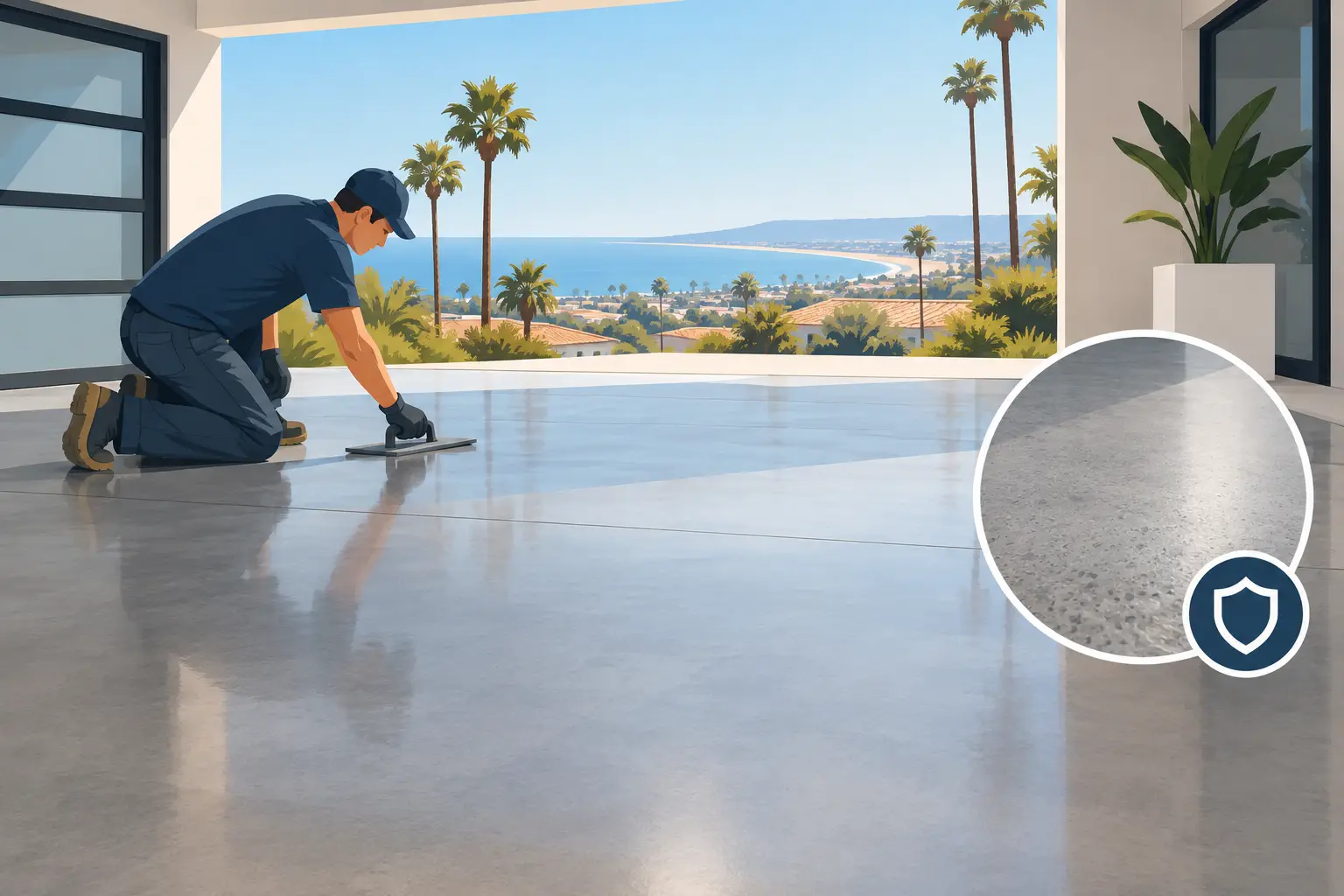
Orange County Concrete Floors That Hold Up
A concrete floor in Orange County has to do more than look clean on installation day. It may need to handle hot tires in a garage, rolling carts in a retail space, forklifts in a warehouse, food and drink spills in a restaurant, or constant foot traffic in an office. The right finish starts with the way the space is actually used – not with a one-size-fits-all product.
At Orange County Concrete Polishing, we scope each job around traffic, moisture, surface condition, maintenance expectations, and the finished look you want. That approach matters because a beautiful floor that cannot handle the environment will become an expensive repair project.
Orange County Concrete Floors Need a Purpose-Built Finish
Bare concrete is durable, but it is not automatically ready for every application. Unprotected slabs can dust, stain, absorb oils, show tire marks, crack at joints, and wear unevenly in high-traffic areas. A proper concrete flooring system addresses those issues while giving the property a more finished, professional appearance.
For homeowners, the usual priorities are a garage floor that cleans easily, resists stains, and looks better than plain gray concrete. For business owners and facility managers, the conversation often includes chemical exposure, slip resistance, downtime, equipment traffic, and how the floor will perform after years of service. General contractors may be focused on coordination, schedule reliability, and getting a surface ready for the next phase of construction.
Those needs call for different systems. Polished concrete, epoxy coatings, resurfacing, grinding, and decorative stains all have a place. The best choice depends on the slab and the job, not on whichever finish happens to be trending.
Polished Concrete for Clean, Long-Term Performance
Polished concrete is a strong fit for offices, showrooms, retail environments, lobbies, warehouses, and modern residential interiors. The process uses specialized grinding and polishing equipment to refine the existing slab, then densifies and polishes the surface to the selected sheen level. The result is a hard, refined floor with low maintenance needs and a clean, architectural look.
One major advantage is that polished concrete does not rely on a thick topical coating that can peel under the wrong conditions. It becomes part of the concrete surface itself. That makes it a practical choice for facilities that want a professional finish without the maintenance burden of carpet, tile grout, or frequently replaced coatings.
Polished concrete is not always the answer, though. A slab with extensive damage, major moisture concerns, or a need for a highly decorative, opaque color may be better served by resurfacing or a coating system. A proper site evaluation prevents the wrong recommendation.
Epoxy Systems for Garages and Demanding Work Areas
Epoxy flooring remains a popular option for garages, workshops, commercial kitchens, service areas, storage rooms, and industrial settings. When the concrete is prepared correctly, epoxy can provide strong resistance to stains, oil, many chemicals, abrasion, and routine wear. It also creates a uniform finished surface that is easy to sweep and clean.
The preparation work is where quality is won or lost. A coating is only as reliable as the concrete beneath it. Grinding the slab, repairing cracks, addressing contamination, and checking for moisture are all critical before the material is applied. Skipping those steps can lead to peeling, bubbling, or early failure.
Epoxy can also be customized with color flakes, solid colors, quartz broadcast systems, and traction additives. That flexibility makes it useful when a homeowner wants a cleaner garage or when a facility needs visual separation between work zones. More texture can improve traction, but it can also make certain surfaces a little more difficult to mop. The right balance depends on the setting.
Concrete Resurfacing Solves More Than Cosmetic Problems
Not every slab is a candidate for polishing or a direct coating application. Older concrete may have spalling, pitting, failed patches, uneven transitions, exposed aggregate, or widespread surface wear. In those cases, resurfacing can create a sound new wearing surface before a decorative or protective finish is installed.
Resurfacing is particularly useful for drive lanes, patios, garages, commercial entries, parking areas, and interior spaces where the concrete is structurally serviceable but visually worn out. It can improve appearance, correct minor surface defects, and prepare the floor for stains, coatings, or other finishes.
That does not mean every crack disappears forever. Concrete moves, and cracks can reflect through some resurfacing materials over time. A dependable contractor should explain what can be repaired, what may remain visible, and what level of performance the system is designed to provide. Clear expectations are part of a quality flooring project.
Grinding and Leveling Create the Right Starting Point
Flooring failures often begin before the visible finish is installed. Uneven concrete, adhesive residue, high spots, low spots, coatings that are failing, and contaminated surfaces all need to be addressed before new work starts. Concrete grinding removes problem material and creates the surface profile needed for a durable bond.
Concrete leveling may be needed when a floor has dips, transitions, or areas that interfere with equipment, doors, rolling carts, or future flooring. In a warehouse or retail space, small elevation changes can become ongoing operational problems. In a home, they can make a finished room feel unfinished even after the decorative work is complete.
Surface preparation may not be the glamorous part of a flooring project, but it is usually the most important. It is also the part that should never be guessed at from photos alone. An in-person estimate gives the contractor a chance to evaluate the actual slab, identify repair needs, and recommend a realistic system.
Choosing a Finish for Your Orange County Property
Start with the operating conditions. A garage that sees weekend vehicle use needs a different plan than an airplane hangar, restaurant back room, office lobby, or high-traffic distribution area. Consider what contacts the floor, how often it is cleaned, whether it gets wet, and how much downtime is available for installation and cure time.
If the priority is a natural, modern surface with low routine maintenance, polished concrete may be the right fit. If chemical resistance, color options, and a protective film build are more important, an epoxy system may make more sense. If the slab is worn or damaged, resurfacing and repair may be necessary before either option can perform properly.
Appearance matters too. Concrete stains and dyes can add depth, variation, and color while keeping the character of the slab visible. Decorative flake systems can make a garage or commercial floor feel more finished and help disguise everyday dust and debris. For industrial spaces, the priority may be a functional color system with safety markings and added traction instead of a high-gloss finish.
Scheduling should be part of the conversation from the beginning. Commercial flooring work can often be planned during off-hours, weekends, or phased around operations to reduce disruption. The exact schedule depends on prep requirements, material cure times, building access, and the size of the area, but early coordination gives the project a much better chance of staying on track.
Get a Floor System Built for the Work It Will Do
A finished concrete floor should make the property easier to maintain and more reliable to operate. It should stand up to the traffic it was designed for, fit the visual standard of the space, and avoid creating unnecessary maintenance work later.
Whether you are upgrading a residential garage, preparing a retail floor, repairing a warehouse slab, or specifying a durable finish for a commercial build-out, start with a clear assessment of the concrete and the demands of the space. Request an in-person quote, ask the practical questions about preparation and cure time, and choose a system built to hold up long after the installation crew leaves.
Recent Post
Best Industrial Floor Systems for Demanding Sites
October 16, 2026 1:51 am
How to Prevent Concrete Delamination Early
October 14, 2026 1:51 am

Warehouse Floor Safety Guide for Busy Facilities
October 12, 2026 1:45 am