
How to Repair Concrete Spalling the Right Way
A spalled concrete floor does not stay a cosmetic problem for long. What starts as flaking, shallow pits, or broken edges can expose weak concrete beneath, collect moisture, create trip hazards, and interfere with coatings or polished finishes. Knowing how to repair concrete spalling means addressing the cause and the damaged substrate, not simply filling holes with a patch product.
For Orange County garages, warehouses, retail spaces, parking areas, and industrial floors, the right repair process depends on traffic, moisture exposure, slab condition, and the finish planned afterward. A repair that holds under a patio chair may fail quickly under forklifts, vehicle tires, pallet jacks, or chemical exposure.
What Concrete Spalling Looks Like
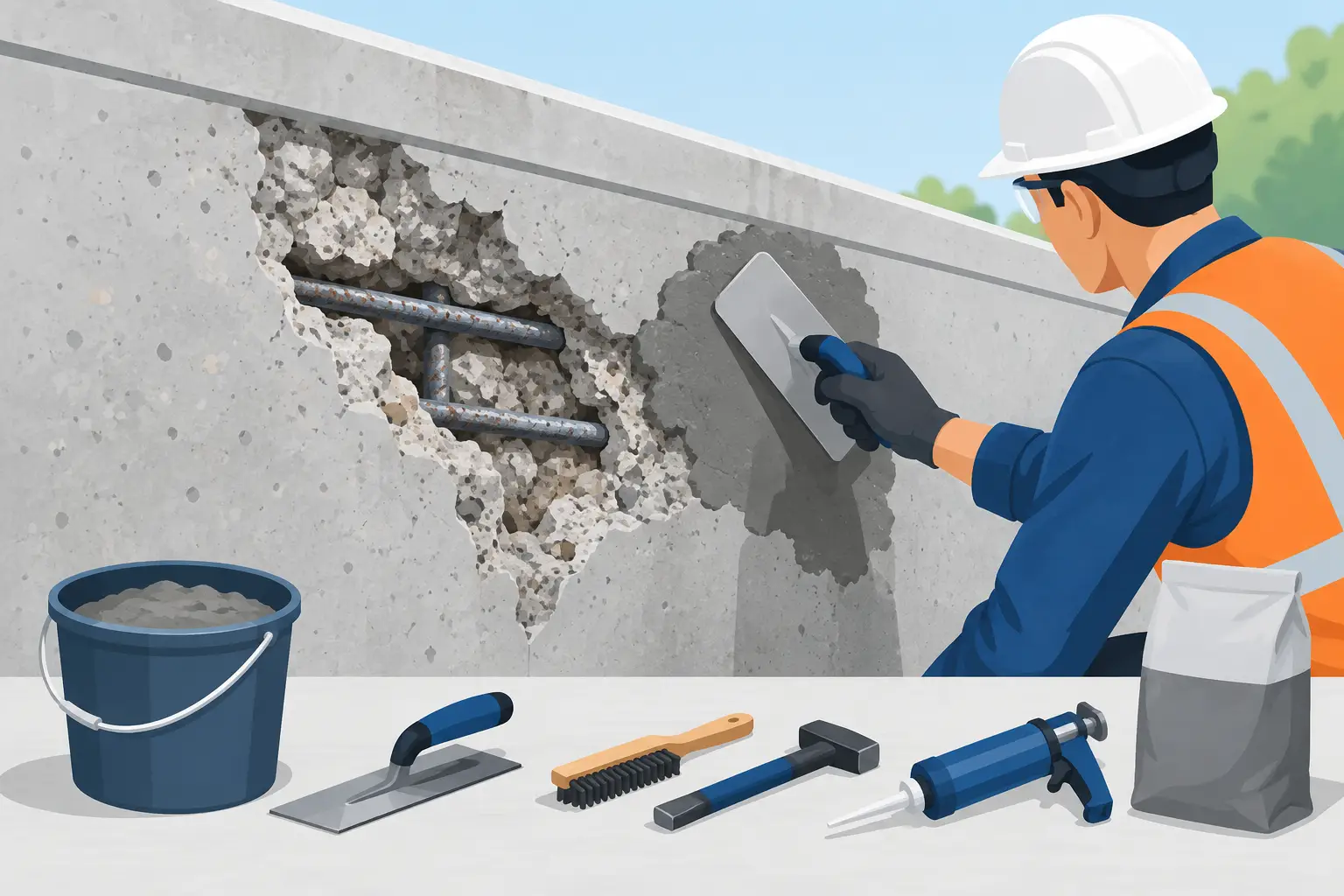
Concrete spalling occurs when the surface breaks away from the slab. It may look like peeling layers, craters, chipped sections, scaling, or rough areas where aggregate is visible. In more serious cases, the damage extends deep enough to expose reinforcing steel or leave edges that continue to crumble under traffic.
Spalling is different from a simple hairline crack. A crack can be stable or moving, while spalling indicates that the concrete surface itself has lost strength or bond. Before selecting a repair material, determine how deep the damage goes and whether the surrounding concrete is still solid.
Find the Cause Before You Repair Concrete Spalling
Surface repair without diagnosis is one of the most common reasons concrete patches fail. The damaged material may be gone, but the condition that caused it can remain underneath or continue affecting the slab.
Common causes include moisture moving through the concrete, poor original finishing, freeze-thaw exposure, impact damage, deicing salts, chemical attack, corrosion of embedded reinforcing steel, and coating failures that trap moisture. In garages and commercial facilities, hot tires, oil, battery acid, cleaners, and repeated point loads can accelerate breakdown. Older slabs may also have weak surface paste from improper placement or curing.
Moisture deserves special attention. Concrete can look dry at the surface while vapor is moving upward through the slab. If a moisture issue is ignored, a rigid patch, epoxy coating, or decorative overlay may debond later. A professional surface evaluation can identify weak areas, assess moisture concerns, and determine whether grinding, moisture mitigation, patching, resurfacing, or a complete coating system is the better investment.
How to Repair Concrete Spalling Step by Step
The repair sequence is straightforward in principle, but the details determine whether the finished area blends in and remains serviceable. For small, shallow damage in a low-traffic residential area, a quality DIY repair may be reasonable. For broad deterioration, structural damage, active moisture, or floors that will receive polish, epoxy, or heavy traffic, professional preparation is usually the more dependable route.
Remove Every Bit of Unsound Concrete
Do not patch over loose, chalky, hollow-sounding, or delaminated concrete. Use mechanical methods such as grinding, scarifying, chipping, or shot blasting to remove damaged material until the remaining concrete is hard and well bonded.
The repair area should have firm edges rather than a feathered, fragile perimeter. On deeper repairs, contractors often square-cut or saw-cut the boundaries to create a clean vertical edge that gives the patch material a stronger profile to lock into. Any dust, oil, old coating residue, curing compound, and debris must be removed before patching.
This is where many store-bought repairs fall short. A patch compound may be good, but it cannot bond to contaminated concrete or a weak surface layer.
Clean and Prepare the Surface
After removal, thoroughly vacuum the area. If oil or chemical contamination is present, it must be cleaned with a method appropriate for the contaminant, then mechanically prepared again if residue remains. Water alone rarely solves an oil-contaminated slab.
The substrate must also meet the repair product’s requirements. Some cement-based materials need a saturated surface-dry condition, meaning the concrete is damp internally but has no standing water. Epoxy repair mortars typically require a dry, properly profiled surface. Using the wrong moisture condition can reduce adhesion before the floor ever goes back into service.
Choose a Repair Material That Matches the Job
There is no single best product for every spall. Cementitious repair mortars work well for many shallow-to-moderate repairs and can be compatible with resurfacing systems. Polymer-modified repair materials offer better adhesion and performance in many demanding environments. Epoxy mortars are often selected for fast return-to-service needs, hard-wearing industrial repairs, and areas exposed to impact or chemicals.
The material must also match the repair depth. Some products are designed for feather-edge applications, while others require a minimum thickness. Using a thick repair mortar in a thin skim area, or a feather-finish product to fill a deep crater, can lead to shrinkage, cracking, or failure.
Consider the final flooring system before making the selection. A garage floor receiving an epoxy system needs repairs that can be properly ground and coated. A floor planned for polishing needs color and aggregate exposure that will not create obvious patch islands. A warehouse may prioritize compressive strength, abrasion resistance, and minimal downtime over appearance.
Place, Consolidate, and Finish the Patch
Mix repair material exactly to the manufacturer’s ratio. Adding extra water to improve workability weakens many cement-based products and can create a porous, dusty repair. Apply the material firmly into the prepared area, working it into the surface profile to eliminate voids.
Strike the patch level with the surrounding slab, then finish it to suit the planned floor system. Do not over-trowel cement-based materials, which can bring excess paste to the surface and weaken the top layer. For floors that will be ground, a slightly proud repair may be placed and later brought flush through diamond grinding.
Deep repairs may require placement in lifts, reinforcement treatment, or special bonding procedures. If rusted reinforcing steel is exposed, the steel condition must be addressed before the repair is placed. Simply covering corrosion without stopping it can allow the concrete to spall again.
Cure Before Grinding, Coating, or Reopening Traffic
A patch needs the required cure time before it is exposed to vehicles, heavy equipment, moisture, coatings, or aggressive cleaning. Fast-setting materials can shorten downtime, but they still have specific installation and temperature requirements.
Do not rush to apply epoxy over a fresh repair because it feels hard to the touch. The patch and the slab need compatible moisture conditions for the coating system. Once cured, the repair should be checked for soundness, ground smooth where necessary, and blended into the surrounding surface.
When Patching Is Not Enough
Spot repairs make sense when damage is isolated and the rest of the slab is stable. If spalling covers large sections of a garage, warehouse, walkway, or commercial floor, repeated patching can become a costly short-term fix. The better solution may be mechanical removal of the failing surface followed by a resurfacing system, concrete overlay, epoxy coating, or another finish designed for the environment.
A polished concrete floor can be an excellent long-term option when the slab has sufficient integrity and the desired look fits the space. Epoxy systems are often the better fit for garages, kitchens, industrial work areas, and facilities that need chemical resistance, color options, and easy cleaning. The right system depends on use, not just appearance.
Call a professional promptly if the spalling is deep, reinforcing steel is visible, cracks are moving, moisture is persistent, or the floor supports vehicles, equipment, or public foot traffic. Those conditions call for a complete assessment rather than a cosmetic patch.
Protect the Repair From Failing Again
After repair, keep the floor clean and address standing water, chemical spills, and impact risks quickly. Use a finish system appropriate for the space, especially where traffic, tires, oils, salts, or cleaners are part of normal operations. A properly prepared epoxy or polished concrete finish can reduce dusting, simplify maintenance, and improve the appearance of repaired areas.
For facilities, schedule repair work around operations whenever possible. Off-hours surface preparation and coating installation can reduce disruption while giving the repair the time it needs to cure correctly. For homeowners, repairing spalling before installing a garage coating prevents a small concrete issue from becoming a coating failure.
Orange County Concrete Polishing can evaluate damaged slabs and recommend a repair and finishing approach based on the real conditions on site. A clear in-person assessment is the best place to start when you need a floor that looks finished, performs under traffic, and stays easier to maintain.
Recent Post
Best Industrial Floor Systems for Demanding Sites
October 16, 2026 1:51 am
How to Prevent Concrete Delamination Early
October 14, 2026 1:51 am

Warehouse Floor Safety Guide for Busy Facilities
October 12, 2026 1:45 am