
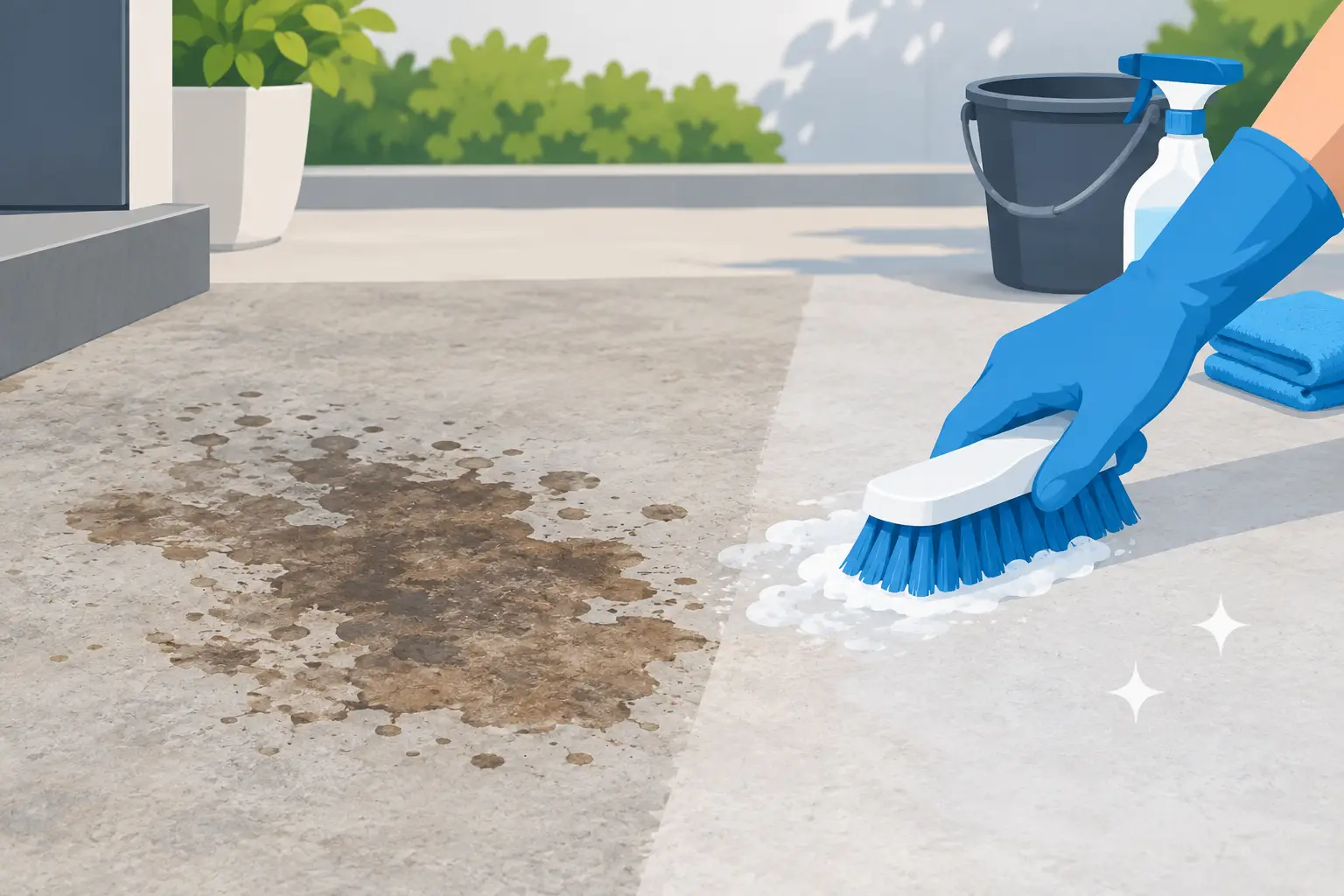
How to Remove Concrete Stains Without Damage
A concrete stain is rarely just a cosmetic issue. Oil can keep spreading through an unsealed garage slab, rust can leave permanent-looking orange shadows, and battery acid can actually etch the surface. Knowing how to remove concrete stains starts with identifying what caused the mark and treating the concrete without creating a larger, lighter, or rougher patch around it.
For Orange County homes and facilities, the right method depends on the stain, the age of the concrete, and whether the floor is bare, polished, stained, coated, or sealed. A product that works on a raw driveway can damage a polished showroom floor or weaken an epoxy coating.
Start by Identifying the Concrete Stain
Concrete is porous. Unless it has a working sealer or coating, liquids travel below the visible surface. That is why a quick rinse often removes surface dirt but leaves a dark shadow behind.
Fresh stains are usually easier to remove than old ones. Before applying any cleaner, sweep or vacuum away loose dirt and inspect the area in good light. Note the stain color, texture, and location. A dark, greasy spot near a parked vehicle is usually petroleum-based. A reddish-brown mark beneath patio furniture or near irrigation is often rust. White powder can be mineral efflorescence, while a chalky, rough patch may be acid damage rather than a removable stain.
Test any cleaning product in a small, inconspicuous area first. This matters even more on decorative concrete, polished concrete, and coated floors. Strong chemicals can alter sheen, color, or traction.
How to Remove Concrete Stains by Type
Oil, grease, and automotive fluid stains
Oil stains need absorption first, then a degreasing treatment. If the spill is fresh, cover it with an absorbent material such as clay-based cat litter, oil-dry, or a commercial spill absorbent. Work it lightly into the stain, leave it long enough to pull up the oil, then sweep it away.
Next, apply a concrete-safe degreaser. Scrub with a stiff nylon brush, not a wire brush, which can leave metal fragments that later rust. Let the degreaser dwell according to its directions, scrub again, then rinse thoroughly. Avoid pushing dirty rinse water into storm drains.
Old oil stains may require two or three treatments. For deep discoloration, use a poultice-style oil remover designed to draw petroleum from porous concrete. Pressure washing alone can make a driveway look cleaner, but it does not always remove oil that has penetrated the slab. It can also force contaminated water into nearby landscaping or drains.
Rust stains
Rust stains are common around metal furniture, fertilizer spills, irrigation overspray, and exposed rebar. Use a rust remover made specifically for concrete, preferably one based on oxalic acid or another concrete-safe formulation. Apply only to the affected area, allow limited dwell time, scrub gently, and rinse well.
Do not reach for muriatic acid as a first option. It can aggressively etch concrete, create a visibly lighter spot, damage nearby metal, and leave the slab more open to future staining. On decorative or polished surfaces, rust removal should be handled carefully because acidic cleaners can change the finish.
If rust returns from the same crack or location, there may be a moisture issue or embedded metal below the surface. Cleaning the orange stain will not solve the source.
Paint, overspray, and adhesive
Paint removal depends on the paint type and how deeply it bonded to the concrete. Start with a scraper and a concrete-safe paint stripper suitable for the coating involved. Keep the stripper confined to the stain, allow it to soften the paint, then lift the residue with a plastic scraper or stiff brush.
Avoid grinding random paint spots off a finished floor. Mechanical removal can leave a noticeably different texture or expose aggregate. On a garage floor with epoxy, do not use a stripper unless it is approved for that coating system. A solvent strong enough to remove paint may also soften or dull the epoxy.
For adhesive residue, use a manufacturer-approved adhesive remover, then clean the area with a neutral detergent. Residue left behind can interfere with future sealers, overlays, stains, or coatings.
Tire marks and rubber scuffs
Hot tires can leave black transfer marks on driveways and garage floors, especially on unsealed concrete or lower-quality coatings. Use a neutral or mildly alkaline cleaner and a nylon pad or brush. Work in small sections and rinse before the cleaner dries.
If tire marks are embedded in an epoxy or polyurethane floor, harsh solvents are not the answer. They can soften the coating and create a dull repair area. A coating-safe cleaner is the better choice, and persistent staining may indicate that the existing coating needs professional evaluation.
Organic stains from leaves, food, pets, or mildew
Leaf tannins, berries, food spills, and pet stains often respond to an oxygen-based cleaner or a concrete-safe outdoor cleaner. For mildew or algae, use a cleaner designed for biological growth and rinse thoroughly after the recommended dwell time.
Never mix bleach with acids, ammonia, or other cleaners. These combinations can produce dangerous fumes. Chlorine bleach may also lighten colored concrete and can be hard on surrounding plants. If you use it on plain exterior concrete, dilute and control it carefully, then rinse surrounding areas.
Use the Right Tools, Not the Strongest Chemical
The goal is not to attack concrete until the stain disappears. The goal is to remove the contaminant while preserving the surface. For most residential and commercial cleaning jobs, a stiff nylon brush, absorbent material, pH-appropriate cleaner, wet vacuum, and controlled water supply are more useful than a harsh acid.
Pressure washers can help remove loosened grime from exterior slabs, but they are not a cure-all. Too much pressure, a narrow tip, or poor technique can etch lines into concrete. On older slabs, spalled areas, polished floors, decorative finishes, or joints with failing sealant, pressure washing should be approached with caution.
Wear gloves and eye protection whenever you use cleaners. In enclosed garages, improve ventilation and avoid products with strong solvent fumes. Keep chemicals away from landscaping, painted surfaces, aluminum, glass, and drainage systems.
When Cleaning Will Not Fully Fix the Stain
Some marks are no longer surface stains. Acid spills can chemically alter the cement paste. Deep oil can migrate far below the surface. Rust can originate from reinforcement steel, and failed coatings can trap contamination beneath the finish.
At that point, repeated cleaning may waste time and leave uneven results. Professional concrete grinding can remove a thin contaminated layer, while resurfacing can correct widespread cosmetic damage. For garages, warehouses, retail spaces, and work areas exposed to oils or chemicals, an epoxy system or other protective coating may be the more practical long-term repair. Polished concrete can also be a strong option for interior floors that need a clean, durable appearance with lower day-to-day maintenance.
Orange County Concrete Polishing evaluates the condition of the slab before recommending grinding, polishing, resurfacing, staining, or a protective coating. The right solution should match the traffic level, moisture conditions, cleaning requirements, and appearance you expect from the floor.
Prevent the Next Concrete Stain
Once the slab is clean and fully dry, prevention is simpler than another deep-cleaning cycle. A quality sealer reduces absorption on driveways, patios, and other exterior concrete. In garages and commercial spaces, a properly installed epoxy or urethane system provides stronger resistance to oils, chemicals, abrasion, and tire traffic.
Maintenance still matters. Clean spills promptly, use walk-off mats at entries, place drip pans beneath vehicles or equipment with leaks, and use furniture pads or protective feet on metal patio pieces. Facility managers should also choose cleaning products that are compatible with the installed floor system. The wrong cleaner can shorten the life of a coating even when the floor looks clean at first.
If a stain has become part of the slab rather than sitting on top of it, a professional surface assessment can prevent a small cleanup project from turning into permanent damage. A clear recommendation and a tailored quote are often the fastest path to a floor that looks finished again and stays easier to maintain.
Recent Post

How to Prevent Concrete Delamination Early
October 14, 2026 1:51 am

Warehouse Floor Safety Guide for Busy Facilities
October 12, 2026 1:45 am
Orange County Concrete Floors That Hold Up
October 10, 2026 1:51 am