
Restaurant Kitchen Floor Coating That Holds Up
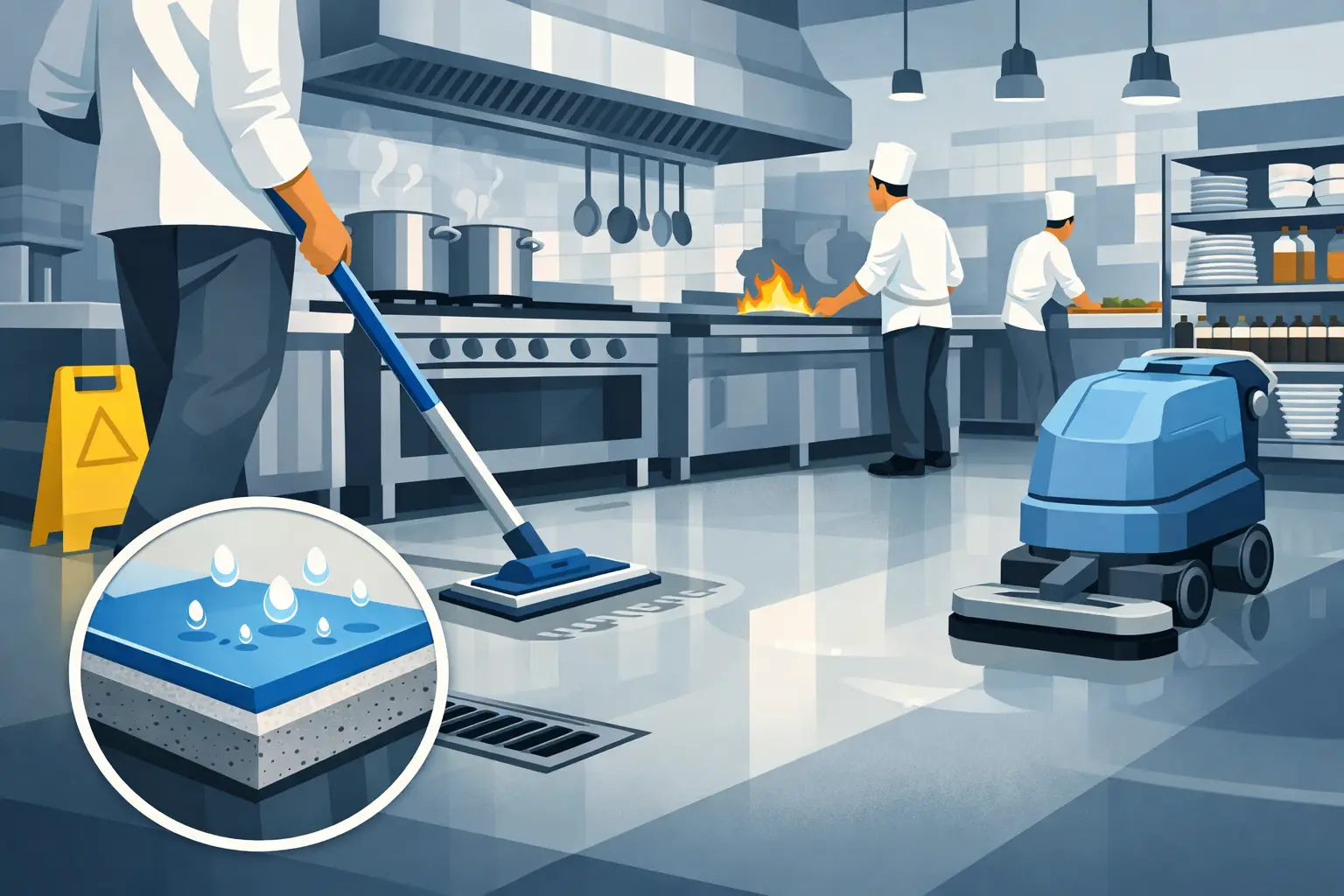
A failed kitchen floor does not stay a flooring problem for long. Grease collects in cracks, water finds its way beneath damaged surfaces, employees lose traction, and cleaning becomes harder than it should be. The right restaurant kitchen floor coating gives your back-of-house operation a dense, cleanable surface built for heat, traffic, spills, and daily washdowns.
For Orange County restaurant owners, facility managers, and general contractors, the goal is not simply a floor that looks finished on opening day. It is a flooring system that stays dependable through dinner rushes, heavy equipment movement, degreasing chemicals, dropped utensils, and constant moisture.
What a Restaurant Kitchen Floor Coating Must Handle
Commercial kitchens put more stress on a floor than most retail or office environments. The coating needs to resist cooking oils, animal fats, acidic food products, detergents, sanitizers, and occasional impacts from carts, kegs, racks, and equipment. It also has to handle repeated temperature changes around ovens, dishwashing areas, walk-in coolers, and freezer transitions.
A standard paint or thin consumer-grade epoxy may look acceptable initially, but it usually lacks the film build, surface preparation, and chemical resistance needed for food-service work. When that coating peels, stains, or becomes slick, repairs can interrupt service and create avoidable sanitation concerns.
A properly specified system starts with the actual conditions in your kitchen. A fast-casual prep line has different demands than a high-volume commissary, bakery, steakhouse, brewery kitchen, or full-service restaurant with a dish pit running all day. The floor must be selected around the work, not pulled from a one-size-fits-all package.
The Best Coating Systems for Commercial Kitchens
There is no single best coating for every restaurant. The right system depends on moisture in the slab, the condition of the existing concrete, cleaning practices, temperature exposure, and how much downtime the restaurant can allow.
Epoxy Flooring Systems
Epoxy is a common choice for commercial kitchen floors because it creates a hard, nonporous surface with strong resistance to stains, oils, many chemicals, and abrasion. It can also be built in multiple layers for more protection and a more uniform appearance.
For dry or moderately wet kitchen areas, a high-build epoxy system can be a practical, cost-effective solution. Decorative color flakes are generally not the priority in a working kitchen, but color can be used to define prep zones, dish areas, walkways, or safety boundaries.
The trade-off is that epoxy can be sensitive to moisture vapor from the concrete slab and may not be the best choice around severe thermal shock. If hot water, steam, or frequent temperature cycling is part of the environment, a different resin system may offer a longer service life.
Urethane Cement Systems
Urethane cement is often the stronger choice for demanding food-service environments. It is designed to tolerate thermal cycling, moisture, hot washdowns, oils, and aggressive cleaning better than many conventional coatings. This makes it especially well suited for dishwashing areas, commercial bakeries, brewery production spaces, high-volume kitchens, and locations where hot equipment and wet cleaning are routine.
This system is typically thicker than a basic epoxy coating and can be broadcast with aggregate to improve traction. It costs more upfront, but the added durability may reduce repairs and shutdowns in the areas that take the most abuse.
Polyaspartic and Fast-Cure Topcoats
Fast-cure polyaspartic materials can help when schedule pressure is high. They are often used as topcoats because they offer strong wear resistance and can return certain spaces to service faster than traditional systems.
However, speed should not drive the entire decision. The concrete still needs proper preparation, cracks need attention, and moisture conditions must be evaluated. A quick installation is only valuable when the coating is correctly matched to the substrate and kitchen use.
Slip Resistance Is Part of the Specification
A restaurant kitchen floor needs to be cleanable without becoming dangerously smooth. That balance matters. A glossy, glass-like finish may be easy to wipe down, but it can become slippery when grease, water, flour, or food debris is present.
Slip resistance is created by incorporating the right aggregate into the coating system. The texture should suit the work area. A dish pit, fryer line, and walk-in entrance may require more traction than a dry storage area. Too little texture creates a safety concern; too much texture can trap debris and make cleaning more labor-intensive.
This is why restaurant kitchen flooring should be planned by zone. Wet zones, cook lines, prep areas, service corridors, and storage rooms do not always need the same finish. A contractor who understands commercial concrete coatings can recommend texture levels that support both safety and sanitation.
Surface Preparation Determines Whether the Coating Lasts
The coating is only as reliable as the concrete beneath it. Grease contamination, old adhesive, failing paint, weak concrete, moisture vapor, and existing cracks can all affect adhesion. Applying a new coating over these issues may hide them briefly, but it will not solve them.
Professional surface preparation usually includes mechanical grinding or shot blasting to open the concrete and create the correct profile for bonding. Areas affected by oil or grease need additional cleaning and treatment. Cracks, spalls, and joint damage should be repaired before the coating system is installed.
Moisture testing is also a key step. Concrete can release moisture vapor even when it appears dry on the surface. If vapor pressure is excessive, the system may need a moisture-mitigating primer or a coating designed to tolerate those conditions. Skipping this assessment is one of the most common reasons commercial floor coatings blister or delaminate.
Plan Around Drains, Coves, and Equipment
A durable coating cannot correct every drainage problem by itself. If water pools near a dish station, mop sink, or floor drain, the slope may need to be addressed before coating. Concrete leveling, patching, or resurfacing may be necessary to guide wash water where it belongs.
Integral cove base is another detail worth considering. A coved transition from the floor to the wall removes the sharp corner where grease and debris tend to collect. It creates a more sanitary, easier-to-clean perimeter, especially in prep areas and wet zones.
Before installation, identify where equipment will sit, where carts turn, and where employees routinely stand. High-wear paths may need added thickness or a more aggressive texture. Equipment may need to be moved or protected, and floor penetrations should be sealed correctly. Good planning prevents costly field changes once the project starts.
Minimize Restaurant Downtime Without Cutting Corners
Restaurants cannot casually close their kitchens for a week. Scheduling matters as much as system selection. Depending on the coating, project size, repairs required, and curing conditions, work may be completed in phases, overnight, during planned closures, or across slower operating days.
The practical approach is to inspect the site first, identify the prep requirements, and build a schedule around your operation. A small prep room may be completed separately from the main cook line. Larger kitchens may be divided into sections when temporary workflow changes are possible.
Orange County Concrete Polishing provides in-person estimates and can help scope a coating project around business hours and access requirements. The objective is straightforward: complete the floor correctly while limiting disruption to staff, customers, and revenue.
How to Maintain a Coated Kitchen Floor
A commercial coating reduces maintenance, but it does not eliminate it. Use cleaning products that match the coating manufacturer’s recommendations, remove grease promptly, and avoid harsh tools that can gouge the surface. Regular cleaning also preserves the traction profile by preventing oily buildup.
Inspect the floor periodically around drains, door thresholds, expansion joints, and equipment legs. Small chips or damaged joints are easier and less expensive to address before moisture reaches the concrete below. If a section needs repair, professional evaluation can determine whether a localized patch will blend and perform properly or whether the surrounding area needs additional work.
A restaurant kitchen floor should support your operation quietly: easier cleanup, safer footing, fewer staining issues, and less time spent managing worn-out surfaces. Get a site-specific quote before choosing a system, and make sure the coating is designed for the way your kitchen actually works.
Recent Post
Best Industrial Floor Systems for Demanding Sites
October 16, 2026 1:51 am
How to Prevent Concrete Delamination Early
October 14, 2026 1:51 am

Warehouse Floor Safety Guide for Busy Facilities
October 12, 2026 1:45 am