
Polyaspartic Garage Coating Review for OC Homes
A garage floor has to deal with more than parked cars. It sees hot tires, oil drips, dropped tools, rolling bins, bicycles, and the fine dust that comes in from the driveway. This polyaspartic garage coating review looks at whether this fast-curing floor system delivers the durability and clean finish Orange County homeowners expect – and where the real trade-offs are.
Polyaspartic coatings have become a popular upgrade for garages because they cure quickly, hold color well, and can be installed as part of a decorative flake system. But the coating itself is only one part of the result. Concrete condition, surface preparation, moisture, traction needs, and installer skill all determine whether the floor looks sharp for years or starts showing problems early.
Polyaspartic Garage Coating Review: What You Get
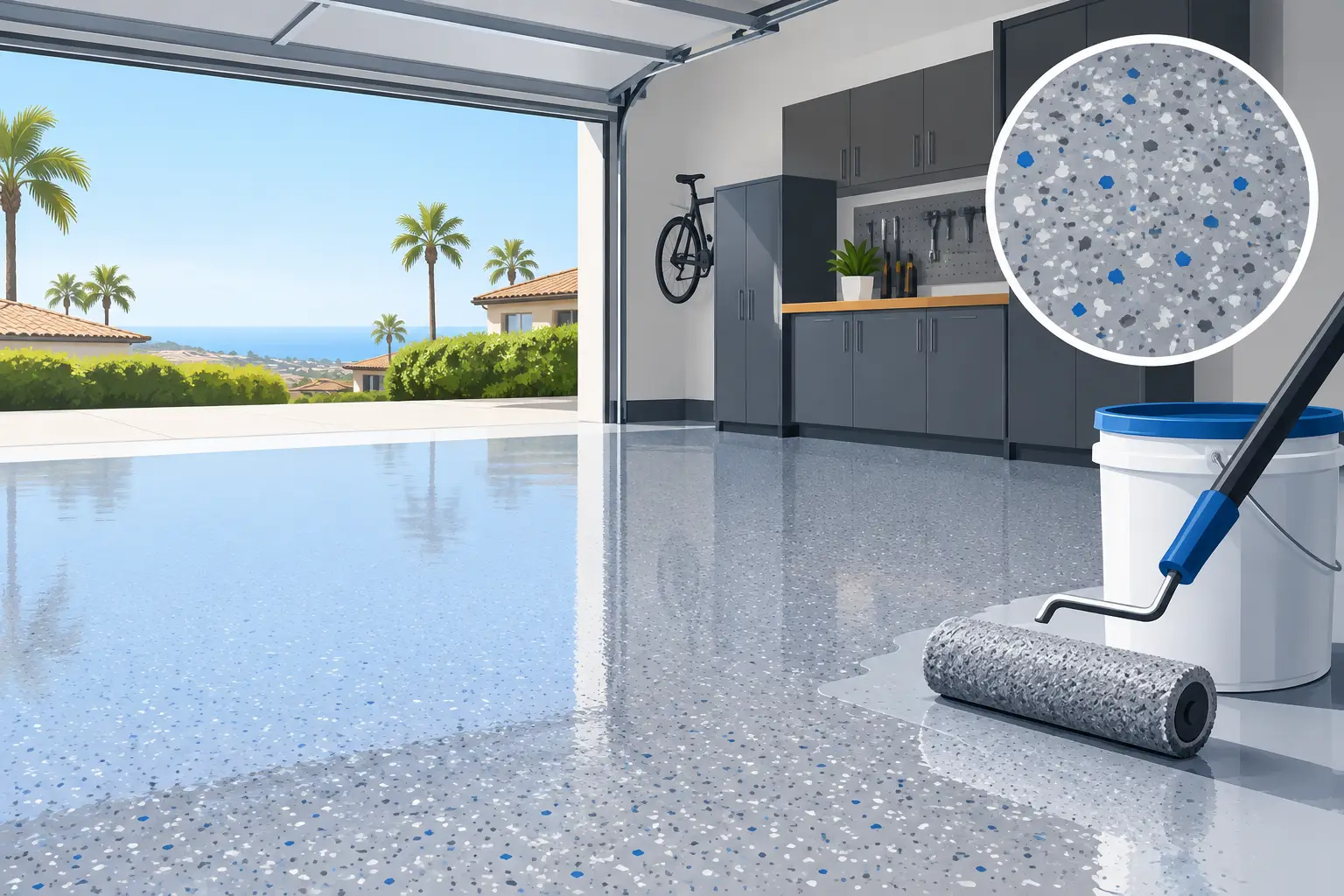
Polyaspartic is a high-performance coating material in the polyurea family. In a typical garage system, the concrete is mechanically ground, cracks and joints are addressed as needed, a base coat is applied, decorative vinyl flakes are broadcast into the wet coating, and a clear polyaspartic topcoat seals the surface.
The finished floor is not simply painted concrete. A professionally installed system creates a continuous, easy-to-clean surface with color, texture, and a protective wear layer. Full-flake floors are especially common because the flake blend helps disguise dust, tire marks, and minor day-to-day wear better than a single solid color.
One of polyaspartic’s strongest selling points is cure time. Many systems can be installed and returned to light use much faster than conventional epoxy-only systems. For homeowners who cannot leave vehicles outside for several days, that matters. For property managers or business owners with limited downtime, it can matter even more.
That faster cure also requires disciplined installation. Once materials are mixed, there is less room for delays or guesswork. Temperature, humidity, concrete profile, mixing ratios, and application timing need to be controlled by a crew that understands the product system being used.
Where Polyaspartic Performs Well
A properly specified polyaspartic garage coating performs well in the areas most garage owners care about: appearance, cleaning, chemical resistance, and daily durability. The clear topcoat gives decorative flakes depth and helps protect the color from wear. Unlike many epoxy products, polyaspartic topcoats generally have strong UV resistance, so they are less likely to amber or yellow when exposed to sunlight near an open garage door.
The coating also creates a surface that is much easier to maintain than bare concrete. Oil, road grime, fertilizer residue, and common automotive fluids are less likely to soak into the floor when spills are cleaned promptly. Most routine cleaning involves sweeping or blowing out dust, then using a mild cleaner and soft mop as needed.
Hot-tire pickup is another issue homeowners ask about. Bare concrete and poorly bonded coatings can show tire marks or lose adhesion under repeated heat and pressure. A professionally prepared polyaspartic system is designed to resist that stress. Still, no coating should be sold as indestructible. Aggressive tire compounds, hard turning in place, neglected chemical spills, metal scraping, and heavy impact can damage any decorative floor.
Traction Needs a Real Conversation
A glossy garage floor can look excellent, but gloss alone does not equal safety. When water enters the garage from rain, pool use, washing a car, or wet shoes, any smooth coated surface can become slicker than dry concrete.
Decorative flake adds texture, and additional traction media can be incorporated when appropriate. The right amount depends on how the garage is used. A homeowner who parks two cars and stores seasonal items may want a different finish than someone using the garage as a workshop, home gym, or entry point from a pool area. More texture improves grip but can make detailed cleaning slightly more involved. That is a practical trade-off worth discussing before installation rather than after.
Appearance Is Highly Customizable
Polyaspartic systems are not limited to the gray showroom look. Flake blends can complement light cabinets, darker exterior paint, wood accents, or modern interior finishes. Neutral blends remain the most forgiving for everyday garages, while lighter colors can brighten an enclosed space.
Color selection should account for the amount of dust, dirt, and vehicle traffic in the garage. A finish that looks dramatic in a sample board may show every footprint in a high-use family garage. An experienced contractor can help match the system to the space instead of pushing a one-size-fits-all color.
Surface Preparation Decides the Result
The most expensive coating will not overcome poor concrete preparation. This is the part of the project homeowners do not always see, but it is where the long-term performance is decided.
Professional installers mechanically grind the concrete to create the proper surface profile for adhesion. Grinding removes weak surface material, opens the concrete, and eliminates many contaminants that can interfere with bonding. Acid washing is not a substitute for proper mechanical preparation on a serious coating project.
Before coating begins, the crew should inspect for oil contamination, failed old paint, moisture concerns, spalling, cracks, joint condition, and areas where concrete has become soft or deteriorated. Cracks can often be repaired and blended into the system, but active movement and structural issues need honest evaluation. Coatings follow the concrete underneath them. If the slab is moving, damp, or breaking down, the coating cannot magically make that problem disappear.
Moisture deserves special attention in coastal and older Orange County properties. Vapor moving through a slab can affect adhesion if the wrong system is installed. Depending on the conditions, the floor may need moisture testing, a specialized primer, repairs, or a different finish recommendation. A contractor who skips this conversation may be offering a fast price rather than a reliable floor.
Polyaspartic vs. Epoxy for a Garage
Epoxy and polyaspartic are often presented as opponents, but a quality garage floor can use both. Epoxy is known for strong adhesion, build, and chemical resistance. Polyaspartic is known for fast curing, UV stability, and a durable clear finish. Some professional systems use an epoxy or polyurea base coat with a polyaspartic topcoat because each layer serves a purpose.
The better question is not which word is on the proposal. Ask what the complete system includes, how the concrete will be prepared, how cracks will be handled, and what topcoat is being used. A low-cost coating package may leave out critical prep work, use a thin application, or rely on a generic product that does not suit the slab.
Polyaspartic systems often cost more than basic DIY epoxy kits, and for good reason. The material, grinding equipment, repair work, skilled labor, and installation pace are all different. For a garage that gets daily use, the value is usually in reduced maintenance and a floor that stays presentable rather than needing to be patched, repainted, or replaced after a short period.
Who Should Choose a Polyaspartic System?
A polyaspartic garage floor is a strong fit for homeowners who want a clean, finished garage with limited downtime and long-term protection from routine automotive and household use. It also works well for collectors, workshops, and attached garages where appearance matters as much as durability.
It may not be the right first step for every slab. If the concrete has major structural cracking, persistent moisture problems, widespread delamination, or drainage issues, those conditions should be addressed before committing to a decorative coating. The right contractor will tell you when repairs or a different flooring solution make more sense.
When reviewing proposals, look beyond square-foot pricing. Confirm whether diamond grinding is included, whether crack repairs are included or priced separately, what flake coverage is proposed, whether traction additives are available, and how long the floor needs before foot and vehicle traffic. Those details explain why two quotes that sound similar can produce very different results.
Orange County Concrete Polishing approaches garage coatings as complete concrete finishing systems, not quick paint jobs. An in-person assessment makes it possible to evaluate the slab, your traffic level, preferred color, schedule, and the finish details that will make the garage work better every day.
A garage coating should make the space easier to use, not just easier to photograph. Choose the system after the concrete has been inspected, ask direct questions about preparation, and select a finish that fits how you actually park, work, store, and live in the space.
Recent Post
Best Industrial Floor Systems for Demanding Sites
October 16, 2026 1:51 am
How to Prevent Concrete Delamination Early
October 14, 2026 1:51 am

Warehouse Floor Safety Guide for Busy Facilities
October 12, 2026 1:45 am