
Industrial Epoxy Floor Coating That Lasts
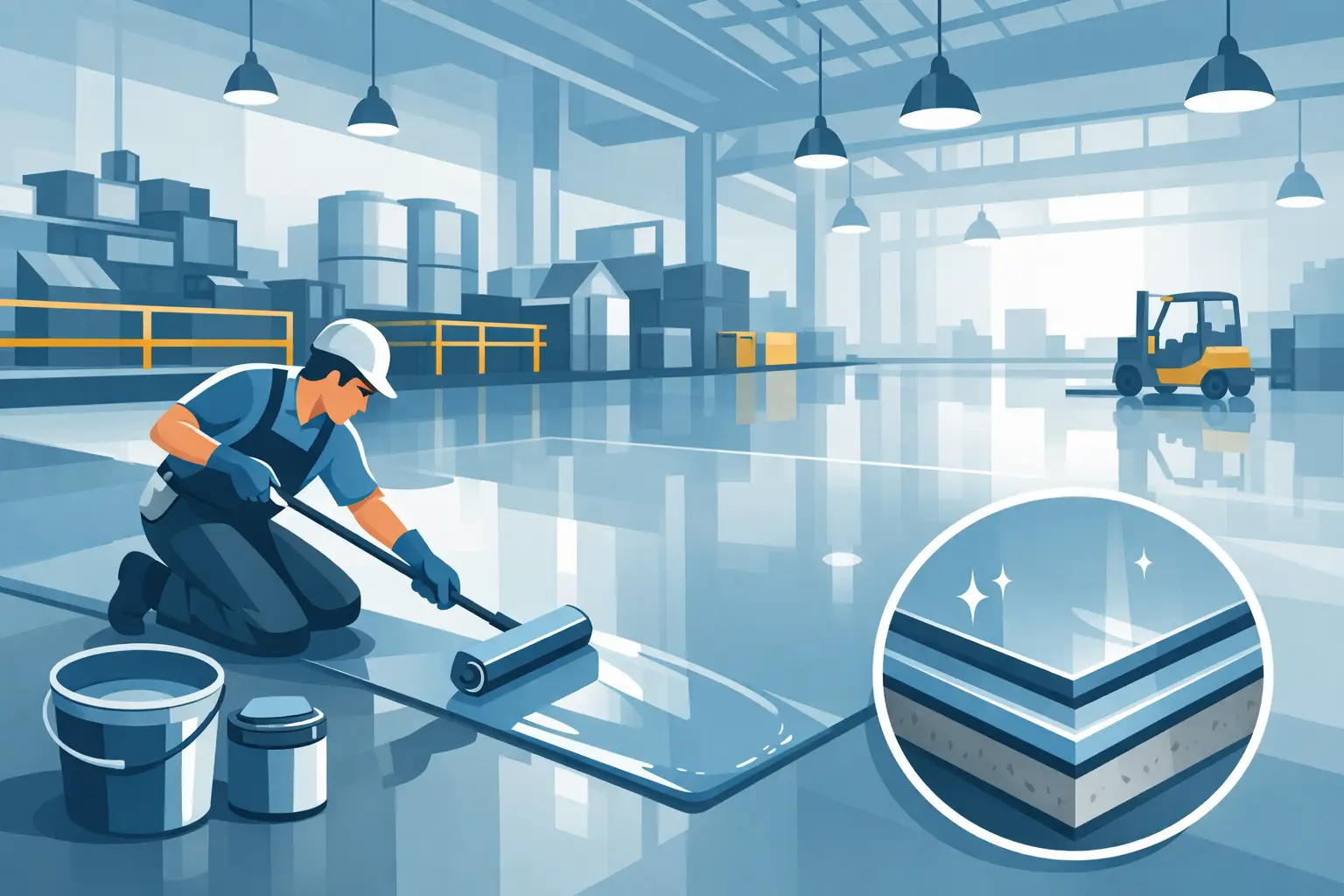
A forklift turns too sharply, a pallet drops hard, oil hits the slab, and suddenly your floor is part of the problem. In busy facilities, the surface under your operation takes more abuse than almost anything else. That is why industrial epoxy floor coating is not just a cosmetic upgrade. It is a performance system built to protect concrete, improve cleanability, and hold up under real working conditions.
For warehouses, manufacturing spaces, service bays, commercial kitchens, garages, and other high-demand environments, the right floor coating can reduce dust, resist chemicals, and make daily maintenance faster. The wrong system, or the wrong installer, usually shows up in peeling, hot tire pickup, slick areas, or premature wear. The details matter from the first stage of surface prep to the final topcoat.
What industrial epoxy floor coating is designed to do
Industrial epoxy floor coating is a resin-based system applied over properly prepared concrete to create a dense, durable surface. Once cured, it forms a hard-wearing layer that bonds to the slab and helps shield it from abrasion, stains, impact, and many common chemicals.
In practical terms, that means less concrete dust in the air, fewer surface defects exposed to traffic, and a cleaner-looking facility overall. It can also improve light reflectivity, which is useful in large interiors where visibility matters for both productivity and safety.
Not every epoxy system is the same, though. Film thickness, number of coats, aggregate additives, moisture conditions, and traffic demands all affect performance. A light-duty coating for a private garage is one thing. A heavy-duty system for a warehouse aisle, machine shop, or airplane hangar is another.
Where industrial epoxy floor coating makes the most sense
This type of flooring performs best in places where concrete sees repeated wear and where maintenance needs to stay manageable. Warehouses benefit from a surface that can handle tire traffic and regular cleaning. Manufacturing and assembly areas often need better resistance to oils, fluids, and daily abrasion. Automotive spaces need a coating that stands up to chemicals, dropped tools, and rolling loads.
Commercial facilities also choose epoxy for practical reasons beyond toughness. Retail back rooms, storage areas, service corridors, and food-related workspaces often need floors that look cleaner, are easier to mop, and present a more professional appearance. In some settings, color zoning and striping can also help organize traffic flow or mark safer walkways.
For property owners and facility managers, the big question is usually not whether a coating would help. It is whether the selected system matches the actual use of the space.
The biggest performance factor is surface preparation
A quality coating job starts long before the epoxy is mixed. Concrete has to be evaluated for contamination, moisture issues, previous coatings, cracking, and surface weakness. If that step gets rushed, the coating may fail no matter how good the product is.
Professional surface preparation usually involves mechanical grinding or shot blasting to create the right profile for adhesion. Oil-soaked areas may need additional treatment. Cracks, joints, and spalled sections may need repair or rebuilding before the coating goes down. If moisture vapor transmission is present, a standard epoxy system may not be enough on its own.
This is where many cheap bids fall apart. On paper, one coating proposal can look similar to another. On the floor, the difference usually comes down to prep quality, material selection, and whether the contractor is building a system for the site conditions instead of applying a generic package.
Choosing the right epoxy system for the job
There is no single best industrial epoxy floor coating for every project. The right solution depends on traffic, exposure, cleaning methods, downtime requirements, and the condition of the slab.
A solid-color epoxy system is a common choice for work areas that need a clean, uniform finish and dependable protection. Quartz or flake-enhanced systems can improve texture, slip resistance, and visual appeal while helping hide dirt and wear patterns. For heavier industrial use, installers may recommend high-build systems with added thickness or topcoats designed for extra chemical and abrasion resistance.
In some facilities, epoxy is only part of the answer. A urethane or polyaspartic topcoat may be added to improve UV stability, scratch resistance, or cure time. That is especially useful when scheduling is tight or when the floor needs to return to service quickly. The best recommendation is usually based on the operating environment, not on what is easiest to sell.
Benefits property owners and facility managers actually notice
The most obvious benefit is durability. A properly installed epoxy system protects the slab from wear that would otherwise lead to dusting, staining, and surface breakdown. That matters in high-traffic areas where bare concrete starts to show damage fast.
Maintenance is another major advantage. Smooth, sealed surfaces are easier to sweep and mop than porous concrete. Dirt, spills, and tire marks are generally easier to manage, which can reduce labor over time and help the facility stay presentable.
Chemical resistance is also a strong selling point, but it comes with an important qualifier. Different systems resist different substances. Some environments involve oils and standard shop fluids. Others deal with harsher chemicals, washdowns, or heat exposure that may call for a more specialized coating system. Matching the chemistry to the environment is part of getting a floor that lasts.
Safety can improve as well. Texture additives and broadcast systems can be used to increase traction, especially in areas prone to spills or moisture. At the same time, more texture can make cleaning slightly more involved, so there is always a balance between slip resistance and ease of maintenance.
What can go wrong with industrial epoxy floor coating
Epoxy is durable, but it is not indestructible, and it is not automatic. If the slab has moisture issues, coatings can blister or delaminate. If surface prep is weak, adhesion can fail. If the floor sees heavy impact or chemical exposure beyond the coating’s design, wear will show up sooner than expected.
There are also project-specific trade-offs. A very smooth finish may be easier to clean, but it may not be ideal in wet areas. A thicker system may offer more protection, but it can add cost and cure time. Fast-turnaround coatings can reduce downtime, but not every slab or service condition is right for that approach.
That is why a serious site review matters. You want a contractor who asks how the space is used, what rolls across it, what spills on it, how often it is cleaned, and how much downtime is acceptable. Those answers shape the system.
Installation timing matters more than most people expect
For many businesses, scheduling is just as important as product selection. Flooring work can affect operations, deliveries, employee access, and tenant activity. In active facilities, coating installation often needs to happen in phases or during nights and weekends to reduce disruption.
A contractor with experience in commercial and industrial environments knows how to build around those realities. That includes protecting adjacent areas, managing cure windows, coordinating access, and setting realistic expectations about when traffic can return. The goal is not simply to finish the floor. It is to finish the project without creating unnecessary operational headaches.
Orange County Concrete Polishing works with clients who need that level of coordination, especially in spaces where the flooring has to perform and the schedule has to stay under control.
How to know when it is time to coat or recoat
If your concrete is chalking, staining easily, collecting dust, or showing widespread wear, it is usually time to look at a coating system. Older coatings with peeling, bubbling, or worn traffic paths are another clear sign that the floor needs attention.
The earlier you address the problem, the more options you typically have. A floor with moderate wear may need grinding, patching, and recoating. A floor with severe failure, deep contamination, or major slab damage may need more extensive repair before a new system can be installed. Waiting too long often turns a straightforward project into a larger one.
Getting the result you actually want
A good epoxy floor should fit the way your space operates. It should stand up to your traffic, your cleanup routine, your exposure conditions, and your scheduling needs. It should also look clean and professional without demanding constant attention.
That does not happen with a one-size-fits-all bid. It comes from proper slab evaluation, honest recommendations, and a coating system built around the actual demands of the site. If you are planning an upgrade for a warehouse, plant, garage, service area, or commercial facility, start with a contractor who treats the floor like a working surface, not just a finish.
The best time to address a failing floor is before it starts slowing down the rest of your operation.
Recent Post
Best Industrial Floor Systems for Demanding Sites
October 16, 2026 1:51 am
How to Prevent Concrete Delamination Early
October 14, 2026 1:51 am
Warehouse Floor Safety Guide for Busy Facilities
October 12, 2026 1:45 am