
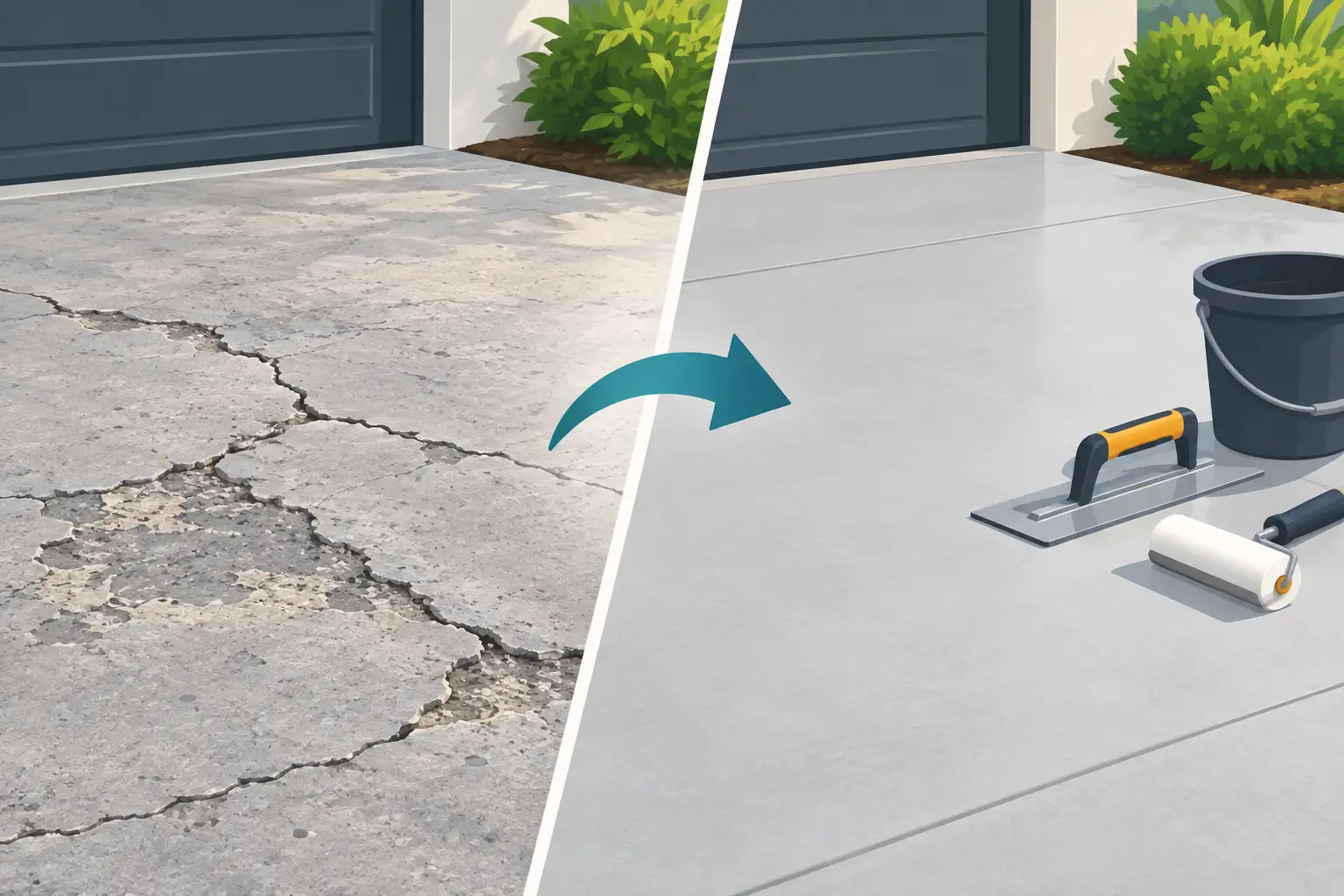
How to Restore Worn Concrete for Lasting Use
A worn concrete floor usually tells you what it needs. Dusting along traffic paths points to a weak surface. Tire marks, oil stains, and faded color may be cosmetic. Spalling, cracking, and uneven areas call for more substantial repair. Knowing how to restore worn concrete starts with separating surface wear from the structural or moisture problems underneath it.
For Orange County homes and businesses, the right restoration can turn a tired slab into a clean, durable floor that is easier to maintain. The wrong shortcut can trap moisture, hide active cracks, or leave a coating that peels under vehicle traffic and daily use.
Start by Identifying Why the Concrete Wore Out
Concrete does not wear evenly without a reason. A residential garage may show damage from hot tires, oil drips, moisture, and years of abrasion. In a warehouse or retail space, forklifts, carts, foot traffic, dropped materials, and chemical exposure can break down the surface. Outdoor slabs face water intrusion, sun exposure, and temperature movement.
Look closely at the condition of the slab before choosing a finish. Fine hairline cracks that do not move may be repaired and blended into a resurfacing or coating system. Wider cracks, vertical displacement, or areas that sound hollow when tapped can signal a deeper issue. If the slab is settling, heaving, or experiencing active moisture pressure, a new coating alone will not solve it.
Pay attention to moisture as well. Concrete is porous, and vapor moving through the slab can cause bubbling, whitening, or delamination in coatings. This is especially relevant in ground-level garages, older commercial buildings, and locations with drainage issues. A professional surface evaluation helps determine whether moisture mitigation, crack repair, or concrete leveling should come before the final finish.
How to Restore Worn Concrete Based on the Damage
The best restoration method depends on the concrete’s condition, the intended use of the space, and the performance you expect from the finished floor. A decorative patio, an airplane hangar, and a home garage may all begin with concrete, but they require very different solutions.
Grind away weak, contaminated concrete
Grinding is often the first step in a lasting restoration. Professional diamond grinders remove weak surface paste, old coatings, paint, adhesive residue, tire marks, and stubborn contamination. More importantly, grinding creates the proper surface profile for a new coating or overlay to bond.
This is not the same as lightly sanding the floor. Concrete preparation requires the right equipment, diamond tooling, dust collection, and operator control. Grinding too aggressively can expose excessive aggregate or create low spots. Skipping the process can leave hidden contaminants that interfere with adhesion.
For floors with only minor wear, grinding may be enough to prepare the slab for a clear sealer, penetrating densifier, stain, dye, or polish. It can also open a worn surface before applying an epoxy or urethane system.
Repair cracks, chips, and spalled areas
Cracks should be cleaned, routed when necessary, and filled with a material compatible with the final floor system. Rigid fillers can work for dormant cracks, while flexible materials may be appropriate where movement is expected. The repair must be ground flush so it does not create a visible ridge or weak point.
Spalling requires a different approach. When the concrete surface has flaked away, the damaged material needs to be removed back to sound concrete. A polymer-modified repair mortar can rebuild the area before resurfacing, polishing, or coating. Simply spreading a thin product over loose concrete usually leads to failure.
Chips at doorways, slab edges, and loading areas deserve extra attention because those locations take repeated impact. In commercial and industrial settings, a repair should be selected for the weight, traffic pattern, and chemical exposure the floor will see after reopening.
Resurface concrete when appearance and profile are the problem
Concrete resurfacing is a practical option when the slab is structurally sound but its face is too rough, pitted, stained, or inconsistent to serve the space well. A cementitious overlay can create a fresh, uniform surface over properly prepared concrete. It can then be left with a clean natural appearance, stained, sealed, or used as a base for a decorative finish.
Resurfacing works well for worn patios, driveways, walkways, retail floors, and garage slabs with broad cosmetic damage. It is not a cure for major settlement, active cracking, poor drainage, or a slab that has failed below the surface. Those problems need correction first.
The thickness of the overlay matters. Thin skim coats are suitable for minor surface imperfections, while deeper repairs and leveling conditions require materials designed to build thickness. The finished floor also needs the right cure time before traffic or coating installation.
Choose a coating system for protection and easier maintenance
For garages, showrooms, kitchens, service areas, warehouses, and commercial spaces, a resinous coating can add chemical resistance, abrasion resistance, and a cleaner appearance. Epoxy systems are commonly used for their build, color options, and ability to protect a prepared slab. Urethane or polyaspartic topcoats can improve UV stability, scratch resistance, and return-to-service time depending on the system.
The key word is prepared. Coatings are only as dependable as the concrete beneath them. A floor with oil saturation, moisture issues, weak concrete, or inadequate grinding may look good briefly, then blister or peel. A contractor should evaluate the slab and specify a system based on the actual exposure, not just the desired color.
Texture is another decision point. Smooth floors are easier to mop, but areas exposed to water, oils, or frequent foot traffic may need a traction additive. The right texture improves safety without making cleaning unnecessarily difficult.
Polish existing concrete for a durable, low-maintenance finish
If the concrete is in generally good condition and you want a modern, long-lasting appearance, polished concrete may be the right direction. The process mechanically refines the slab through multiple grinding and polishing stages. A densifier hardens the concrete surface, helping reduce dusting and improve performance.
Polished concrete is a strong option for offices, retail spaces, warehouses, restaurants, and modern residential interiors. It offers a clean look without a film-forming coating that can wear away in high-traffic paths. Color can be added with stains or dyes, and the final sheen can range from satin to high gloss.
Polishing has trade-offs. Existing cracks, patches, aggregate exposure, and slab variation can remain visible as part of the finished character. If you need a completely uniform color or want to conceal extensive repairs, a resurfacing or coating system may be a better fit.
Do Not Skip Drainage, Joints, and Edges
Many concrete restoration failures begin at the perimeter rather than the center of the floor. Water running toward a garage wall, pooling at a doorway, or entering through an exterior joint can undermine repairs and coatings. Before finishing the slab, identify where water travels and correct drainage issues when they are present.
Control joints also need to remain functional. These joints are intentionally placed to manage cracking as concrete moves. Filling or coating over them without the right joint treatment can cause the finish to split. Depending on the floor system, joints may be cleaned and filled, honored in the final design, or treated with flexible sealant.
Edges around walls, drains, ramps, and transitions should be prepared carefully. These are common points for coating lift, chipping, and moisture intrusion. Detailed prep takes time, but it is part of a floor built for real use.
Match the Finish to the Space
A garage floor needs protection from tire pickup, oil, brake fluid, and impact. A warehouse floor needs to handle rolling loads and frequent cleaning. A restaurant or commercial kitchen needs traction and resistance to spills. A polished office floor may prioritize appearance, easy upkeep, and a professional finish.
There is no one-size-fits-all answer. The best system balances the slab’s current condition with traffic, chemicals, moisture, cleaning practices, budget, and downtime. Fast-cure products can be valuable when a business needs to reopen quickly, while a more involved polishing or resurfacing process may offer better long-term results for another space.
Work With a Contractor Who Starts With Preparation
Restoring worn concrete is not just about applying a product. It is a sequence of inspection, mechanical preparation, repair, moisture evaluation, and finish selection. Each step affects whether the floor performs for years or becomes another repair project.
Orange County Concrete Polishing provides in-person evaluations and tailored recommendations for residential, commercial, and industrial concrete floors. Whether your slab needs grinding, repair, resurfacing, polishing, or a protective epoxy system, the right scope begins with seeing the floor in person.
A worn concrete floor does not have to stay dusty, stained, uneven, or difficult to clean. Get a professional assessment before choosing a finish, and you can invest in a surface built for the traffic and conditions it will actually face.
Recent Post

Best Industrial Floor Systems for Demanding Sites
October 16, 2026 1:51 am
How to Prevent Concrete Delamination Early
October 14, 2026 1:51 am

Warehouse Floor Safety Guide for Busy Facilities
October 12, 2026 1:45 am