
How to Prevent Concrete Delamination Early
A concrete floor can look sound on pour day and still fail months later. Blisters, hollow-sounding spots, flaking, and thin layers breaking loose are more than cosmetic defects. They can interrupt warehouse traffic, compromise a polished finish, cause coating failures, and turn a planned maintenance project into a larger repair. Knowing how to prevent concrete delamination starts before finishing begins and continues through curing, moisture control, and surface preparation.
For Orange County homeowners, contractors, and facility managers, prevention is usually less expensive than removing failed concrete and rebuilding the surface. The right approach depends on whether the slab is new, recently placed, or an existing floor being prepared for polishing, epoxy, resurfacing, or another finish system.
What Concrete Delamination Looks Like
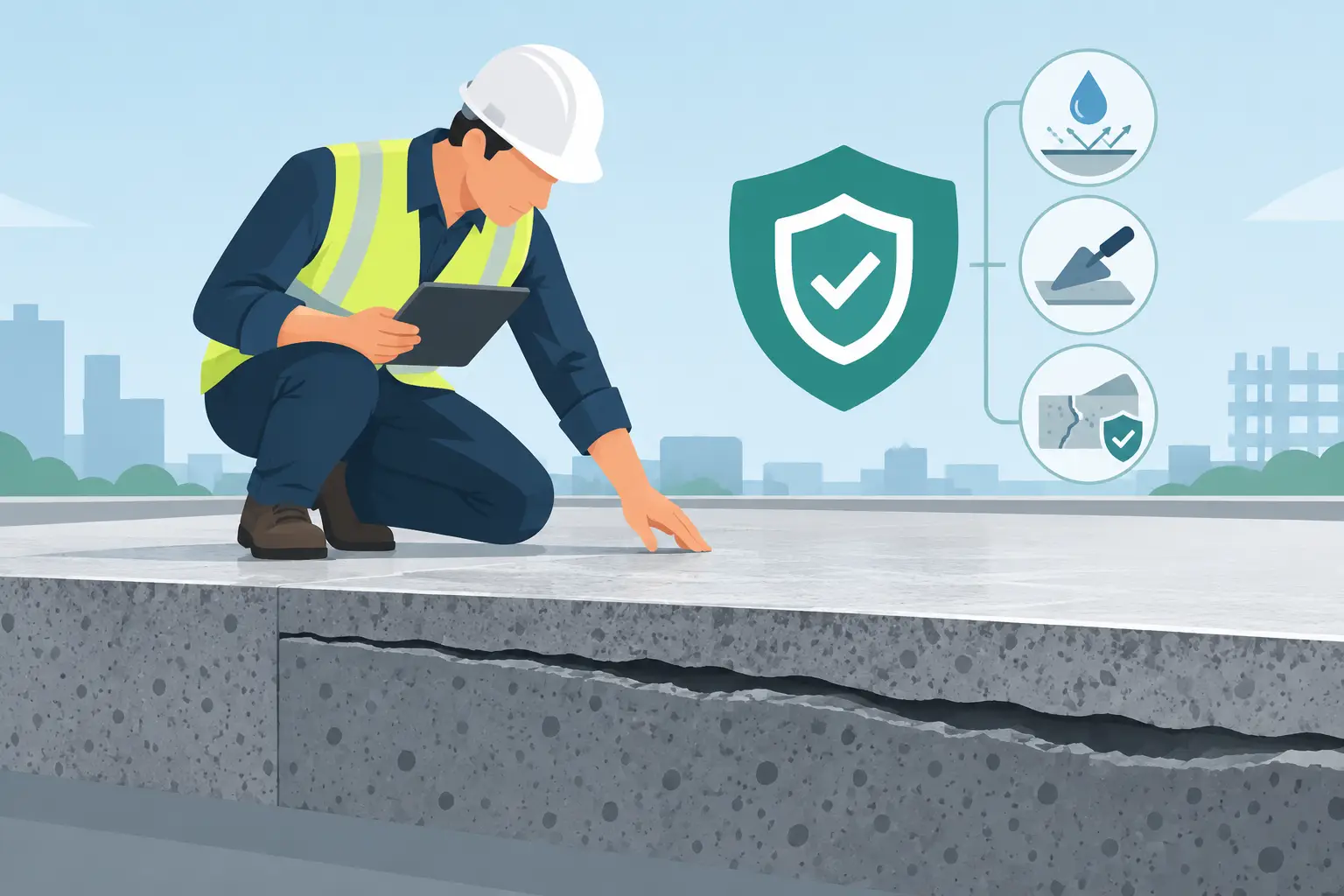
Delamination occurs when a thin layer of concrete separates from the material below it. The surface may sound hollow when tapped, crack in a web-like pattern, develop blisters, or break away in sheets under traffic or grinding equipment. In severe cases, the slab can appear solid until it is exposed to forklift wheels, heavy shelving loads, tire traffic, or the mechanical preparation required for a new coating.
The problem is often concentrated near the top of the slab because that is where finishing practices, bleed water, air, heat, and curing conditions have the greatest effect. A delaminated surface does not provide a dependable base for epoxy, polish, stain, or resurfacing materials. Covering it without addressing the weak layer only transfers the failure to the finished floor.
Why Concrete Delaminates
Fresh concrete contains entrapped air and naturally releases excess mix water upward as it settles. This process is called bleeding. When finishers close the surface too early, they can trap that water and air beneath a dense top layer. As the concrete hardens, the trapped moisture creates a weak plane below the surface.
Premature finishing is a common cause, but it is not the only one. Excess water in the mix, added water at the jobsite, improper air content, cold weather, hard-troweling at the wrong time, and poor curing can all contribute. So can placing concrete over a vapor barrier without adjusting the mix design and finishing sequence for slower bleed-water movement.
Existing slabs can develop similar-looking failures from freeze-thaw exposure, moisture vapor pressure, chemical attack, weak previous overlays, or improperly bonded coatings. That is why a proper evaluation matters. The repair method for a new-slab finishing defect is different from the solution for an aging parking structure or a warehouse floor with coating-related damage.
How to Prevent Concrete Delamination During Placement
Prevention begins with a coordinated plan between the concrete supplier, general contractor, placing crew, and finishing crew. Concrete is not a material that benefits from rushing. The crew needs to understand the intended floor finish, slab thickness, ambient conditions, mix design, and schedule before the trucks arrive.
Use the right mix, not extra water
A workable mix is essential, but adding water on site to make concrete easier to place can lower surface strength and increase bleeding. Specify a mix designed for the project conditions and placement method. If additional workability is needed, the concrete supplier may recommend an approved admixture rather than unmeasured water additions.
Air entrainment also deserves attention. Air-entrained concrete has a place in exterior applications exposed to freeze-thaw cycles, but it requires careful finishing practices. Excessive air near the surface can increase the risk of blistering and delamination when the slab is hard-troweled. The mix should match the exposure conditions and the desired finish.
Do not finish before bleed water is gone
This is the rule that prevents many surface failures. Do not begin final finishing while bleed water remains on the slab. If water is visible, or if the concrete is still releasing moisture, sealing the surface with a trowel can trap it below the top layer.
Finishing crews should wait for the slab to reach the correct set before performing final trowel passes. The exact timing changes with temperature, humidity, cement content, slab thickness, admixtures, and wind conditions. There is no reliable shortcut based on the clock alone. An experienced crew reads the concrete and adjusts the sequence accordingly.
Avoid dusting dry cement or other materials onto wet surfaces to absorb bleed water. That practice can create a weak, brittle skin that later fractures or separates. If weather delays finishing, adjust the pour plan rather than forcing the slab to meet an unrealistic schedule.
Protect the slab from rapid moisture loss
Hot, dry, or windy Orange County conditions can pull moisture from a fresh slab quickly. Rapid evaporation may lead to plastic shrinkage cracking and uneven surface behavior, especially on large open placements. Windbreaks, fogging equipment used correctly, sunshades, and evaporation-reducing measures can help maintain workable conditions.
These measures are not substitutes for curing. They protect the concrete while it is fresh. Once finishing is complete, the slab needs a curing method that supports strength development without interfering with the planned final flooring system.
Cure Concrete for the Finish You Plan to Install
Concrete needs moisture and time to gain strength. A curing compound, wet curing method, or other approved process can be appropriate, but the method must be compatible with the next step. Some curing compounds can interfere with epoxy adhesion, decorative overlays, densifiers, stains, and other flooring products unless they are completely removed through mechanical surface preparation.
For polished concrete, surface hardness and consistency are especially important. For epoxy systems, the substrate must be clean, mechanically profiled, and dry enough for the specified product. For resurfacing, the weak concrete must be removed and the remaining surface must have a sound profile for bonding.
Do not assume that a slab is ready for coatings simply because it looks dry. Moisture vapor can move through concrete long after placement. A qualified flooring contractor will evaluate moisture conditions, slab condition, and the manufacturer requirements for the selected system before installation.
Prepare Existing Concrete Before Applying a Finish
When a floor already shows signs of delamination, surface preparation is not optional. The failed material has to be identified and removed. A coating can hide visual defects temporarily, but it cannot strengthen unsupported concrete underneath.
Sounding the slab with a hammer or chain drag can help locate hollow areas. Depending on the size and severity of the issue, the repair may involve grinding, scarifying, shot blasting, partial-depth removal, patching, or a bonded overlay. The goal is to reach structurally sound concrete with a clean, open surface.
For a garage floor, a small delaminated area may be repaired before an epoxy system is installed. In a warehouse or airplane hangar, widespread hollow areas may require a more detailed assessment because traffic loads and operational downtime are higher. The right repair is based on the slab condition, not just the appearance of the finished floor.
Avoid Common Mistakes Before Polishing or Coating
The most expensive mistakes usually happen when a floor is treated as a cosmetic project rather than a substrate condition project. Do not apply epoxy over dusty concrete, weak laitance, old adhesive residue, or hollow areas. Do not polish a compromised surface and expect densifier alone to solve separation below the top layer.
Moisture testing also matters. A moisture-related coating failure can resemble delamination, but the cause may be vapor pressure or poor bond preparation. Identifying the cause before selecting a repair system prevents repeat failures. In commercial facilities, this evaluation should account for cleaning chemicals, thermal cycling, point loads, vehicle traffic, and the amount of time available for shutdown.
Get the Slab Evaluated Before the Damage Spreads
Early action protects both the floor and the project budget. Small blisters and hollow spots can expand when they are subjected to grinding, vehicle traffic, impact, or moisture movement. Addressing them before a coating, polish, or resurfacing installation gives the finished system a better chance of performing as intended.
Orange County Concrete Polishing evaluates concrete floors based on their actual use, condition, and finish goals. Whether the project is a residential garage, retail space, office, warehouse, or industrial facility, a site visit helps determine whether the slab needs repair, leveling, grinding, moisture mitigation, or a different finishing approach.
A durable floor starts with concrete that is sound below the surface. If your slab is showing hollow areas, flaking, or suspicious surface cracking, schedule an in-person assessment before investing in the finish that will sit on top of it.
Recent Post

Warehouse Floor Safety Guide for Busy Facilities
October 12, 2026 1:45 am
Orange County Concrete Floors That Hold Up
October 10, 2026 1:51 am
How to Remove Concrete Stains Without Damage
October 8, 2026 1:51 am