

How to Evaluate Slab Moisture Before Coating
A garage epoxy floor can look excellent on installation day and still fail months later because moisture was moving through the concrete from below. Blisters, peeling, whitening, and weak bond lines are rarely just cosmetic problems. They are often signs that slab conditions were not checked before the coating, overlay, or finish went down. Knowing how to evaluate slab moisture helps property owners and project managers avoid a costly do-over.
Concrete is not a dry, sealed material simply because it feels dry at the surface. It is porous, and moisture vapor can travel through the slab long after placement. In Orange County, many slabs are in enclosed buildings, ground-level garages, older commercial spaces, and warehouse environments where moisture conditions can vary by season, drainage, HVAC use, and the presence or condition of a vapor barrier.
Why slab moisture affects floor performance
Moisture pressure can push against a floor coating from beneath the concrete. If that pressure exceeds what the epoxy, urethane, decorative overlay, adhesive, or other system can tolerate, the finish may lose adhesion. The result can be bubbling, delamination, discoloration, or sections of flooring that sound hollow underfoot.
This is why a coating should never be selected based on appearance alone. A decorative garage floor, restaurant kitchen coating, warehouse epoxy system, or retail concrete resurfacing project has to match the slab’s actual moisture condition. Some products can tolerate higher moisture levels than others, but every manufacturer has installation limits that need to be followed.
Polished concrete is somewhat different because it does not create the same continuous film as a coating. Even so, moisture still matters. Excess moisture can affect densifier performance, stain or dye consistency, patch materials, joint fillers, and the long-term appearance of the slab. It can also point to drainage or substrate issues worth addressing before polishing begins.
How to evaluate slab moisture before flooring work
A reliable evaluation starts with a site inspection, then moves to the appropriate test method. One quick check is not enough for a large commercial floor or a slab receiving a high-performance coating. Moisture has to be measured in a way that fits the project, the floor system, and the slab’s condition.
Start with a visual and site-condition inspection
Before placing test kits or drilling test holes, inspect the space. Look for darkened concrete, white powdery residue known as efflorescence, prior coating failure, rust at door thresholds, damp baseboards, or visible cracks that may allow water into the slab. Note whether the building is conditioned, whether doors stay open during operations, and whether the floor has been exposed to rain, washdowns, plumbing leaks, or recent cleaning.
Exterior conditions matter as well. Poor grading, clogged drains, irrigation overspray, or water pooling along the building perimeter can contribute to moisture movement through a slab. A coating contractor should also ask whether the slab is on grade, elevated, newly placed, or part of an older structure with an unknown vapor barrier.
These observations do not replace moisture testing. They help explain the test results and reveal conditions that may need correction before the flooring system is installed.
Use in-situ relative humidity testing for internal moisture
In-situ relative humidity testing is widely used to measure moisture conditions inside the concrete slab. It involves drilling test holes to a specified depth, installing probes or sleeves, allowing the area to stabilize, and reading the relative humidity inside the concrete.
For many coating and flooring projects, this method provides a more useful picture than a surface-only reading because it measures moisture deeper in the slab. A surface may appear dry after HVAC has been running, while internal moisture remains high and continues moving upward after the floor is covered.
Relative humidity results must be compared with the specific product manufacturer’s requirements. There is no universal number that automatically makes every slab acceptable. One epoxy primer may be approved for higher relative humidity than another, while a moisture-mitigation system may be required when readings exceed the limits for the intended finish.
For larger areas, tests should be taken in multiple representative locations. A single result near a doorway does not tell you what is happening in the center of a warehouse, at a low point in a garage, or near a wall where moisture conditions may differ.
Consider calcium chloride testing for moisture vapor emission
Calcium chloride testing measures the amount of moisture vapor emitted from the concrete surface over a set period. This test can be useful for evaluating the slab surface where a coating, adhesive, or resilient flooring system will bond.
It is often performed alongside relative humidity testing, especially when a flooring manufacturer, general contractor, or project specification calls for documented results. Like relative humidity testing, calcium chloride results are only meaningful when compared with the limits of the product being installed.
The limitation is that calcium chloride testing reflects surface emissions during the test period. Temperature, humidity, HVAC operation, and recent changes in the building environment can influence the reading. It should not be treated as a shortcut for understanding all moisture conditions within the slab.
Use a moisture meter as a screening tool, not the final answer
Handheld concrete moisture meters can help identify areas that deserve closer attention. They are useful during an inspection because they can quickly show variations across a floor, especially around exterior walls, drains, cracks, and visibly discolored areas.
However, meter readings are comparative unless the instrument and testing procedure are specifically designed for the project requirements. They should not be used alone to approve an epoxy installation or make a warranty decision. Use them to map potential problem areas, then confirm conditions with an accepted test method.
Test the slab under real operating conditions
A moisture test is only as useful as the conditions around it. If a building has been closed up, recently flooded, heavily cleaned, or running temporary heat or air conditioning, the results may not represent normal service conditions.
For best results, the space should be at its expected operating temperature and humidity before and during testing. In a retail space, office, warehouse, or restaurant, that generally means testing after the building systems are functioning as they will after the floor is complete. In a residential garage, it means accounting for whether the space is enclosed, ventilated, or exposed to outdoor humidity through open doors.
New concrete needs curing time, but age alone does not guarantee a dry slab. A months-old slab can still show elevated moisture when it was placed over wet ground, lacks an effective vapor barrier, has poor drainage, or is exposed to ongoing moisture below.
Do not overlook pH and surface contamination
Moisture and pH are related but not identical. As moisture moves through concrete, it can carry alkaline salts toward the surface. If the slab has a high surface pH, some coatings and adhesives may have bonding problems even when the moisture result is within the product’s stated limit.
Surface contamination creates a separate risk. Oil, grease, curing compounds, old adhesives, paint, sealers, and densifiers can interfere with testing and adhesion. This is why professional floor preparation often includes diamond grinding or shot blasting before a coating system is installed. The goal is to expose clean, properly profiled concrete, not simply make the floor look cleaner.
If moisture testing is done before surface preparation, the contractor may need to retest after the slab is opened up. Removing an old coating or dense surface layer can change how the concrete reads and reveal conditions that were previously concealed.
What to do when slab moisture is too high
High moisture does not always mean the project has to stop. It means the flooring system and preparation plan need to change. The right response depends on the readings, the cause of moisture, the intended floor finish, and the manufacturer’s requirements.
In some cases, the solution is to improve exterior drainage, repair leaks, allow more drying time, or adjust the building environment. In others, a compatible moisture-mitigation epoxy primer may be installed before the decorative epoxy, urethane cement, resurfacing material, or other finish. The mitigation product must be specified as a system with the topcoat, not selected as an afterthought.
For slabs with active water intrusion, hydrostatic pressure, or persistent drainage problems, coating over the issue is not a reliable fix. The source of the water needs to be addressed first. A high-build coating can hide a problem for a while, but it cannot permanently overcome water entering through cracks, failed joints, or below-slab conditions beyond the system’s limits.
Match the test plan to the floor you want
A polished concrete office floor, a decorative residential garage epoxy floor, and a chemical-resistant industrial coating do not have identical moisture tolerances or preparation needs. The right evaluation is based on the final use of the floor, not just the square footage.
For a garage, consider hot tires, vehicle fluids, exterior moisture, and the likelihood of doors being open for long periods. For a warehouse or airplane hangar, evaluate forklift traffic, joint movement, chemical exposure, and operational downtime. For retail and office spaces, appearance consistency and scheduling around business hours may be just as critical as adhesion.
Orange County Concrete Polishing evaluates slab condition before recommending a system because the best-looking floor is only a good investment when it is built on sound preparation. A clear moisture assessment gives you a realistic scope, helps prevent surprises, and makes it easier to select a finish that performs in your actual environment.
Before committing to epoxy, polishing, or resurfacing, ask for moisture testing and a written recommendation tied to the product being installed. That extra step is small compared with the cost and disruption of repairing a failed floor later.
Recent Post

Best Industrial Floor Systems for Demanding Sites
October 16, 2026 1:51 am
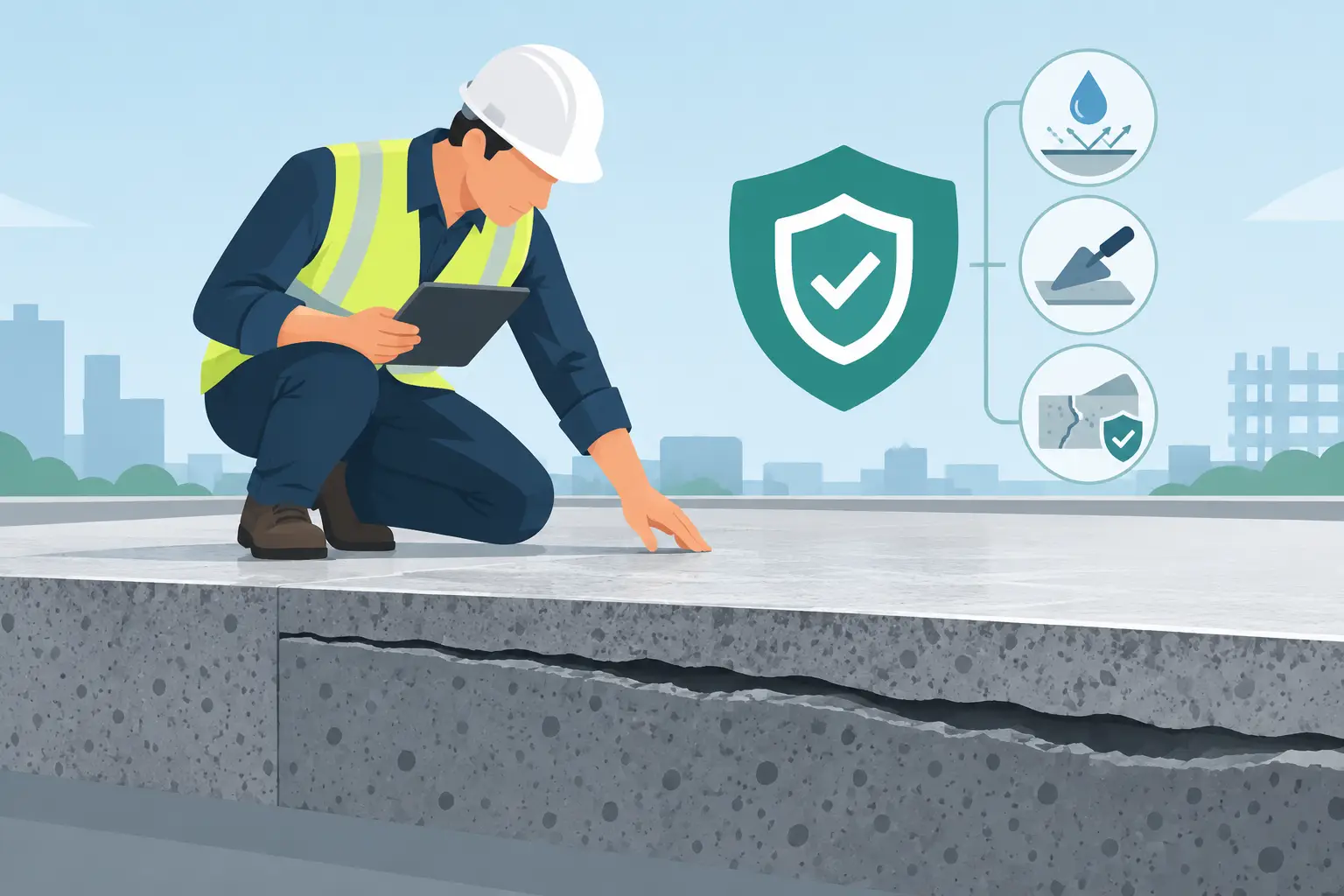
How to Prevent Concrete Delamination Early
October 14, 2026 1:51 am

Warehouse Floor Safety Guide for Busy Facilities
October 12, 2026 1:45 am