
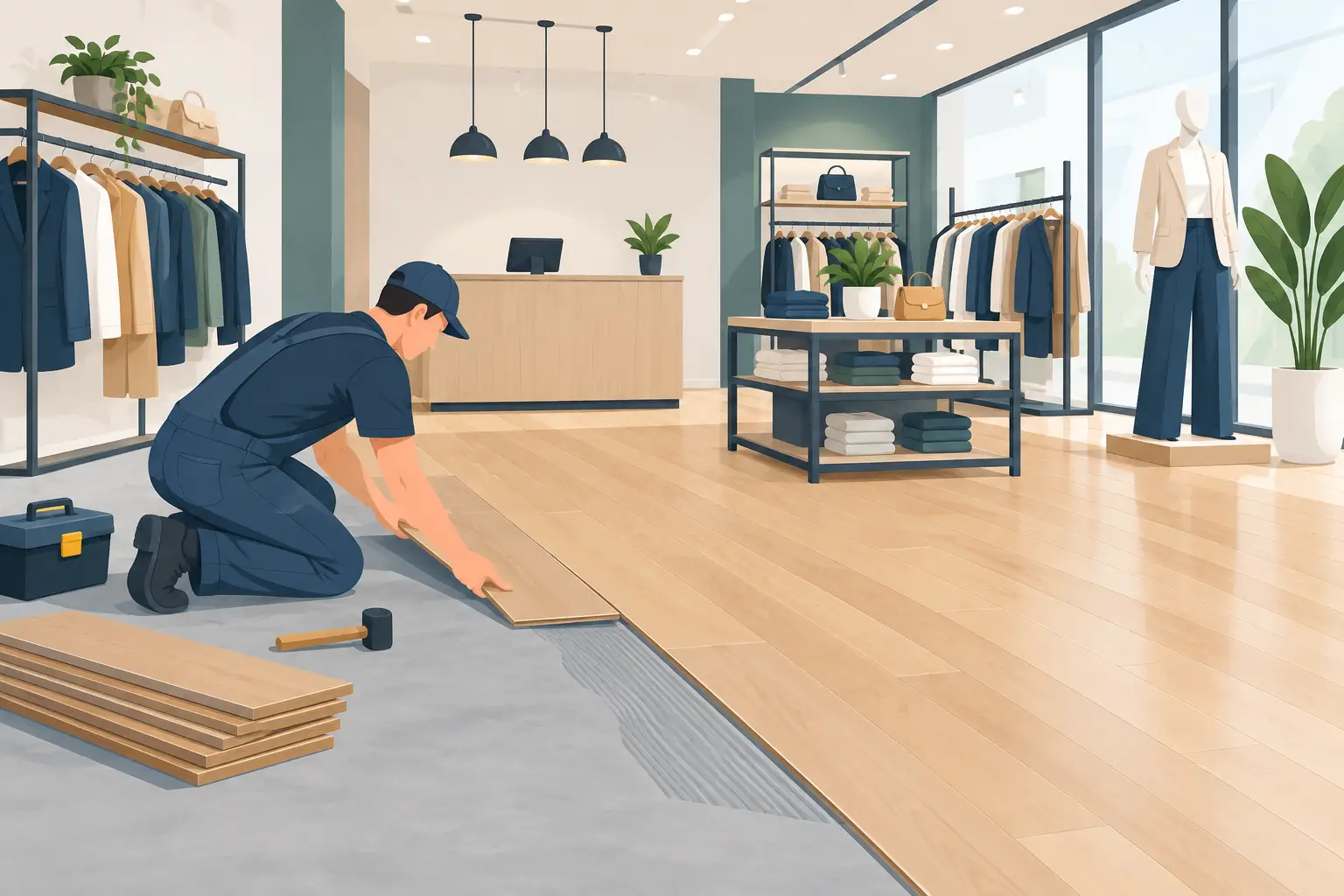
Guide to Retail Floor Renovation That Lasts
A worn retail floor is more than a cosmetic problem. Cracked coatings, stained concrete, uneven transitions, and dusty surfaces affect how customers view the business and how safely employees can work. This guide to retail floor renovation explains how to plan a concrete floor upgrade that looks right for your store, holds up under traffic, and limits disruption to daily operations.
Retail flooring has to do several jobs at once. It needs to support carts, rolling fixtures, deliveries, foot traffic, cleaning equipment, and occasional spills without becoming difficult to maintain. The right system depends on the condition of the slab, the kind of business you operate, your available downtime, and the finish you want customers to see.
Start With the Floor You Have
The best renovation plans begin with an in-person assessment, not a color chart. A concrete slab can look serviceable on the surface while hiding issues that will affect any new coating or finish. Moisture vapor, old adhesives, weak concrete, oil contamination, cracks, and uneven areas all need to be identified before work begins.
A contractor should inspect the floor for soundness and determine whether the existing surface can be polished, needs grinding and repair, or requires resurfacing. For example, a retail space with minor scratches and dullness may be a strong candidate for concrete polishing. A slab with widespread patching, exposed aggregate, or old glue may need more aggressive preparation before it can accept a new finish.
Moisture testing matters particularly in ground-level retail buildings. If vapor is moving through the slab, a standard coating may blister or release over time. In that case, the renovation may require a moisture-mitigation system, a breathable finish, or a different flooring approach. Skipping this step can turn a fast-looking project into an expensive redo.
Before approving a proposal, have the contractor address four practical conditions:
- The concrete’s strength and surface condition
- Moisture levels and contamination risks
- Cracks, joints, low spots, and trip hazards
- Access for equipment, deliveries, and after-hours work
These details determine the scope, schedule, and long-term performance of the finished floor.
Choose a Retail Floor System for Real Conditions
There is no single best retail floor. A boutique selling apparel has different needs than a grocery market, auto parts store, salon, restaurant, or warehouse-style showroom. The finish should match the space’s traffic, cleaning routine, brand presentation, and exposure to water or chemicals.
Polished Concrete
Polished concrete is a practical choice for many retail spaces because it uses the existing slab and creates a clean, modern appearance. Through mechanical grinding, honing, and polishing, the concrete can be brought to the desired level of sheen, from a softer satin finish to a more reflective look.
This option performs well in stores that want low maintenance and a durable, professional floor. It is also a good fit for retailers with exposed ceilings, industrial-inspired interiors, or large open sales areas. Densifiers can strengthen the concrete surface, while stains and dyes can add color variation without covering the character of the slab.
The trade-off is that polished concrete does not hide major slab defects. Repairs can be blended, but they may remain visible. If your floor has extensive damage and you want a completely uniform appearance, resurfacing or a coating system may be the better direction.
Epoxy and Resinous Coatings
Epoxy systems create a protective layer over concrete and can be customized with solid colors, decorative flakes, quartz, or textured additives. They are often selected for back rooms, stock areas, service counters, food-related spaces, and retail environments where chemical resistance and easy cleaning are priorities.
A properly specified epoxy system can stand up to spills, scuffs, and frequent cleaning. However, the performance depends heavily on surface preparation. Concrete must be mechanically profiled, repaired, and cleaned before installation. Applying epoxy over weak or contaminated concrete is one of the fastest ways to create peeling problems.
Epoxy is not always the best choice for every sales floor. High UV exposure can affect certain products, and smooth coatings may need traction additives near entrances, beverage stations, fitting rooms, or areas exposed to wet shoes. The right topcoat and texture should be selected for the actual use of the space, not just the appearance of a sample board.
Concrete Resurfacing and Overlays
When a retail slab is worn, pitted, patched, or visually inconsistent, resurfacing can provide a fresh base for a new finish. Cementitious overlays and resurfacing systems can correct surface defects and create a more consistent look before staining, sealing, or coating.
Resurfacing is not a shortcut around structural issues. Moving cracks, poor drainage, moisture pressure, and unstable concrete must be addressed first. But for a sound slab with surface-level damage, it can be a cost-effective way to avoid demolition while improving the appearance of the entire store.
Grinding, Leveling, and Repair
Floor renovation often starts with work customers will never see. Grinding removes failed coatings, old thinset, adhesive residue, and surface contamination. Leveling corrects low areas that create rocking fixtures, pooling water, or visible floor irregularities. Crack repair and joint treatment help create safer transitions and a cleaner finish.
This preparation stage is where project quality is decided. A decorative coating or polished finish is only as reliable as the concrete beneath it.
Plan Renovation Around Store Operations
A retail floor project should protect revenue as well as the slab. Many stores cannot close for a full week, especially during seasonal demand or major promotions. That does not mean the work has to be rushed. It means the project needs a clear phasing and scheduling plan.
For smaller retail spaces, an after-hours renovation may allow the contractor to prepare and install the floor overnight or during scheduled closures. Larger locations may be divided into zones so one section remains operational while the other is being completed. This can work well for showrooms, large-format retailers, and spaces with movable displays.
Keep in mind that cure times are part of the schedule. Some coating systems can return to light foot traffic quickly, while others need more time before they can handle rolling loads, shelving, or heavy deliveries. Polished concrete projects also need enough time for grinding, repairs, densifying, and final polishing. Fast turnover is valuable, but opening before the floor is ready can damage the new finish.
Coordinate fixture removal, merchandise protection, delivery access, and HVAC conditions before the crew arrives. Dust-control equipment and containment should be part of the conversation, particularly when renovating an occupied store. A professional contractor can plan around your hours, but access and staging need to be confirmed early.
Design for Cleaning, Safety, and Maintenance
A retail floor should look good on opening day and still be manageable six months later. That starts with choosing a finish that works with your cleaning routine. Highly glossy floors can look impressive, but they may show dust, streaks, and scratches more readily than a satin finish. Dark colors can hide some stains while making dust more visible. Light colors can brighten a store but may require more attention near entrances and loading areas.
Traction is another design decision, not an afterthought. Entryways, restrooms, food service areas, and spaces that see rainwater or spills may need a textured surface or slip-resistant additive. The goal is not to make the floor rough everywhere. It is to provide the right amount of grip where conditions call for it while preserving a clean, professional appearance.
Set up a maintenance plan with the finish in mind. Polished concrete benefits from routine dust mopping and neutral cleaning products. Coated floors should be cleaned with compatible products and inspected periodically for wear at doors, registers, and receiving areas. Promptly addressing chips or damaged sections helps prevent moisture and dirt from working beneath a coating.
Get a Scope That Matches Your Store
Retail renovation pricing can vary because the work is driven by the slab’s condition and the selected system. A low price that excludes grinding, repairs, moisture testing, or proper preparation can become costly once the floor starts failing. Ask for a scope that clearly identifies preparation, materials, repair allowances, installation steps, cure time, and expected maintenance.
For Orange County business owners, Orange County Concrete Polishing provides in-person estimates and tailored recommendations for polished concrete, epoxy, resurfacing, leveling, and concrete preparation. The right solution may be a clean polished slab, a protective resinous system, or a repaired and resurfaced floor ready for a new look.
Your retail floor is working every hour the doors are open. Treat the renovation as an operational investment: inspect the slab carefully, select a finish for real traffic, and schedule the work with enough time to do it right. A clear, site-specific quote is the best next step when you are ready to move forward.
Recent Post
How to Prevent Concrete Delamination Early
October 14, 2026 1:51 am

Warehouse Floor Safety Guide for Busy Facilities
October 12, 2026 1:45 am
Orange County Concrete Floors That Hold Up
October 10, 2026 1:51 am