
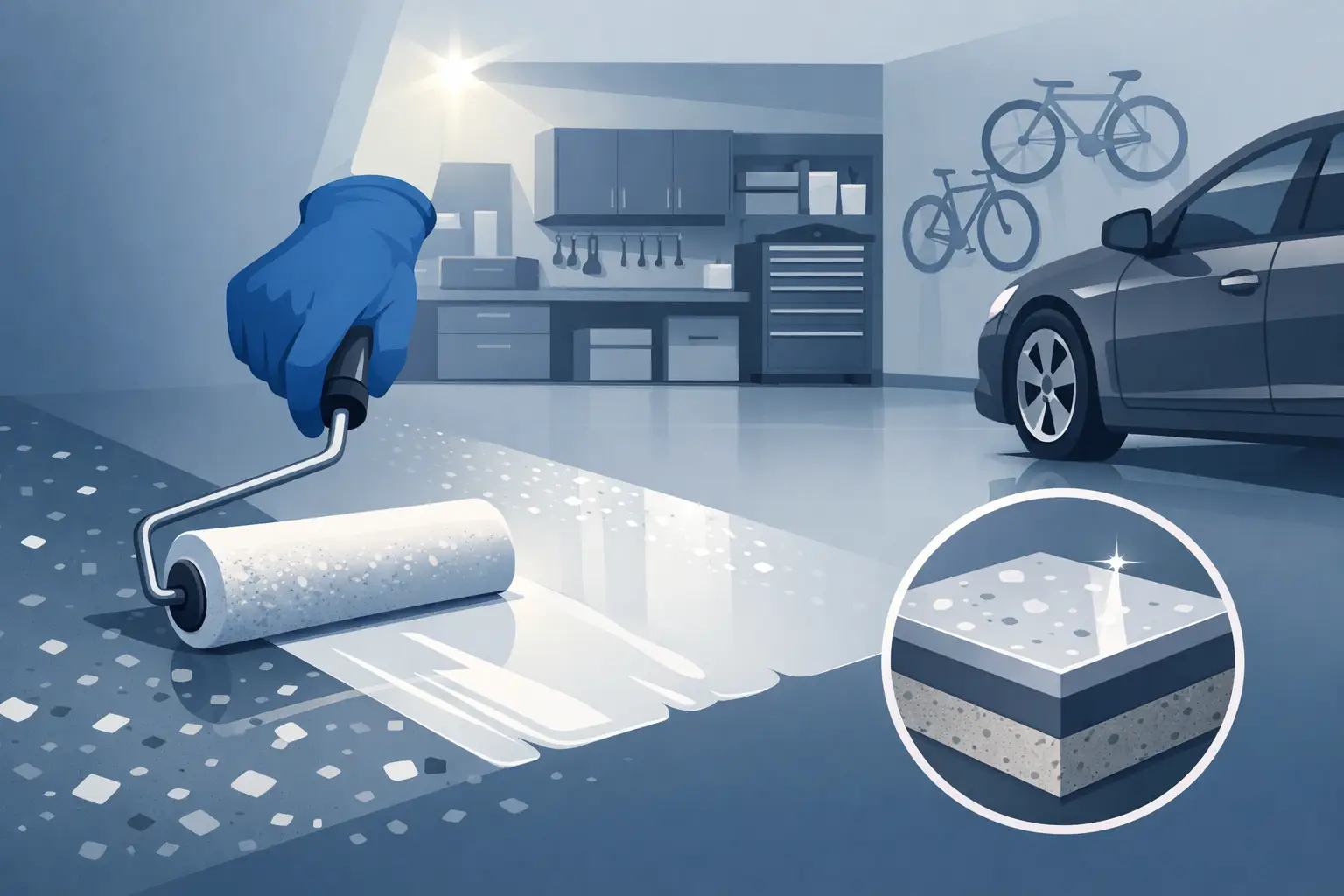
Garage Floor Epoxy Coating That Lasts
A garage floor usually tells you very quickly what kind of coating it got. If the surface starts peeling under hot tires, stains soak in, or the finish turns dull after a short time, the problem is rarely just the product. It is usually the prep, the moisture conditions, or the wrong system for the way the space is actually used. A garage floor epoxy coating should do more than improve appearance. It should hold up to traffic, resist chemicals, clean easily, and keep performing year after year.
For homeowners, that means a garage that looks finished instead of dusty and stained. For contractors and property managers, it means fewer callbacks and a floor system that matches the demands of the site. The best results come from treating epoxy as a system, not a bucket of paint.
Why garage floor epoxy coating is worth it
Concrete in a garage takes more abuse than many people expect. Vehicle traffic, oil, brake fluid, cleaners, dropped tools, moisture, and tire heat all work against the surface. Bare concrete is porous, so it absorbs contaminants and shows wear fast. Once that happens, cleaning gets harder and the floor starts looking older than the rest of the property.
A professionally installed garage floor epoxy coating creates a dense, protective layer over properly prepared concrete. That gives the floor better resistance to staining, chemical exposure, abrasion, and daily wear. It also improves light reflectivity and gives the garage a cleaner, more intentional look.
There is also a practical maintenance benefit. Dusting is reduced because the concrete surface is sealed instead of slowly shedding fine particles. Cleaning is faster because spills stay on the surface longer rather than soaking in. For busy homeowners and commercial operators alike, that matters.
What separates a long-lasting floor from a short-term fix
The biggest difference is surface preparation. This is where many coatings fail before they ever have a chance to perform. If the slab is not mechanically ground, cleaned properly, and evaluated for cracks, contamination, and moisture issues, epoxy may not bond the way it should.
A strong installation starts with the condition of the concrete itself. Old adhesive, oil saturation, weak surface laitance, or previous failed coatings all need to be addressed. Cracks and surface defects may need repair before the coating goes down. If moisture vapor is present, that has to be evaluated too. Epoxy does not perform well over slabs with unresolved moisture problems.
Product selection matters as well. Not every garage uses the floor the same way. A residential garage with normal vehicle use has different demands than an auto-related workspace, a storage-heavy garage, or a commercial service bay. The right build depends on traffic, chemical exposure, desired texture, appearance goals, and budget.
Thickness also plays a role, but thicker is not always better by itself. A well-prepared floor with the right primer, base coat, broadcast layer if needed, and topcoat will usually outperform a poorly prepared floor with more material thrown at it.
Choosing the right epoxy system for your garage
Not every epoxy floor looks or performs the same. Some clients want a clean solid-color finish. Others want decorative flakes for a more finished appearance and better visual texture. In some garages, slip resistance becomes more important than gloss. In others, chemical resistance and cleanability take priority.
A solid-color epoxy system gives a straightforward, professional look and works well for utility-focused spaces. A flake system is popular because it helps hide minor dirt and surface variation while giving the floor more design appeal. Clear topcoats can be adjusted depending on whether the goal is a higher-gloss finish, additional UV stability, or better wear resistance.
This is where a tailored proposal matters. The right recommendation depends on how the garage is used, how old the slab is, whether there is existing damage, and what level of finish the client expects. A one-size-fits-all coating package may sound simple, but it often misses the details that determine service life.
Common problems with garage floor epoxy coating
Peeling is the issue most people worry about, and for good reason. When epoxy lifts, it usually points back to poor prep, moisture problems, or contamination in the slab. A floor that looked fine on installation day can start failing once temperature changes, tire pressure, and normal use expose weak adhesion.
Hot tire pickup is another common complaint. This happens when warm vehicle tires soften or stress the coating enough to pull it from the surface. Better prep and the right material system reduce that risk, but not all coatings handle the same conditions equally.
Yellowing can also become an issue in garages with strong sunlight exposure. Epoxy has many performance advantages, but UV stability is not always one of them. In garages with significant sun exposure, the topcoat selection becomes especially important.
Then there is slipperiness. A glossy floor may look great, but if the garage sees water, washdown, or frequent foot traffic, traction needs to be part of the conversation. A proper texture additive or broadcast system can improve safety without sacrificing the finished look.
What the installation process should look like
A professional coating job should start with an in-person evaluation. That is the only reliable way to assess slab condition, existing coatings, crack repair needs, contamination, moisture concerns, and the right coating system for the site.
From there, the floor is typically cleared, mechanically prepared, repaired where needed, and coated in stages. Depending on the system, this may include a primer, epoxy base coat, decorative flake broadcast, scraping and cleanup, and a protective topcoat. Cure times vary by product and site conditions, so realistic scheduling matters.
For occupied homes and active commercial properties, timing is not a small detail. The project should be scoped around access needs, downtime, and expected return-to-service. That is especially important when the garage is not just a parking space but part of daily operations.
Garage floor epoxy coating for homes and commercial properties
Residential clients usually want a floor that looks sharp, cleans easily, and can handle cars, storage, and general use without constant upkeep. In that setting, appearance and durability tend to carry equal weight. A well-installed coating can turn a garage into a cleaner extension of the home rather than a space people try to ignore.
Commercial and mixed-use properties often have a different priority list. Facility managers and business owners may care more about chemical resistance, abrasion performance, safety texture, and service scheduling. If a floor needs to be completed after hours or around active operations, the contractor has to plan for that from the start.
That is one reason experienced flooring contractors are valuable. The coating itself is only part of the job. The rest is project coordination, surface diagnosis, product matching, and executing the work on time.
How to know if your garage is a good candidate
Most concrete garages can be coated, but some need more correction than others before installation begins. Older slabs may have cracks, spalling, moisture issues, or contamination that need repair. Newer slabs may still need grinding and testing before any coating is applied. Smooth, untreated-looking concrete is not automatically ready for epoxy.
If the floor has already been coated and is failing, the existing material usually needs to be removed or properly addressed. Coating over a failing surface does not solve the problem. It hides it briefly.
A straightforward site visit can usually answer the key questions quickly. Is the slab structurally sound enough for coating? Does it have moisture concerns? What level of prep is required? What system makes sense for the way the garage is used? Those are the decisions that shape both price and performance.
Getting better value from the project
The cheapest quote is often based on skipping the work clients do not immediately see. That may mean little or no mechanical prep, lower-grade materials, minimal crack repair, or a coating system that is too thin for the intended use. It saves money on day one and creates problems later.
Better value comes from a floor system that fits the space, is installed correctly, and lasts. For many property owners, that means fewer repairs, less maintenance, and a garage that continues to look professional instead of becoming another surface that needs replacement.
At Orange County Concrete Polishing, that is the standard we aim for – practical recommendations, proper prep, and coating systems built around real use conditions, not generic packages.
If you are considering a garage floor upgrade, focus less on the sales pitch and more on how the slab will be evaluated, prepared, and protected. That is where lasting performance starts, and it is what makes the difference between a floor that simply looks new and one that actually stays that way.
Recent Post
Best Industrial Floor Systems for Demanding Sites
October 16, 2026 1:51 am
How to Prevent Concrete Delamination Early
October 14, 2026 1:51 am

Warehouse Floor Safety Guide for Busy Facilities
October 12, 2026 1:45 am