
Can Epoxy Cover Cracked Concrete? What Works
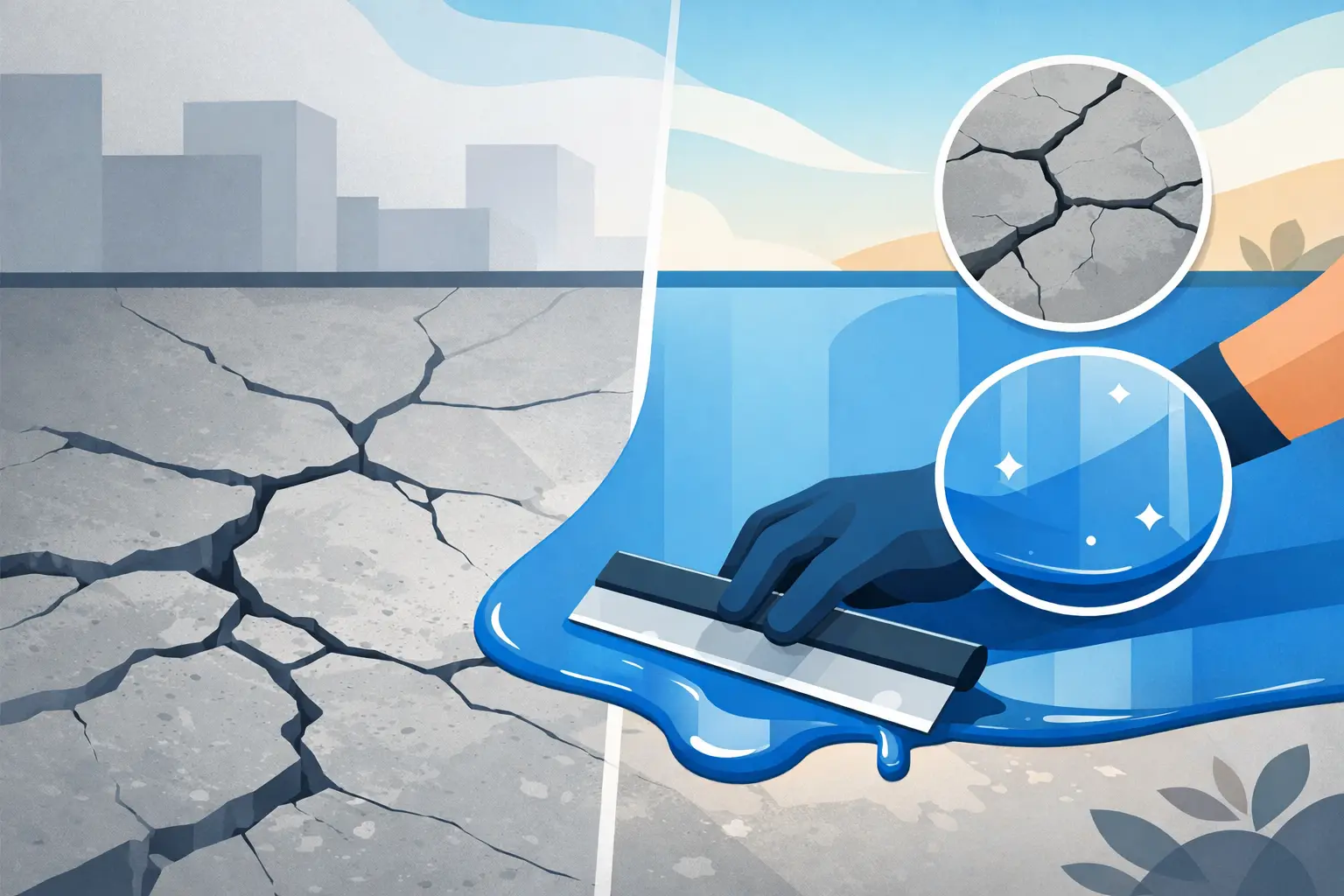
A garage floor can look solid from a distance, then reveal a network of cracks once it is cleaned and coated. So, can epoxy cover cracked concrete? Yes, but epoxy should not be expected to repair every type of crack on its own. The right result depends on why the concrete cracked, whether the crack is still moving, and how thoroughly the slab is prepared before the epoxy system is installed.
For Orange County homes, retail spaces, warehouses, and work areas, epoxy can turn worn concrete into a clean, durable, easy-to-maintain floor. It can also make an unresolved crack more noticeable if the underlying problem is ignored. A professional evaluation separates cosmetic cracking that can be repaired from movement or moisture issues that need a different solution first.
When Epoxy Can Cover Cracked Concrete Successfully
Epoxy works well over many hairline cracks and small, stable surface cracks. These are common in aging garage slabs, office spaces, and light-duty commercial floors. Concrete naturally shrinks as it cures, and minor cracking can occur over time without affecting the slab’s structural performance.
Before coating, stable cracks are cleaned, opened as needed, and filled with a compatible crack repair material. The repaired area is then ground flush with the surrounding concrete. Once the surface has been mechanically prepared, a properly specified epoxy system can create a uniform finished floor that resists vehicle traffic, stains, chemicals, and routine cleaning.
The key word is stable. If a crack has not widened, shifted, or shown signs of ongoing movement, it is often a good candidate for repair and coating. In many garage and interior floor projects, the repair becomes difficult to see once the base coat, decorative flakes or color system, and protective topcoat are installed.
When Epoxy Is Not the Fix for a Concrete Crack
Epoxy is a hard coating. It does not stretch enough to bridge an actively moving crack indefinitely. When concrete continues to move, the crack can telegraph through the new coating. That means the line may reappear at the surface, even when the epoxy itself remains bonded to the slab.
Larger cracks require a closer look, especially if one side sits higher than the other. This condition, often called vertical displacement or differential movement, can indicate settlement, slab movement, expansive soil conditions, or a problem below the concrete. Coating over it without addressing the cause may leave a visible ridge and create a future failure point.
Cracks near control joints are another exception. Control joints are intentionally cut into concrete to manage where it cracks as the slab shrinks. They are designed to move. Some projects allow those joints to remain visible as part of the floor layout, while others use a flexible joint filler based on the system and the floor’s intended use. Rigidly filling a moving joint with standard epoxy can lead to cracking at the joint line.
A floor with widespread cracking, loose concrete, spalling, or crumbling edges may need more than crack repair. Grinding, patching, concrete resurfacing, or leveling may be needed to build a sound surface before a final coating is considered. The coating is only as reliable as the concrete beneath it.
Why Surface Preparation Determines the Result
Most epoxy failures are not caused by the epoxy itself. They come from poor surface preparation, hidden moisture, contamination, or applying a coating over weak concrete. Paint, old sealers, tire residue, oil, grease, curing compounds, and dust can prevent the coating from bonding correctly.
Professional installers mechanically grind the concrete to create the surface profile the epoxy needs. This process removes contaminants and opens the concrete so the coating can achieve a strong bond. Acid etching is not a substitute for proper mechanical preparation on many demanding flooring projects, particularly where long-term durability matters.
Cracks also need to be properly cleaned before they are repaired. Dirt, old filler, moisture, and loose concrete inside a crack can compromise the repair. Depending on the crack and system, a contractor may use a fast-setting polyurea or polyurea-based repair material, an epoxy filler, or another compatible product. The goal is not simply to fill a line. It is to create a stable, smooth repair that supports the finished flooring system.
Moisture Can Change the Entire Plan
Concrete is porous, and moisture vapor can move upward through the slab. This matters in ground-level garages, warehouses, older buildings, and areas where drainage or vapor barriers are questionable. If excessive moisture vapor is present, an epoxy coating can blister, discolor, or lose adhesion over time.
A moisture evaluation should be part of the project scope when conditions raise concern. Visible dark spots, efflorescence, previous coating failures, dampness after rain, or a slab with no known vapor barrier are all reasons to investigate further. A moisture-mitigation primer may be appropriate in some cases. In others, the slab may require repairs to drainage or a different flooring approach.
This is why a quick coating quote based only on square footage can miss important details. The crack pattern, substrate condition, moisture risk, floor use, and desired finish all affect the right recommendation.
Choosing the Right Finish After Crack Repair
Once the concrete is properly repaired and prepared, epoxy gives property owners several practical finish options. A solid-color epoxy floor delivers a clean, professional appearance for utility rooms, garages, storage spaces, and commercial back-of-house areas. Decorative flake systems help disguise minor visual variations while adding texture and color depth.
For facilities that see oil, cleaning chemicals, rolling carts, forklifts, or frequent foot traffic, the topcoat matters as much as the base epoxy. A quality urethane or polyaspartic topcoat can improve abrasion resistance, chemical resistance, and UV stability. This is especially valuable in garages or areas with direct sunlight, where some epoxy materials can amber over time.
Traction should also be planned around the space. A smooth floor may be easy to clean but can be too slick in an entry, kitchen-adjacent area, shop, or workspace where water is present. Broadcast media or a traction additive can create a safer texture without making routine maintenance difficult.
What to Expect From a Professional Assessment
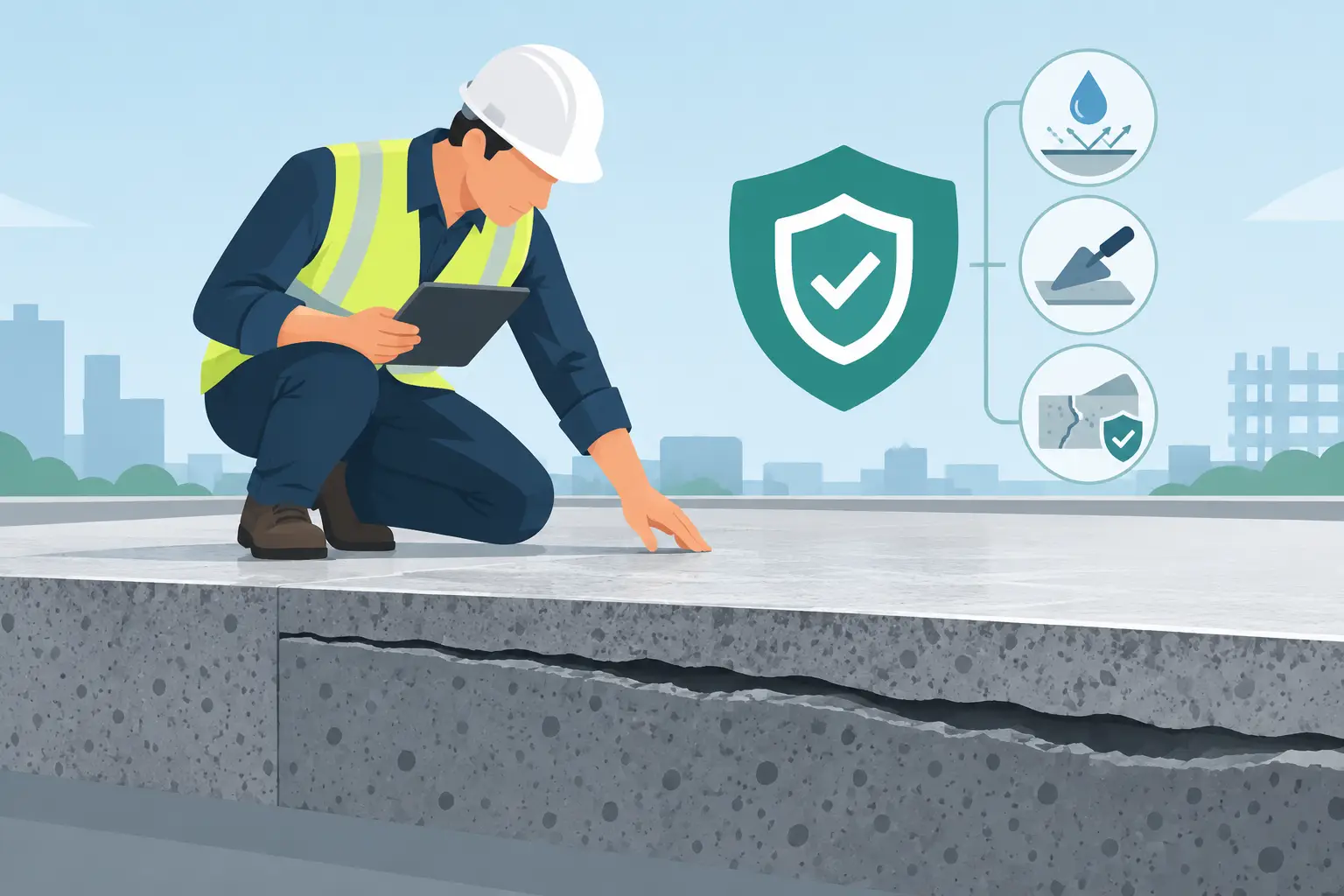
An experienced flooring contractor will look beyond the fact that cracks exist. The assessment should identify their size, location, pattern, and likely cause. A single hairline crack across a garage is very different from multiple widening cracks, broken slab edges, or cracks with vertical movement.
The contractor should also discuss how visible the repairs may be after coating. Even excellent repairs can remain faintly visible under a solid-color system in certain lighting. Decorative flakes, quartz systems, or a resurfacing approach may be better options when appearance is a priority and the slab has numerous repairs.
For commercial and industrial clients, the conversation should include operational demands. A warehouse aisle, restaurant service area, retail floor, and airplane hangar do not need the same system. Traffic loads, chemicals, cleaning practices, cure time, downtime, and safety requirements all influence the specification.
Can Epoxy Cover Cracked Concrete Without Grinding?
In most cases, skipping grinding is a shortcut that creates risk. Rolling epoxy over a cracked, sealed, dusty, or contaminated slab may look acceptable at first, but adhesion problems often show up later as peeling, hot-tire pickup, chipping, or delamination around repairs.
Proper grinding also helps level repaired cracks with the surrounding surface. That preparation makes the floor more attractive and helps avoid high spots that can catch dirt, wheels, or equipment. For a durable epoxy floor, the prep work is not an extra. It is the foundation of the installation.
A Better Way to Approach a Cracked Floor
Do not assume a cracked slab needs to be replaced, and do not assume a coating will hide every issue. Many cracked concrete floors can be repaired and finished with epoxy successfully when the cracks are stable and the substrate is properly prepared. Floors with active movement, moisture pressure, settlement, or major deterioration need the underlying condition addressed before a coating is applied.
A free in-person estimate gives you a practical answer based on the actual slab, not a guess from a photo. Orange County Concrete Polishing can evaluate the cracks, recommend the right repair and flooring system, and schedule work around your home or business operations. The best next step is simple: have the concrete inspected before covering it, so the finished floor performs as well as it looks.
Recent Post

Best Industrial Floor Systems for Demanding Sites
October 16, 2026 1:51 am
How to Prevent Concrete Delamination Early
October 14, 2026 1:51 am

Warehouse Floor Safety Guide for Busy Facilities
October 12, 2026 1:45 am