
Best Flooring for Garages That Really Holds Up
A garage floor takes a different kind of abuse than the rest of the home. Hot tires leave marks, dropped tools chip weak surfaces, oil and brake fluid stain bare concrete, and everyday moisture works its way into cracks. The best flooring for garages is not simply the finish that looks best on installation day. It is the system that fits your traffic, maintenance expectations, concrete condition, and budget.
For most Orange County homeowners, a professionally installed epoxy, polyaspartic, or polished concrete floor delivers the best long-term value. Each has a place, but they do not perform the same way. The right choice starts with an honest look at how the garage is actually used.
What the Best Flooring for Garages Must Handle
A garage is part parking area, part workshop, part storage room, and sometimes part entryway. That means flooring must stand up to vehicle weight, tire heat, moisture, chemicals, abrasion, and regular cleaning without becoming difficult to maintain.
The concrete underneath matters just as much as the visible finish. If the slab has moisture vapor issues, active cracks, old adhesive, paint, contamination, or low areas that collect water, a coating cannot simply be rolled over the top and expected to last. Proper surface preparation – typically diamond grinding, crack repair, cleaning, and moisture evaluation – is what gives a garage floor system its bond and durability.
Appearance also matters. Many homeowners want a floor that makes the garage feel cleaner and more finished, especially when it is visible from the driveway or connected directly to the home. Color flakes, solid-color coatings, decorative stains, and polished concrete all create a more intentional look than unprotected gray concrete.
Epoxy Flooring: A Proven Garage Upgrade
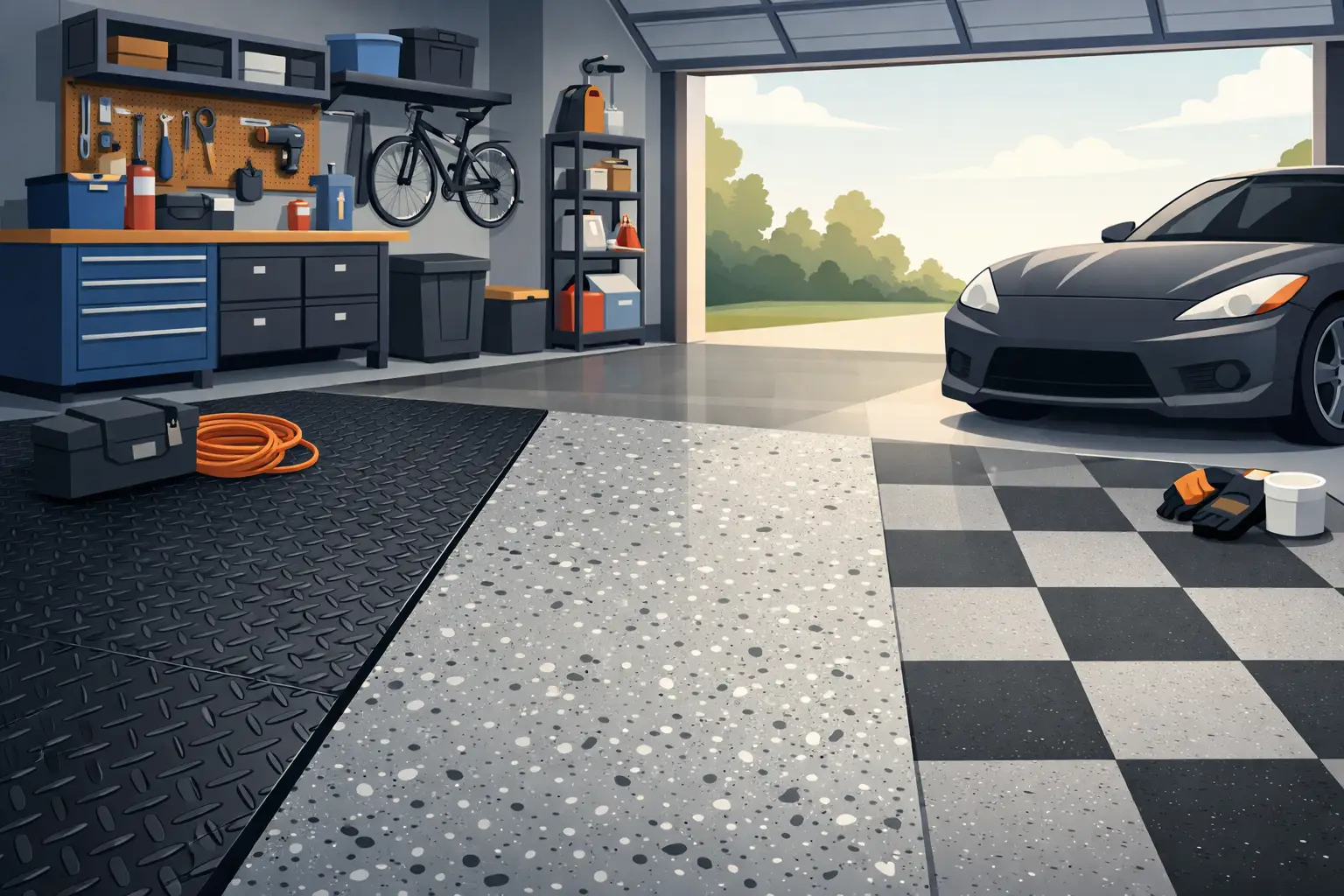
Epoxy remains one of the most popular garage flooring options for good reason. A professionally installed epoxy system creates a hard, continuous surface that resists oil, gasoline, many household chemicals, dirt, and normal vehicle traffic. It is also highly customizable, with options ranging from simple gray finishes to decorative flake systems that hide dust and minor marks well.
For a typical residential garage, epoxy is a strong choice when the owner wants a clean, durable floor with a broad range of colors and a practical price point. It makes sweeping and mopping easier because dust and spills stay on the surface instead of soaking into porous concrete.
The trade-off is that epoxy needs the right installation conditions. Concrete preparation must be thorough, and moisture issues need to be addressed before coating begins. Some epoxy products also have longer cure times than faster-setting alternatives. A garage may need to stay empty for several days while the system cures fully.
Epoxy can be finished with a broadcast flake layer and a clear protective topcoat. This is a practical option for homes where the garage sees daily vehicles, bicycles, storage bins, lawn equipment, and occasional DIY work. The flakes add visual texture, help conceal debris, and can improve traction when paired with the right topcoat.
When Epoxy Makes the Most Sense
Choose epoxy when you want a durable decorative finish, need chemical resistance, and can allow enough time for proper curing. It is particularly well suited to homeowners who want a major visual improvement without replacing the existing slab.
Polyaspartic and Polyurea Coatings: Fast Turnaround, High Performance
Polyaspartic and polyurea coating systems are often selected when fast installation and return-to-service are priorities. These materials can cure much faster than conventional epoxy, making them a practical choice for busy households that cannot leave vehicles outside for an extended period.
A quality polyaspartic garage system also provides excellent resistance to UV exposure. That matters in garages with open doors, windows, or direct sunlight. Some epoxy coatings can amber or yellow over time when exposed to strong UV light, while polyaspartic topcoats hold color more consistently.
These systems are highly durable and work well with decorative flake finishes. They can handle daily traffic, common automotive fluids, and regular cleaning, while providing a crisp, finished appearance. For homeowners who want a garage floor completed on a tight schedule, this is often the best fit.
The main consideration is cost. Fast-curing polyaspartic and polyurea systems generally cost more than basic epoxy applications, and the short working time means installation must be handled by an experienced crew. There is little room for shortcuts when mixing, spreading, broadcasting flakes, or applying a topcoat.
Polished Concrete: Low Maintenance Without a Coating Layer
Polished concrete is a different approach. Rather than covering the slab with a film-forming coating, the concrete surface is mechanically ground, densified, refined, and polished to create a durable, light-reflective finish. The result can be modern and understated, ranging from a satin sheen to a higher-gloss appearance.
For garages that double as showrooms, hobby spaces, home gyms, or clean storage areas, polished concrete has real advantages. It does not peel like a coating because the finished surface is the concrete itself. It is easy to clean, durable under traffic, and can brighten the garage by reflecting more light.
Polished concrete is not always the right answer for every slab. Deep stains, extensive patching, significant cracking, and uneven repairs may remain visible after grinding. A highly polished finish can also be more revealing than a decorative flake coating. If the existing concrete has a lot of cosmetic history, a coating system may provide a more uniform final appearance.
Polished concrete also offers chemical resistance, but it is not completely stain-proof. Automotive spills should still be cleaned promptly. A penetrating guard or protective treatment can improve stain resistance and simplify maintenance.
Grind and Seal: A Practical Middle Ground
Grind-and-seal flooring sits between raw concrete and full polishing. The surface is mechanically ground to remove weak material, old coatings, and contamination, then sealed with a protective coating. It can produce a clean, attractive concrete look without the multiple grinding stages required for a high-polish finish.
This option can work well for utility-focused garages, workshops, and commercial back-of-house areas where a neat, durable floor matters more than a showroom-level shine. It can also be a smart solution for concrete that needs preparation and protection but does not justify a full decorative coating system.
The performance depends heavily on the sealer selected. A quality sealer can improve resistance to stains and dusting, but it may not offer the same level of chemical protection or decorative flexibility as epoxy or polyaspartic flooring.
Other Garage Flooring Options and Their Limits
Interlocking tiles, roll-out mats, and peel-and-stick products are often marketed as simple garage upgrades. They can improve appearance quickly, especially in rental properties or temporary setups, but they have limitations.
Tiles can trap moisture and dirt underneath, shift under heavy loads, or develop gaps where debris collects. Roll-out mats may curl, stain, or move when vehicles turn their tires. DIY paint kits are usually the weakest option because they often lack professional surface preparation, build thickness, and chemical resistance. A floor coating is only as reliable as its bond to the concrete below it.
These products may be reasonable for light-duty use or a short-term cosmetic change. They are less dependable for a garage that handles daily vehicles, frequent washing, heavy storage, or mechanical work.
How to Choose the Right Garage Floor System
Start with use, not color. A two-car family garage with daily vehicle traffic needs a different system than a collector-car garage, a woodworking shop, or a commercial vehicle bay. Consider whether you need fast installation, a decorative flake finish, maximum UV stability, low maintenance, or a natural concrete appearance.
Then look closely at the slab. Cracks can often be repaired, but they may need flexible treatment if movement is expected. Moisture must be evaluated before a coating is selected. Low spots may need leveling so water does not sit under vehicles or at the garage door. Old paint and failed coatings should be mechanically removed rather than covered over.
Traction is another decision point. A glossy floor can look sharp, but a garage should not become slippery when wet. Decorative flakes, traction additives, and the right topcoat texture can improve footing without making the surface hard to clean.
For most residential projects, a full-flake epoxy or polyaspartic system offers the strongest balance of appearance, durability, and easy maintenance. For owners who prefer a refined concrete look and are comfortable seeing the character of the slab, polished concrete can be an excellent long-term investment.
Installation Quality Decides How Long the Floor Lasts
The most expensive coating can fail if the concrete is poorly prepared. Surface grinding opens the concrete pores and removes weak material, allowing the system to bond correctly. Repairs, moisture testing, edge work, and proper cure times are not extras. They are part of a garage floor built to perform.
At Orange County Concrete Polishing, garage flooring recommendations are based on the condition of the slab and the way the space will be used, not a one-size-fits-all package. A professional in-person evaluation helps identify the right preparation method, coating system, color, and finish before work begins.
A garage floor should make the space easier to use every day, not create another maintenance project. Before choosing a finish, get the concrete inspected, discuss your vehicle and storage needs, and select a system designed for the work your garage actually does.
Recent Post
Best Industrial Floor Systems for Demanding Sites
October 16, 2026 1:51 am
How to Prevent Concrete Delamination Early
October 14, 2026 1:51 am

Warehouse Floor Safety Guide for Busy Facilities
October 12, 2026 1:45 am