
Best Concrete Coatings for Factories That Last
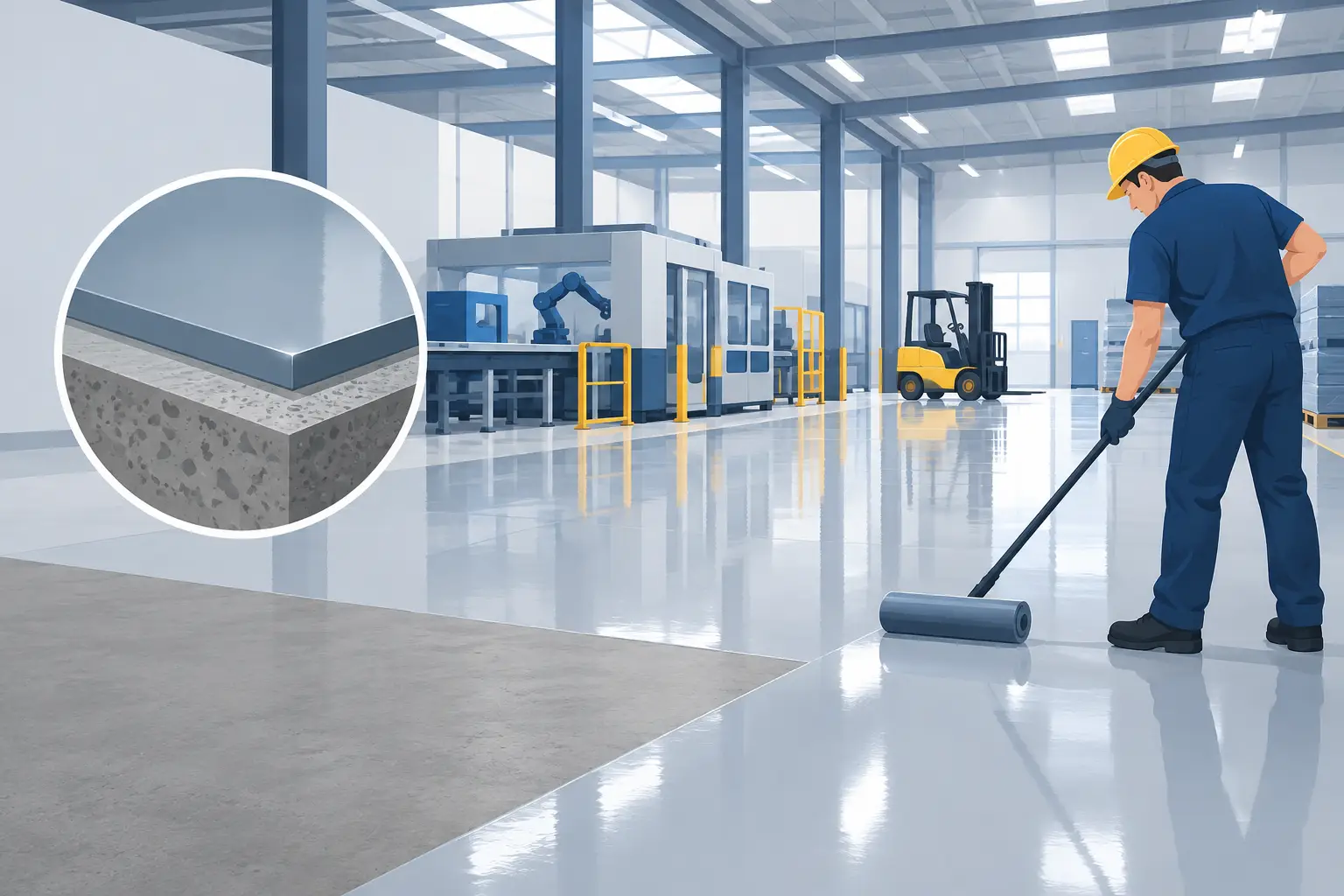
A factory floor has to handle more than foot traffic. Forklifts, pallet jacks, dropped tools, chemical spills, washdowns, heat, and constant production all put pressure on the slab. The best concrete coatings for factories are not simply the toughest products on paper. They are the systems matched to your traffic, process, cleaning routine, safety requirements, and available shutdown window.
A coating that works well in a light assembly area may fail quickly at a loading dock or chemical processing station. Getting the floor specification right before installation protects the concrete, supports safer operations, and avoids paying twice for a floor that was never designed for the job.
What a Factory Floor Coating Must Handle
Concrete is durable, but an untreated slab is porous. It absorbs oils, chemicals, moisture, and contaminants that can stain the surface and weaken the top layer over time. Heavy wheels can also wear down exposed concrete, while repeated impacts create chips, cracks, and dust.
The right coating creates a protective wear surface that is easier to clean and more consistent under traffic. It can also improve visibility with color zoning, define walkways, add traction around wet processes, and help a facility maintain a more professional work environment.
Before selecting a system, look at the real conditions on the floor. A good contractor will ask what moves across it, what spills on it, how often it is cleaned, whether moisture is present in the slab, and how much downtime the facility can allow. Those details matter more than choosing a coating by color or price alone.
Epoxy Systems for General Factory Areas
Epoxy remains one of the best concrete coatings for factories with general manufacturing, assembly, storage, and warehouse activity. A properly installed industrial epoxy system creates a dense, durable surface with strong adhesion and good resistance to oils, fuels, many chemicals, and abrasion.
Epoxy is a practical choice when a facility needs a clean, uniform finish that can be customized for safety and workflow. High-visibility colors can separate production lanes from pedestrian paths. Quartz or broadcast aggregate can be added where more slip resistance is needed. For facilities concerned with housekeeping, epoxy’s nonporous surface makes routine sweeping and mopping much easier than cleaning bare concrete.
There are trade-offs. Standard epoxy can yellow where it receives direct UV exposure, so it is not always the right topcoat near open loading doors or sunlit production areas. It also needs correct surface preparation and enough cure time. Applying epoxy over contaminated, weak, or moisture-affected concrete without addressing the underlying condition is a shortcut that usually shows up later as peeling or delamination.
Urethane Cement for Heat, Moisture, and Thermal Shock
Urethane cement is often the better answer for demanding wet-process facilities, food and beverage production, commercial kitchens, breweries, and areas exposed to hot water or steam cleaning. This system is thicker and designed to tolerate conditions that can challenge standard epoxy.
Its biggest advantage is resistance to thermal shock. When a floor repeatedly moves from hot washdown water to cooler operating temperatures, coatings expand and contract. A urethane cement system is better equipped to handle that cycle without cracking or losing bond. It also performs well in areas with moisture vapor concerns when the slab and system are properly evaluated.
This material is not usually selected for appearance alone. It has a more industrial look and generally costs more than a basic epoxy installation. But in the right environment, the added performance can prevent frequent repairs and production interruptions. For a washdown room, processing line, or hot equipment area, choosing a lower-cost coating can become the expensive option.
Polyaspartic Coatings When Downtime Is Tight
Some factory projects cannot afford to close an area for several days. Polyaspartic coatings are valuable when fast return to service is a major requirement. Depending on site conditions and system design, these coatings can cure much faster than conventional epoxy, allowing work to be scheduled during off-hours or planned shutdowns.
Polyaspartic systems also offer good UV stability, which helps them retain color better in bright areas. They can be used as protective topcoats over epoxy systems or as part of a complete broadcast floor system. This makes them useful for factory entrances, shipping areas, corridors, and work zones where appearance and fast installation both matter.
Fast curing does not mean preparation can be rushed. In fact, timing is less forgiving with fast-setting materials. The concrete still needs to be mechanically prepared, cracks need to be addressed, and the installation crew needs the experience to maintain a consistent finish across large areas. Polyaspartic is a strong option for the right schedule, not a universal replacement for every coating system.
MMA Coatings for Rapid-Cure Industrial Repairs
Methyl methacrylate, commonly called MMA, is another rapid-cure option for facilities that need very short downtime. It can cure in cold conditions and return areas to service quickly, making it useful for targeted repairs, freezer environments, and operations that run around the clock.
MMA has performance advantages, but its installation has a strong odor and requires careful ventilation and experienced application. It is not the first recommendation for every occupied factory, especially when nearby employees or sensitive operations cannot be relocated during the work. When a fast repair is more valuable than a low-odor installation, however, MMA can solve a difficult scheduling problem.
Don’t Skip Surface Preparation
The coating is only one part of the floor system. Surface preparation is where many industrial flooring jobs succeed or fail. Concrete must be assessed for contamination, existing coatings, cracks, moisture, weak surface paste, and slab movement before new material is installed.
Mechanical grinding or shot blasting opens the concrete profile so the coating can bond correctly. Oil-saturated areas may need additional treatment. Cracks may require routing and filling, while active joints need to be handled in a way that allows for movement. A coating applied over a problem slab without preparation may look finished on day one, then begin separating under forklift traffic months later.
Orange County Concrete Polishing scopes preparation around the actual condition of the slab rather than treating every industrial floor like the same project. That approach helps facility managers compare proposals based on long-term performance, not just the initial square-foot price.
How to Match the Coating to Your Operation
For dry assembly and warehouse areas, a high-build epoxy system with a durable topcoat is often a dependable choice. For chemical exposure, the specific chemicals and concentration levels should determine the resin and topcoat selection. For food processing or frequent hot washdowns, urethane cement is typically worth serious consideration.
Traffic also changes the recommendation. Forklift aisles, turning zones, loading areas, and battery charging stations receive more punishment than low-traffic storage sections. Those areas may need added thickness, aggregate broadcast, or a different system than the rest of the facility. Installing one uniform coating everywhere can make sense for some buildings, but it is not automatically the most cost-effective plan.
Safety should be part of the specification as well. A glossy floor can be easy to clean but may be too slick in a wet area. Broadcast aggregate can improve traction, although aggressive texture may make cleaning more difficult. The goal is a finish that gives employees dependable footing without creating a surface that traps dirt and slows sanitation.
Plan the Installation Around Production
Factory flooring work should be planned around operations, not the other way around. A qualified contractor can phase the work by department, aisle, or production zone to keep more of the facility running. Off-hours installation may also reduce interference with staff, deliveries, and equipment movement.
Ask for a clear schedule that covers surface preparation, repair work, coating application, cure times, and return-to-service requirements. Also ask how the crew will control dust, protect adjacent equipment, and coordinate access to the work area. The best coating material can still create an operational headache if the project is not managed carefully.
Your factory floor does not need the most expensive coating available. It needs a system built for the abuse it receives every shift. Start with an on-site evaluation, be clear about the conditions your floor faces, and choose a contractor who can explain why a particular system fits your operation before the first grinder is turned on.
Recent Post
Best Industrial Floor Systems for Demanding Sites
October 16, 2026 1:51 am
How to Prevent Concrete Delamination Early
October 14, 2026 1:51 am

Warehouse Floor Safety Guide for Busy Facilities
October 12, 2026 1:45 am