
Are Epoxy Floors Chemical Resistant?
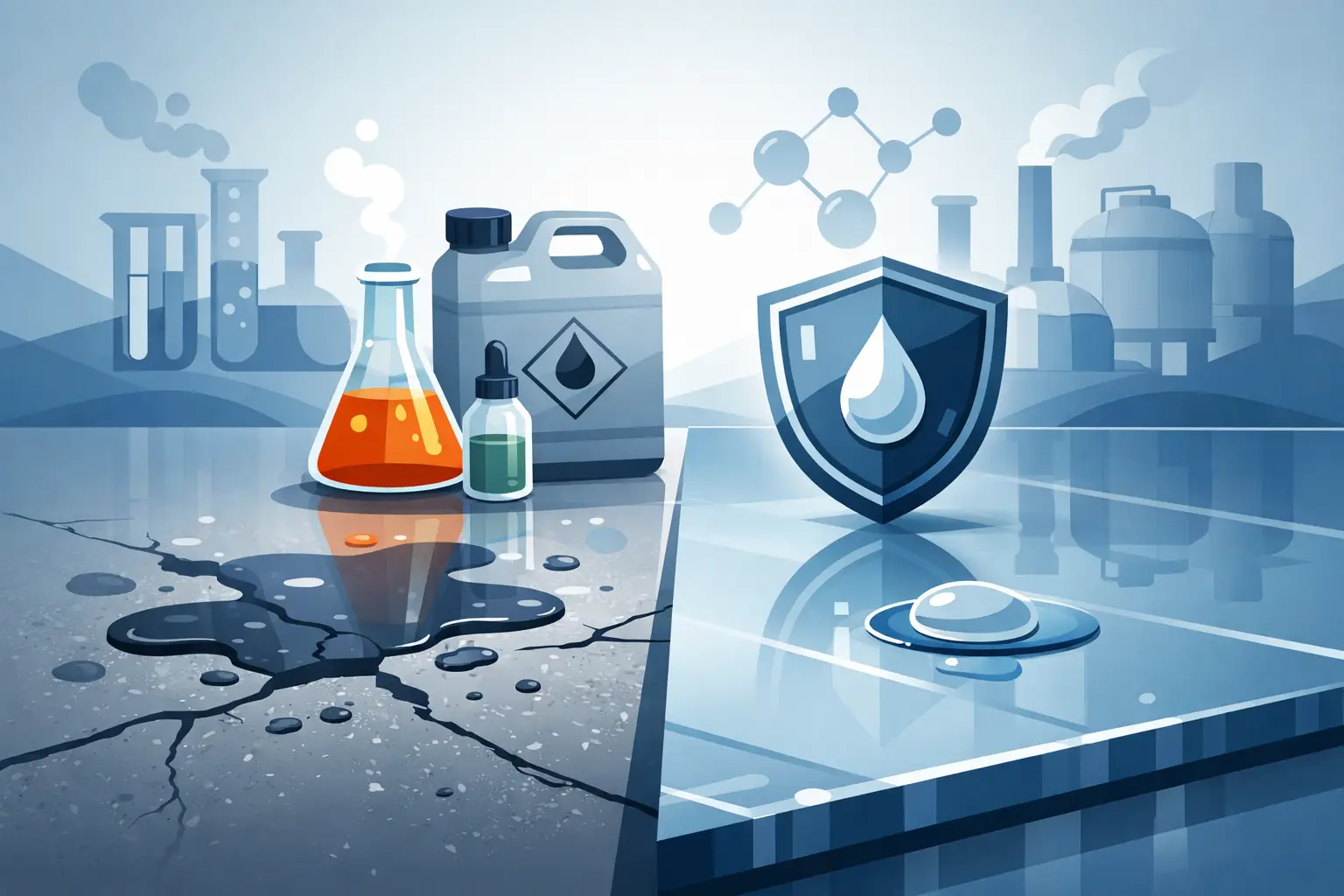
A floor can look perfect on install day and still fail fast once oil, cleaners, battery acid, solvents, or process chemicals hit the surface. That is why property owners and facility managers keep asking the same question: are epoxy floors chemical resistant? The short answer is yes – but only when the floor system is specified correctly for the chemicals, traffic, and cleaning routine in that space.
Epoxy is widely used because it creates a dense, non-porous surface that stands up well to many common spills. In garages, warehouses, manufacturing spaces, commercial kitchens, and service areas, that matters. But chemical resistance is not a blanket claim. Different epoxy formulas perform differently, and the real-world result depends on thickness, topcoat, surface prep, cure time, and what chemicals the floor will actually see.
Are epoxy floors chemical resistant in real-world use?
In many environments, yes. A properly installed epoxy floor resists motor oil, gasoline, many cleaning solutions, salts, mild acids, mild alkalis, and a range of industrial chemicals better than bare concrete. That is one reason epoxy remains a strong choice for garages, auto shops, retail back rooms, warehouses, and production areas.
What epoxy does especially well is protect the concrete underneath. Bare concrete absorbs spills. Once chemicals soak in, you can end up with staining, surface breakdown, dusting, and ongoing maintenance problems. Epoxy forms a barrier layer over the slab, helping keep contaminants on the surface where they can be cleaned up instead of penetrating deep into the concrete.
That said, chemical resistant does not mean chemical proof. Some substances can soften, discolor, etch, or shorten the life of an epoxy system, especially if they sit too long or if the coating was not designed for that exposure. Strong acids, harsh solvents, and repeated chemical attack can overwhelm the wrong system quickly.
What epoxy floors usually resist well
For most residential and light commercial settings, epoxy handles common contaminants very well. In a garage, that typically means oil, antifreeze, brake fluid, road salts, and household chemicals. In a commercial facility, it may include detergents, light degreasers, and occasional chemical splash.
In industrial settings, performance depends more on exact exposure. Some 100 percent solids epoxy systems are built for demanding conditions and can resist a broader range of chemicals than basic water-based or lower-build coatings. If a floor is expected to deal with forklift traffic, constant washdowns, chemical storage, or process drips, the specification needs to be tighter.
The practical point is simple: epoxy can be highly chemical resistant, but it needs to match the jobsite. A showroom floor and a battery charging area are not the same environment, even if both are concrete.
Chemicals that often cause problems
The biggest issues usually come from prolonged exposure, not brief spills. Strong acids can attack many epoxy systems. Certain solvents can soften or dull the finish. Hot chemicals are often more aggressive than cold ones. Repeated exposure around drains, mixing stations, or wash areas can also wear down a floor faster than expected.
Even when the coating itself resists damage, staining can still happen. So if your main concern is appearance as well as protection, that should be part of the conversation before installation.
Why one epoxy floor holds up and another fails
Most coating failures are not caused by epoxy as a material category. They come from system mismatch or installation mistakes.
Surface prep is the first big factor. If the slab is not properly ground and cleaned, the coating may not bond well. Once adhesion is compromised, chemicals can find their way under the surface, and peeling or blistering can follow.
Film thickness matters too. A thin roll-on product from a kit is not the same as a professionally installed high-build system. Thicker systems generally offer better protection, especially in commercial and industrial spaces where the floor sees repeated chemical exposure.
Topcoats also make a difference. In many cases, chemical resistance improves when the epoxy base is paired with a urethane or other performance topcoat suited to the environment. That added layer can improve resistance to staining, abrasion, UV exposure, and certain chemicals that would otherwise shorten the life of the floor.
Then there is cure time. Even a well-installed floor can be damaged if it is put into service too early. Chemical exposure before full cure can leave permanent marks or weaken the system before it has reached full performance.
Are epoxy floors chemical resistant enough for garages?
For most residential garages, absolutely. Epoxy is a strong upgrade over bare concrete because it resists the fluids and grime that come with daily vehicle use. Oil drips, tire residue, road salts, and common automotive fluids are much easier to clean off an epoxy-coated floor than untreated concrete.
This is one reason epoxy garage floors remain popular with homeowners who want both appearance and function. The floor looks cleaner, stays easier to maintain, and has better protection against the kind of spills that are hard on plain concrete.
Still, garage use is not always light-duty. If the space is used for vehicle repair, chemical storage, welding, or heavy equipment, the system should be selected accordingly. A decorative residential coating may not be the right choice for a serious work garage.
Commercial and industrial spaces need a tighter specification
In commercial buildings, the question is less about whether epoxy is chemical resistant and more about whether the specific system is right for the site. Retail stockrooms, medical spaces, restaurants, warehouses, manufacturing areas, and airplane hangars all create different demands.
A warehouse may need resistance to oils, pallet traffic, and aggressive cleaning products. A food service area may need protection from grease, washdowns, and sanitizers. A manufacturing floor may deal with repeated chemical splash in one zone and almost none in another. That is why a one-size-fits-all coating package often creates problems later.
Experienced contractors look at exposure patterns, not just product labels. What spills on the floor? How long does it sit before cleanup? Is there heat involved? How often is the floor scrubbed? Are there metal wheels, forklifts, or impact loads? Those details affect which primer, epoxy body coat, aggregate profile, and topcoat make sense.
How to get better chemical resistance from an epoxy floor
The best results come from treating the floor like a system, not just a coating. Proper concrete preparation, crack and joint repair where needed, moisture testing, the right epoxy build, and the right topcoat all work together.
It also helps to be honest about the use case. If the floor will see corrosive chemicals, frequent washdowns, or harsh solvents, say that up front. A stronger system costs more on the front end, but it is usually less expensive than coating failure, shutdown time, slab damage, and rework.
Maintenance plays a role too. Even a chemical-resistant floor lasts longer when spills are cleaned promptly. Leaving chemicals on the surface overnight or over a weekend raises the chance of staining or damage. Routine cleaning with compatible products also helps preserve the finish.
When epoxy may not be the best answer
There are cases where another resin system may be a better fit. Some environments with extreme thermal shock, highly aggressive acids, or constant heavy chemical attack need something beyond standard epoxy. In those settings, a contractor may recommend a different system or a specialty topcoat to improve performance.
That does not mean epoxy is a weak option. It means the right flooring decision depends on how the space actually operates. The goal is not to force one product into every environment. The goal is to install a floor that performs under real conditions, with the least disruption and the best long-term value.
For property owners in Orange County, that is where working with a contractor who understands concrete preparation and coating performance matters. Orange County Concrete Polishing evaluates the slab, the use case, and the exposure conditions before recommending a system, because chemical resistance only means something if the floor holds up after the job is done.
The bottom line on chemical resistance
Epoxy floors are chemical resistant when they are properly designed, installed, and maintained for the environment they serve. They offer strong protection against many common spills and can dramatically outperform bare concrete in garages, commercial spaces, and industrial settings. But performance always depends on the chemical type, exposure time, coating build, and installation quality.
If your floor needs to handle more than normal wear and tear, do not settle for a generic answer or a generic coating. Get the space evaluated, match the system to the actual exposure, and build the floor for the work it needs to do. That is how you get a finish that looks clean, performs hard, and keeps protecting your concrete long after the first spill.
Recent Post
Best Industrial Floor Systems for Demanding Sites
October 16, 2026 1:51 am
How to Prevent Concrete Delamination Early
October 14, 2026 1:51 am
Warehouse Floor Safety Guide for Busy Facilities
October 12, 2026 1:45 am