
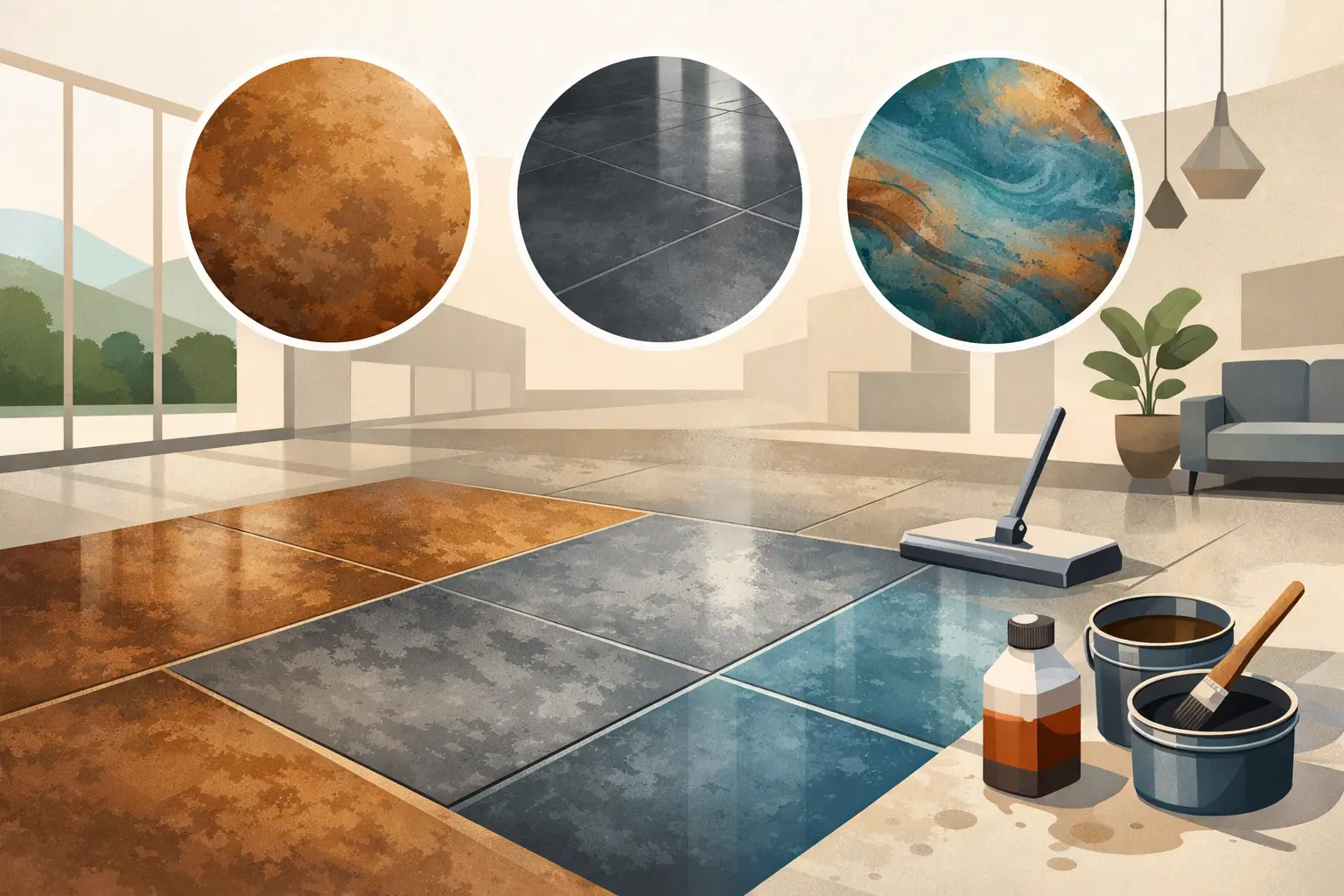
Stained Concrete Floor Options That Last
A concrete floor can look like a basic gray slab one week and a finished, high-end surface the next. That is why stained concrete floor options get so much attention from homeowners, facility managers, and business owners who want a floor that looks sharp without taking on constant upkeep. The right stain system can change the color, character, and performance of concrete, but the best choice depends on how the space is used, what condition the slab is in, and how much variation you want in the final look.
What stained concrete floor options really include
When people ask about stained concrete, they are often talking about more than one finish. In the field, stained concrete floor options usually fall into a few categories: acid stain, water-based stain, acetone or solvent-based dye, and stain paired with polishing or a protective sealer. Each one creates a different result.
Some clients want a mottled, natural surface with movement and depth. Others want a more even color that reads clean and modern. In a retail store or office, appearance matters, but so do dry times, traffic resistance, and maintenance. In a garage, warehouse, or back-of-house area, durability and cleanability tend to matter more than decorative detail. That is why a one-size-fits-all recommendation rarely works.
Acid stain vs. water-based stain
Acid stain for variegated, natural character
Acid stain reacts chemically with the minerals in concrete. The result is not a painted-on layer. It becomes part of the slab and creates rich, uneven color variation that many property owners want for showrooms, patios, garages, restaurants, and interior residential floors.
The trade-off is control. Acid stain produces a more organic finish, which means every slab takes color differently. Existing patches, repairs, saw cuts, and age variations will usually remain visible. That can be a benefit if you want character, but it can be a downside if you expect perfect uniformity.
Acid stain also works best on clean, open concrete. If the slab has old coatings, glue residue, curing compounds, or heavy contamination, surface prep becomes critical. Without the right grinding and cleaning, the stain may not penetrate consistently.
Water-based stain for broader color flexibility
Water-based stain gives you more color choices and more control over the final appearance. It can create anything from soft earth tones to stronger contemporary colors, and it often works well when clients want a cleaner, more consistent finish than acid stain can provide.
This option is popular in offices, retail spaces, residential interiors, and commercial settings where branding or a more uniform visual matters. It is also useful when the slab itself is less attractive and you need a finish that helps minimize the look of minor imperfections.
That said, water-based stain still depends on proper prep and sealing. If the floor is not mechanically prepared correctly, the finish will not perform the way it should. Color may also appear different once the protective topcoat goes on, so sample areas matter.
Concrete dyes and color-enhanced finishes
Dyes for bold, modern color
Concrete dyes are often chosen when a project needs stronger color intensity or a more refined decorative effect. They penetrate the surface and can produce a cleaner, more contemporary appearance than traditional stain. Dyes are commonly used indoors because they can create a sharp, finished look that pairs well with polished concrete.
For commercial interiors, dyes can be a strong choice when you want a floor that feels updated and professional without installing tile, vinyl, or other higher-maintenance materials. For homeowners, they work well in garages, basements, and modern interior spaces where a sleek finish matters.
The main limitation is exposure. Some dye systems are better suited to interior environments, especially when UV stability is a concern. In sunlit areas or exterior applications, product selection matters. This is where contractor guidance makes a real difference.
Stain with polished concrete
One of the better stained concrete floor options for commercial properties is color combined with polished concrete. Instead of relying only on a film-forming coating, the floor is densified, refined, and mechanically polished to create clarity, durability, and easier maintenance.
This is a practical fit for offices, retail spaces, lobbies, and certain industrial environments because it offers a finished appearance with less ongoing maintenance than many topical systems. It also reduces dusting and stands up well to daily traffic when the slab is suitable for polishing.
The floor still needs proper evaluation first. If the slab is severely damaged, heavily patched, or structurally inconsistent, a polished stained finish may require additional repair or resurfacing before it will look right.
Choosing stained concrete floor options by space
Residential interiors and garages
In homes, the decision often comes down to appearance, maintenance, and comfort with natural variation. Acid stain is a strong choice if you want a warmer, more decorative look with movement in the color. Water-based stain or dye makes more sense if you want cleaner lines or a more modern style.
Garages are a little different. Decorative value matters, but so does resistance to tire traffic, spills, and regular cleaning. In many garage projects, stain alone is not enough. The floor also needs a reliable protective finish, and in some cases, an epoxy or polyaspartic system may be a better fit than stain depending on the owner’s priorities.
Retail, office, and customer-facing spaces
For businesses, the floor has to look good under lighting, hold up to foot traffic, and stay easy to maintain. Water-based stain, dye, or polished colored concrete usually performs well in these settings because the finish can be tailored to the brand and the maintenance demands.
A retail store may want more design appeal, while an office may prioritize a clean, professional look that hides dirt between cleanings. Both benefit from surfaces that do not need frequent waxing or constant replacement.
Warehouses, industrial areas, and service spaces
In industrial or high-use back-end environments, decorative appearance usually comes second to durability. Stained finishes can still work, but the system has to match the exposure. Forklift traffic, chemical spills, abrasion, and moisture all affect the right recommendation.
In some of these spaces, polished or sealed concrete can be a better investment than a decorative stain-focused finish. The goal is not just color. It is long-term performance with minimal downtime and manageable maintenance.
Surface prep matters more than color charts
The biggest factor in a successful stain job is not the stain itself. It is the condition of the concrete and the quality of the prep. Old adhesives, paint, coatings, oil contamination, cracks, spalls, and prior repairs all influence how a stained floor will look.
That is why experienced contractors start with an on-site evaluation. Grinding, patching, leveling, or coating removal may be needed before color is ever applied. If someone promises a perfect decorative result without addressing slab condition, that is usually a red flag.
A good proposal should account for the actual floor, not just the square footage. That matters in homes, but it matters even more in occupied commercial spaces where scheduling, access, and operational disruption need to be managed correctly.
Sealed vs. polished stained floors
Most stained floors need protection, but the type of protection changes the maintenance profile. A sealed stained floor can deliver solid color enhancement and stain resistance, but over time the sealer may need reapplication, especially in high-traffic areas.
A polished colored concrete floor typically offers lower day-to-day maintenance and a more durable wear surface in many commercial settings. It is not the right fit for every slab, but when the floor qualifies, it can be a strong long-term solution.
This is one of the most important decisions in the process. If the client wants the lowest upfront cost, a basic stained and sealed system may make sense. If the goal is reduced maintenance and better lifecycle value, polishing may be worth the added investment.
Getting the right result from stained concrete floor options
The best stained concrete floor options are the ones matched to the slab, the traffic, and the way the space actually functions. A residential garage does not need the same system as a restaurant dining room. A warehouse does not need the same finish as a showroom. Color matters, but performance matters more once the floor goes into daily use.
That is why the smartest approach is to look at the concrete first, then build the finish system around the job. Orange County Concrete Polishing works that way because it is the only way to give clients a floor that looks right, holds up, and fits the budget without guesswork.
If you are considering a stained concrete floor, get the slab evaluated before choosing a color from a sample board. The concrete will tell you what is possible, and the right finish will pay off every day the space stays cleaner, sharper, and easier to maintain.
Recent Post

Sealed Concrete vs Polished: Which Floor Fits? September 4, 2026 2:54 am

Concrete Floor Moisture Testing Before Coatings September 2, 2026 2:54 am
Epoxy Flake Systems for Garages and Workspaces August 31, 2026 2:57 am