
Concrete Resurfacing for Patios That Last
A patio usually tells you when it is past its prime. The surface starts holding dirt, hairline cracks spread, old coatings peel, and the color looks flat no matter how often you wash it. In many cases, concrete resurfacing for patios is the smarter fix than tearing everything out. It gives you a cleaner, stronger-looking surface without the cost, mess, and downtime of a full replacement.
For homeowners and property managers, that matters. A patio is not just a slab in the backyard. It is part of how the property looks, how it functions, and how much maintenance it demands over time. If the concrete is structurally sound but the top layer is worn, resurfacing can extend its life and make the space look finished again.
When concrete resurfacing for patios makes sense
Resurfacing works best when the concrete underneath is still stable. If the slab has minor surface damage, shallow spalling, discoloration, or light cracking, a resurfacing system can usually correct the appearance and improve performance. It is also a strong option when the goal is cosmetic – for example, updating an old broom finish patio with a cleaner, more uniform look.
Where property owners get into trouble is assuming every patio can be saved with a coating or overlay. If the slab has major settlement, wide structural cracks, poor drainage, or ongoing moisture issues, resurfacing alone will not solve the problem. Those conditions need to be evaluated first. A good contractor will tell you where resurfacing is the right investment and where a more extensive repair is the better call.
That is the difference between a surface fix and a lasting result. The product matters, but substrate condition matters more.
What resurfacing actually changes
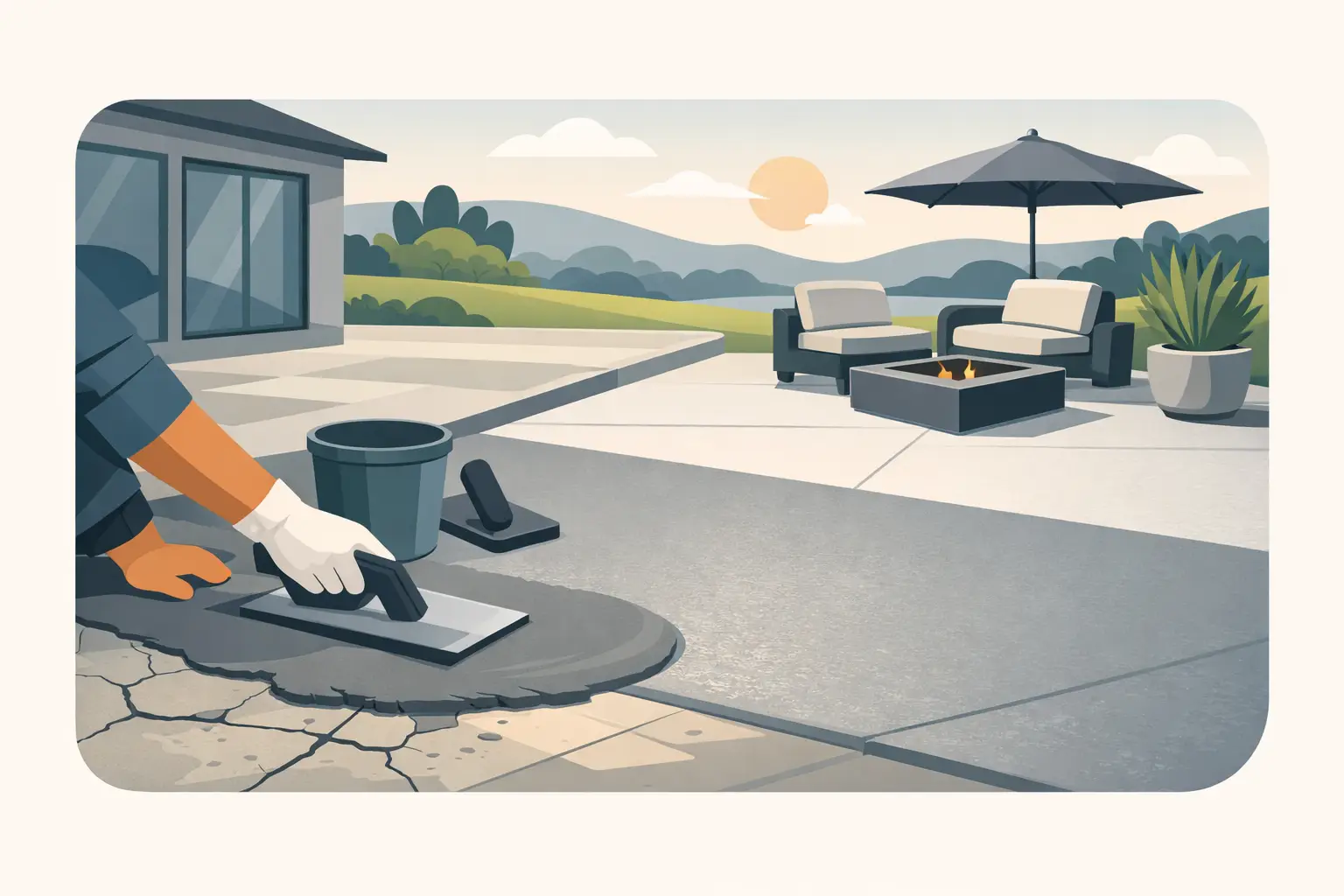
A proper patio resurfacing job does more than cover flaws. It creates a new wear layer over the existing concrete after the surface has been cleaned, repaired, and mechanically prepared. Depending on the system, the finished patio can have improved texture, a more even color, better stain resistance, and a more refined appearance.
This is especially useful on patios that have seen years of sun exposure, furniture movement, foot traffic, irrigation overspray, and inconsistent cleaning. Even when the slab is still usable, the top layer often becomes porous and tired-looking. Resurfacing gives that slab a reset.
For some clients, the priority is appearance. They want a patio that looks clean, modern, and intentional. For others, the priority is maintenance. They want something easier to keep up and less likely to trap dirt and show every stain. In both cases, resurfacing can be tailored to the space instead of forcing a full demolition and replacement.
Surface prep is where the job is won or lost
The part most people do not see is the part that determines whether the resurfacing lasts. Any patio can look good the day it is installed. The real question is how it performs after weather, foot traffic, and regular use.
That comes back to surface preparation. The concrete needs to be properly cleaned, ground, and profiled so the resurfacing material can bond correctly. Cracks and damaged areas need to be addressed before the new layer goes down. If contamination from oils, sealers, pool chemicals, or old coatings is left behind, adhesion problems can show up fast.
This is why contractor experience matters. Exterior concrete is not forgiving. It deals with heat, moisture, UV exposure, and expansion cycles that interior floors do not. A patio resurfacing system has to be selected and installed with those conditions in mind.
Finish options depend on how you use the patio
Not every patio should have the same finish. A backyard entertaining area may call for a decorative overlay with a more refined texture and color. A side-yard patio or rental property may benefit from a simpler resurfacing approach that focuses on durability and easy maintenance. If the patio is near a pool, slip resistance becomes a bigger factor.
Texture is one of the most important decisions. A smoother finish can look clean and modern, but too smooth may not be ideal in areas that get wet. A more textured finish improves traction, though it can hold a bit more dirt and require a different cleaning routine. There is always a balance between appearance, safety, and maintenance.
Color selection matters too. Lighter tones can brighten a space and stay cooler in direct sun, but they may show dirt more easily. Darker finishes can create a richer look, but they often absorb more heat and may highlight surface dust. The best choice usually comes down to the property style, the amount of sun exposure, and how the patio is actually used day to day.
Why homeowners choose resurfacing over replacement
The biggest reason is value. If the slab is in serviceable condition, resurfacing can deliver a major visual upgrade at a lower cost than removal and replacement. It also avoids the disruption that comes with demolition, hauling, forming, pouring, and curing a brand-new patio.
Timing is another advantage. Full replacement can stretch into a larger exterior construction project, especially if access is limited or nearby landscaping needs protection. Resurfacing is typically more efficient, which makes it appealing for occupied homes, rental properties, and commercial outdoor spaces where downtime matters.
There is also a design advantage. Replacement gives you a new slab, but resurfacing often gives you more flexibility in the finished appearance. Depending on the system, you can improve color consistency, texture, and overall presentation without rebuilding the entire patio from scratch.
That said, resurfacing is not a shortcut. It is the right solution when the existing concrete has the right foundation for it.
Common patio problems resurfacing can improve
A resurfacing system can address many of the issues that make an older patio look worn out before it is actually worn out structurally. Surface flaking, minor pitting, old patch marks, faded color, and shallow cracks are all common candidates. In many cases, those flaws make the patio look worse than it performs.
Resurfacing can also help when previous coatings have failed. Peeling paint or inconsistent sealers often leave a patio looking neglected. Once those materials are properly removed and the concrete is prepared the right way, the surface can be rebuilt with a finish that is better suited to exterior use.
What resurfacing cannot do is correct major heaving, severe settling, or active structural movement. If one section of the patio has dropped or drainage is pushing water back toward the house, those issues need a broader repair strategy.
What to expect from the installation process
A professional resurfacing project starts with an on-site evaluation. That step is important because patios vary widely in condition, exposure, and previous treatment history. The contractor should check for crack patterns, surface contamination, moisture concerns, and whether the slab is a good candidate for resurfacing at all.
From there, the process usually moves into mechanical prep, repairs, application of the resurfacing material, and final sealing or finishing as needed. The exact timeline depends on square footage, weather, and the selected system. Exterior work always carries some schedule sensitivity because temperature and moisture can affect installation and cure times.
For clients, the main benefit of working with an experienced concrete contractor is clarity. You should know what condition the slab is in, what finish is being recommended, what level of maintenance to expect, and what trade-offs come with that choice. That is how projects stay on track and results hold up.
Choosing the right contractor for patio resurfacing
Patio resurfacing is one of those services that looks easy online and goes wrong quickly in the field. The difference between a finish that lasts and one that fails early usually comes down to preparation, material selection, and installation discipline.
Look for a contractor who understands surface profiling, repair methods, exterior product performance, and how different finishes behave in real-world conditions. You want someone who can speak plainly about what your patio needs, not someone who promises every slab can be made perfect with a thin topcoat.
At Orange County Concrete Polishing, that practical approach is what drives the work. The goal is not to oversell a surface treatment. It is to recommend a patio solution that fits the condition of the concrete, the use of the space, and the level of durability the property owner expects.
If your patio is worn, stained, or dated but the slab itself still has good bones, resurfacing may be the most cost-effective way to bring it back. The best next step is simple – get the surface evaluated, ask the right questions, and choose a system built for how the patio will actually be used.
Recent Post
Sealed Concrete vs Polished: Which Floor Fits? September 4, 2026 2:54 am
Concrete Floor Moisture Testing Before Coatings September 2, 2026 2:54 am
Epoxy Flake Systems for Garages and Workspaces August 31, 2026 2:57 am