

Concrete Grinding Services Near Me
If you’re searching for concrete grinding services near me, you probably already have a floor that’s causing problems. Maybe it’s uneven, coated with failing adhesive, stained, rough, or simply not ready for the next finish. Grinding is the step that fixes the surface so the floor can actually perform the way it should.
Concrete grinding is not a cosmetic extra. It is a core surface prep service that affects how your floor looks, how long coatings last, how safe it is underfoot, and how much maintenance it takes over time. For homeowners, that can mean a cleaner garage or a better-looking interior slab. For commercial and industrial properties, it often means fewer shutdowns, better traction, and a floor system that holds up under real use.
What concrete grinding services near me should actually include
A quality grinding service starts with the condition of the slab, not a one-size-fits-all price or process. Every floor has its own issues. Some need glue and mastic removal. Others need high spots knocked down, control joints addressed, coating prep completed, or a smoother profile before polishing or epoxy installation. The right contractor looks at the slab in person and scopes the work based on what the surface needs.
That matters because grinding can mean different things depending on the job. On one project, the goal is to remove surface contamination so a coating bonds properly. On another, it is to flatten an uneven floor that affects carts, shelving, or foot traffic. In a garage or retail space, it may be part of preparing the slab for a cleaner, more finished appearance. The equipment, diamond tooling, dust control, and number of passes all change based on the result you need.
Why grinding is often the first step to a better concrete floor
When concrete is left uneven or improperly prepared, every finish installed over it has a harder job to do. Epoxy can fail early. Polish can look inconsistent. Resurfacing materials can bond poorly. Even basic cleaning becomes harder when the slab has ridges, old residue, or pitted areas that trap dirt.
Grinding creates a more uniform surface profile. That improves adhesion, helps reduce weak surface material, and gives the next system a better foundation. It can also remove surface imperfections that make a floor look worn long before its time.
For business owners and facility managers, this is where cost control comes in. Paying for proper prep up front is usually cheaper than dealing with coating failure, trip hazards, or a floor that needs to be redone prematurely. For homeowners, it means the finished floor is more likely to look clean, modern, and intentional instead of patched together.
Common problems concrete grinding can solve
Grinding is commonly used to remove old coatings, thinset, glue, paint, sealers, and surface contamination. It can help correct minor unevenness, reduce trip points between slabs, open the concrete for stains or dyes, and prepare the floor for polished concrete or epoxy systems.
It also helps in spaces where appearance and durability need to work together. A garage floor that is ground correctly before coating tends to perform better. A warehouse floor that is ground and densified can be easier to maintain. A retail or office floor that starts with proper prep usually ends up looking cleaner and more professional.
Residential, commercial, and industrial jobs are not the same
One of the biggest mistakes property owners make is hiring a contractor who treats every grinding job the same. A residential garage, a restaurant kitchen, a warehouse aisle, and a parking structure all have different performance demands.
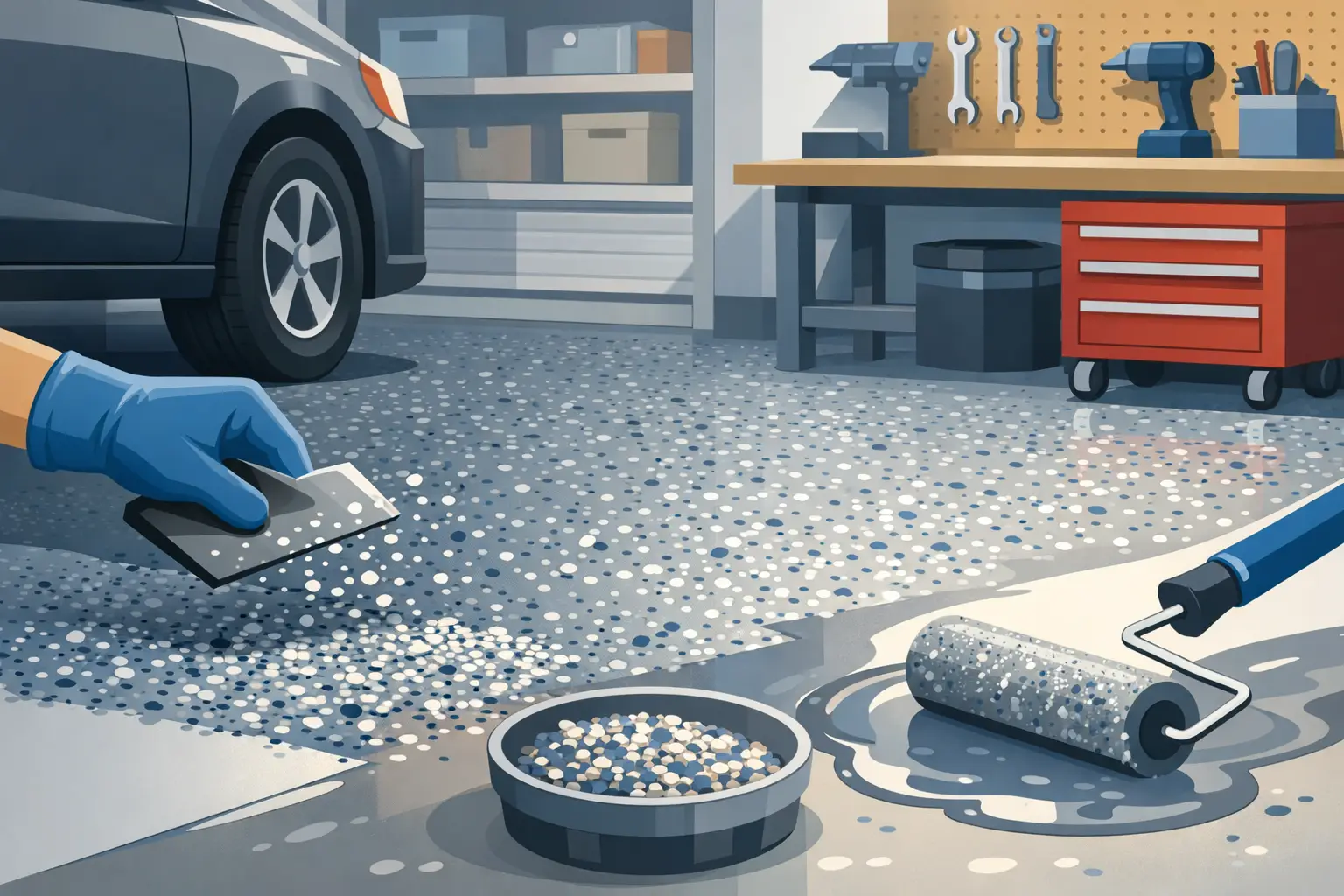
In residential spaces, homeowners usually care about appearance, durability, and ease of cleaning. They want a floor that looks sharp and does not become a constant maintenance issue. Grinding may be part of preparing for a flake epoxy garage system, exposing concrete for a modern finish, or correcting rough areas before sealing.
In commercial settings, schedule and disruption matter just as much as the floor itself. Retail stores, offices, and restaurants often need work completed efficiently and sometimes outside standard business hours. The goal is to improve the slab without disrupting normal operations more than necessary.
Industrial floors have their own requirements. Warehouses, manufacturing areas, hangars, and service spaces deal with heavier loads, equipment traffic, and sometimes chemicals. In those environments, the grinding process has to support long-term performance, not just surface appearance. Flatness, profile, and compatibility with the final flooring system matter more than a quick pass over the slab.
How to choose the right contractor when you search locally
Not every company offering grinding services is set up to handle demanding concrete work. Some are really focused on decorative finishes and only do light prep. Others may lack the tooling or experience to handle larger commercial and industrial floors. When you are comparing local contractors, ask what types of properties they work on and what the grinding is intended to accomplish.
A dependable contractor should be able to explain the condition of your slab in plain terms. They should tell you whether the floor needs grinding only, or whether it also needs patching, leveling, densifying, polishing, or a coating system. They should also be upfront about dust control, noise, access, scheduling, and realistic production timelines.
Experience across multiple environments is a real advantage here. A contractor who has worked in garages, offices, warehouses, parking structures, and industrial facilities is usually better at matching the process to the job. They know where appearance is the priority, where performance comes first, and where both have to be delivered on a tight schedule.
What affects pricing
Concrete grinding is quote-driven for a reason. The price depends on the size of the area, slab condition, thickness of material being removed, edge work, accessibility, moisture issues, and whether the grinding is part of a larger flooring system. A clean slab with light prep needs is a different job than a floor covered in old adhesive or damaged coating.
This is why in-person estimates matter. A real site visit gives you a more accurate scope and helps prevent change orders later. It also gives the contractor a chance to spot issues that photos often miss, such as surface softness, previous patching, or hidden unevenness.
What happens after grinding depends on your goal
For some properties, grinding is the finish. For others, it is the preparation stage for the final system. That distinction matters.
If you want a refined concrete floor, grinding may lead into polishing, where the slab is honed to the sheen level you want and treated for better durability. If you need protection from chemicals, abrasion, or vehicle traffic, grinding is typically followed by an epoxy or other resinous coating system. If the surface is worn but structurally sound, grinding may be part of a resurfacing plan that gives the slab a fresh, functional finish.
The right recommendation depends on how the space is used. A homeowner may want a garage floor that is easier to clean and looks finished. A facility manager may need a surface that handles forklifts and frequent washdowns. A general contractor may need reliable prep before the next trade comes in. There is no single best answer for every slab.
Why local response and scheduling matter
When people search for concrete grinding services near me, they are not just looking for a nearby name. They are looking for a company that can show up, assess the floor properly, and complete the work without creating unnecessary delays.
Local service matters because concrete jobs move on real schedules. Commercial tenants have opening dates. Warehouses have operating hours. Homeowners want the project done without weeks of uncertainty. A responsive contractor who offers clear communication, tailored proposals, and flexible scheduling saves time before the grinding even begins.
That is especially true for businesses that cannot afford major disruption. Off-hours scheduling can make a big difference in offices, retail, restaurants, and active facilities. The ability to phase work, coordinate around operations, and keep the project moving is often just as valuable as the grinding itself.
Orange County Concrete Polishing approaches grinding the way it should be handled – as a technical service tied directly to the finished performance of the floor. That means evaluating the slab, understanding the use case, and recommending the right prep and finish for the environment.
If your concrete is uneven, coated, contaminated, or simply not ready for the next step, getting the right grinding contractor in place now can save you money and headaches later. The best next move is simple: get the slab looked at in person, get a clear scope, and make sure the floor is being prepared for the way your space actually works.
Recent Post

Sealed Concrete vs Polished: Which Floor Fits? September 4, 2026 2:54 am

Concrete Floor Moisture Testing Before Coatings September 2, 2026 2:54 am
Epoxy Flake Systems for Garages and Workspaces August 31, 2026 2:57 am