
Epoxy Flooring for Warehouses That Lasts
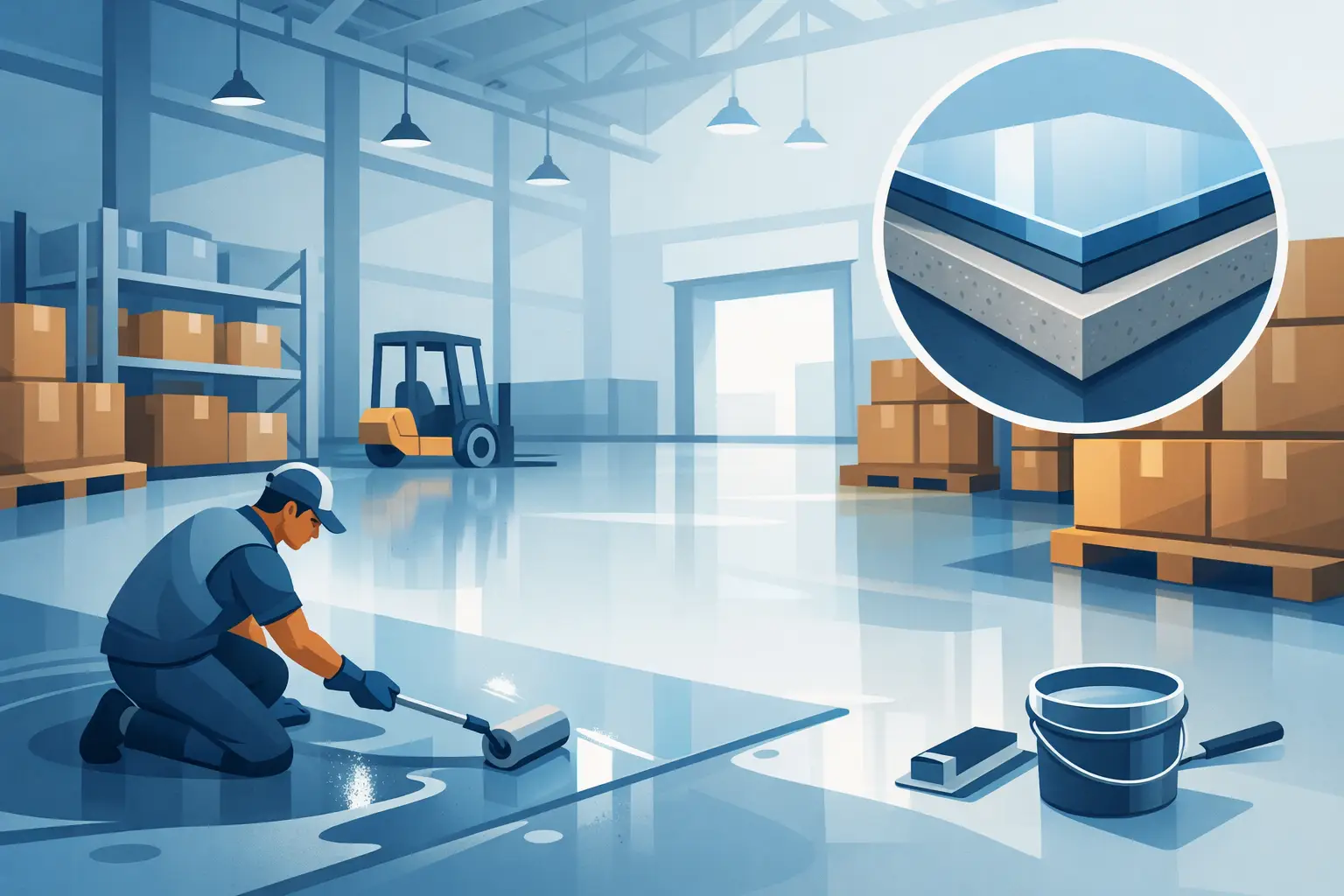
A warehouse floor takes a beating long before anyone notices it. Forklift turns grind down weak surfaces, pallet jacks chip brittle concrete, and oil, chemicals, and dust build up fast. That is exactly why epoxy flooring for warehouses is not a cosmetic upgrade. It is a performance surface built to handle traffic, protect the slab, and keep operations moving.
For facility managers and property owners, the real question is not whether the floor looks better after coating. It is whether the system matches the way the building actually runs. A warehouse with constant forklift traffic has different needs than a storage facility with light rolling loads. A food distribution center has different chemical exposure than a parts warehouse or a manufacturing space. The right epoxy system starts with that distinction.
Why epoxy flooring for warehouses makes sense
Concrete on its own is strong, but it is also porous and vulnerable at the surface. Over time, dusting, staining, abrasion, and impact damage start to show up. Once that wear cycle starts, maintenance gets harder and the floor becomes more expensive to manage.
Epoxy flooring creates a protective layer over properly prepared concrete. That layer helps resist abrasion, reduces concrete dust, and creates a surface that is easier to clean than bare slab. In a warehouse environment, that matters every day. A cleaner, more consistent floor supports better housekeeping, better visibility for striping, and fewer problems tied to surface breakdown.
There is also a safety component. Warehouses depend on clear traffic flow, visible markings, and predictable traction. Epoxy systems can be installed with line striping, safety zones, and texture where needed. That does not mean every warehouse should have a rough floor. Too much texture can interfere with cleaning and rolling traffic. The right balance depends on how the space is used.
What a warehouse epoxy system actually needs to do
A warehouse floor coating has one job on paper and several jobs in practice. It needs to hold up under traffic, resist spills, clean up quickly, and maintain a professional appearance without constant repair.
That starts with adhesion. If the coating is installed over poorly prepared concrete, failure is only a matter of time. Peeling, bubbling, and hot tire pickup are usually not product problems first. They are surface prep problems. Concrete has to be evaluated for contamination, previous coatings, cracks, moisture issues, and profile. Grinding, shot blasting, patching, and joint repair are what make the coating system work.
Film build matters too. A thin coat may look fine at turnover, but warehouse floors are not showroom floors. They need enough thickness to take abuse. In some buildings, a standard epoxy system is a good fit. In others, a heavier-duty build with additional topcoats or chemical-resistant layers makes more sense. The right answer depends on traffic volume, point loads, and exposure.
Where epoxy performs best in warehouse environments
Epoxy is a strong choice for many warehouse applications because it combines durability with a clean, controlled finish. It performs especially well in staging areas, storage zones, service corridors, packing sections, and facilities that need marked traffic lanes and spill resistance.
It is also a practical option for warehouses that want a more professional appearance for staff, tenants, or visiting customers. A bright, reflective floor improves light distribution and helps the space feel cleaner and more organized. That can make a real difference in mixed-use industrial properties and distribution buildings where presentation matters.
That said, there are conditions where another resin system may be the better call. If a warehouse has major thermal shock, extreme moisture vapor transmission, or highly aggressive chemical exposure, the coating specification may need to shift. This is where a contractor with real industrial experience matters. The goal is not to force every building into the same package. The goal is to recommend the system that fits the site.
Common warehouse problems epoxy helps solve
Most warehouse owners start looking at coatings after the floor begins causing operational headaches. Dust is one of the most common issues. As bare concrete wears, it creates fine dust that spreads onto inventory, shelving, and equipment. That adds cleaning time and can become a quality-control problem.
Surface damage is another. Small chips and pits turn into larger failures under rolling loads. Once the floor starts breaking down, it becomes harder to keep clean and harder to maintain a safe, even surface. Epoxy helps protect against that wear cycle when installed over sound, properly repaired concrete.
Staining is also a practical concern. Oils, chemicals, and general warehouse grime soak into untreated concrete quickly. A coated floor gives maintenance teams a surface they can actually clean instead of a slab that holds onto every spill.
Choosing the right epoxy flooring for warehouses
Not every warehouse needs the same build, gloss level, or texture profile. The right system should be based on use, not assumptions.
A lighter-duty storage warehouse may do well with a straightforward epoxy system that improves cleanability and appearance while adding abrasion resistance. A busier logistics or industrial warehouse may need a thicker build with enhanced wear resistance and better impact performance. If the building uses washdowns, handles chemicals, or has food-related operations, topcoat selection becomes more important.
Color is not just about looks. Light gray and other neutral tones are popular because they brighten the space and help show debris before it becomes a larger issue. Safety striping can be built into the system to define forklift lanes, pedestrian walkways, loading zones, and hazard areas. That kind of layout support is one of the most useful practical benefits of a warehouse floor coating.
Finish matters too. High gloss can improve reflectivity, but some facilities prefer a more satin appearance to reduce visible scuffs or fit a harder-working industrial look. There is no universal best finish. It depends on priorities.
Installation timing and warehouse downtime
The biggest concern for many warehouse operators is disruption. Floor work has to be coordinated around staffing, shipping schedules, equipment movement, and tenant needs. A good coating contractor plans for that upfront.
In many warehouse settings, installation can be phased by area to keep part of the operation active. Off-hours scheduling can also help reduce interruptions. That is especially useful in active facilities where fully shutting down is not realistic.
What should never be rushed is prep or cure timing. Owners naturally want fast turnaround, but speed means nothing if the coating fails early. Moisture testing, crack repair, slab prep, and cure windows all affect long-term performance. A reliable contractor will be clear about what the schedule should be and why.
What to expect from the floor before and after installation
Before installation, the slab needs an honest evaluation. If the concrete is heavily cracked, contaminated, or weakened at the surface, those conditions need to be addressed first. Epoxy can cover a lot, but it is not a fix for structural slab problems.
After installation, the floor should be easier to maintain and more predictable under daily use. Dust control improves. Cleanup becomes faster. Traffic markings stay sharper. The space looks more finished and operates with fewer flooring-related distractions.
Like any hard-working surface, epoxy still requires maintenance. Dragging steel across it, ignoring spill cleanup, or using the wrong cleaning method will shorten its life. But compared with bare concrete, upkeep is simpler and more controlled.
Why contractor experience matters
Warehouse flooring is not a place for guesswork. Product choice, prep standards, moisture conditions, repair methods, and scheduling all affect the outcome. A contractor who understands warehouse operations will ask the right questions before recommending a system.
That includes traffic type, wheel loads, cleaning methods, downtime limits, chemical exposure, and the condition of the existing slab. It also includes practical concerns like whether the project needs to happen in phases, whether striping is part of the scope, and how quickly each section has to return to service.
At Orange County Concrete Polishing, that hands-on approach is the difference between a floor that simply looks coated and a floor that actually performs. Warehouse clients need durability, clean installation, and a crew that shows up ready to solve site-specific problems, not sell a one-size-fits-all package.
If your warehouse floor is dusty, stained, worn out, or starting to chip under traffic, it is worth getting it evaluated before those issues spread. The right epoxy system does more than improve appearance. It gives your facility a tougher working surface that supports safety, cleanup, and daily operations without adding more maintenance to your plate.
Recent Post

Sealed Concrete vs Polished: Which Floor Fits? September 4, 2026 2:54 am

Concrete Floor Moisture Testing Before Coatings September 2, 2026 2:54 am
Epoxy Flake Systems for Garages and Workspaces August 31, 2026 2:57 am