
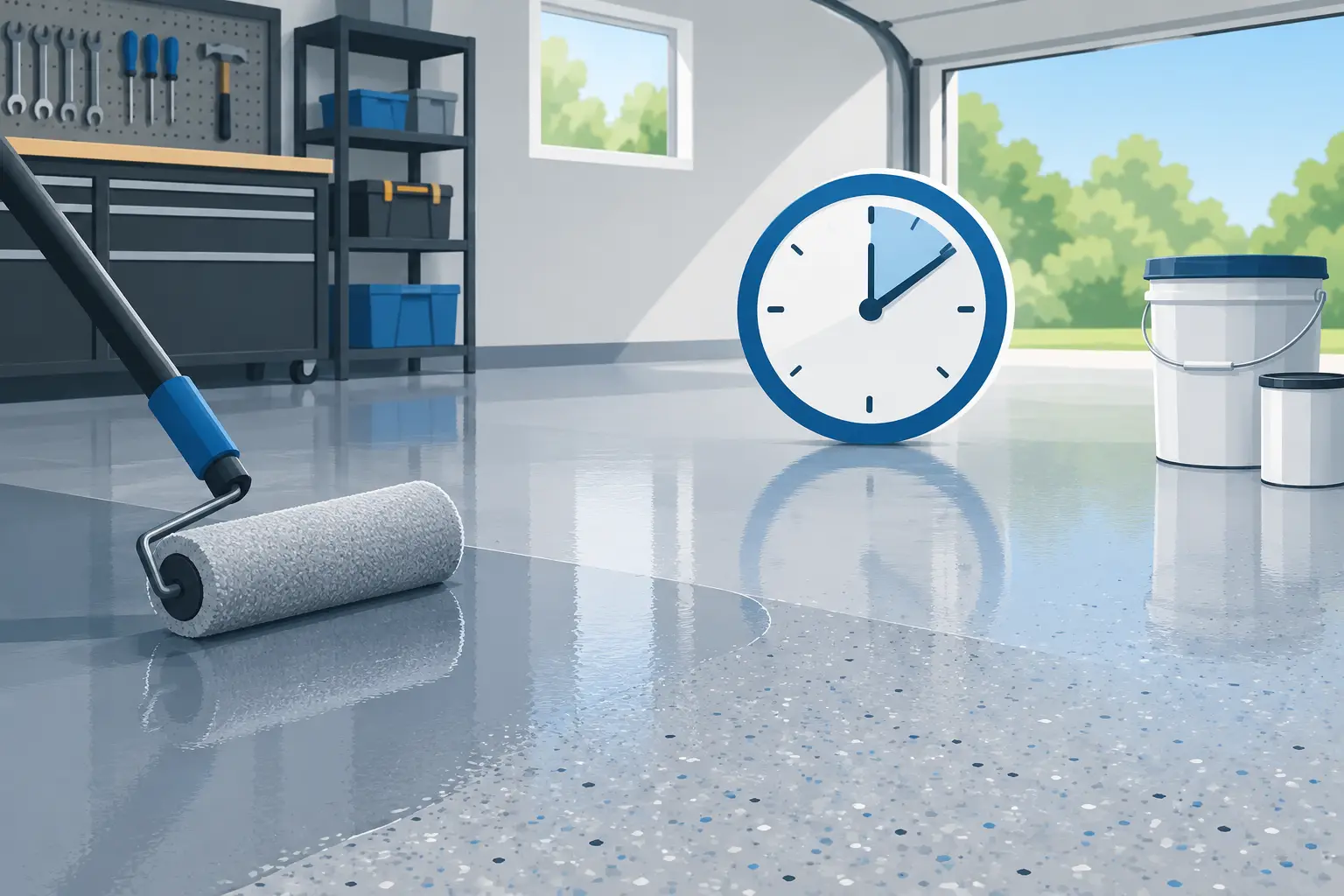
Epoxy Curing Time for Garage and Shop Floors
A freshly coated garage or commercial floor can look finished within hours, but that does not mean it is ready for a vehicle, pallet jack, chemical spill, or full workday. Epoxy curing time determines when the coating has developed the strength and chemical resistance it was installed to provide. Rushing that process is one of the fastest ways to leave tire marks, create surface damage, or shorten the life of an otherwise high-quality floor.
For Orange County homeowners, facility managers, and contractors, the right schedule starts with understanding that epoxy does not simply dry. It cures through a chemical reaction. Temperature, humidity, concrete condition, coating type, and the intended use of the space all affect the timeline.
What Controls Epoxy Curing Time?
Epoxy is typically made from a resin and hardener mixed at a specified ratio. Once mixed, the reaction begins. The material gradually changes from liquid to solid as it builds a tightly bonded, durable film. That process cannot be judged by appearance alone.
Temperature has a major effect. Most epoxy systems cure best within the temperature range listed by the manufacturer, often around 60 to 85 degrees Fahrenheit. Cooler concrete slows the reaction and can extend curing well beyond the expected schedule. Excessive heat can make epoxy set too quickly, reducing working time and increasing the risk of roller marks, uneven coverage, or application issues.
Humidity also matters, especially when a floor has moisture concerns. While epoxy chemistry is not identical to moisture-cured coatings, damp concrete, active vapor transmission, or condensation can interfere with adhesion. A slab may feel dry at the surface while still holding moisture that affects the coating system from below.
The coating selected for the project changes the timeline as well. A standard water-based epoxy, a 100 percent solids epoxy, an epoxy mortar system, and a polyaspartic topcoat all have different cure characteristics. That is why a reliable contractor does not promise one universal turnaround time before evaluating the floor, products, and job conditions.
Typical Epoxy Curing Time by Stage
A floor can move through several usable stages before it reaches full service strength. The exact schedule always comes from the product data and site conditions, but these general ranges help with project planning.
- Tack-free or dry to the touch: Often 6 to 12 hours. The surface may no longer feel wet, but it is not ready for foot traffic or equipment.
- Ready for recoating: Commonly 12 to 24 hours. Many multi-coat systems need the next coat applied within a specific recoat window for proper intercoat adhesion.
- Light foot traffic: Often 24 to 48 hours. This usually means careful walking only, not moving furniture, ladders, carts, or tools across the surface.
- Vehicle and full-duty service: Commonly 3 to 7 days. Heavy equipment, hot tires, chemical exposure, and industrial operations may require the longer end of that range or more.
These are planning ranges, not permission to ignore the system specifications. A garage floor might accept light walking the next day but still need several days before a car can be parked inside. A warehouse coating may look hard enough to use, yet remain vulnerable to forklift turns and concentrated loads until the full cure period is complete.
Why Full Cure Matters for Garages and Commercial Floors
The difference between a partially cured floor and a fully cured floor is not cosmetic. It affects real-world performance.
In a residential garage, early vehicle traffic can press hot tire plasticizers into a young coating and leave marks or pull at the finish. Dragging storage cabinets, rolling a heavy toolbox, or setting down a motorcycle stand too soon can scratch or dent a surface that would have resisted the same load after full cure.
For commercial and industrial spaces, the stakes are higher. Rolling loads, pallet jacks, forklifts, racks, restaurant equipment, and chemical exposure put concentrated stress on the floor. An epoxy system installed for durability and chemical resistance needs enough cure time to build those properties. Opening too early may create damage that interrupts operations more than a properly planned closure would have.
This is also why coating work is often scheduled after hours, over weekends, or during planned shutdowns. The goal is not merely to get the floor coated quickly. It is to return the area to service at the right time, with a finish that can handle the work it was designed to do.
Concrete Preparation Can Affect the Schedule
Cure time begins after application, but the project schedule starts well before the epoxy is mixed. Proper surface preparation is what allows the coating to bond to the concrete in the first place.
Concrete grinding or shot blasting removes contaminants, weak surface material, old coatings, and smooth laitance that can interfere with adhesion. Oil spots, tire residue, sealers, curing compounds, and previous paint must be addressed before coating. If these conditions are covered rather than removed, the epoxy may fail regardless of how long it cures.
Concrete moisture also deserves careful attention. New concrete usually needs substantial time to cure and dry before an epoxy system is installed. A common benchmark is 28 days for new concrete, but that is not a blanket approval for every slab or coating. Moisture testing, slab condition, and the selected system determine whether additional mitigation or a different approach is needed.
Cracks, spalls, and low areas should be repaired before coating as well. Epoxy can enhance and protect a floor, but it does not correct structural movement or solve active moisture problems by itself. A tailored scope prevents surprises after the floor is placed back into service.
How to Plan Around Epoxy Curing Time
The best way to avoid downtime problems is to identify the required return-to-service date before the job begins. A homeowner may only need to keep vehicles out of the garage for several days. A retail store may need a night-by-night installation plan. A warehouse may require phased work so critical traffic routes remain available.
Start by defining what the floor must handle when it reopens. Foot traffic and office furniture are very different from vehicle traffic, forklifts, airplane hangar equipment, or cleaning chemicals. Then account for surface preparation, crack repairs, moisture evaluation, primer coats, epoxy coats, decorative broadcast media, and topcoats. Each layer has its own application and cure window.
If fast return to service is essential, ask about systems designed for quicker cure times. Polyaspartic coatings, for example, can offer rapid turnaround in the right application. The trade-off is that faster materials may have a shorter working time and require experienced installation planning, especially in warm conditions. The best material is not always the fastest one. It is the one that fits the concrete, exposure conditions, appearance goals, and operating schedule.
Practical Care During the Cure Window
Once the coating is installed, keep the area clean and protected. Do not introduce vehicles, equipment, water, cleaning chemicals, or heavy objects until the specified service time has passed. Avoid covering a new floor with rubber mats, cardboard, plastic sheeting, or storage items unless the installer approves it. Trapped moisture and concentrated pressure can create avoidable issues.
When the floor is ready for light use, treat it gently until full cure. Lift rather than drag objects. Use clean shoes and soft-wheeled carts where possible. In commercial environments, communicate the reopening schedule to employees, tenants, and delivery teams so no one rolls equipment onto a floor ahead of schedule.
Orange County Concrete Polishing evaluates the concrete, coating system, and use requirements before setting a realistic installation and return-to-service plan. That upfront coordination helps homeowners protect a new garage floor and helps businesses minimize disruption without sacrificing long-term performance.
A finished epoxy floor should be put back to work with confidence, not guesswork. Build the curing window into the project schedule, follow the recommended service times, and give the coating the time it needs to deliver the clean, durable surface you hired it to provide.
Recent Post

Distribution Center Resurfacing That Holds Up
November 3, 2026 1:51 am
Can Polished Concrete Reduce Dust in Your Facility?
November 1, 2026 1:44 am

Concrete Flooring Design Trends for Orange County
October 30, 2026 1:45 am