
Can Polished Concrete Reduce Dust in Your Facility?
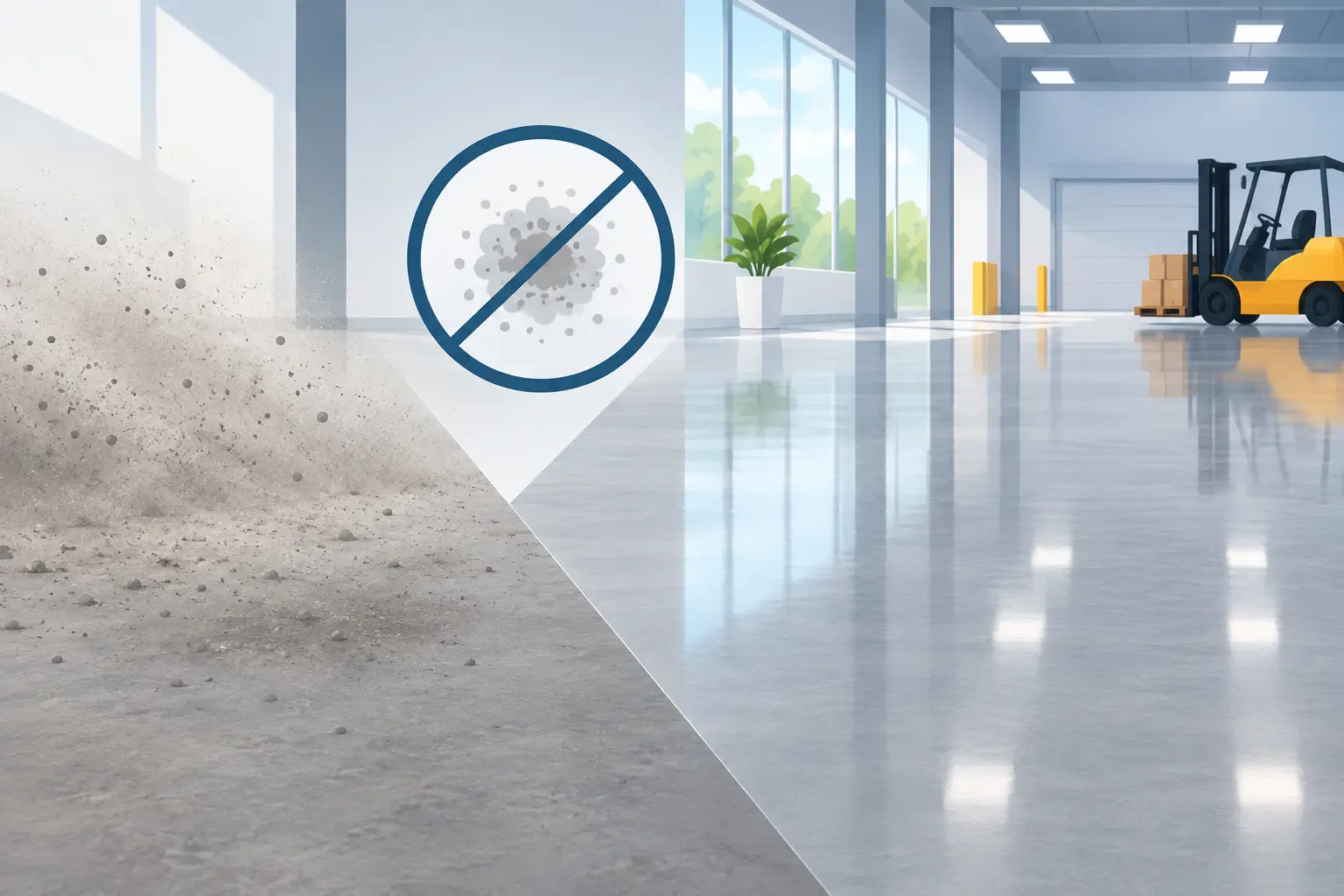
A dusty concrete floor is more than a housekeeping problem. In a garage, warehouse, retail space, or production area, it can track onto inventory, settle on equipment, affect indoor cleanliness, and make a facility look neglected. So, can polished concrete reduce dust? Yes – when the slab is properly prepared, densified, and finished, polished concrete can dramatically reduce the dust created by an untreated or deteriorating concrete surface.
The key is understanding what type of dust you are dealing with. Polished concrete controls dust coming from the concrete itself. It will not stop cardboard fibers, dirt brought in on tires, sawdust, or airborne debris from other operations. But for floors that are slowly breaking down at the surface, polishing is one of the most practical long-term solutions.
Why Bare Concrete Creates Dust
Concrete may look solid, but its surface contains tiny pores and softer material that can wear away over time. Foot traffic, forklifts, vehicle tires, moisture, chemical exposure, and routine sweeping gradually loosen fine particles from an unprotected slab. This is commonly called concrete dusting.
Dusting is especially common in older garages, warehouses, loading areas, and workspaces with high traffic. In some cases, the original concrete mix was weak at the surface. In others, curing conditions, excessive water in the mix, or years of abrasion left the top layer vulnerable. No amount of frequent sweeping fixes a slab that is continuing to shed material.
That dust often gets carried well beyond the floor. It can collect along walls and shelving, find its way into vehicles and machinery, and create more cleaning work for staff or homeowners. For businesses, it can also leave the wrong impression on customers, tenants, and inspectors.
Can Polished Concrete Reduce Dust at the Source?
Yes. A polished concrete system reduces dust by strengthening and refining the concrete surface rather than simply covering it. The process begins with mechanical grinding to remove weak, contaminated, or uneven material. This exposes a sounder concrete surface and creates the profile needed for a consistent finish.
A concrete densifier is then applied. Densifiers react within the slab to harden the surface, reduce porosity, and make the concrete more resistant to abrasion. During the later polishing stages, the floor is refined with progressively finer diamond tooling until it reaches the selected level of sheen.
The result is a denser, tighter surface that is far less likely to release fine concrete particles under normal use. Instead of sweeping up powder from a failing slab every week, property owners have a floor that is easier to clean and built to handle regular traffic.
Polishing does not make concrete indestructible. Severe impact, poor drainage, corrosive chemicals, and structural cracking can still damage any floor. But on a suitable slab, it addresses dusting where it starts and provides a finished appearance at the same time.
How the Polishing Process Improves Floor Performance
The dust-control benefit does not come from shine alone. It comes from the preparation and the chemistry behind a professional concrete polishing system.
Grinding removes the weak top layer and opens the floor for treatment. Densification hardens the concrete and helps bind the surface together. Polishing closes and refines the surface, reducing places where fine dust and dirt can lodge. Guard products may also be used when appropriate to enhance stain resistance and improve the finished look.
Each step needs to match the condition of the slab. A lightly used residential garage may need a different approach than a warehouse with forklift traffic or an airplane hangar exposed to vehicle fluids and heavy rolling loads. The level of aggregate exposure, desired gloss, existing coatings, moisture conditions, and floor repairs all affect the scope of work.
This is why a quick visual inspection matters. A floor that appears dusty may have coating failure, moisture-related damage, oil contamination, delamination, or an underlying structural issue. Proper surface preparation determines whether the finished floor performs as expected.
Where Dust-Reducing Polished Concrete Makes Sense
Polished concrete is a strong fit for many Orange County properties because it combines dust control with durability and low maintenance. It is particularly useful where floors need to stay presentable without constant refinishing.
In residential garages, polishing helps prevent that gray powdery film that collects near walls, storage cabinets, and vehicles. It gives homeowners a clean, modern floor that stands up to tires, routine cleaning, and daily use.
In warehouses and industrial spaces, dust reduction can improve housekeeping and reduce the buildup of debris around racks, workstations, and equipment. A hard, polished surface is also easier to sweep or auto-scrub than untreated concrete. Facility managers can choose a finish that supports the operational needs of the space, from a practical satin finish to a higher-gloss appearance for customer-facing areas.
Retail stores, offices, restaurants, and showrooms benefit from the visual side as well. A polished floor can create a professional finish while minimizing the ongoing dust associated with bare concrete. It also eliminates many of the maintenance demands that come with waxed flooring systems.
Polished Concrete vs. Coatings for Dust Control
Epoxy and other resinous coatings can also stop a dusty concrete surface from shedding particles. They create a protective layer over the slab and are often the right choice for areas needing enhanced chemical resistance, specific colors, safety markings, or a more seamless decorative finish.
The difference is that polished concrete strengthens and refines the concrete itself, while epoxy relies on a bonded coating system. Both require good surface preparation. Both can perform well. The right choice depends on the use of the facility, slab condition, moisture levels, traffic, chemical exposure, downtime requirements, and appearance goals.
For example, a warehouse looking for a durable, easy-clean floor with minimal long-term coating maintenance may be an excellent candidate for polishing. A commercial kitchen, automotive work area, or facility with frequent chemical spills may be better served by a properly specified epoxy system. In some projects, a combination of polished concrete in general traffic areas and coatings in high-exposure zones is the most practical answer.
What Polished Concrete Will Not Fix
A professional contractor should be clear about the limits of any flooring system. Polishing can reduce dust from the slab, but it cannot correct every problem without additional repair work.
Active moisture vapor issues may need to be addressed before a finish is selected. Deep cracks, spalling, and failed joints should be repaired as part of the project scope. If the floor has extensive oil saturation, the contaminated areas may need specialized treatment. Floors with major elevation problems may need grinding, patching, or leveling before polishing can produce an even result.
Polished concrete also does not replace a cleaning plan. It makes cleaning faster and more effective, but dirt still enters through doors, tires, foot traffic, and operations. Entry mats, routine dry mopping, prompt spill cleanup, and appropriate cleaning products help protect the finish and keep dust under control.
Maintenance That Keeps the Floor Cleaner
Once a floor is polished, maintenance is straightforward. Dry mop or sweep regularly to remove abrasive grit. Use a neutral cleaner and clean water for periodic wet cleaning. In larger facilities, an auto-scrubber with properly maintained pads can keep the floor looking consistent without leaving residue.
Avoid harsh acidic cleaners, aggressive degreasers, and soaps that leave a film. Residue can make a polished surface look dull and may attract more dirt. For garages and work areas, clean chemical or oil spills promptly, even if the floor has added stain protection.
Traffic patterns matter, too. Heavy forklift lanes and entry points may need more frequent cleaning than low-traffic areas. That is normal, and it is one reason a tailored finish and maintenance plan are more reliable than a one-size-fits-all recommendation.
Start With the Condition of Your Slab
If you are constantly sweeping concrete dust, the floor is telling you it needs more than another cleaning product. A site evaluation can identify whether polishing, densification, resurfacing, or a protective coating is the right solution for the slab and the way you use the space.
Orange County Concrete Polishing provides in-person evaluations and customized recommendations for garages, commercial properties, warehouses, and industrial facilities. Get a clear scope, practical schedule, and flooring system designed to reduce maintenance instead of adding another recurring problem.
Recent Post
Epoxy Curing Time for Garage and Shop Floors
November 5, 2026 1:51 am
Distribution Center Resurfacing That Holds Up
November 3, 2026 1:51 am

Concrete Flooring Design Trends for Orange County
October 30, 2026 1:45 am