
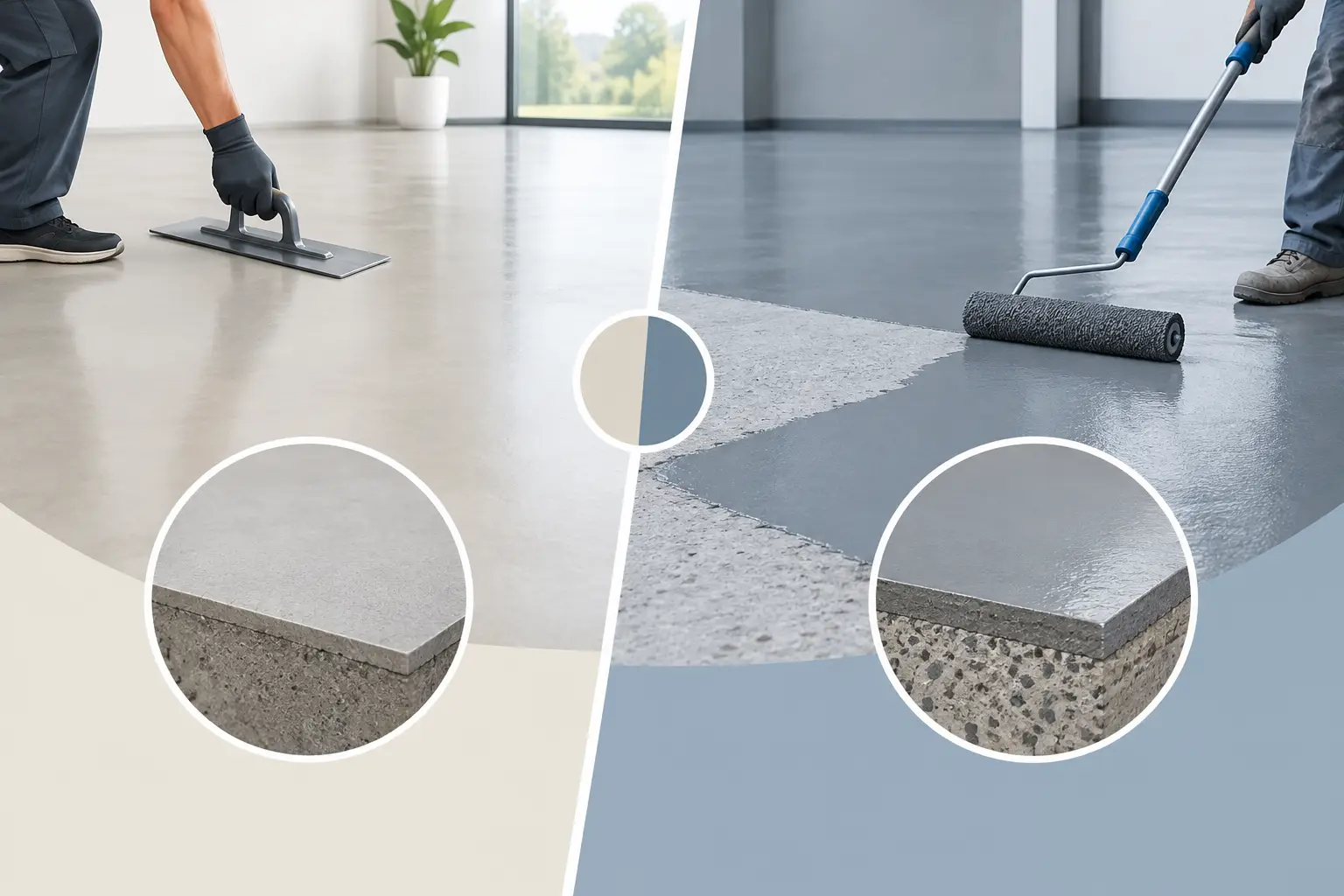
Microtopping Versus Concrete Overlay Systems
A floor can look worn out for very different reasons. It may have hairline cracking, low spots, old adhesive, forklift wear, or simply a dated finish that no longer fits the space. When comparing microtopping versus concrete overlay systems, the right choice depends less on which material looks better in a sample and more on what the existing slab needs to perform for years.
Microtopping creates a refined, modern decorative surface with very little added thickness. Concrete overlay systems cover a broader category of resurfacing materials built to repair, level, protect, or change the look of concrete. Both can transform a floor without a full slab replacement, but they are not interchangeable.
What Is a Microtopping?
A microtopping is a thin, polymer-modified cement coating applied in multiple tight coats. It is commonly used when a homeowner, designer, retail operator, or office manager wants a clean, continuous-looking cement finish. Depending on the system and final sealer, it can range from smooth and minimal to lightly textured and hand-troweled.
Because the finished material is thin, often measured in millimeters rather than fractions of an inch, microtopping follows the character of the substrate. Proper surface preparation is not optional. The existing concrete must be sound, clean, mechanically profiled, and repaired before the coating begins. Cracks, joints, moisture issues, and weak concrete need to be evaluated up front.
Microtopping is a strong fit for residential interiors, feature walls, retail floors, office spaces, restaurant areas, and upscale garage conversions where appearance carries equal weight with performance. It delivers a modern concrete look without the demolition, dust, and height changes associated with removing an existing slab.
It is not the best answer for every damaged floor. A thin decorative system cannot correct major slab movement, deep spalling, broad depressions, or active moisture vapor problems on its own.
What Is a Concrete Overlay System?
Concrete overlay systems include a wider range of cementitious materials installed over existing concrete. Some are designed for cosmetic resurfacing. Others are engineered for thicker repairs, slope correction, self-leveling, stamped textures, or high-build applications that restore a heavily worn surface.
An overlay may be applied as a thin bonded coat or installed much thicker when the floor needs meaningful correction. The product selection depends on the condition of the slab, required compressive strength, traffic level, exposure to chemicals, and desired finish. A warehouse aisle, restaurant patio, retail showroom, and residential garage do not place the same demands on an overlay.
For example, a floor with shallow pitting and surface scaling may need a repair-focused overlay before receiving a protective coating. A slab with low areas may require a self-leveling underlayment. A commercial entrance may benefit from a decorative overlay with added texture for traction. The term “overlay” describes the category, not one single finish.
Microtopping Versus Concrete Overlay Systems: Key Differences
The most noticeable difference is thickness. Microtopping is intentionally thin and is primarily selected for its refined visual finish. Many concrete overlay systems can be built thicker, making them better suited to resurfacing, leveling, and repairing floors with more substantial defects.
The second difference is appearance. Microtopping typically provides a contemporary, hand-finished cement aesthetic. Color variation, trowel movement, and subtle mottling are part of its character. Clients expecting a perfectly uniform painted appearance should discuss finish expectations before choosing it.
Overlays offer more visual directions. They can be smooth, broom-finished, stamped, colored, stained, or prepared for epoxy and other protective systems. If the project calls for a specific texture, improved slip resistance, or a floor correction that must disappear under a final coating, an overlay gives the contractor more options.
Durability also depends on the complete system, not just the material name. A properly prepared microtopping with the right sealer can perform well in appropriate interior and light-to-moderate traffic settings. A repair-grade overlay may handle heavier service, but it still needs a compatible coating or sealer where chemical resistance, abrasion resistance, or easy cleaning is required.
Start With the Concrete, Not the Finish Sample
The condition of the existing slab should drive the recommendation. This is where an in-person assessment pays off. Surface stains and old coatings can often be removed by grinding. Weak concrete may need to be cut out and repaired. Cracks may need routing and filling, while control joints may need to remain visible because they are designed to accommodate movement.
Moisture is another critical issue, especially in garages, ground-level rooms, commercial spaces, and older buildings. Moisture vapor moving through the slab can interfere with adhesion or damage certain finish systems. Testing, surface preparation, primers, and moisture-mitigation products may be necessary before installing either microtopping or an overlay.
A contractor should also check for slope, drainage, and floor flatness. If water needs to move toward drains, a decorative microtopping alone will not create that slope. A properly specified overlay or repair mortar can correct the substrate first, then support the final finish.
Where Microtopping Makes Sense
Choose microtopping when the slab is structurally sound, the required repairs are limited, and the project is driven by design. It works particularly well when added floor height must stay low around doors, cabinets, transitions, and existing baseboards.
A polished, lightly variegated cement look can elevate a living area, showroom, boutique, reception space, or finished garage. It also gives property owners more freedom than simply accepting the color and condition of their original concrete. The final sealer can be selected around the expected use, whether the priority is a low-sheen residential appearance, easier cleaning, or greater protection from spills.
Microtopping requires reasonable care. Dragging heavy equipment, allowing chemical spills to sit, or using harsh cleaning methods can shorten the life of any decorative sealed floor. In commercial environments, maintenance plans should match the traffic and cleaning chemicals used on site.
Where an Overlay Is the Better Investment
An overlay system is often the more practical choice when the slab needs to be rebuilt before it can look good. Surface deterioration, widespread pitting, previous coating failure, uneven areas, and damage from equipment or vehicle traffic all point toward a more repair-capable system.
For garages, warehouses, industrial work areas, and service spaces, the overlay may be only one layer of the solution. After repair and resurfacing, the floor can receive an epoxy, urethane, polyaspartic, or other protective coating selected for the environment. That approach can improve chemical resistance, simplify cleanup, and provide a more durable finish under daily use.
Decorative overlays also make sense for outdoor walkways, pool decks, patios, and entry areas where texture and traction matter. The correct material and sealer must be rated for exterior exposure. Not every interior decorative product is suitable for sun, rain, temperature changes, or standing water.
Cost, Downtime, and Long-Term Maintenance
There is no honest flat-rate answer because concrete conditions vary. Microtopping can be cost-effective when the floor is already in good shape and the project needs a thin decorative finish. It becomes more involved when extensive crack repair, moisture mitigation, or substrate correction is required.
Overlay pricing also depends on thickness, repair depth, access, prep requirements, and the final finish. A thicker overlay may cost more at installation, but it can prevent the bigger expense of removing and replacing a slab that is still structurally serviceable.
Downtime deserves the same attention as material cost. Retailers, restaurants, offices, and industrial facilities may need work completed in phases or during off-hours. Cure times vary by system, temperature, humidity, and the protective coating used. Planning the schedule around business operations protects both the floor installation and the facility’s workflow.
For maintenance, use cleaners approved for the installed system and address spills promptly. Mats at entrances, felt pads under furniture, and routine sweeping can make a visible difference on decorative floors. In higher-demand settings, a planned recoating schedule may be more cost-effective than waiting for wear to become severe.
Get the System Designed for the Actual Space
The best flooring decision starts with an honest look at the slab, the traffic, and what the finished floor must handle. Orange County Concrete Polishing evaluates those details before recommending a system, so the solution matches the space instead of forcing a decorative product onto a repair problem.
If you are deciding between microtopping and an overlay, bring photos, your desired finish, and details about how the area is used to the estimate. A clear scope at the beginning helps avoid surprises and gives your floor the performance and appearance it was designed to deliver.
Recent Post
Best Concrete Coatings for Factories That Last September 24, 2026 1:51 am
Overnight Floor Installation Planning That Works September 20, 2026 1:51 am
Top Commercial Floor Coating Options for Business September 18, 2026 1:53 am