
Epoxy Flake Systems for Garages and Workspaces
A garage floor can look clean on move-in day and still fail quickly under hot tires, dropped tools, oil drips, and everyday foot traffic. Epoxy flake systems are built for exactly these conditions. They combine a bonded resin base coat, decorative vinyl flakes, and a protective topcoat to create a finished concrete floor that is durable, easier to clean, and tailored to the space.
For Orange County homeowners, business owners, and facility managers, the appeal is practical as much as visual. A properly installed flake floor gives a garage, showroom, service area, office, or light industrial workspace a finished appearance without asking the owner to accept high-maintenance flooring. The difference comes down to surface preparation, material selection, and installing the system for the actual demands of the property.
What Are Epoxy Flake Systems?
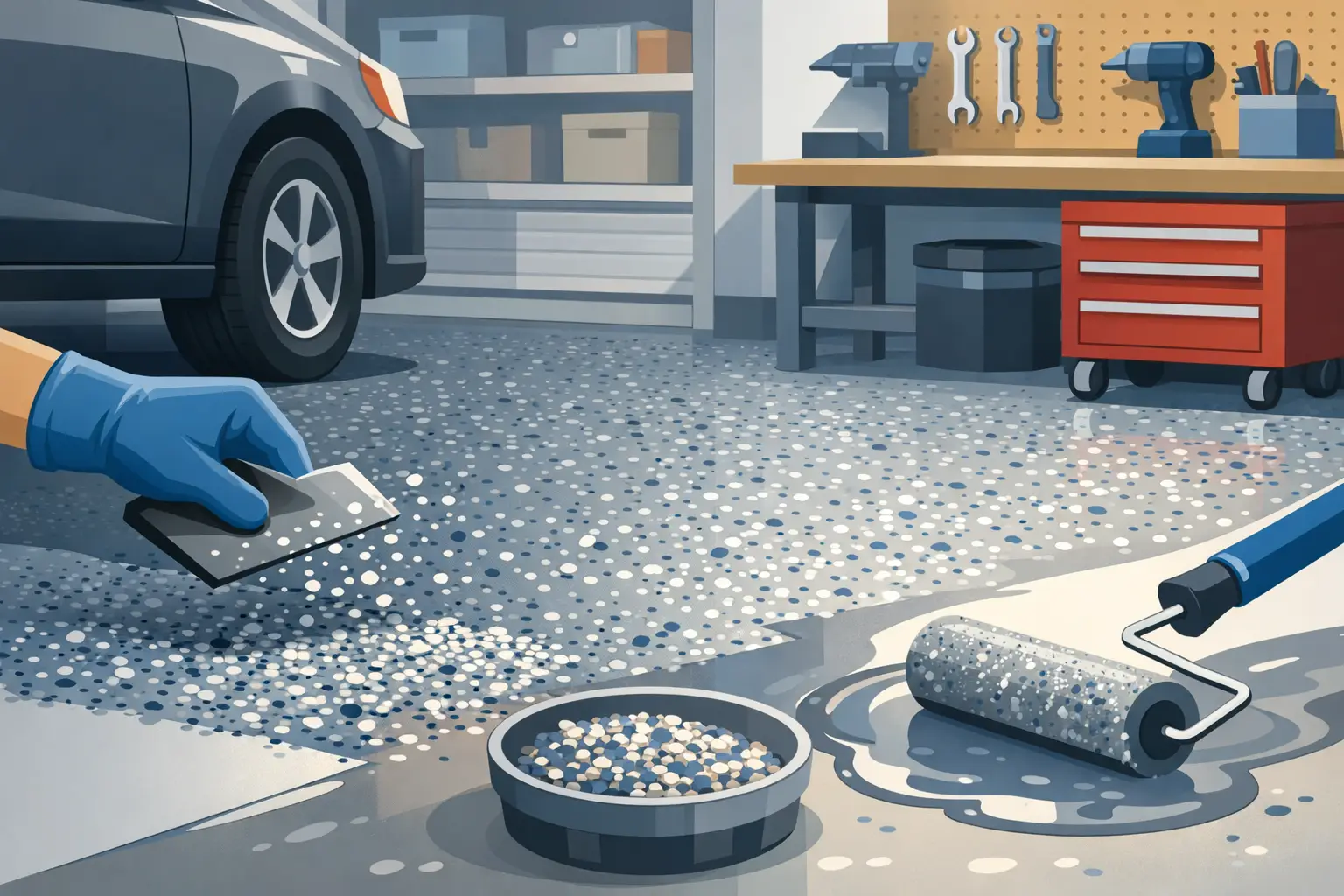
An epoxy flake floor is a multi-layer coating system installed over prepared concrete. The installer first evaluates the slab, repairs cracks or surface defects as needed, mechanically grinds the concrete, and applies a resin base coat. Decorative vinyl flakes are broadcast into that wet coat, then the surface is scraped, vacuumed, and sealed with a clear protective topcoat.
The flakes are not just decoration. A full-flake broadcast helps break up the visual appearance of dust, minor debris, and normal wear. It also creates a textured surface profile that can be adjusted with the selected topcoat and traction additive. That matters in garages, commercial entries, service spaces, and areas where wet shoes, vehicle tires, or routine spills are expected.
The term is often used broadly, but not every flake floor is the same. Some projects use epoxy primer and base coats with a polyaspartic or polyurethane topcoat. Others use a different resin build based on moisture conditions, cure-time requirements, UV exposure, chemical exposure, and budget. The right system depends on the slab and the use of the room, not just the flake color selected from a sample board.
Why Surface Preparation Determines the Result
The most attractive coating will not last if it is installed over weak, contaminated, or improperly prepared concrete. Paint, old coatings, adhesive residue, curing compounds, oil contamination, and smooth concrete can all interfere with adhesion. This is why professional surface preparation is not an optional add-on.
Mechanical diamond grinding opens the concrete profile so the coating can bond correctly. Cracks, pits, and spalls should be repaired before the coating is applied, while slab moisture must be assessed when conditions suggest a vapor issue. A floor may look dry on the surface and still have moisture vapor moving through the concrete. If that condition is ignored, the coating can bubble, delaminate, or fail prematurely.
For a residential garage, preparation may involve grinding, crack repair, and detailed edge work. For a warehouse, retail back room, or commercial facility, the scope may also include larger repairs, joint considerations, overnight scheduling, and coordination around equipment or business operations. A contractor should inspect the site in person before recommending a system or quoting a final scope.
Coating over concrete is not the same as painting it
A basic garage-floor paint can be tempting because it appears inexpensive and simple. The trade-off is performance. Paint commonly has less build, weaker adhesion, and lower resistance to tires, abrasion, chemicals, and repeated cleaning than a professionally installed resin system. It can be appropriate for low-demand, short-term improvements, but it is not a substitute for a prepared and properly coated flake floor.
Where Flake Floors Make Sense
Epoxy flake systems are especially popular in residential garages because they turn a utilitarian slab into a clean, finished part of the home. The surface holds up well under normal vehicle traffic and makes it easier to sweep away dirt, leaves, and garage debris. Color blends can coordinate with wall paint, cabinets, and exterior finishes without showing every tire mark.
Commercial applications are broader. Retail spaces, offices, break rooms, utility rooms, auto-related businesses, veterinary areas, showrooms, and light industrial workspaces often benefit from a coating that looks professional and simplifies routine cleaning. In areas exposed to chemicals, oils, cleaners, or frequent foot traffic, the topcoat should be selected for that specific exposure rather than treated as a standard finish.
A flake system is not automatically the best choice for every floor. Heavy forklift traffic, severe impact loads, constant standing water, aggressive industrial chemicals, or outdoor surfaces with direct sun may call for a different resin system, a thicker industrial coating, a urethane cement solution, or a concrete polishing approach. A dependable flooring recommendation starts with how the space is used, not a one-size-fits-all product package.
Choosing Color, Texture, and Finish
Flake floors are available in solid blends, neutral stone-like combinations, high-contrast patterns, and custom color selections. Gray blends remain a practical choice for garages and commercial back-of-house areas because they hide dust and everyday debris well. Lighter blends can make smaller rooms feel brighter, while darker blends can create a more dramatic appearance but may show lighter dust more readily.
Texture deserves the same attention as color. A flake floor should have enough traction for its intended use without becoming difficult to mop or uncomfortable to walk on. More texture can be a smart choice near entrances, wash areas, or work zones where moisture is likely. In a residential garage or showroom, a smoother finish may be preferred for easier cleaning and a more refined appearance.
The clear topcoat also affects the final look and performance. Gloss provides a crisp, reflective finish, while satin can reduce glare and make minor dust less noticeable. UV stability is particularly important where sunlight reaches the floor. Some resin materials can amber or discolor under ultraviolet exposure, so the topcoat needs to match the lighting conditions of the space.
Maintenance Is Simple, Not Zero
One reason property owners choose flake flooring is that maintenance is straightforward. Regular sweeping or blowing removes abrasive grit before it can scratch the finish. For deeper cleaning, use a soft broom, microfiber mop, or auto scrubber where appropriate, along with a mild cleaner recommended for coated floors.
Avoid harsh abrasive pads and cleaners that leave a slippery residue. Wipe up oil, brake fluid, chemicals, and spills promptly, even when the system is designed for chemical resistance. Resistance gives you time to clean a spill without immediate damage. It does not mean every chemical can sit on the floor indefinitely.
A well-installed system can provide years of service, but no floor coating is indestructible. Metal dragging, sharp impacts, failed concrete beneath the coating, and extreme point loads can damage the surface. The advantage of a professionally installed system is that localized damage can often be evaluated and repaired before it becomes a larger issue.
Questions to Ask Before You Approve a Quote
A clear proposal should explain what will happen to your existing concrete, not only describe the color and topcoat. Ask how the slab will be mechanically prepared, whether crack and spall repairs are included, and how moisture concerns will be handled. You should also know what resin system is being proposed and why it fits the space.
For commercial properties, ask about work hours, access requirements, cure times, ventilation, and how the contractor will protect nearby operations. Closing a retail area or blocking a service bay can cost more than the flooring work itself, so scheduling is part of the project plan. Off-hours installation may be the right solution when minimizing disruption is a priority.
Finally, compare scopes carefully. A lower number may leave out essential grinding, repairs, topcoat quality, or edge detailing. The best value is the system that addresses your concrete condition and operating needs upfront, then performs as expected after the crew leaves.
Orange County Concrete Polishing provides in-person evaluations and tailored proposals for garage, residential, commercial, and industrial flooring projects. The right flake system starts with a close look at the slab, the traffic it will handle, and the finish you want to live with. Request a quote, ask direct questions, and choose a flooring scope that is built for your space rather than a generic coating package.
Recent Post

Sealed Concrete vs Polished: Which Floor Fits? September 4, 2026 2:54 am

Concrete Floor Moisture Testing Before Coatings September 2, 2026 2:54 am

How to Choose a Concrete Resurfacing Contractor August 29, 2026 2:57 am