
When a Concrete Floor Moisture Barrier Is Needed
A concrete floor moisture barrier is not an optional add-on when a slab is releasing more moisture than the planned finish can handle. It is the layer that can prevent peeling epoxy, whitening coatings, adhesive failure, and expensive callbacks. For Orange County garages, retail spaces, warehouses, offices, and residential interiors, the right moisture-control plan starts before any coating, polish, or finish is selected.
What a Concrete Floor Moisture Barrier Actually Does
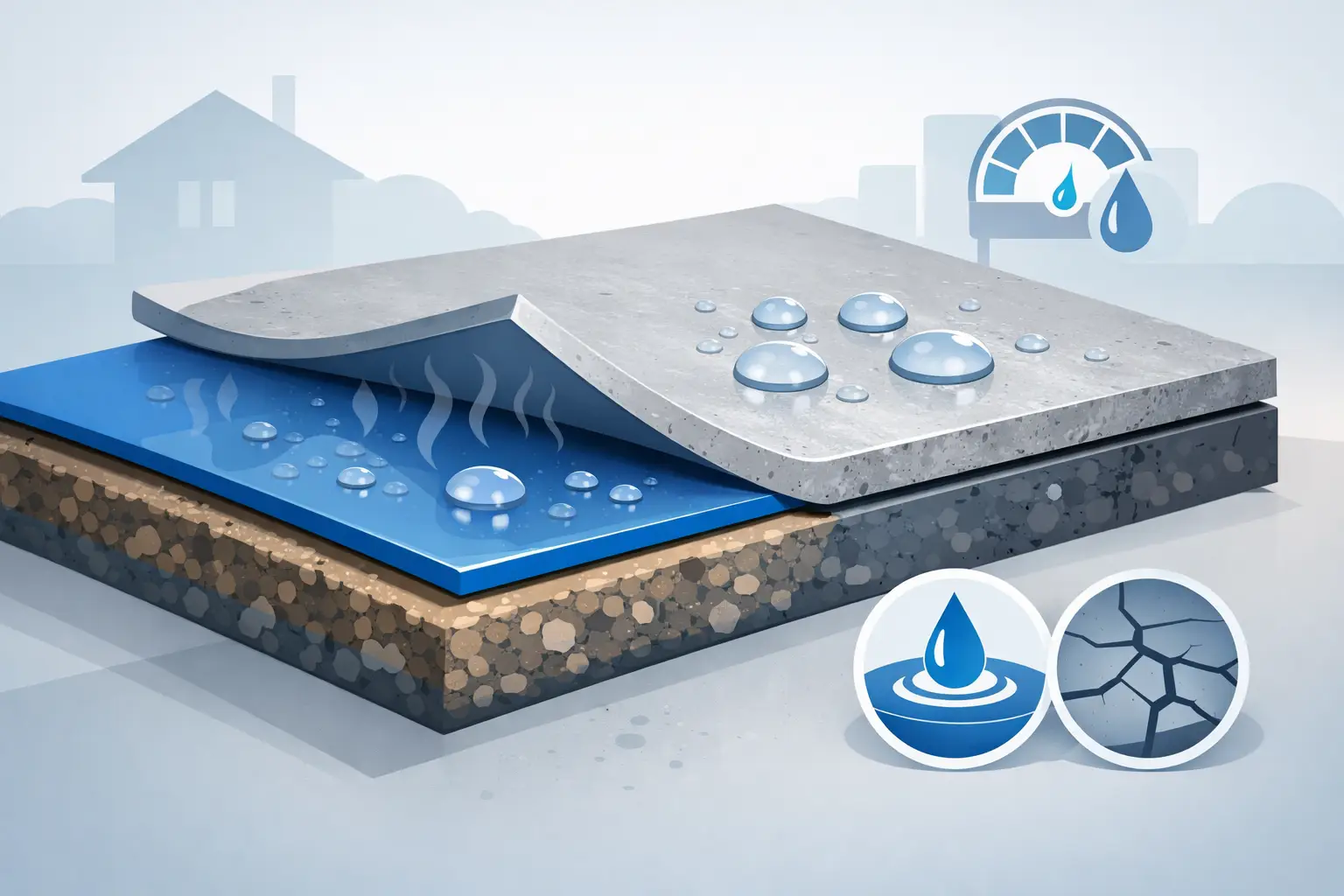
Concrete is porous. Even slabs that look dry at the surface can move moisture vapor upward from the ground or retain water from the original curing process. That moisture can build pressure beneath a coating or flooring system. When it has nowhere to go, it can cause blisters, bubbles, delamination, discoloration, and a loss of bond.
A concrete floor moisture barrier is designed to manage that vapor movement. Depending on the project, it may be a vapor retarder installed beneath a new slab, a topical moisture-mitigation coating applied to an existing slab, or a compatible primer built into a flooring system. These are not interchangeable products, and choosing the wrong approach can leave the finished floor vulnerable.
A common mistake is assuming that a standard concrete sealer is a moisture barrier. Most sealers improve stain resistance and simplify cleaning, but they are not designed to stop high vapor emissions beneath epoxy, urethane cement, glue-down flooring, or other bonded finishes. Surface protection and moisture mitigation serve different jobs.
Start With Moisture Testing, Not Guesswork
The slab should be tested before a finish is specified. A visual inspection matters, but it is not enough. Concrete can look dry, feel dry, and still produce vapor levels that exceed the limits of a coating manufacturer.
Professional testing may include relative humidity testing inside the slab, calcium chloride testing for moisture vapor emission, or both when project conditions call for it. The selected finish determines how much moisture is acceptable. A polished concrete floor may tolerate conditions that would be risky for a thin epoxy coating, while a moisture-sensitive adhesive may require even stricter limits.
Testing also helps identify the reason for the moisture. The issue may be normal vapor transmission through an older slab, poor drainage outside the building, a missing under-slab vapor retarder, plumbing leaks, or water intrusion through joints and cracks. A moisture barrier can be an effective solution, but it should not be used to hide an active water problem. If water is entering the building from outside or below, drainage and leak repairs need attention first.
For commercial properties, testing is especially valuable because a failed floor can disrupt operations. A warehouse aisle, restaurant kitchen, showroom, or production area may need to stay open on a tight schedule. Knowing the slab condition early allows the flooring scope, material selection, and installation timing to be planned correctly.
Types of Concrete Floor Moisture Barrier Systems
Under-Slab Vapor Retarders for New Construction
When a slab has not been poured yet, the best place to control ground moisture is below the concrete. A properly installed under-slab vapor retarder limits moisture migration from the soil into the slab. It must be selected and installed as part of the concrete and building-envelope plan, with care around seams, penetrations, and site drainage.
This is a new-construction solution. It does not fix an existing slab after the fact, although it can prevent many future flooring issues when the project is designed correctly from the start.
Topical Epoxy Moisture-Mitigation Systems
For existing concrete, a high-performance epoxy moisture-mitigation system is often the practical answer. These products are applied after mechanical surface preparation and are designed to reduce vapor transmission before the final floor coating, overlay, adhesive, or finish is installed.
The key word is preparation. The concrete must be properly ground or shot blasted to create a clean, sound profile. Paint, curing compounds, weak concrete, adhesives, oils, and contaminants can keep the barrier from bonding. A moisture barrier applied over an improperly prepared slab may fail along with the decorative coating placed above it.
Not every epoxy primer qualifies as a true moisture-mitigation system. The product must be rated for the tested moisture condition and compatible with the finish being installed. That compatibility matters when combining products such as metallic epoxy, flake garage coatings, self-leveling overlays, urethane cement, or glue-down flooring.
Breathable Finishes and Polished Concrete
In some cases, the best option is not to block moisture completely. Densified and polished concrete remains more vapor permeable than a film-forming coating. That can make it a strong choice for certain slabs with elevated vapor transmission, provided the floor is in sound condition and the design does not require a moisture-sensitive coating.
Polished concrete is not a cure for every moisture issue. Active water intrusion, salts, severe cracking, or surface deterioration still need to be evaluated. But for facilities that need a durable, low-maintenance floor without adding a thick topical coating, polishing can reduce risk while delivering a clean, professional appearance.
Choosing the Right System for the Space
The best solution depends on the slab, the planned use, and the finished floor. A residential garage may need a moisture barrier beneath an epoxy flake system because hot tires, vehicle fluids, and daily use demand a tightly bonded coating. A retail floor may need a barrier before decorative epoxy or leveling work so the appearance stays consistent under bright lighting.
Industrial and commercial facilities add another layer of consideration. Forklift traffic, chemical exposure, washdown procedures, temperature swings, and downtime requirements all affect the system selection. A facility manager may prioritize a fast return to service, while a homeowner may focus on color, texture, and long-term ease of cleaning. Both need the same foundation: a floor system designed for the actual slab conditions.
There is also a cost trade-off. Moisture mitigation adds material and labor, but skipping it when testing indicates a need can cost far more after a coating fails. On the other hand, installing an expensive barrier where it is not required may not provide a meaningful benefit. Proper testing keeps the scope focused and the proposal honest.
Surface Preparation Determines Long-Term Performance
A moisture-control coating is only as dependable as the concrete beneath it. Before installation, the floor may require diamond grinding, crack repair, removal of old coatings, oil treatment, patching, or leveling. The goal is to create a clean, stable surface with the correct profile for the selected material.
Cracks and joints require special attention. Concrete naturally moves, and some joints are designed to move. Filling a moving joint rigidly without considering movement can create new cracks in the finish. A qualified contractor will distinguish between cosmetic cracks, dormant cracks, active joints, and areas affected by settlement or moisture intrusion.
Moisture barriers also need proper cure time before the next layer is installed. Rushing the process can create intercoat adhesion problems. A well-planned installation accounts for preparation, testing, barrier application, cure windows, finish coats, and return-to-service requirements instead of treating the floor as a one-day cosmetic upgrade.
Signs Your Floor May Need Moisture Mitigation
Peeling or bubbling coatings are obvious warning signs, but they are not the only ones. White mineral deposits on the surface, darkened concrete after humid weather, persistent musty odors, adhesive failure at flooring edges, or repeated coating problems can all point to moisture movement.
Older buildings deserve extra attention because many slabs were installed without the vapor-control practices used in newer construction. Ground-level rooms, garage slabs, warehouse floors, and spaces near exterior doors or landscaping are common areas to inspect. Still, age alone does not determine the answer. Testing should drive the recommendation.
If an existing coating has failed, the old material should be removed and the slab evaluated before applying a replacement. Installing a new coating over a failed one may look acceptable for a short time, but it does not address the reason the original system lost bond.
Plan the Barrier With the Entire Flooring System
A concrete floor moisture barrier should be specified as part of the complete floor assembly, not as an afterthought. The barrier, primer, repair materials, base coat, decorative layer, and topcoat must work together under the conditions of the space. That is how a garage coating stays bonded, a showroom maintains its finish, and an industrial floor holds up under real operations.
Orange County Concrete Polishing evaluates each project in person so the recommendation fits the slab, traffic level, schedule, and performance requirements. Whether the goal is polished concrete, epoxy, resurfacing, or leveling, the right preparation can protect the investment from the bottom up.
Before committing to any floor finish, have the slab tested and the surface inspected. A clear moisture plan at the beginning gives your new floor the best chance to perform the way it should for years.
Recent Post

Sealed Concrete vs Polished: Which Floor Fits? September 4, 2026 2:54 am

Concrete Floor Moisture Testing Before Coatings September 2, 2026 2:54 am
Epoxy Flake Systems for Garages and Workspaces August 31, 2026 2:57 am