
Best Concrete Finish for Garages That Holds Up
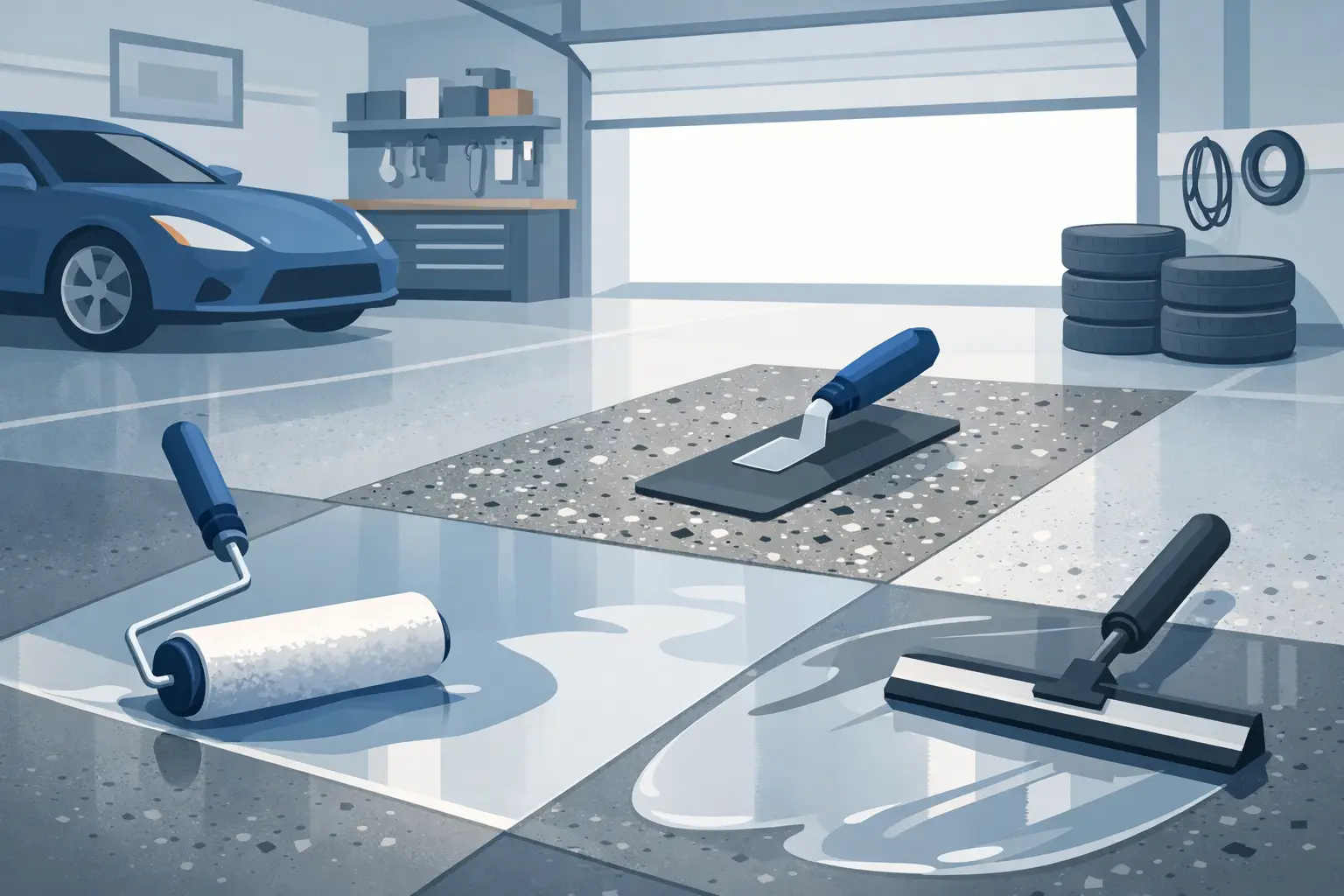
A garage floor sees abuse that interior floors never do. Hot tires, oil drips, dropped tools, lawn equipment, moisture at the door, and daily vehicle traffic all test the surface. The best concrete finish for garages is not simply the one with the best color chip blend or highest gloss. It is the system that matches the condition of your slab, how you use the space, and the level of maintenance you are willing to accept.
For most Orange County homeowners, a professionally prepared epoxy or polyaspartic coating system is the strongest all-around choice. But there are situations where polished concrete, a grind-and-seal finish, or a resurfacing system makes better sense. The right answer starts below the coating, with the concrete itself.
What the Best Concrete Finish for Garages Must Handle
A proper garage finish needs to do more than make old concrete look cleaner. It should protect the slab from automotive fluids, tire marks, abrasion, and surface dusting while making routine cleanup easier. It also needs enough texture to be practical when the floor is wet.
The biggest mistake is choosing a finish based on appearance alone. A glossy floor can look excellent on installation day but fail early if the concrete was not mechanically prepared, if moisture is moving through the slab, or if the coating was not designed for the traffic and chemicals in the space.
A contractor should evaluate cracks, spalling, previous coatings, moisture conditions, slab hardness, and contamination before recommending a system. A garage that stores two daily drivers needs a different finish than a workshop with welding equipment, a home gym, or a collector-car showroom.
Epoxy Flake Systems: The Best All-Around Garage Option
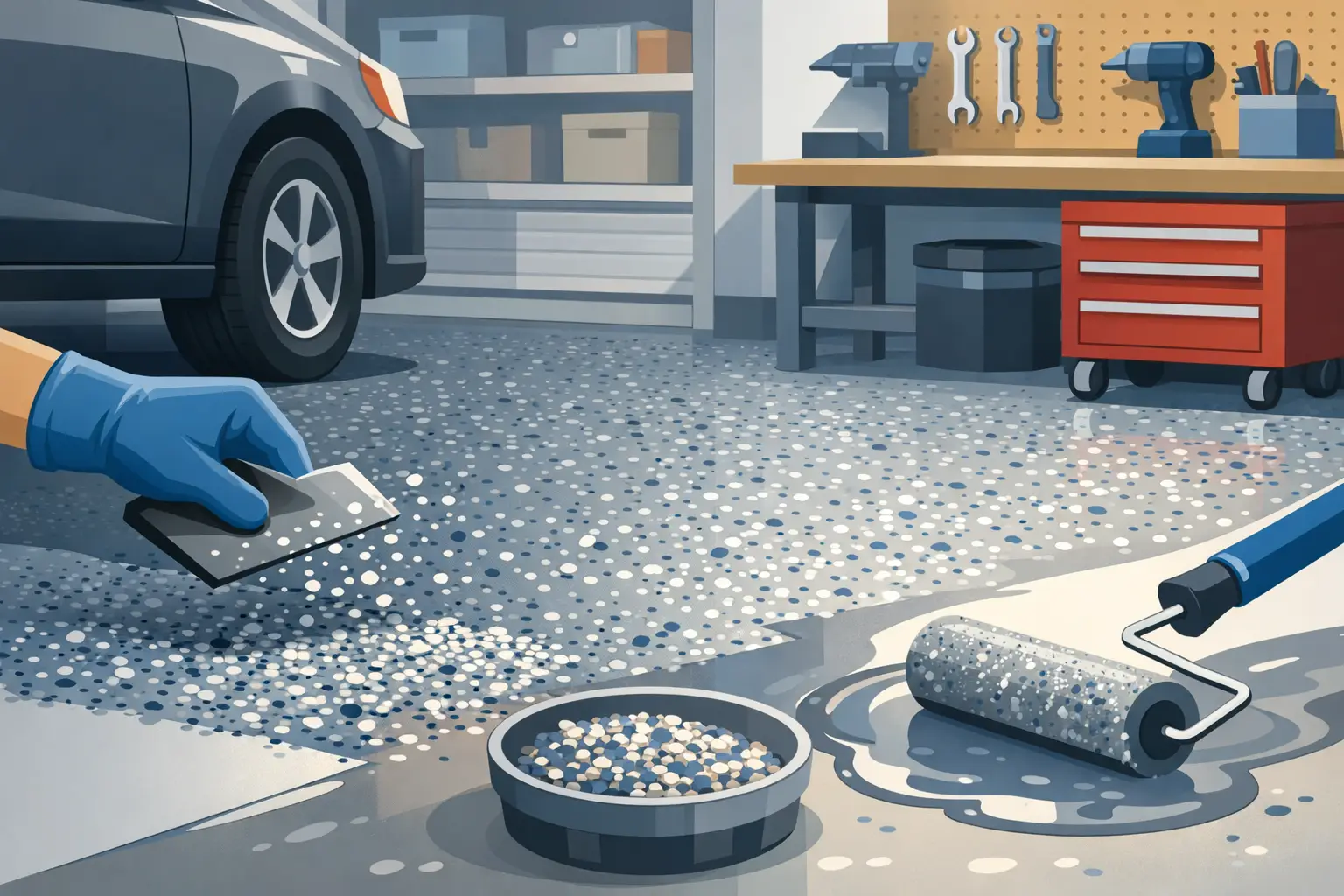
For many residential garages, epoxy with decorative vinyl flakes remains the most practical balance of durability, appearance, and value. The system typically includes concrete grinding, crack and surface repair, a high-build epoxy base coat, broadcast flakes, and a protective clear topcoat.
The flakes do more than add color. They help conceal minor dust, tire marks, and everyday wear that would be obvious on a solid-color floor. They also create visual texture, which is useful in a working garage where a perfectly smooth high-gloss surface could become slick when wet.
A properly installed epoxy system provides strong resistance to oil, grease, gasoline, household chemicals, and abrasion. It can turn a stained, dusty garage into a finished space that is easier to sweep, mop, and maintain. Homeowners who use the garage as an extension of the home often choose flake epoxy because it delivers a clean, finished look without requiring constant attention.
The trade-off is that epoxy is only as dependable as the preparation underneath it. Concrete must be diamond-ground to create the right profile for adhesion. Acid washing alone is not a substitute for professional surface preparation, especially where there are old sealers, tire residue, paint, or contaminants in the slab.
Epoxy also requires appropriate cure conditions and a realistic return-to-service schedule. Rushing vehicles back onto a floor before the system has cured can compromise the finish. A qualified contractor will set clear expectations about prep, cure time, and when the garage can safely return to use.
When Epoxy Is the Right Choice
Choose an epoxy flake system when you want a durable, customizable garage floor with good chemical resistance and a finished residential appearance. It is particularly well suited for standard two- and three-car garages, workshops, storage areas, and garages that need to look organized while standing up to real use.
Polyaspartic Coatings: Fast Return to Service and Strong UV Performance
Polyaspartic systems are often selected when schedule matters. They cure faster than traditional epoxy systems and can allow a quicker return to service, depending on the specific product, weather, and project conditions. This is useful for homeowners who cannot leave vehicles outside for several days or for commercial clients needing work completed during off-hours.
Polyaspartic topcoats also offer excellent UV stability. That matters most near open garage doors, on exposed driveway-adjacent areas, or in spaces with strong daylight. Some epoxy products can amber or change color with prolonged UV exposure, while polyaspartic coatings are designed to retain color and clarity more effectively.
A full polyaspartic or epoxy-polyaspartic flake system can provide a premium garage finish with strong chemical resistance and a high-end appearance. The key is not treating “polyaspartic” as a shortcut. Fast cure products leave less room for installation errors, so surface preparation, temperature control, and experienced application are critical.
Polyaspartic can cost more than a conventional epoxy system, but the price may be justified when fast installation, UV performance, and long-term appearance are priorities. It is a strong option for homeowners who want a high-performance garage floor with minimal downtime.
Polished Concrete: Best for a Clean, Modern, Low-Coating Look
Polished concrete is different from a coating. Instead of adding a thick film over the slab, the concrete is ground, densified, refined, and polished to improve its appearance and surface performance. The result can range from a soft satin sheen to a reflective finish, depending on the desired level of polish.
For garages, polished concrete works best when the existing slab is in good condition and the owner wants a minimalist, architectural look. It is durable, does not peel like a failed coating, and is easy to dust mop. It can also be enhanced with dyes or decorative saw cuts for a more customized finish.
However, polished concrete is not automatically the best answer for every garage. It does not create the same chemical barrier as a high-quality epoxy or polyaspartic coating. Oil, grease, and other automotive fluids should still be cleaned promptly, particularly on lighter-colored or highly polished floors. Extensive cracking, patchwork, heavy staining, or surface damage may also remain visible after polishing.
This finish is often best for garages used as showrooms, home gyms, studios, or clean storage spaces, especially when the slab already has good visual potential. It is less forgiving if the goal is to hide years of automotive staining and repair work.
Grind and Seal: A Practical Option for Utility Garages
A grind-and-seal finish sits between raw concrete and a full coating system. The floor is mechanically ground to remove surface contamination and improve appearance, then protected with a topical sealer. It can be clear or colored and can produce a matte, satin, or gloss finish.
This approach is practical for utility garages, storage areas, light workshops, and budget-conscious projects where the slab needs cleaning up but does not require a thick decorative coating. It is generally faster and less expensive than a multi-layer epoxy system, while still reducing dust and improving cleanability.
The limitation is wear. A thin sealer will not offer the same build, impact resistance, or long-term protection as a properly installed epoxy or polyaspartic floor. It may need periodic reapplication in areas exposed to vehicle traffic and hot tires. For a garage with daily driving and frequent spills, it is usually a value option rather than the longest-lasting option.
Do Not Skip Repairs and Moisture Testing
Cracks, peeling paint, delaminated concrete, and moisture problems cannot be covered up with a finish and expected to disappear. They need to be addressed before installation. Cracks may require routing and filling, weak concrete may need repair, and failed coatings must be removed through grinding.
Moisture is especially important. Concrete can release vapor even when it looks dry on the surface. If a coating is installed over an excessive moisture condition without the right mitigation system, it can blister, bubble, or lose adhesion. A professional assessment should identify these risks before a finish is selected.
This is where tailored proposals matter. Orange County Concrete Polishing scopes the floor based on its actual condition and intended use, rather than forcing every garage into the same package. The best finish starts with the right preparation plan.
Choosing the Right Garage Finish for Your Use
If your priority is chemical resistance, decorative color options, and an easy-to-clean surface, an epoxy flake system is usually the best starting point. If you need rapid installation or have significant sunlight at the garage opening, consider a polyaspartic topcoat or full polyaspartic system. If you prefer a modern concrete look and your slab is already in good condition, polished concrete may be the better fit.
For a basic storage or utility garage, grind and seal can provide meaningful improvement without the cost of a high-build coating. But if the garage is used every day, carries vehicle traffic, or doubles as a work area, investing in thorough grinding, repairs, and a professional coating system usually delivers better long-term value.
Before selecting a color or finish level, have the slab inspected in person. A clear recommendation based on moisture, damage, traffic, and your schedule will prevent an attractive garage floor from becoming an expensive redo. Get a detailed quote, ask what preparation is included, and choose a system built for the way your garage actually works.
Recent Post

Sealed Concrete vs Polished: Which Floor Fits? September 4, 2026 2:54 am

Concrete Floor Moisture Testing Before Coatings September 2, 2026 2:54 am
Epoxy Flake Systems for Garages and Workspaces August 31, 2026 2:57 am