
Polished Concrete vs Epoxy for Orange County
A garage floor that looks great on day one but peels under hot tires is not a good investment. Neither is a warehouse floor that requires frequent repairs every time pallet traffic, spills, or equipment takes its toll. When comparing polished concrete vs epoxy, the right answer depends on how the space is used, the condition of the slab, the desired appearance, and the level of maintenance your property can support.
Both systems can transform plain concrete into a clean, durable finished floor. They do it in very different ways. A proper recommendation starts with the concrete itself and the demands placed on it, not with a one-size-fits-all product.
Polished Concrete vs Epoxy: The Core Difference
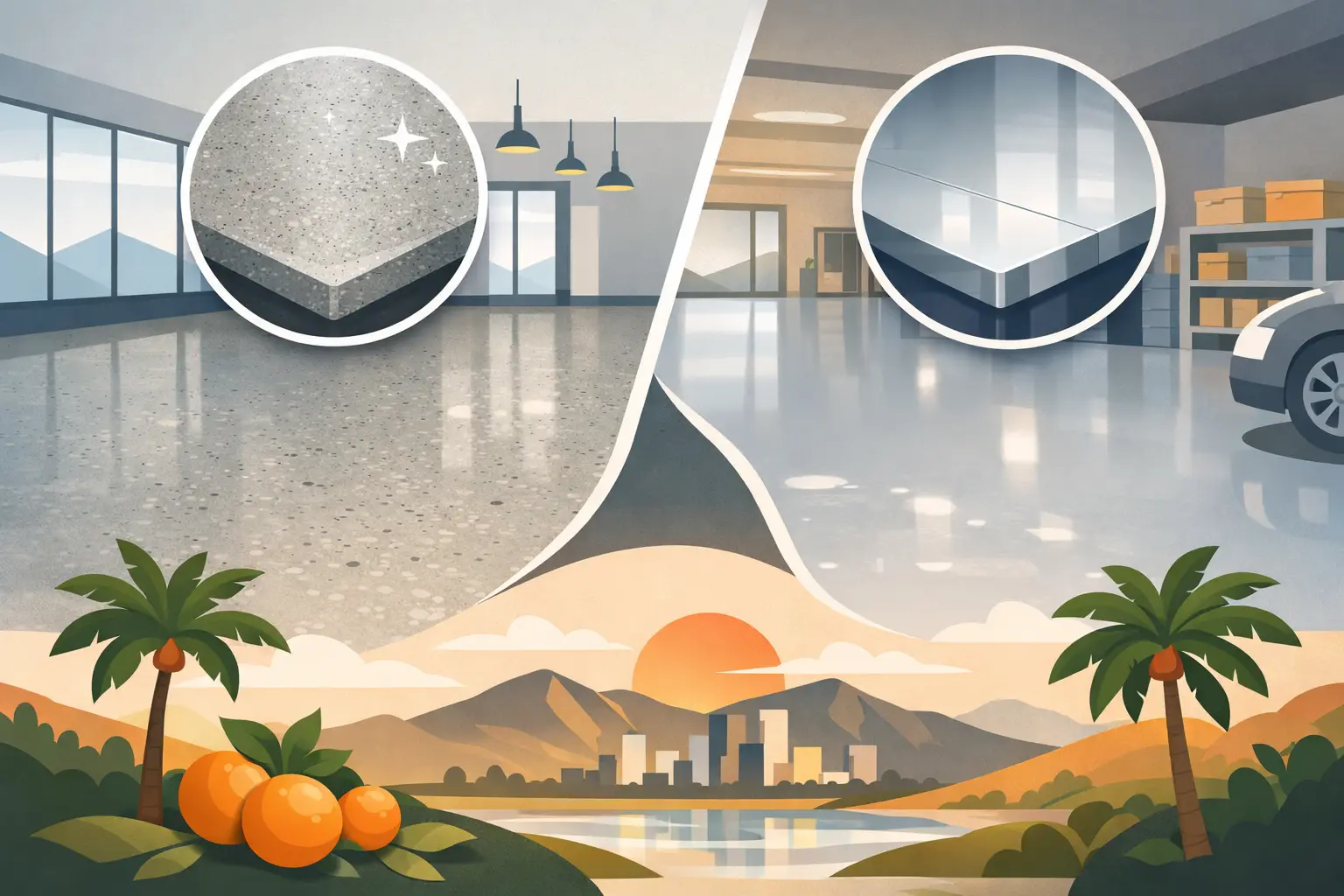
Polished concrete is the existing concrete slab mechanically refined with industrial grinders, densifiers, and progressively finer diamond tooling. The process closes and hardens the surface while creating a finish that can range from a soft satin sheen to a high-gloss, reflective floor. Color can be added with stains or dyes, and decorative aggregate can be exposed when the slab allows it.
Epoxy is a resinous coating system installed over prepared concrete. The coating creates a protective layer on top of the slab rather than changing the concrete surface itself. Epoxy can be solid color, decorative flake, metallic, quartz broadcast, or paired with specialized topcoats for added chemical resistance, UV stability, and traction.
That distinction matters in daily use. Polished concrete becomes part of the slab. Epoxy protects the slab with a separate, buildable layer. Both can perform exceptionally well when the preparation, materials, and installation method match the environment.
Surface preparation drives performance
The floor preparation is often more important than the finish selected. Concrete must be evaluated for cracks, old coatings, contaminants, moisture movement, weak surface paste, and uneven areas before work begins.
For polishing, the contractor may need to remove adhesives, coatings, or surface damage before the concrete can be refined. A slab with extensive patching may still be polished, but repairs can remain visible. That can be part of an industrial look, or it may steer the project toward an epoxy or resurfacing system.
For epoxy, grinding creates the concrete profile needed for adhesion. Oil contamination, moisture vapor, and poorly bonded previous coatings must be addressed first. Skipping this work is how epoxy systems end up bubbling, delaminating, or peeling prematurely.
Durability Under Traffic, Chemicals, and Daily Wear
Polished concrete is an excellent choice for retail floors, offices, showrooms, warehouses, and modern residential interiors where long-term wear and easy cleaning matter. A densified and properly polished slab handles foot traffic, rolling loads, and routine abrasion well. Because there is no film coating to peel, normal traffic does not wear the finish away in sheets.
However, polished concrete is not automatically chemical-proof. It can be vulnerable to acidic products, certain food and beverage spills, and long-term oil exposure if spills are left in place. In facilities with frequent chemical contact, a protective guard, sealer, or a different flooring system may be the smarter choice.
Epoxy is often the stronger option for garages, service bays, industrial work areas, commercial kitchens, airplane hangars, and manufacturing spaces. The right epoxy system can provide serious resistance to oils, fuels, salts, cleaners, and many chemicals. It also creates a more uniform barrier over repaired or imperfect concrete.
There are trade-offs. Not every epoxy is suitable for every exposure. Standard epoxy can amber or discolor in direct sunlight, which matters for open garage doors, patios, storefronts, and spaces with heavy UV exposure. A quality topcoat can improve UV stability and scratch resistance. Hot tires, heavy point loads, and impact also need to be considered when specifying the system.
Appearance: Natural Concrete or a Designed Coating
Polished concrete has a clean, architectural appearance that works especially well in contemporary homes, offices, retail locations, restaurants, and lobbies. It can show natural variation in the slab, including aggregate, subtle color shifts, old repairs, and small imperfections. That character is appealing when the goal is an authentic concrete finish rather than a perfectly uniform surface.
Epoxy offers more control over the final look. Homeowners can choose decorative flake blends for garages. Businesses can use solid colors to match branding, define work zones, or create a brighter work environment. Metallic epoxy can produce a dramatic visual effect, while quartz and flake systems add texture and help hide everyday dirt.
If visual consistency is the priority, epoxy usually has the advantage. If you want the slab itself to become the finished floor, polishing is difficult to beat.
Maintenance and Repairs
A polished concrete floor is straightforward to maintain. Regular dust mopping and damp mopping with a neutral cleaner will keep the surface looking sharp. In commercial settings, automatic scrubbers can maintain large floor areas efficiently. Over time, high-traffic lanes may benefit from a maintenance polish or protective treatment, but the underlying floor remains intact.
Epoxy floors are also easy to clean, especially when they have a smooth, nonporous surface. The maintenance routine should avoid harsh products that can dull or damage the topcoat. Textured flake and quartz floors provide better traction, though their texture can require more effort during detailed cleaning.
Repairs look different with each option. Isolated damage in epoxy can often be patched, but color and gloss matching may be noticeable, particularly on older floors. Polished concrete repairs can also be visible because new patch material rarely matches the surrounding slab exactly. The best repair strategy depends on whether the priority is restoring protection, appearance, or both.
Installation Time and Project Cost
Cost should be based on the complete scope, not just square footage. Concrete condition, moisture issues, crack repair, coating removal, access, design choices, edge work, and required downtime all affect the final proposal.
Polished concrete can be a strong long-term value because the slab becomes the floor and there is no separate coating layer to replace on a routine cycle. It is especially cost-effective in larger open spaces with sound concrete. But heavily damaged slabs, substantial leveling needs, or a requested high-gloss finish can increase the labor involved.
Epoxy pricing varies widely by system. A basic garage coating is very different from a multi-coat industrial system with moisture mitigation, broadcast aggregate, and chemical-resistant topcoats. Epoxy may be more economical when a slab needs visual uniformity or when the project requires a specific protective barrier.
For occupied businesses, scheduling is part of the equation. Retail locations, offices, warehouses, and restaurants may need work completed in phases or during off-hours to reduce disruption. A flooring contractor should plan curing time, access routes, and return-to-service requirements before the project begins.
Which Floor Fits Your Space?
Choose polished concrete when you want a durable, low-maintenance floor with a natural modern appearance. It is well suited to offices, showrooms, retail spaces, residential interiors, and warehouses where heavy traffic is expected but aggressive chemical exposure is limited.
Choose epoxy when chemical resistance, color control, decorative flake, or a protective coating barrier is the main goal. It is a practical fit for garages, workshops, service areas, industrial facilities, commercial kitchens, and other spaces where spills and contaminants are part of normal operations.
Some properties benefit from a combination of solutions. A warehouse may use polished concrete in main aisles and an epoxy system in maintenance bays. A commercial building may polish its lobby and apply a high-traction coating in back-of-house areas. The floor does not have to be the same everywhere if the demands are not the same everywhere.
Start With an In-Person Slab Evaluation
Before selecting a color chart or finish level, inspect the slab. Look for moisture concerns, cracking, surface failures, contamination, and the traffic patterns that will shape the floor over time. A clear scope prevents costly surprises and helps ensure the finish is built for real working conditions.
Orange County Concrete Polishing provides customized recommendations based on the space, the concrete, and the performance you need. Bring the daily realities of the property into the conversation – forklifts, hot tires, cleaning chemicals, sunlight, spills, or customer-facing design goals. That is how you choose a floor that still works hard long after the installation crew leaves.
Recent Post

Sealed Concrete vs Polished: Which Floor Fits? September 4, 2026 2:54 am

Concrete Floor Moisture Testing Before Coatings September 2, 2026 2:54 am
Epoxy Flake Systems for Garages and Workspaces August 31, 2026 2:57 am