
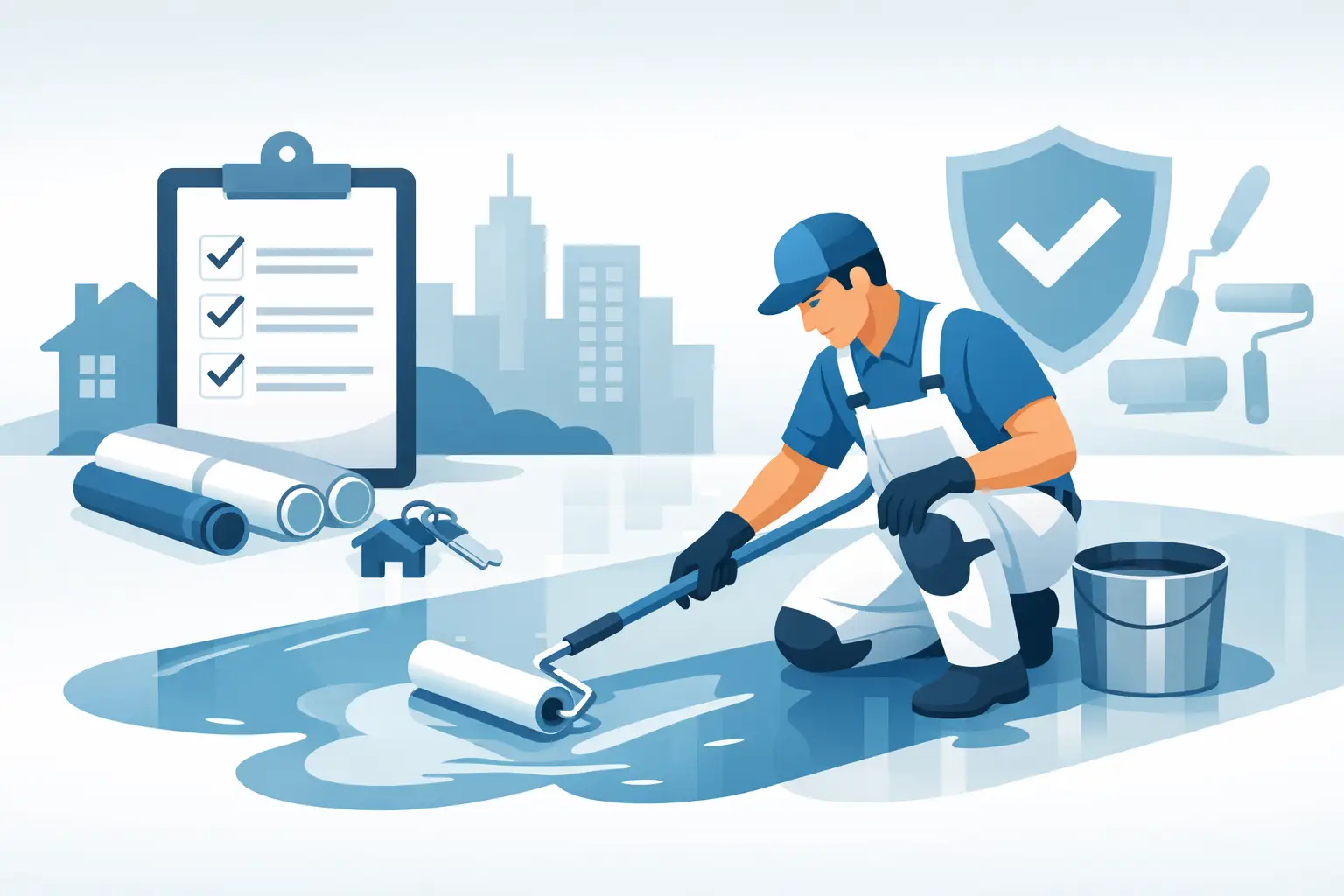
Hiring a Licensed Epoxy Flooring Contractor
A floor can look great on day one and still fail six months later if the prep work was rushed. That is why hiring a licensed epoxy flooring contractor matters more than most property owners realize. The coating itself is only part of the system. Surface preparation, moisture testing, crack repair, product selection, and installation timing are what determine whether your floor holds up under traffic, chemicals, hot tires, and daily wear.
If you are comparing bids for a garage, warehouse, retail space, office, restaurant, or industrial facility, the lowest number rarely tells the full story. A properly installed epoxy floor should be built around your site conditions and your use case, not around a one-size-fits-all package. The right contractor will explain what your slab needs, what system fits the space, and what kind of performance you can realistically expect.
Why a licensed epoxy flooring contractor is worth it
A licensed epoxy flooring contractor brings more than basic installation labor. Licensing helps verify that you are dealing with a legitimate business that is operating professionally and meeting state requirements. That matters when the project involves commercial schedules, tenant improvements, liability concerns, or coordination with other trades.
Just as important, experienced licensed contractors know that epoxy is not a paint job. Concrete behaves differently from one building to the next. Some slabs have moisture vapor issues. Others have oil contamination, weak surface layers, previous coatings, or uneven patches that need grinding and repair before any primer or topcoat goes down. If those conditions are ignored, the floor may peel, blister, or wear out long before it should.
For business owners and facility managers, there is also the scheduling side. A qualified contractor can plan around operating hours, work in phases, and recommend systems that balance cure time with durability. That is a practical advantage, especially in active commercial and industrial settings where downtime costs money.
What a quality epoxy project actually includes
When people picture epoxy flooring, they usually focus on the finished appearance – solid color, decorative flakes, quartz broadcast, or a glossy topcoat. The real work starts well before that final coat.
Surface preparation comes first
Good epoxy starts with mechanical surface preparation. That usually means diamond grinding or shot blasting to open the concrete and create the right profile for adhesion. Acid washing is not a substitute for proper mechanical prep. If a contractor is vague about prep, that is a warning sign.
Cracks, spalls, surface pits, and joint damage should also be addressed before coating. In some cases, floor leveling or resurfacing is part of the scope. This is especially common in older garages, warehouses, and retail spaces where the slab has taken years of abuse.
Moisture and slab condition need to be checked
Not every slab is ready for epoxy on the same day. Moisture testing can be critical, particularly in ground-level commercial spaces or buildings with older concrete. Excess moisture vapor can push a coating off the slab from below. A dependable contractor will identify that risk early and recommend a moisture-mitigation primer or a different system if needed.
The coating system should match the environment
Not every epoxy floor is built the same, and that is where tailored proposals matter. A residential garage may need chemical resistance, hot tire resistance, and a finish that is easy to clean. A warehouse may need abrasion resistance and clear striping for traffic lanes. A restaurant back-of-house area may need slip resistance and easier washdown maintenance. A showroom or office may prioritize appearance and a cleaner, more refined finish.
That is why a serious contractor talks about the system, not just the square-foot price. Primer, basecoat, broadcast media, topcoat, thickness, and finish texture all affect performance.
Questions to ask before you hire
A licensed epoxy flooring contractor should be able to answer direct questions without dancing around the details. Ask what prep method they use. Ask whether crack repair and patching are included. Ask what products they install and what topcoat they recommend for your environment. Ask how long the floor needs before foot traffic and vehicle traffic.
It is also smart to ask who will actually perform the work. Some companies sell the project and then hand it off to crews with little oversight. You want a contractor who manages the process closely and stands behind the finished floor.
For commercial clients, ask how the project will affect operations. Can the work be phased? Can it be completed after hours or over a weekend? Can the contractor coordinate around inventory, equipment, or public access? Those details matter just as much as the coating itself.
Red flags in an epoxy flooring estimate
A vague estimate usually leads to vague results. If the proposal does not mention grinding, repairs, coating build, or the number of coats, you may not be comparing apples to apples. Some low bids leave out prep or use thinner materials that do not deliver the same lifespan.
Be cautious with anyone promising a floor that is “indestructible.” Epoxy is durable, but every system has limits. Heavy impact, constant UV exposure, chemical spills left unattended, and improper cleaning can all affect performance. A reliable contractor sets clear expectations instead of overselling.
Residential and commercial needs are different
Homeowners often want a garage floor that looks clean, modern, and easy to maintain. In that case, decorative flake epoxy systems are popular because they improve appearance, hide minor dust and debris, and add texture underfoot. The right topcoat can also improve stain resistance and make routine cleaning easier.
Commercial and industrial clients usually care more about function first. They need a floor that supports operations, resists wear, and reduces maintenance over time. That could mean a heavier-duty epoxy build, added slip resistance, chemical-resistant topcoats, or selective resurfacing before the coating system is installed.
A contractor with experience across garages, offices, retail spaces, warehouses, parking structures, and industrial facilities is better equipped to recommend the right build. The best answer is not always the most expensive system. It is the one that fits the traffic, exposure, maintenance needs, and budget of the space.
Pricing depends on more than square footage
Property owners often ask for a price per square foot, but epoxy flooring is not a commodity product. The slab condition has a huge impact on cost. A clean, sound slab in a new space is very different from an older floor with cracks, glue residue, moisture problems, or multiple failed coatings.
Project size matters too, but not always the way people expect. Larger floors can bring better efficiency, while smaller jobs with tight access, heavy prep, or detailed edge work may cost more per square foot. Scheduling can also affect price. Night work, phased work, or fast-turn installations sometimes require additional labor and planning.
That is why in-person estimates are valuable. A good contractor wants to see the floor, test the conditions, and understand how the space is used before giving you a final number. That approach protects you from surprises and leads to a floor system that is actually built for the job.
Choosing a contractor you can rely on
A strong epoxy flooring project is part product, part process, and part accountability. You want a contractor who shows up when scheduled, communicates clearly, and gives you a proposal based on the floor in front of them instead of a generic package.
That is especially true when timing matters. Business owners do not want open-ended schedules. Facility managers do not want to chase down updates. Homeowners do not want to guess when they can use their garage again. Reliable contractors set clear timelines, explain curing windows, and keep the project moving.
Orange County Concrete Polishing works with property owners, business operators, and general contractors who need flooring systems that perform under real conditions, not just in sales photos. That means looking closely at the slab, recommending the right prep and coating system, and completing the work with the kind of consistency that keeps a project on track.
The right floor starts with the right scope
If you are hiring a licensed epoxy flooring contractor, focus on the full scope, not just the finish color or the initial quote. Ask how the slab will be prepared, what system is being installed, how the floor will handle your traffic and exposure, and what support you can expect from the contractor before, during, and after the job.
A well-installed epoxy floor should make your space easier to maintain, more durable, and better suited to the way you actually use it. Get a quote from a contractor who treats prep, product selection, and scheduling as part of the job – because that is what gives you a floor worth paying for.
Recent Post

Sealed Concrete vs Polished: Which Floor Fits? September 4, 2026 2:54 am

Concrete Floor Moisture Testing Before Coatings September 2, 2026 2:54 am

Epoxy Flake Systems for Garages and Workspaces August 31, 2026 2:57 am